


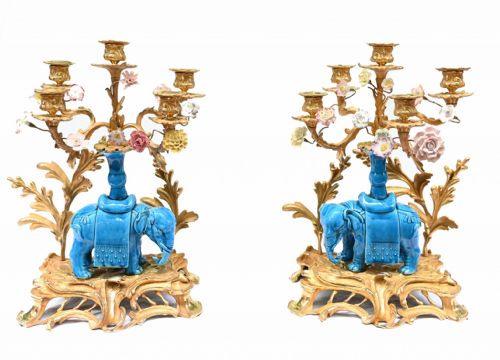


Antique Mantle Candelabra
These antique mantle candelabra bring genuine nineteenth-century presence to a chimneypiece with their heavy bronze, ormolu, and marble.
Antique Mantle Candelabra
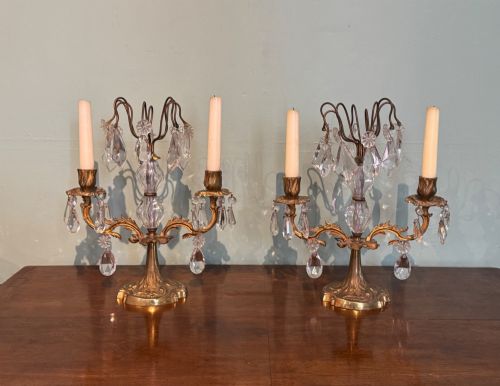
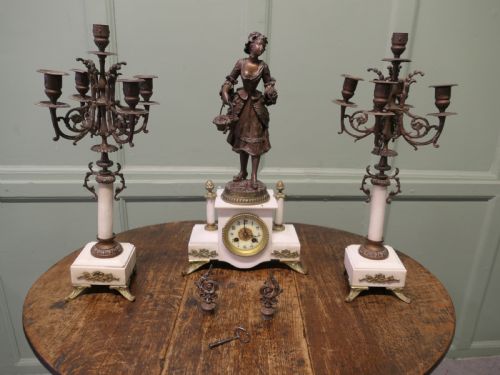
When you search for antique mantle candelabra, you are looking at ornamental branch-light holders designed to sit upon a fireplace mantel, frequently accompanied by matching clock garnitures. The pieces you meet on this page span the nineteenth century into the early twentieth, taking the form of multi-branch candelabra, figural candlesticks, and complete garniture sets.
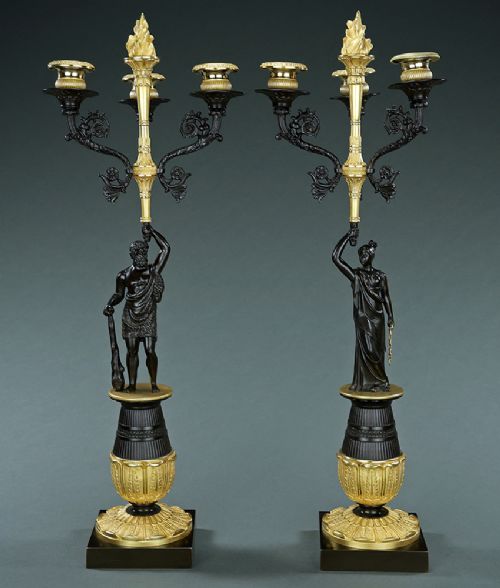
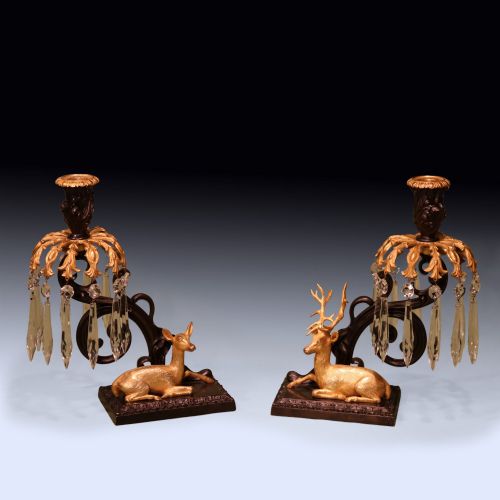
The dominant origins and styles visible here lean heavily towards French Empire, Rococo Revival, and Victorian workshops. You will encounter pairs featuring cherubs, stags, elephants, and classical figures cast in bronze or brass, alongside porcelain elements and cut glass.
How they were made
Foundry workers cast these pieces primarily in bronze, brass, and gilt ormolu, often combining patinated dark bronze with polished or gilded highlights. Marble, enamel, and cut glass frequently form the structural bases and decorative drops of the more elaborate branches.
Makers utilised detailed chasing and fire-gilding techniques to finish the metal surfaces, mounting figural groups securely onto marble plinths or tiered brass bases.
Antique Mantle Candelabra Retail Price Guide 2026
Typical asking prices for mantle candelabra among the pieces listed under this phrase on Sellingantiques today, from the lower quarter to the upper quarter. They describe what is for sale here now, not the wider market.
Periods represented span from the Regency era and French Empire through the Victorian and Edwardian decades.
What varies in quality
Integration within a garniture set also influences standing, where matching clock movements and candelabra retain a more cohesive architectural presence than mismatched or later assembled groupings.
WM. TONKS & SONS·Ferdinand Barbedienne·Meissen
The Antique Mantle Candelabra Glossary
- Ormolu
- Gilded bronze, where a layer of gold amalgam is applied to a base of cast bronze and heated. This technique produces a warm, durable metallic finish typical of finer nineteenth-century decorative pieces.
- Garniture
- A set of matching ornamental objects designed to be displayed together on a mantelpiece, usually comprising a central clock flanked by two candelabra or vases.
- Patinated bronze
- Bronze that has been chemically treated to achieve a dark, aged surface tone rather than a bright polished finish. It provides contrast against gilded ormolu details.
- Lustre candlesticks
- Candlesticks hung with cut glass or crystal pendants that refract the candlelight. These pendants are suspended from the drip pan.
- Regency style
- Design originating from the early nineteenth century characterised by classical revival motifs and refined metal mounts. It draws heavily on ancient Greek and Roman aesthetics.
Antique Mantle Candelabra: Frequently Asked Questions
Where should I place antique candelabra?
These pieces traditionally sit upon a fireplace mantelpiece as a focal point of a room. They also function effectively on sideboards, console tables, or large chest drawers where their height can balance a mirror.
Ensure the surface is stable and deep enough to support the heavy marble or bronze bases safely without risk of tipping.
How do I clean ormolu and bronze?
Dust these items gently with a dry, soft artist's brush or a microfiber cloth to remove everyday particles. Avoid using harsh chemical polishes, abrasive cloths, or water on gilded ormolu surfaces, as these treatments strip the delicate gold layer.
Professional conservation is recommended for stubborn grime to preserve the original patina and fire-gilt finish.
What is a clock garniture set?
A clock garniture is a matched decorative ensemble consisting of a central mantel clock accompanied by two matching side pieces, such as candelabra or urns. They were designed to create a balanced, symmetrical display across a fireplace opening.
The individual items share identical materials, styles, and cast motifs to present a unified decorative theme.
How can I tell nineteenth-century pieces apart?
Examine the weight, construction methods, and casting detail of the metal components. Nineteenth-century examples often utilise heavy cast bronze, hand-chased surface details, and integrated structural peg-and-nut assemblies rather than modern machine screws.
Look closely at the marble bases and the wear patterns on the gilding to assess the true age of the object.