
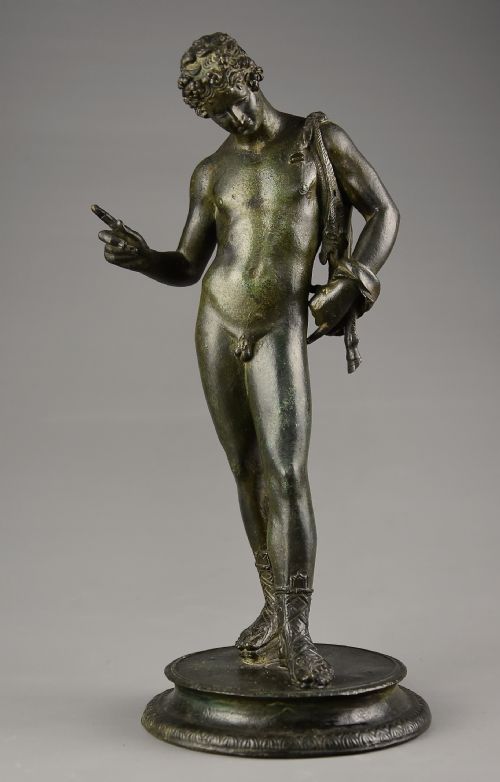


Antique Male Nude Sculpture
An antique male nude sculpture captures the classical form in bronze, marble or terracotta, bringing mythological subjects and athletic figures into domestic spaces.
Antique Male Nude Sculpture
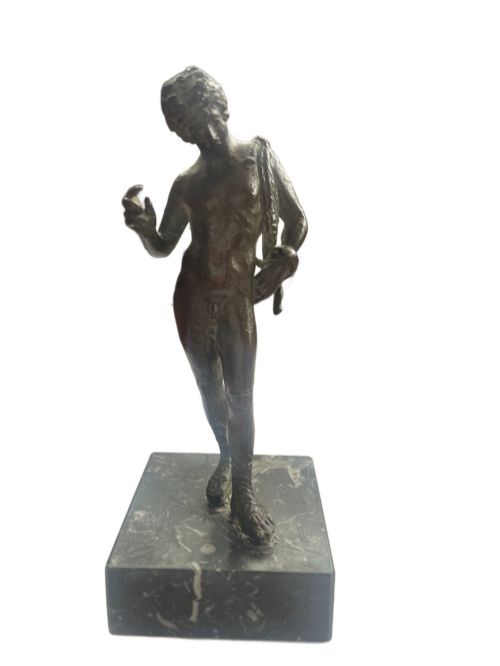
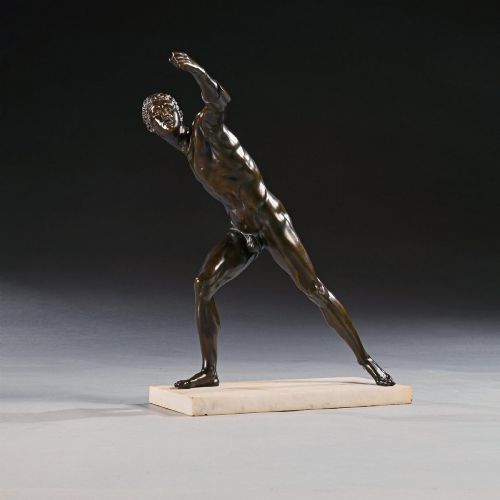
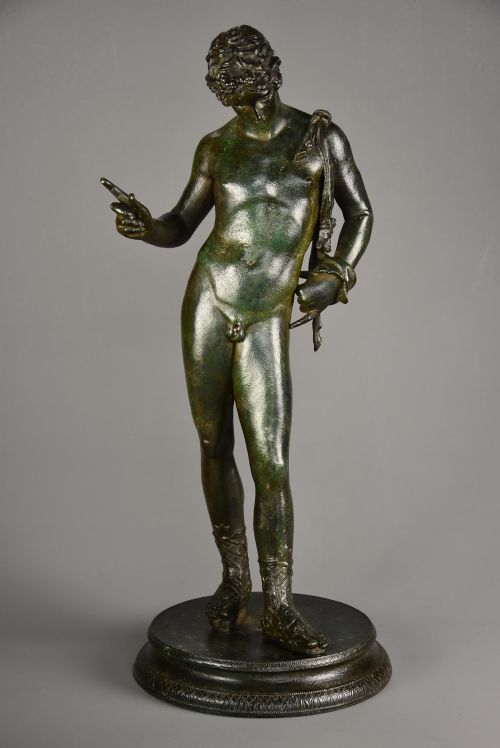
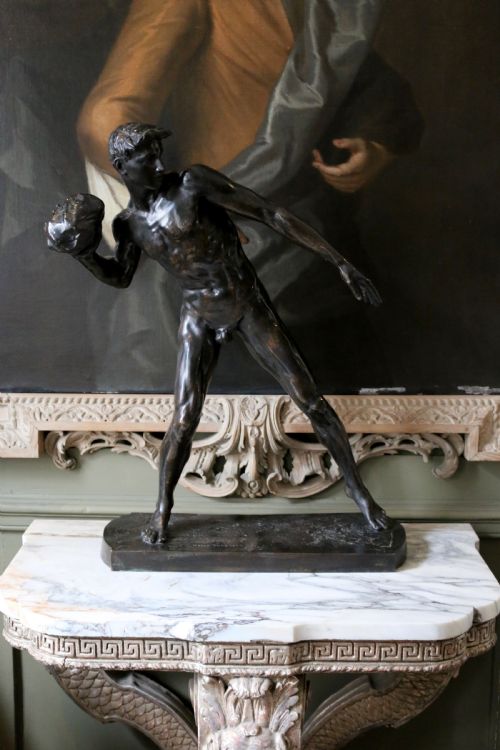
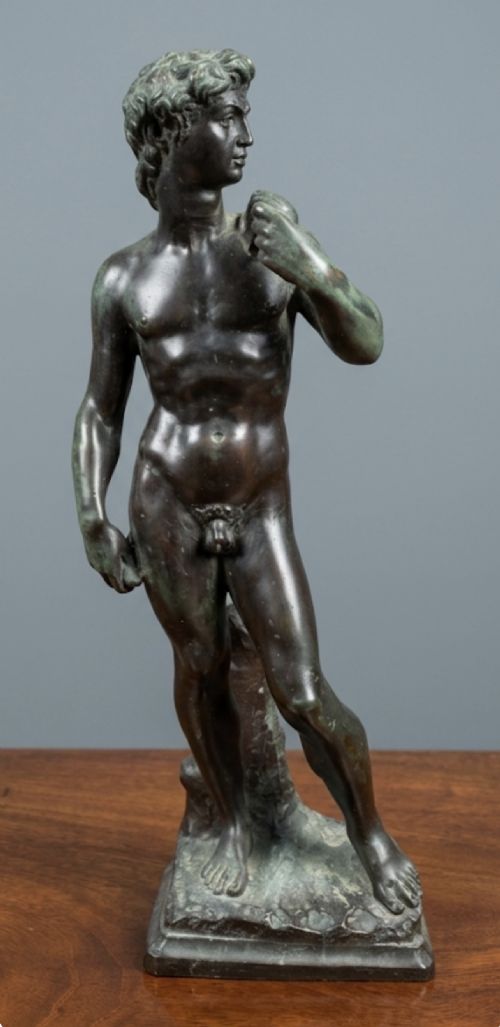
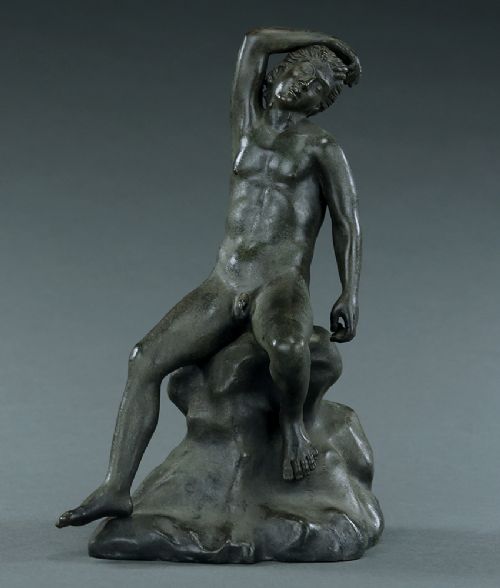
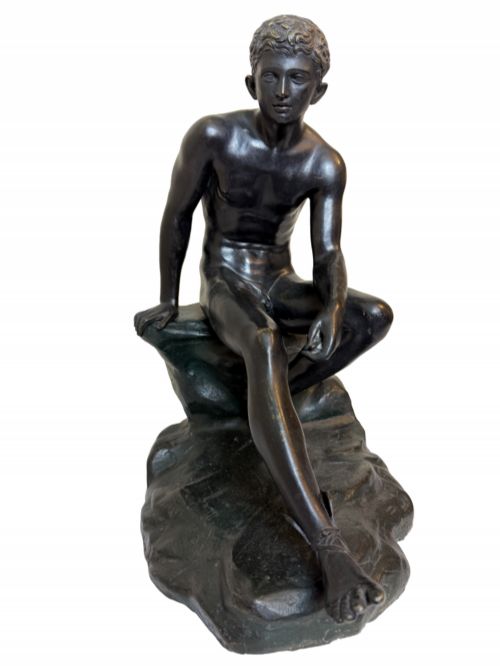
An antique male nude sculpture primarily takes the form of Grand Tour bronzes and nineteenth-century academic studies depicting classical figures like Narcissus, Dionysus and athletes. These works draw directly on ancient models, representing mythological deities and historical figures cast in reduced scales for collectors travelling through Europe. Figures such as the Borghese Gladiator, the Capitoline Antinous and various representations of resting or dancing fauns dominate the available subjects.
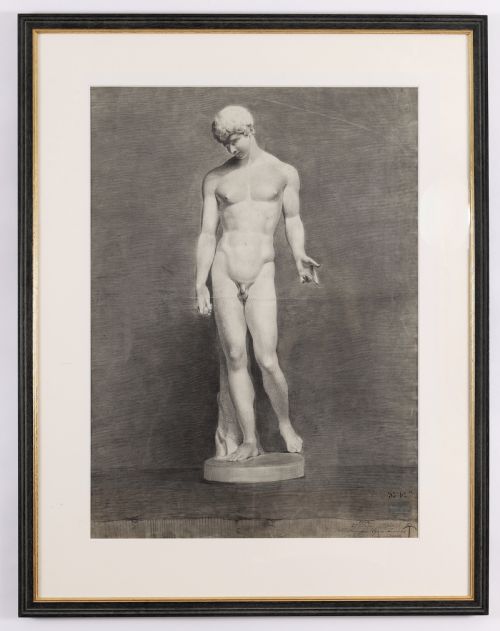
The materials and output span from the mid-nineteenth century through to the early twentieth century, incorporating Victorian interpretations alongside Neoclassical and Art Deco pieces. Buyers frequently encounter patinated bronze figures mounted on fossil marble bases, as well as framed drawings and larger marble statues. The physical scale ranges from cabinet-sized souvenirs to substantial standing works measuring over fifty centimetres in height.
Materials and Casting Methods
Foundries utilised traditional bronze casting techniques to create these figures, applying dark green, verdigris or golden patination to the metal surfaces to emulate ancient patinas. Artisans worked with bronze and patinated bronze as the primary metallic mediums, often pairing the cast figures with bases carved from fossil marble.
Beyond metalwork, makers produced pieces in marble, terracotta, wood and glass, while draughtspersonship is represented through paper, charcoal and framed drawings. The surface finish received careful attention, with patination applied to accentuate musculature and drapery in the manner of Academic Realism and the Victorian New Sculpture movement.
Several nineteenth-century bronzes depict Narcissus so convincingly that viewers might suspect the mythological youth is simply admiring his own reflection in the metal.
Distinctions in Execution
The quality of the patina and the selection of supporting materials further differentiate the pieces. A rich, stable patination applied over a well-chased bronze surface combined with a dense, figured fossil marble base indicates a higher tier of nineteenth-century production.
Hamo Thornycroft·Eugene Barillot·Canova·Raoul Francois Larche·Franz Iffland·Michele Amodio
The Antique Male Nude Sculpture Glossary
- Grand Tour
- A traditional trip through Europe undertaken by upper-class young men during the eighteenth and nineteenth centuries, resulting in the acquisition of art and small-scale bronze sculptures. These souvenirs replicated famous classical antiquities found in Italian collections.
- Patination
- The process of treating a metal surface with chemicals, heat or friction to alter its colour and texture. In nineteenth-century bronzes, patinas range from deep brown and black to various shades of green.
- Neoclassical
- A Western cultural movement drawing inspiration from the art and culture of classical antiquity. Sculptures in this style emphasise restrained emotion, clear outlines and heroic male anatomy.
- Terracotta
- Unglazed or glazed fired clay used as a medium for sculptural models and finished figures. It allows for direct hand-working by the artist before the firing process.
- Narcissus
- A popular mythological subject in nineteenth-century casting, frequently depicted leaning against a support with a contemplative expression. Figures of Narcissus served as a staple of the Grand Tour bronze repertoire.
Antique Male Nude Sculpture: Frequently Asked Questions
What is a Grand Tour bronze?
A Grand Tour bronze is a small-scale replica of a classical statue, cast in Europe during the nineteenth century for travellers visiting historical sites and museums.
These pieces allowed collectors to bring home representations of famous ancient sculptures like the Borghese Gladiator or the Dancing Faun of Pompeii.
How do I identify a nineteenth century cast?
Nineteenth-century casts are identified through the composition of the metal, the character of the patination and the method of construction. Examination of the base and any mounting screws often provides clues to the period of manufacture.
Foundries of this era utilised specific finishing techniques, such as hand-chasing the bronze after casting to sharpen anatomical details.
Where should I display a marble statue?
Marble statues require a stable, level surface capable of supporting considerable weight, as nineteenth-century pieces can be quite heavy. Placing them away from direct heat sources and strong sunlight protects the stone and any underlying patina or finish.
Many figures were designed to sit on dedicated pedestals or sturdy tables where their full three-dimensional form can be appreciated.
What is the difference between bronze and patinated bronze?
Bronze is an alloy of copper and tin, while patinated bronze refers to metal that has received a surface treatment to alter its natural metallic colour. This chemical or thermal treatment produces tones ranging from dark brown to verdigris green.
The applied patina protects the underlying metal while enhancing the visual depth of the sculptural form.