




French Bronze Warrior Statue
A french bronze warrior statue brings classical drama and physical intensity into a room, capturing figures from antiquity and the nineteenth century with remarkable presence.
French Bronze Warrior Statue
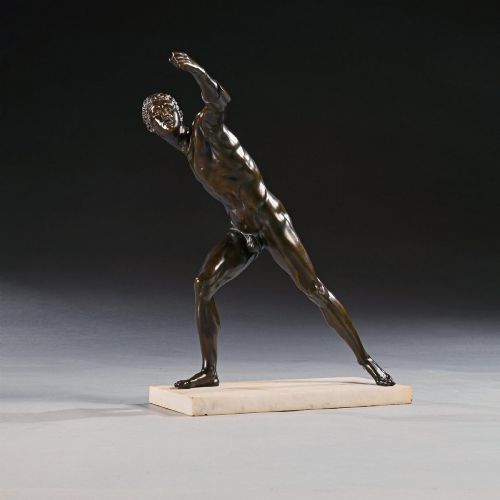
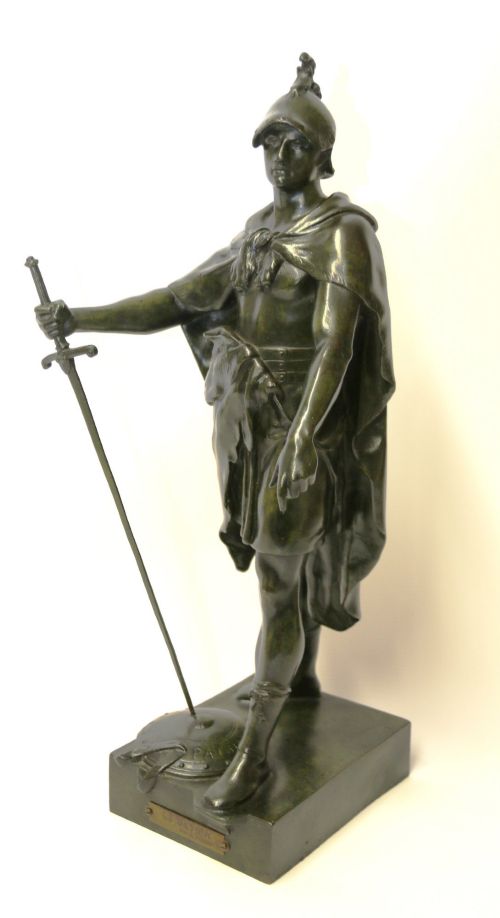
A french bronze warrior statue typically depicts figures from classical antiquity, including Roman gladiators, Greek archers, and notable military commanders such as Hannibal, Ajax, and Saladin. These sculptures emerge primarily from nineteenth-century French workshops, spanning Neoclassical, academic, and Orientalist movements.
The subjects range from heroic standing soldiers and seated classical generals to dynamic archers and sentinels, often cast on a large scale. Alongside pure bronze and gilt bronze works, buyers frequently encounter alternative metal compositions like spelter and zinc alloy from the same period.
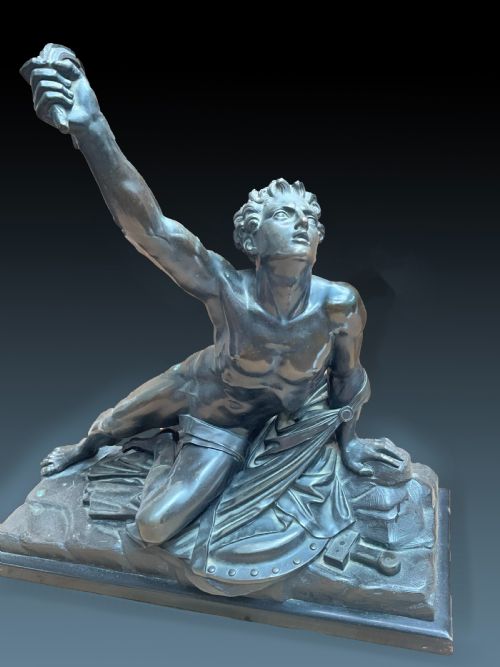
The physical stance of each warrior defines the character of the piece, whether caught in the quiet aftermath of battle or poised for immediate action. These works served as centrepieces for nineteenth-century salons and libraries, designed to display intellectual taste and martial virtue.
How they were made
Foundries utilised the lost-wax casting method or sand casting to produce these figures from molten metal, ensuring intricate detail in armour, drapery, and musculature. Artisans then applied chemical patination to the surface to achieve deep brown, green, or near-black tones, whilst others employed fire gilding for a bright metallic finish.
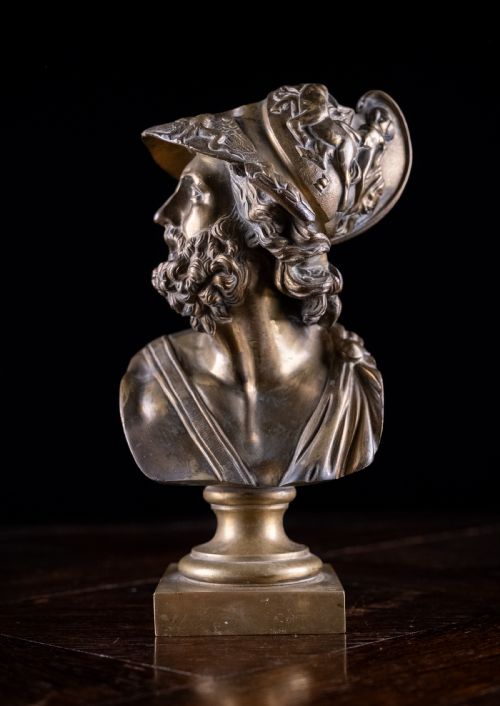
The sculptural forms range from compact busts of classical commanders to towering two-foot figures of Arabian sentinels and Roman soldiers.
What varies in quality
The crispness of the chasing and the fidelity of the surface finish distinguish superior castings from standard commercial production. Master founders retained sharp details in facial expressions, weaponry, and textile folds after casting, whereas inferior versions exhibit softened edges and filled-in textures.
The choice of medium fundamentally alters the character and longevity of the piece, with genuine heavy bronze and fire-gilt bronze representing the upper tier of foundry work. Spelter and zinc alloy alternatives offer lighter weight and softer metallic grain, reflecting a more economical nineteenth-century production scale.
Émile Louis Picault·Eugene Barillot·Desire Grisard·Chiparus·Raoul Francois Larche·Emile Laporte·J.ANGLES·Eden Antony Paul Noel
The French Bronze Warrior Statue Glossary
- Patination
- The chemical treatment applied to the surface of a metal sculpture to produce a specific colour and finish. This layer protects the underlying metal and defines the visual mood of the figure.
- Spelter
- A zinc alloy commonly utilised in nineteenth-century European manufacturing as a less expensive alternative to bronze. It accepts metallic paints and patinas readily but possesses a softer structure.
- Neoclassical
- An artistic movement drawing direct inspiration from the art and culture of classical Greece and Rome. Works in this style emphasise balanced proportions, heroic themes, and restrained dignity.
- Orientalism
- A nineteenth-century artistic style focusing on subjects, costumes, and architectural elements from North Africa and the Middle East. Sculptures in this vein frequently depict Arabian sentinels and soldiers.
- Lost-wax casting
- A traditional technique where a wax model is melted out of a mould to create a cavity for molten bronze. This method allows for exceptional undercut detail and complex sculptural forms.
French Bronze Warrior Statue: Frequently Asked Questions
How do I identify a real bronze from spelter?
Genuine bronze feels noticeably heavier and colder to the touch than zinc-based spelter. Examining the underside or unpainted areas often reveals the reddish-yellow hue of copper alloy beneath the patina.
Spelter tends to show a greyish or silvery metal when scratched and lacks the resonant ring of true bronze when lightly tapped.
Where should I place a large figure in a room?
These substantial sculptures require stable support such as a heavy mahogany pedestal, a sturdy console table, or a dedicated corner stand. Their physical presence commands attention, making them ideal focal points for studies, libraries, or high-ceilinged reception rooms.
Ensure the display surface can comfortably bear the significant weight of both the metal figure and its marble base.
How do I care for nineteenth-century patinated bronze?
Dust the sculpture regularly with a soft, dry brush to prevent particulate accumulation in the crevices of the armour and drapery. Avoid using commercial metal polishes, water, or chemical cleaners, as these substances will strip the original historical patina.
A light application of microcrystalline wax by a specialist can help protect the metal surface from atmospheric moisture if required.
What separates academic nineteenth-century sculpture from other styles?
Academic pieces adhere strictly to the rigorous anatomical standards and narrative conventions taught by European fine art academies of the period. They prioritise historical accuracy in weaponry, clothing, and posture over decorative abstraction.
This commitment to naturalistic human form gives figures like Roman gladiators and Greek archers their intense, lifelike gravity.