




Bronze Archer Statue
A bronze archer statue brings the tension and theatre of classical archery into a room through enduring cast metal.
Bronze Archer Statue
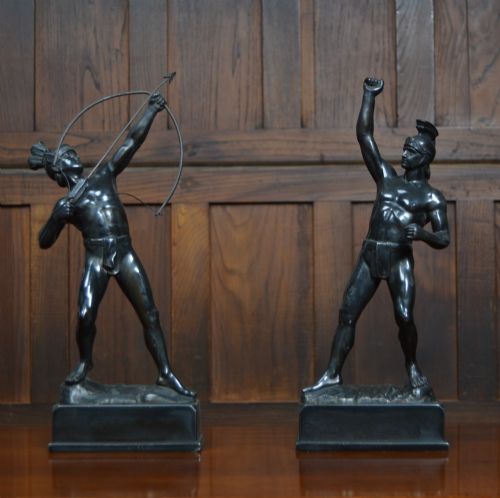
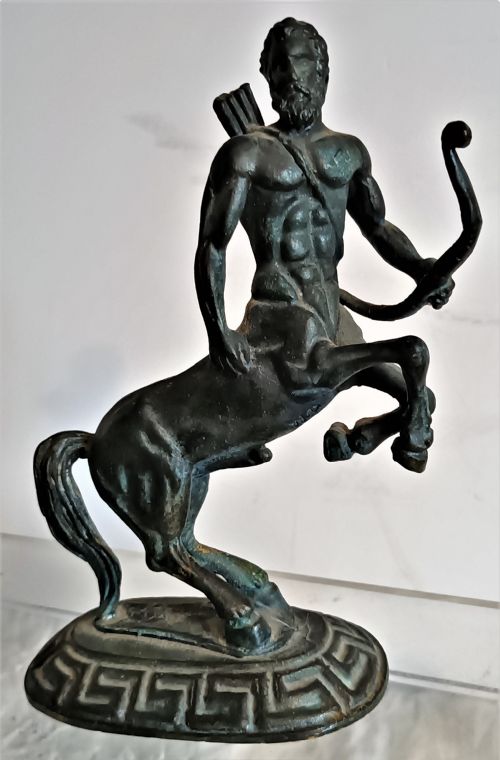
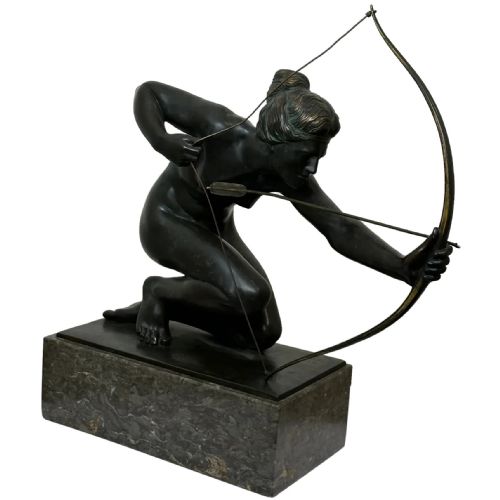
A bronze archer statue encompasses figures drawing bows or holding arrows, including classical deities like Diana and mythological centaurs and warriors. These pieces range from Victorian Classical Revival and Neo-Grec interpretations to sleek Art Deco depictions.
The versions most commonly met on this page span the nineteenth century through the 1930s, often paired with marble or onyx bases. Alongside genuine bronze and patinated bronze, the inventory includes alternative metal compositions such as spelter and zinc alloy.
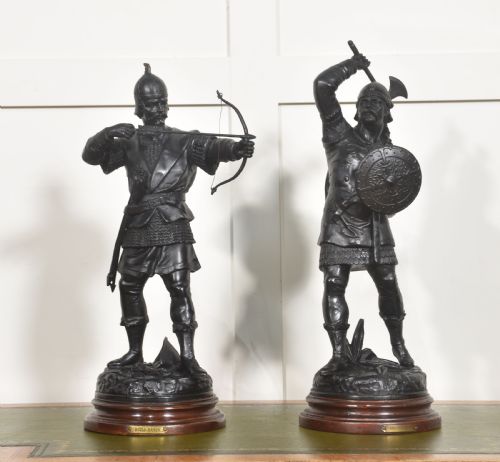
Buyers encounter single sculptures as well as pairs of figures, moving from muscular ancient warriors to stylised huntresses of the interwar period. Each object captures a kinetic moment of the hunt or battle frozen in metal.
Materials and construction
The figures are cast using traditional foundry methods, transforming molten bronze, spelter or zinc alloy into detailed sculptural forms. Many of these works receive a patinated finish to accentuate the musculature, drapery and weaponry of the archers.
Foundations and plinths frequently utilise contrasting natural stones, incorporating substantial blocks of marble or onyx to support the weight of the metal figures. Certain Victorian and Art Deco pieces integrate wooden elements into their structural bases.
The listings combine nineteenth-century Victorian classical revival works with 1920s and 1930s Art Deco figures in bronze and spelter.
Distinguishing quality
The division between standard works and finer examples lies in the crispness of the casting and the sensitivity of the finishing hand. Superior pieces retain sharp details in the facial expressions, feathered arrows and clothing folds without the softening typical of secondary casts.
The choice of base material and the depth of the patina significantly influence the character of the piece. High-grade mountings use dense marble or onyx that complements the proportion and balance of the central bronze figure.
Eugene Barillot·Aug Moreau·Paul Joris·R Henn
The Bronze Archer Statue Glossary
- Spelter
- A zinc alloy frequently utilised as a cost-effective alternative to bronze in nineteenth-century figure casting. It is softer than bronze and usually carries a painted or patinated finish.
- Patinated bronze
- Bronze treated with chemical solutions to produce a specific surface colour or aged tone. This process highlights the sculptural contours and protects the underlying metal.
- Neo-Grec
- A nineteenth-century stylistic movement drawing direct inspiration from ancient Greek art and architecture. Figures from this period often display strict classical proportions and traditional drapery.
- Art Deco
- A design style prominent in the 1920s and 1930s characterised by streamlined forms and geometric simplification. Archer figures from this era exchange classical academic realism for modern stylisation.
- Figural group
- A sculpture composed of more than one distinct human or animal figure interacting within a single composition. These pieces demand greater technical skill from the foundry to maintain structural equilibrium.
Bronze Archer Statue: Frequently Asked Questions
What is a bronze archer statue?
A bronze archer statue is a cast metal sculpture depicting a mythological or historical figure equipped with a bow and arrow. These works capture figures in athletic poses, ranging from classical deities to ancient warriors.
The pieces found here date from the nineteenth century into the 1930s, reflecting shifts in taste from Victorian revivalism to Art Deco design.
How do I distinguish bronze from spelter?
Bronze is a heavy copper alloy that takes a deep, durable patina and rings with a clear tone when tapped gently. Spelter is a softer zinc-based metal that often shows a lighter weight and may reveal grey metal beneath worn paint.
Many nineteenth-century figures utilise spelter as an accessible alternative to cast bronze while maintaining similar decorative ambitions.
Where should I place these sculptures?
These statues require a stable, level surface such as a heavy sideboard, mantlepiece or dedicated pedestal where their weight and form can be appreciated safely. Because many pieces incorporate marble or onyx bases, ensure the furniture is sturdy enough to bear the load.
Keep the sculptures away from direct heat sources and moisture to preserve the stability of the metal patination and stone plinths.
How do I identify Art Deco archers?
Art Deco archer figures from the 1920s and 1930s feature simplified anatomical lines, stylised hair, and geometric clothing folds that break from nineteenth-century academic realism. They often stand on sleek, polished marble or onyx plinths.
These pieces reflect a modernist fascination with speed, athleticism, and clean architectural silhouettes.