38,488  PAGES BROWSED TODAY PAGES TODAY 98  ANTIQUES UPLOADED TODAY NEW ARRIVALS
ID #SA939467
FOR SALE
£4,250
Email
Save
Antique Bronze of Vercingetorix with His Son by Emile Laporte 19th C
Regent Antiques
for sale €4,973     $5,398
£4,250
Regent Antiques

Regent Antiques

Sellingantiques Verified Since Sep 2016
View Dealers Stock Page
  • About Us
    We specialise in english and continental furniture, silver, porcelain and decorative items.
  • Trade Associations
    Regent Antiques is a registered member of LAPADA  CINOA
Id #SA939467
PDF SHARE
SAVE

Antique Bronze of Vercingetorix with His Son by Emile Laporte 19th C

19th century
For Sale by Regent Antiques
Description

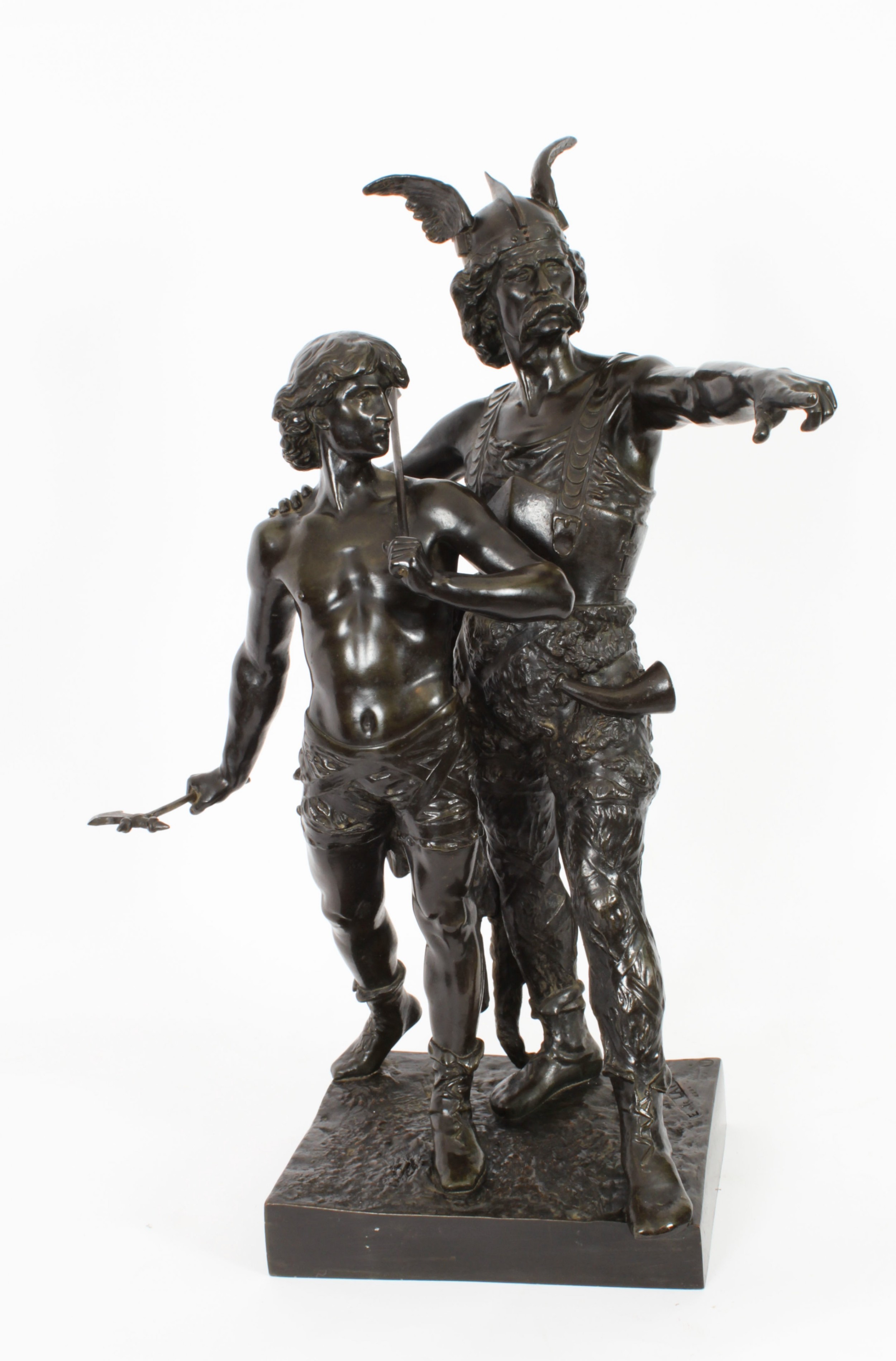
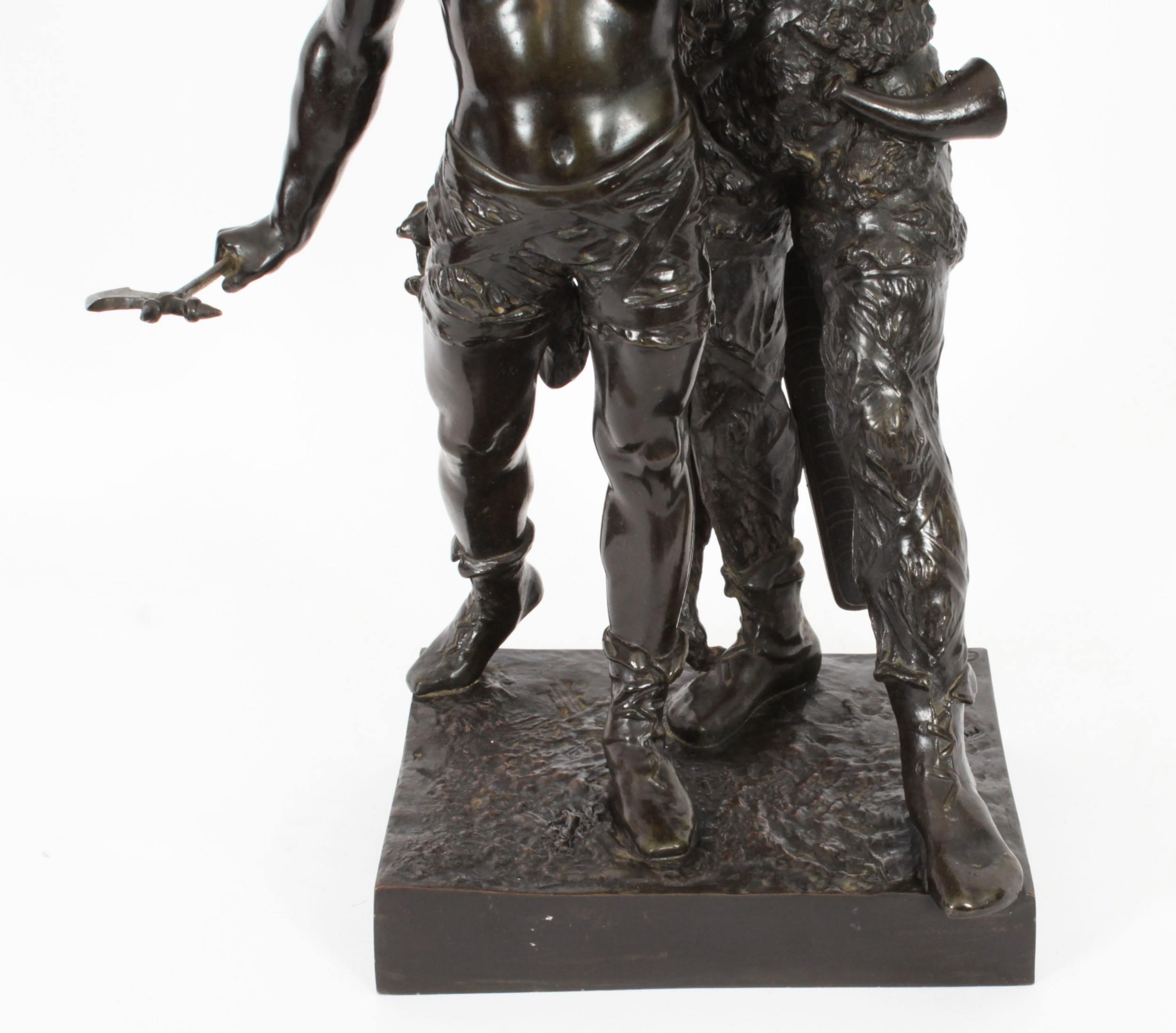
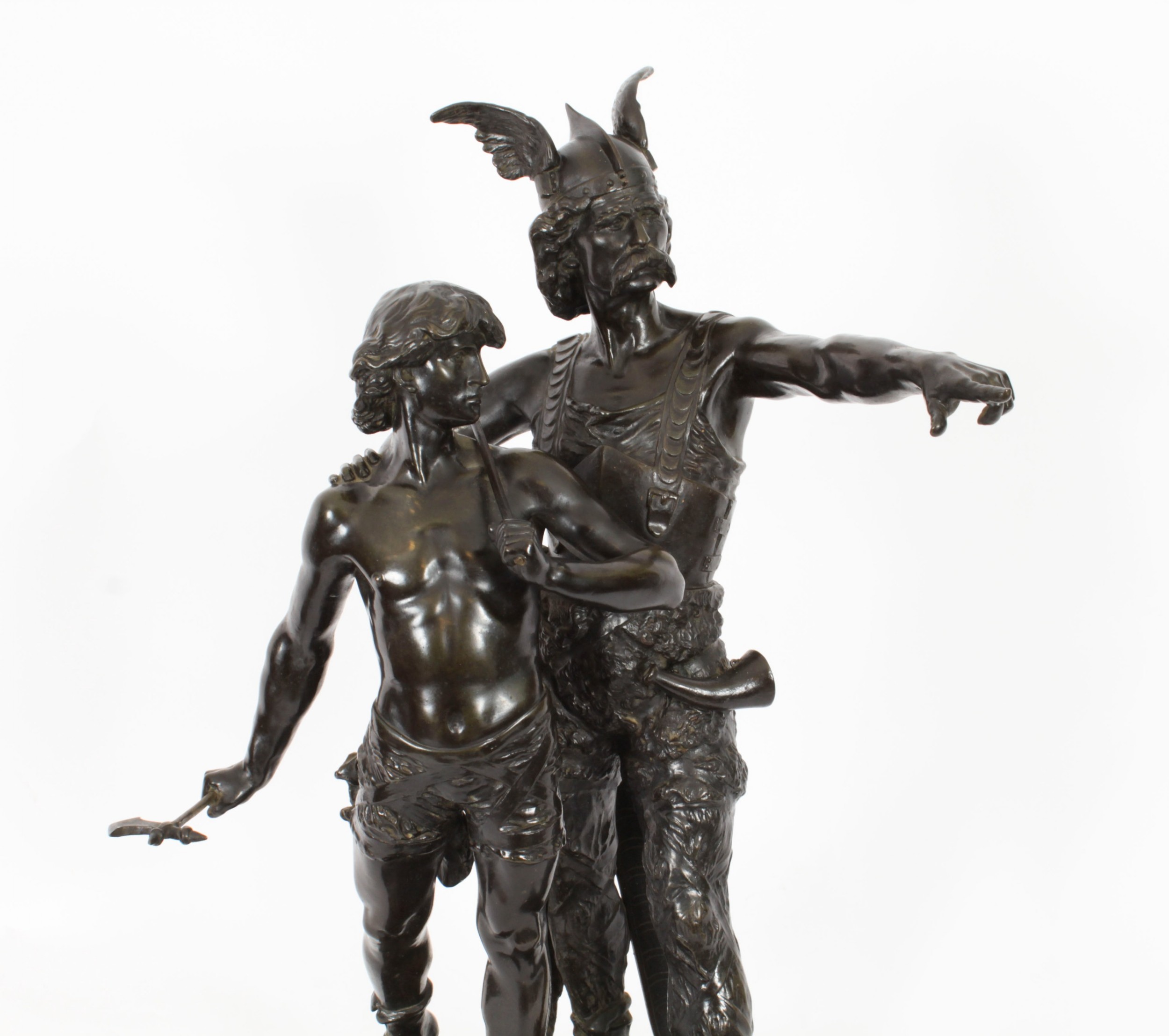
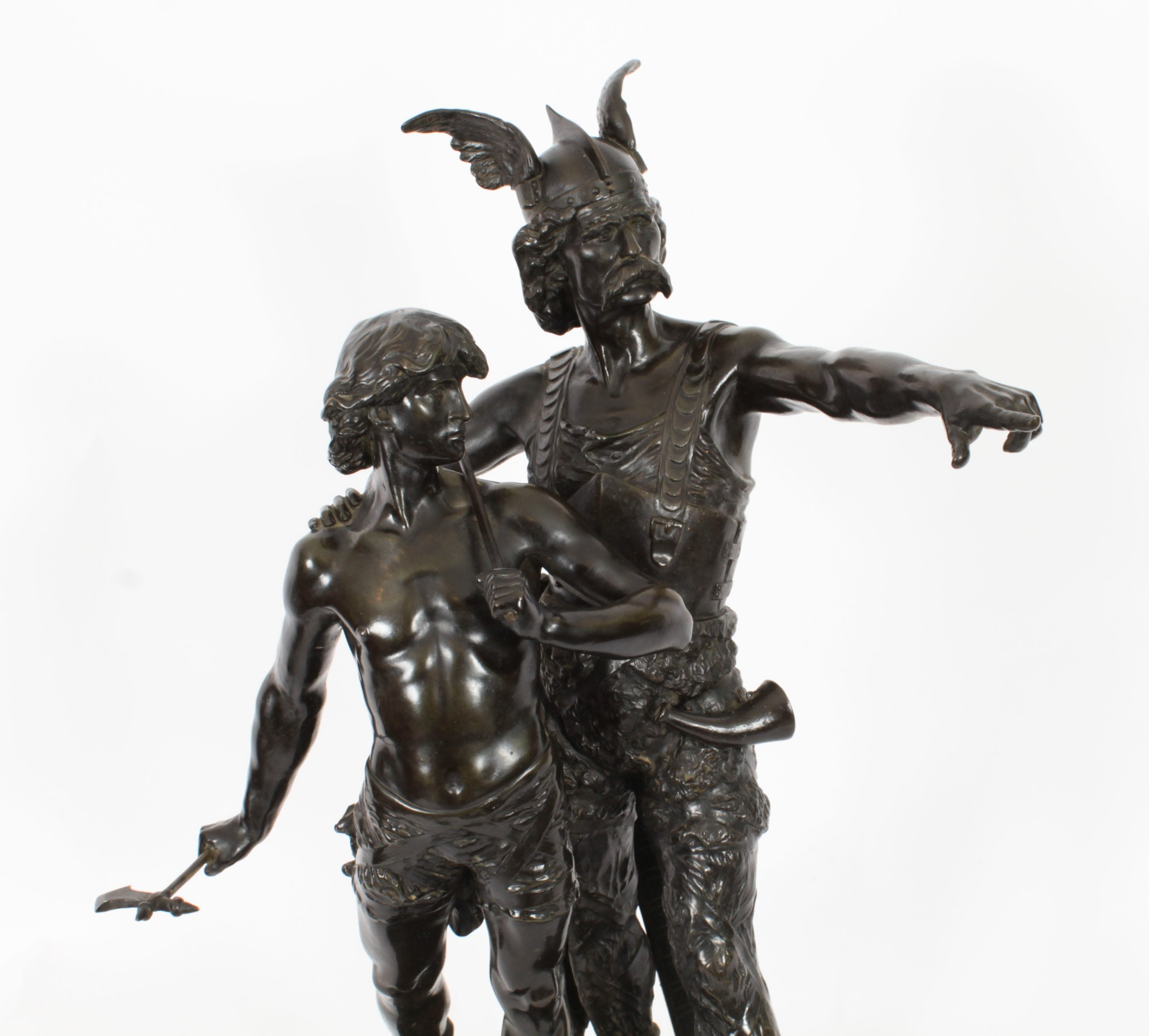
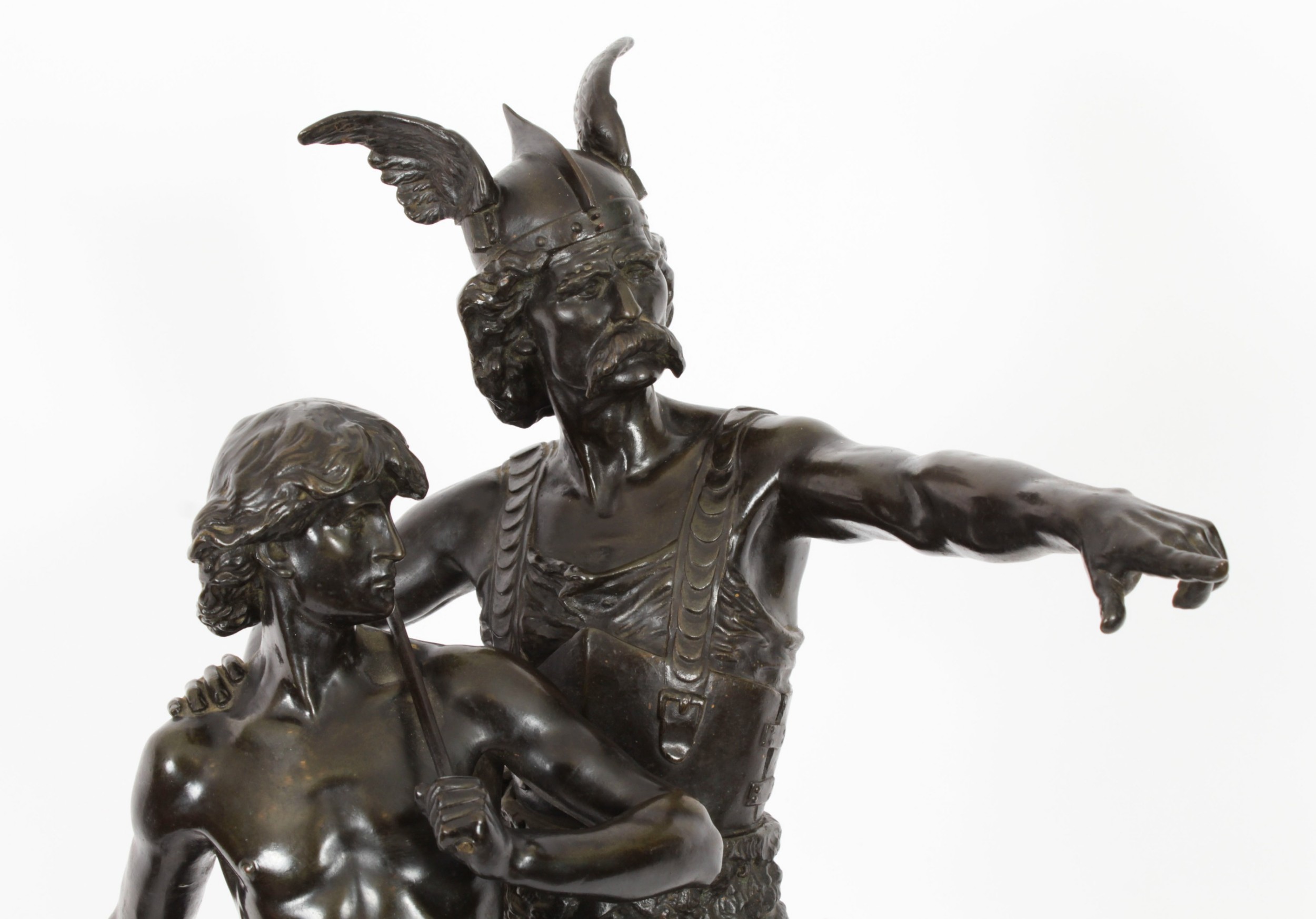
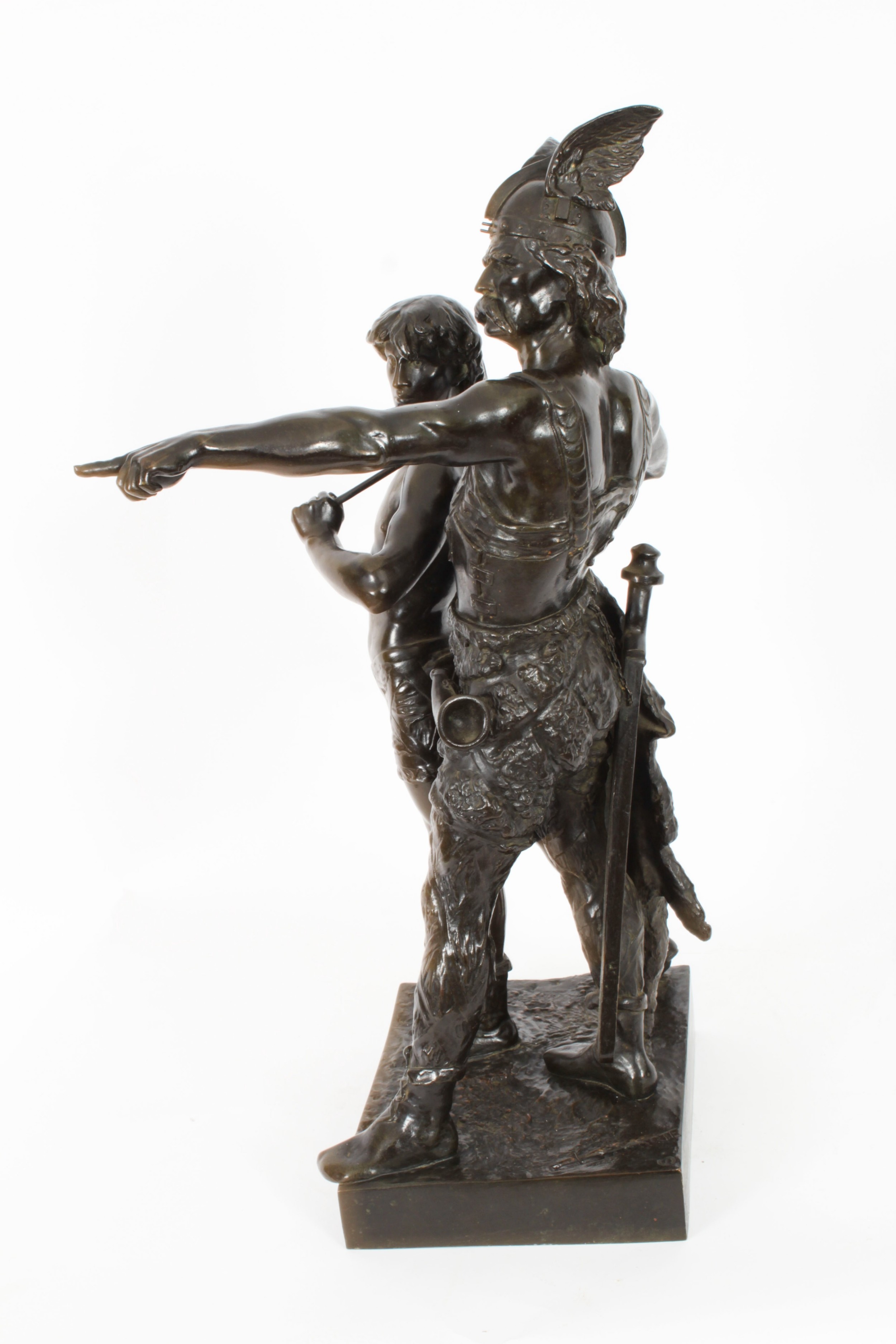
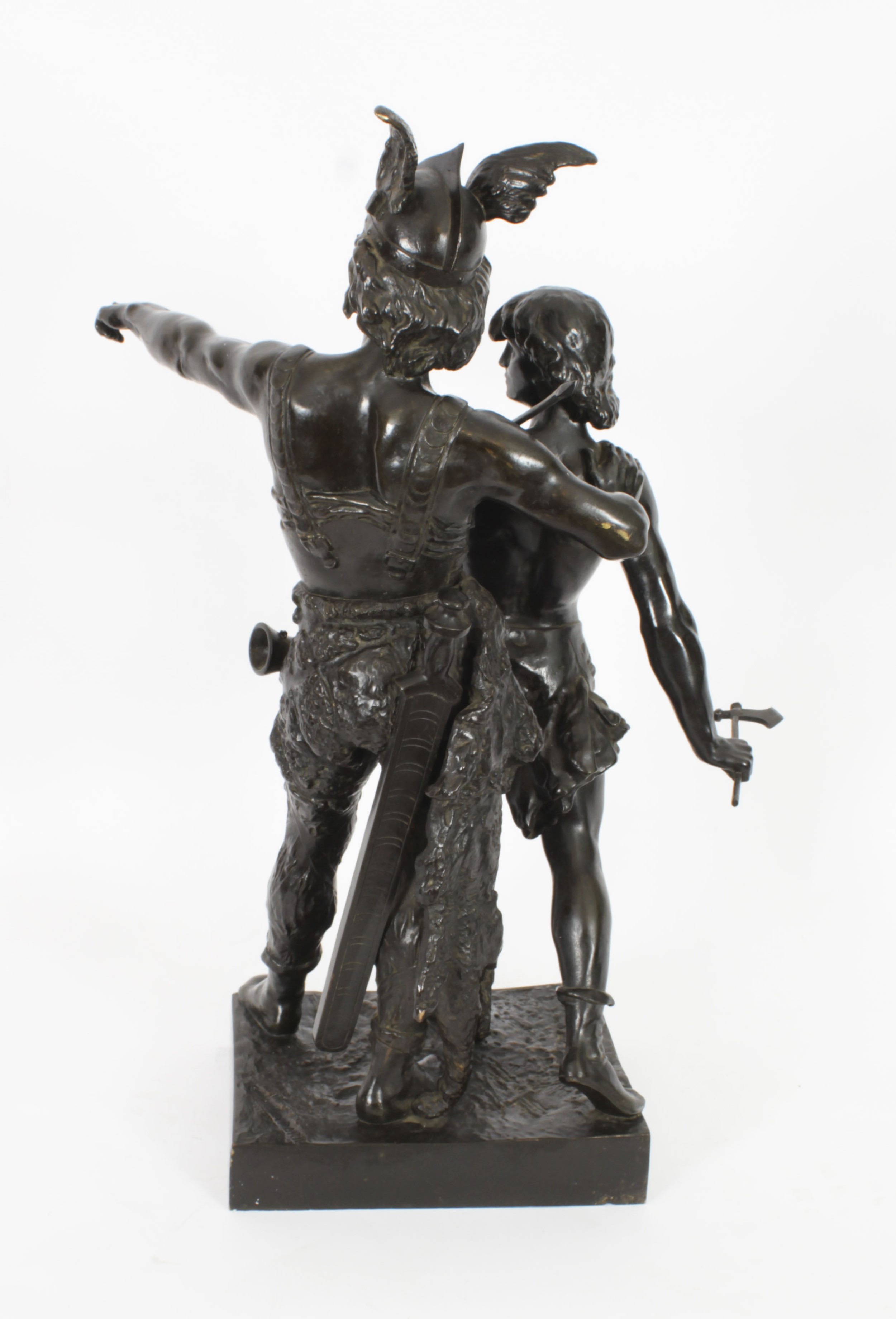
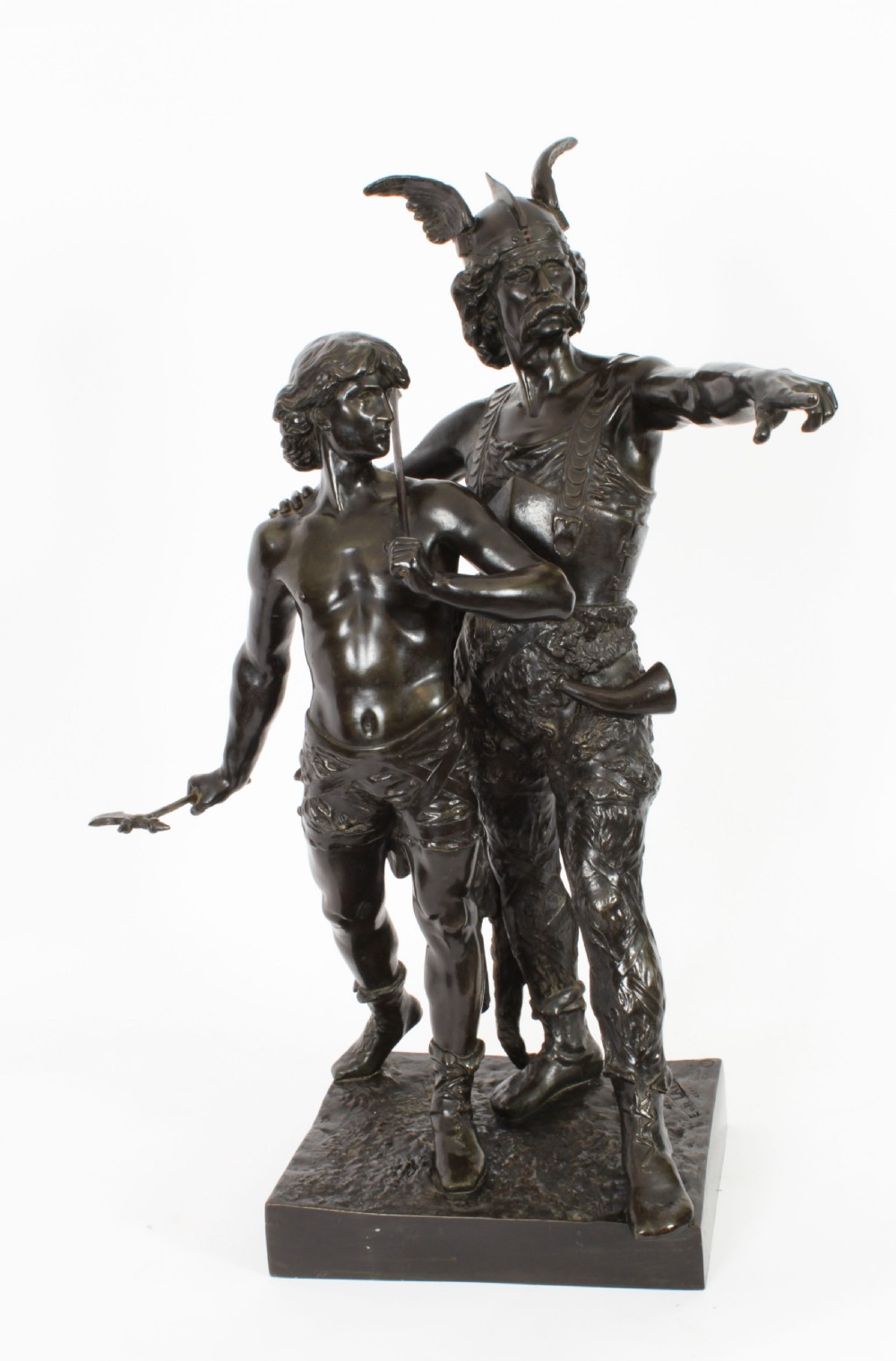
This is a large French bronze sculpture of Vercingetorix with his son by Emile Laporte (1858 - 1901), circa 1890 in date.

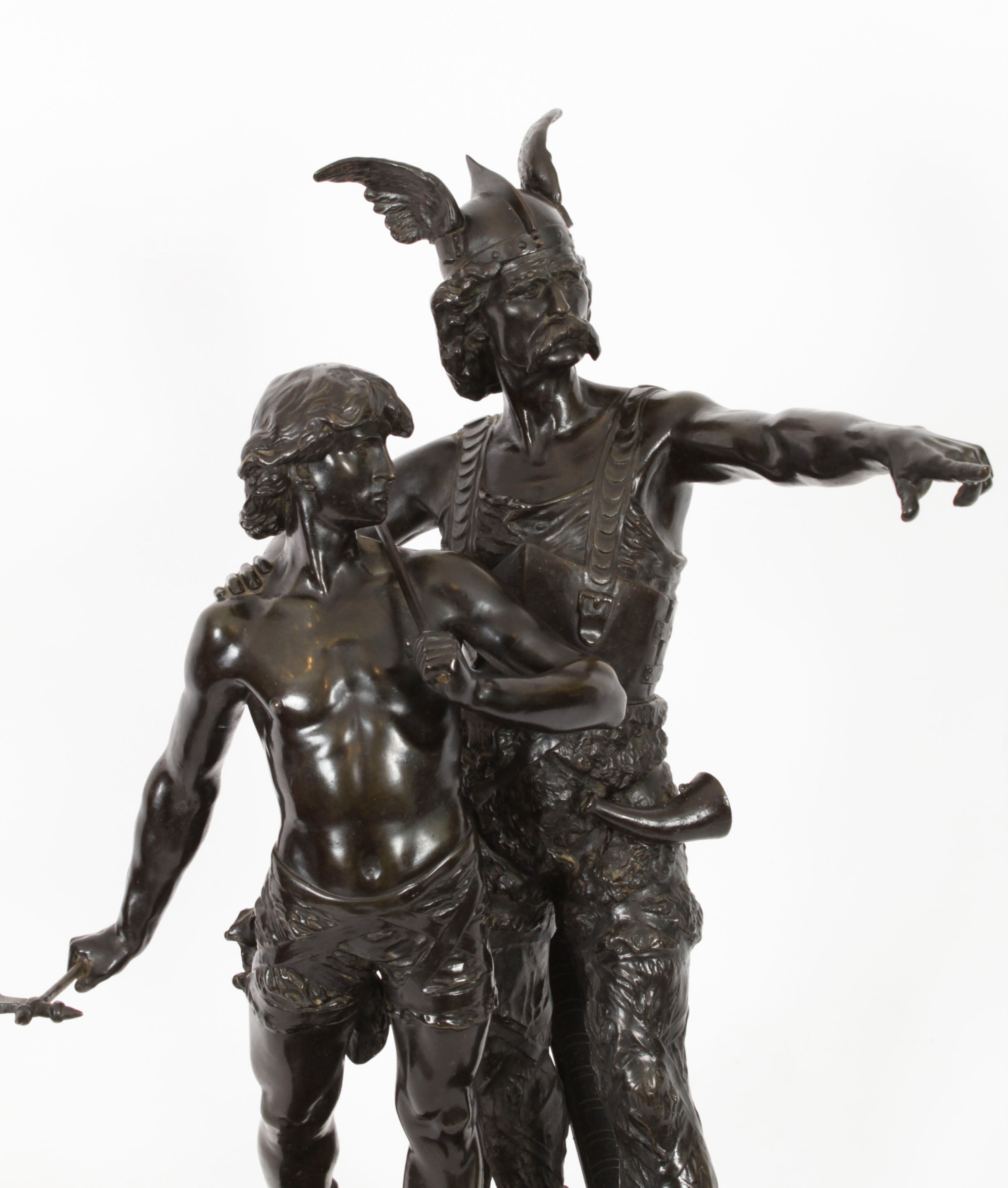
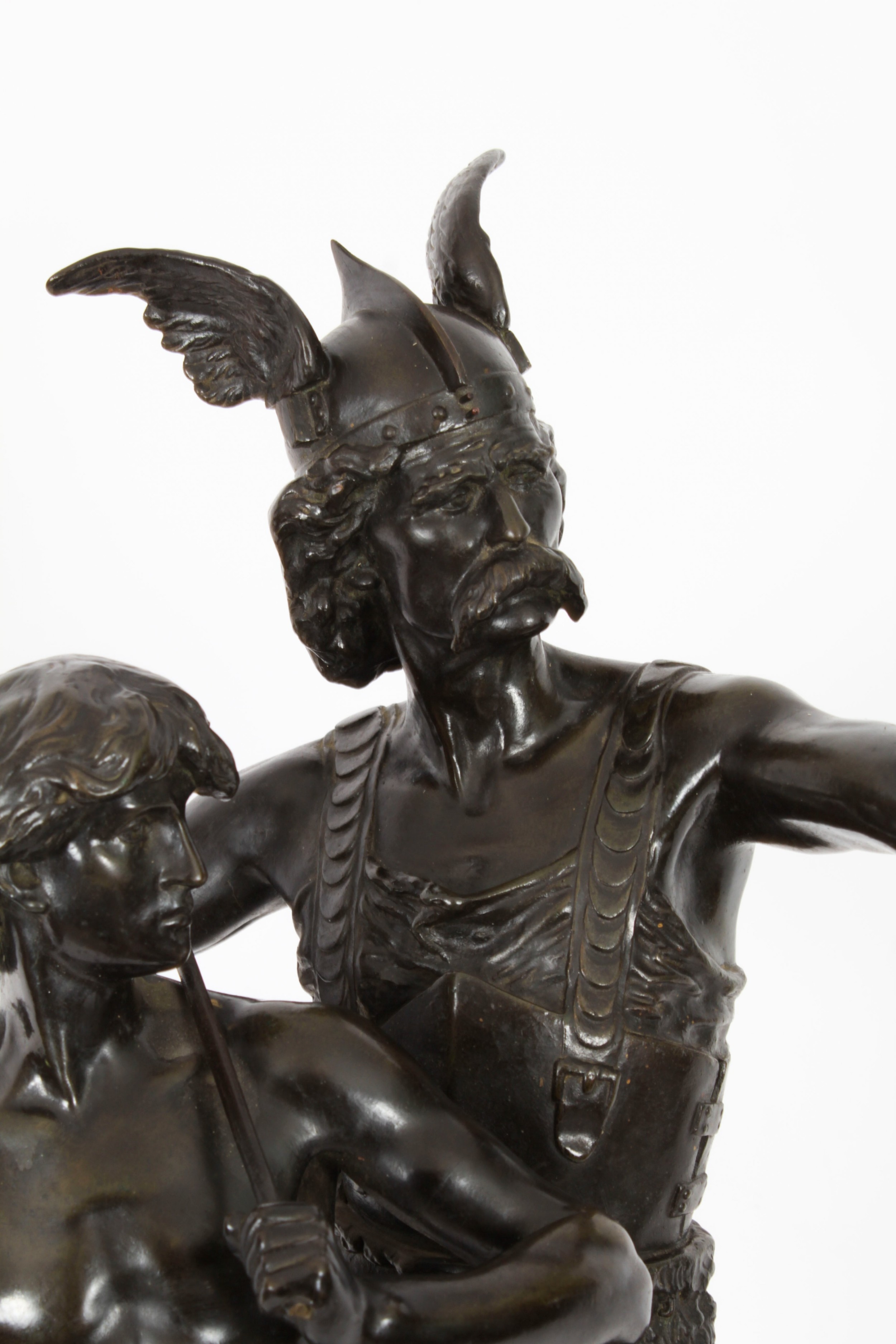
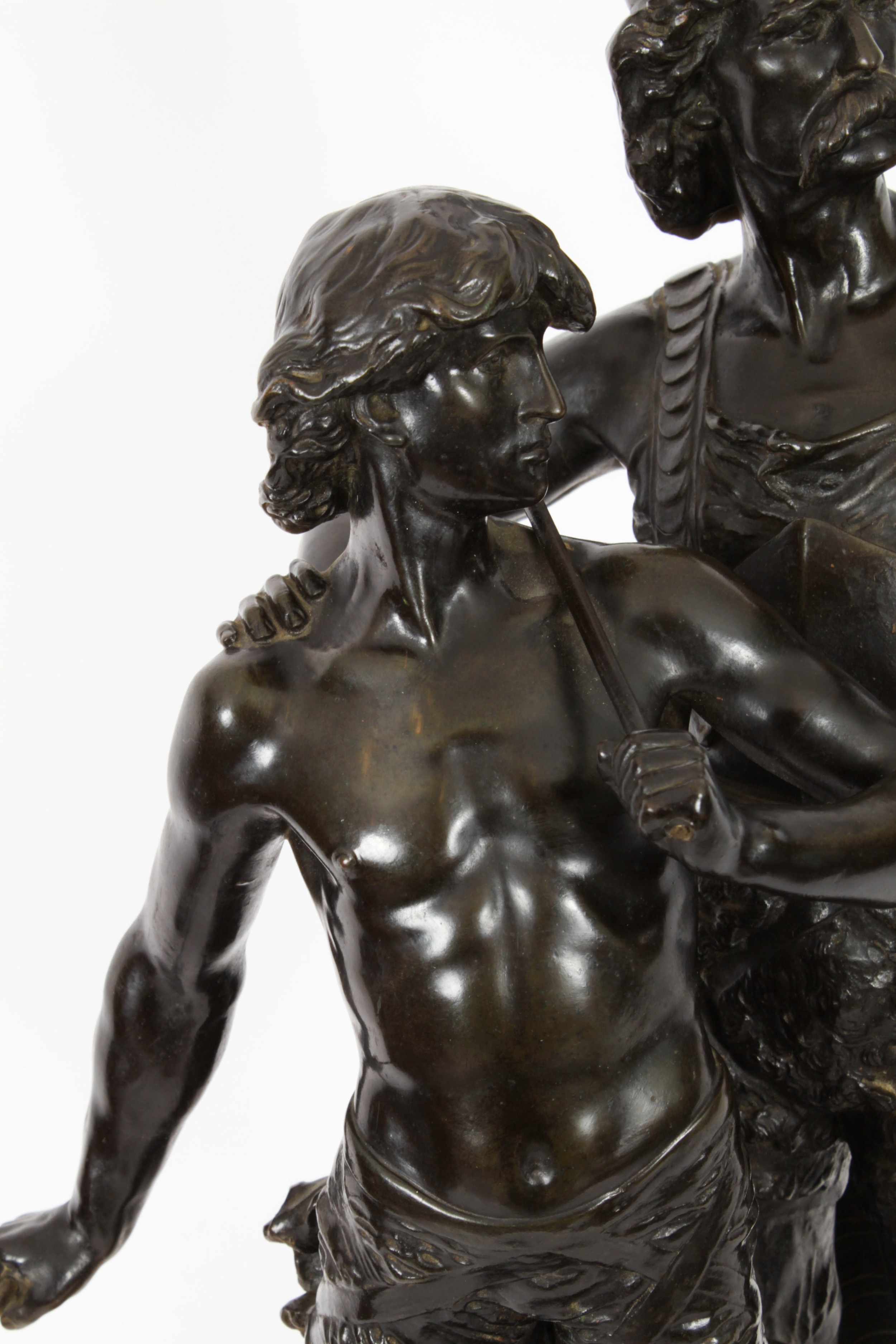
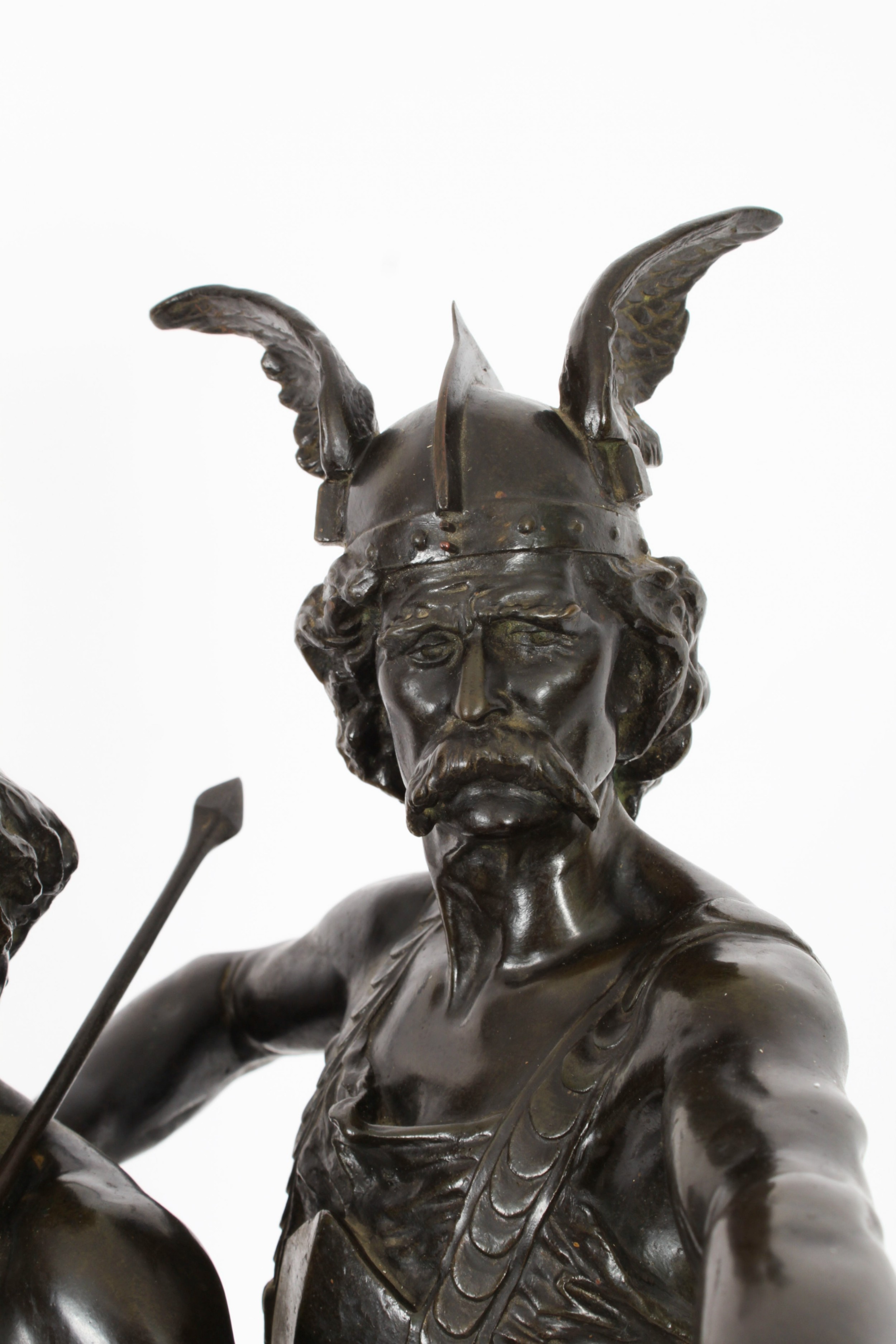
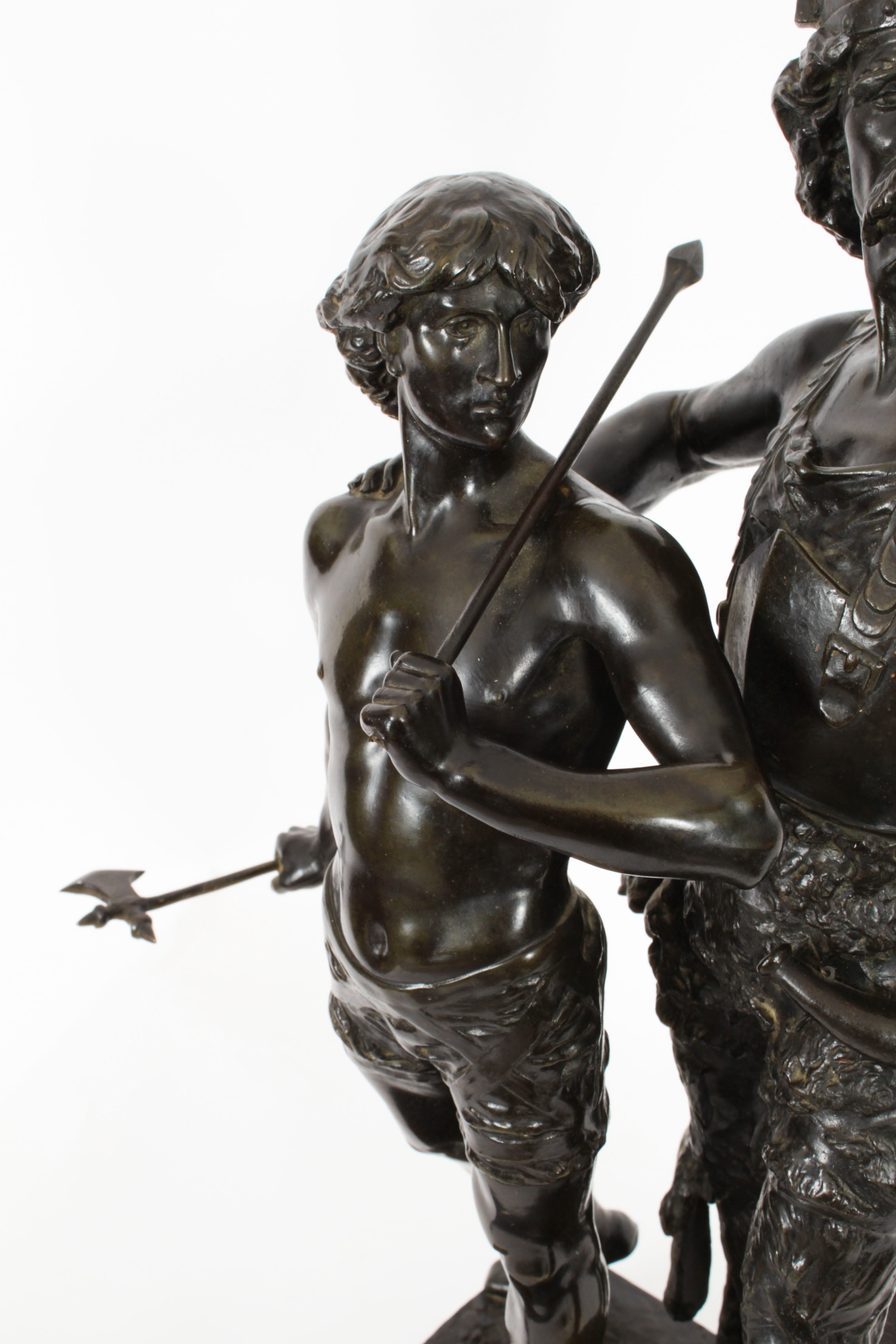
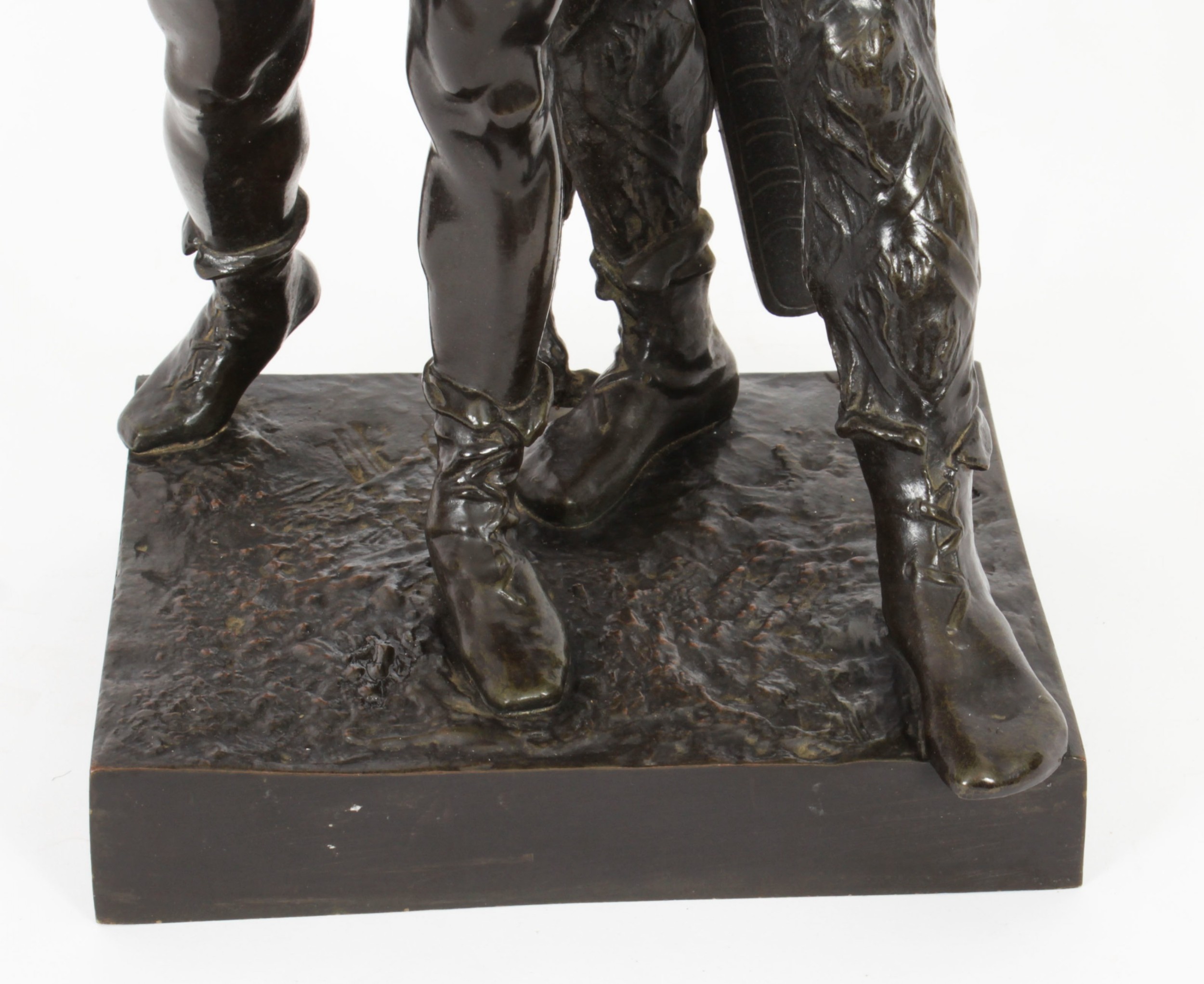
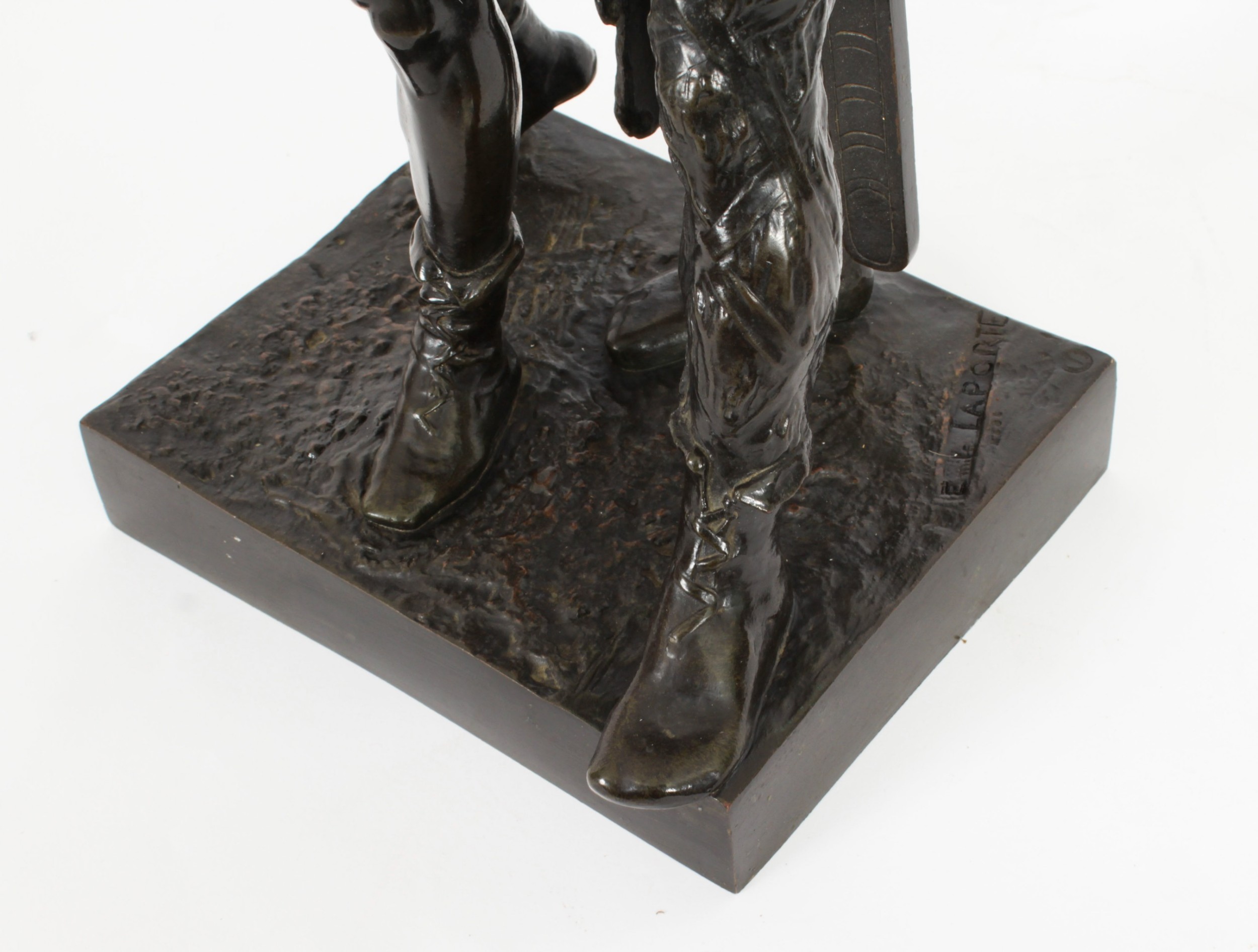
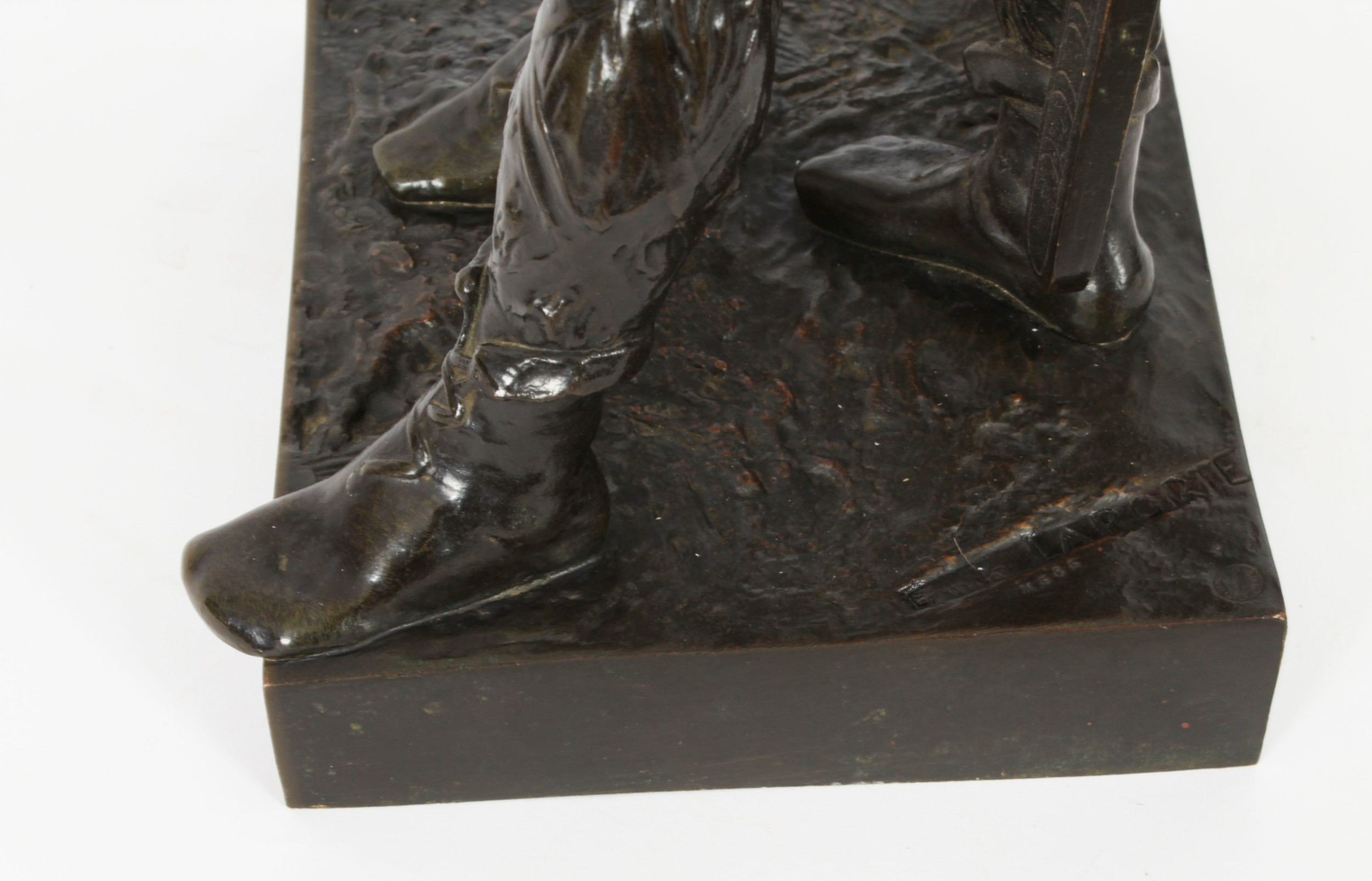
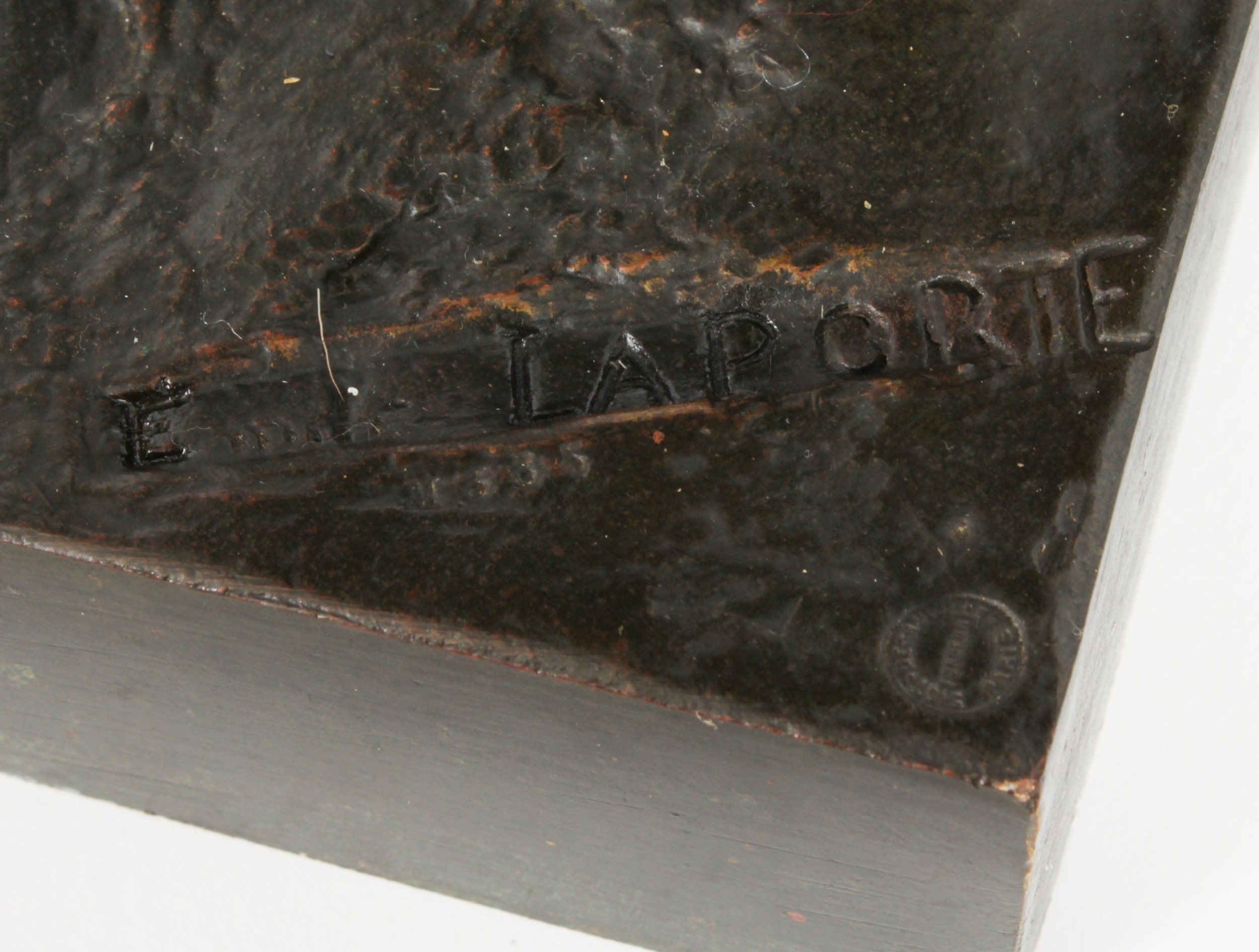
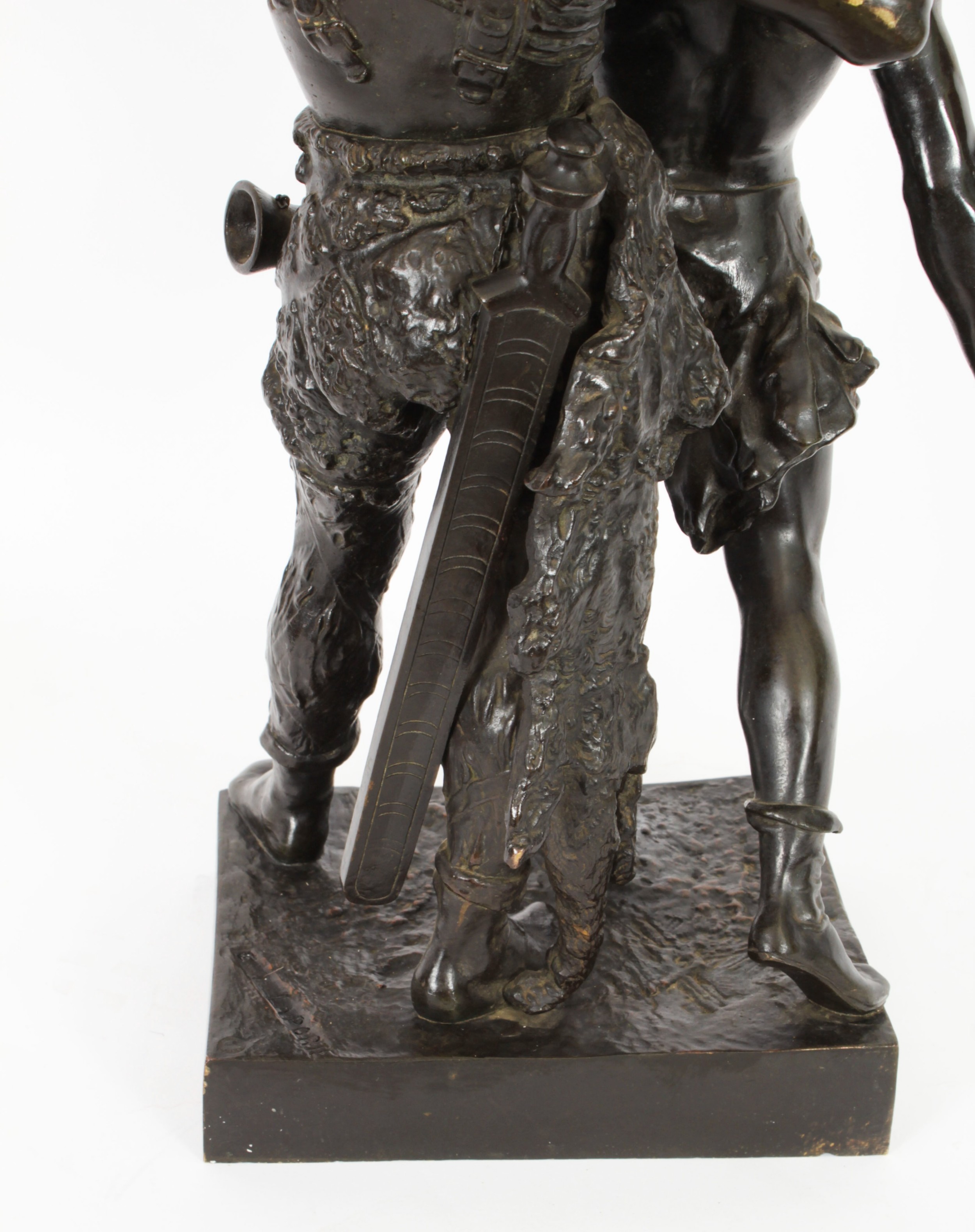
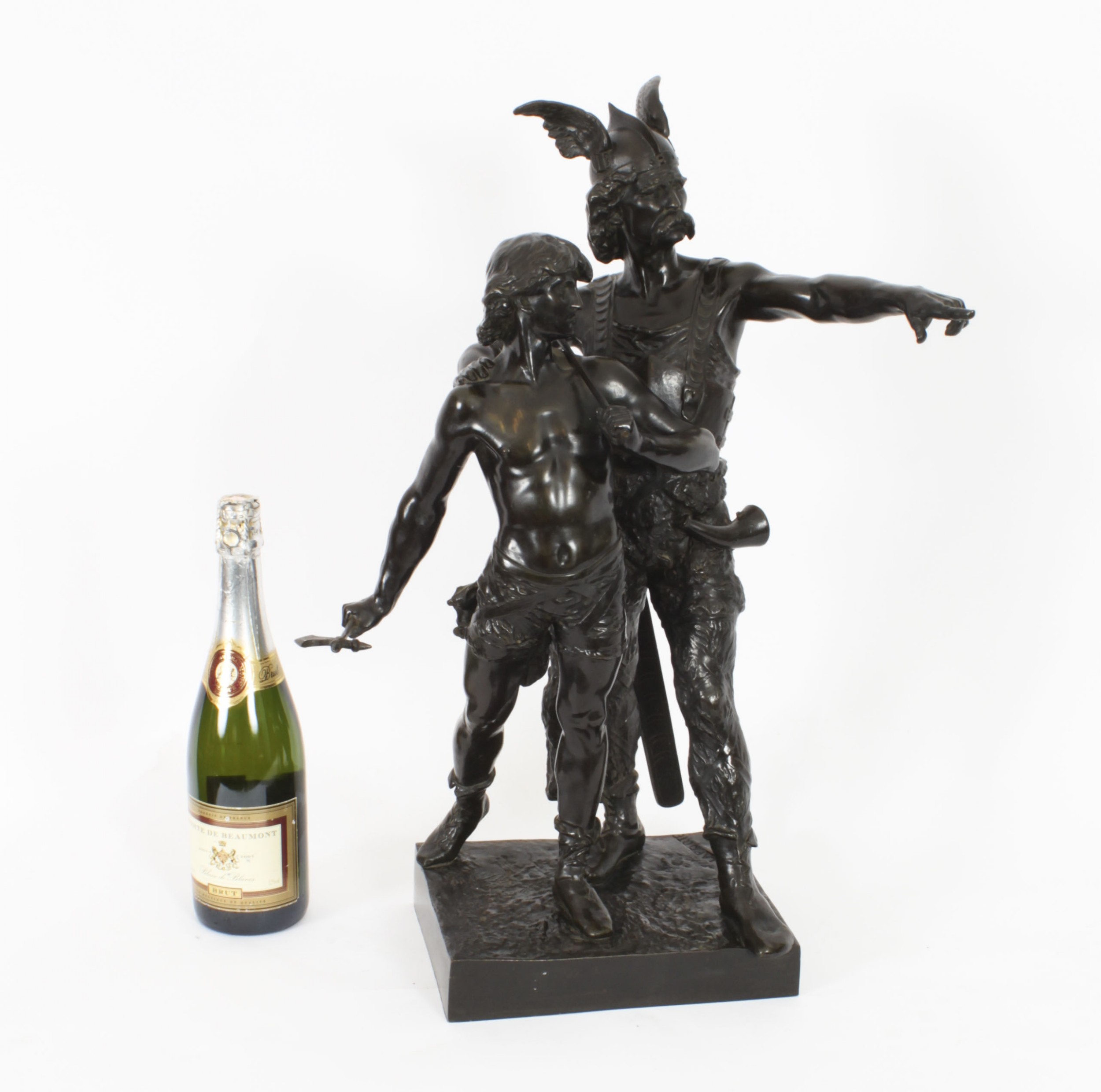
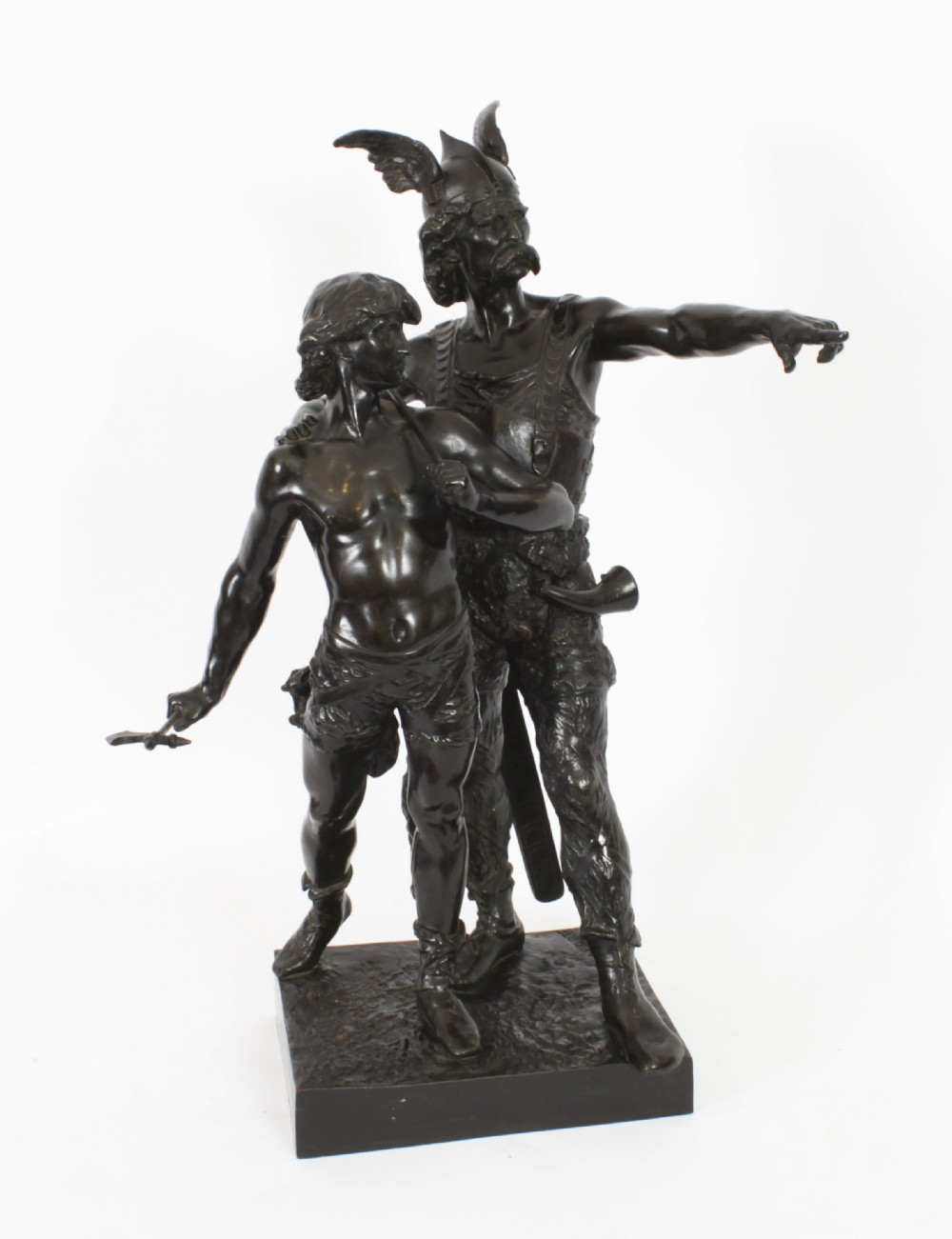
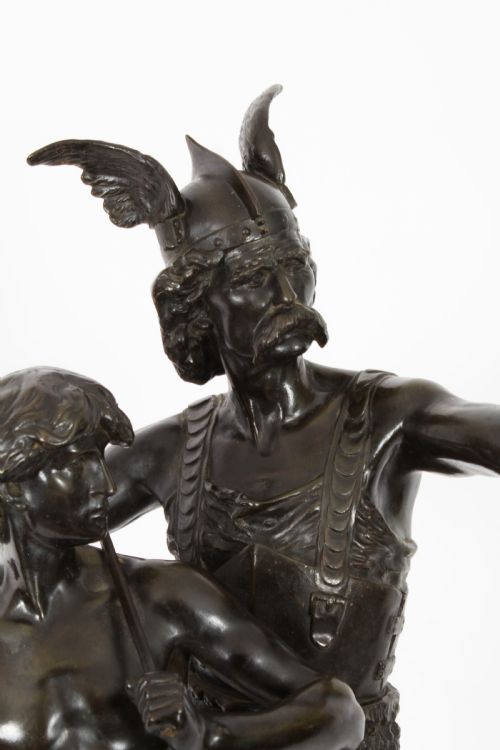
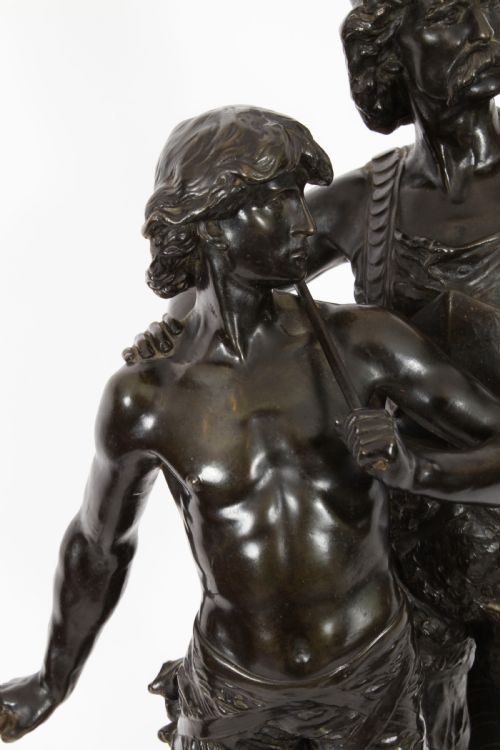
The standing figure of Vercingetorix wearing a winged helmet, with arm raised pointing into the distance, a figure of a of his son at his side, holding an axe in his right hand, raised on a rectangular naturalistically cast base, signed and numbered M585 & Salon Des Beaux Arts, Paris on the base.
Emile Laporte was a French sculptor (1858 Paris to 1907) who attended the Academy in Paris and was a student of Gabriel-Jules Thomas, Augustin Dumont, Jean-Marie Bonnassieux and Louis-Ernest Barrias.

Hi exhibited his work at the Salon of French artists from 1881, his last work exhibited there dates from 1905.

The attention to detail is absolutely fantastic and the sculpture is extremely life-like.

Condition:
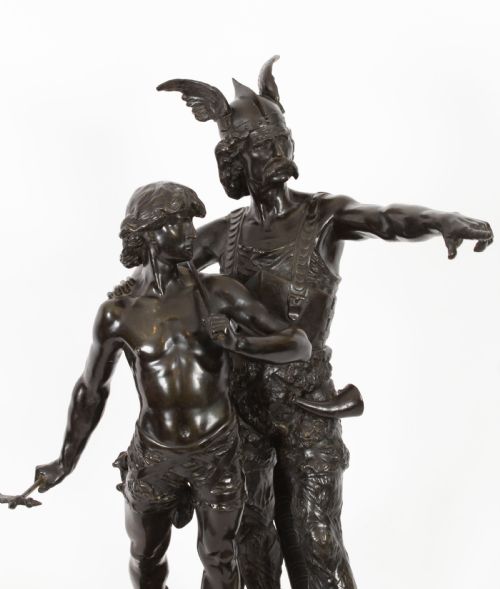
In really excellent condition, please see photos for confirmation.

Dimensions in cm:

Height 61 x Width 42 x Depth 35

Dimensions in inches:

Height 2 foot x Width 1 foot, 4 inches x Depth 1 foot, 2 inches

In 53 BC, when Caesar had left for Italy after the summer campaign season, the Gallic tribes rebelled under the leadership of Vercingetorix, who raised an army against the Roman legions still wintering in Gaul. Hearing of the rebellion, Caesar crossed the mountains in the south, digging through snow drifts six feet deep, to rejoin his troops. "The very vigour and speed of his march in such wintry conditions," says Plutarch, "was a sufficient advertisement to the natives that an unconquered and unconquerable army was bearing down upon them" (Life of Julius Caesar, XXVI.3). To deprive the Romans of food and supplies, Vercingetorix had ordered a scorched-earth policy, and all the neighboring villages and farms were burned, "until fires were visible in all directions." But one tribe, already having torched twenty towns in a single day, refused to destroy its capital at Avaricum (Bourges), "almost the finest in Gaul, the chief defense and pride of their state."
Vergingetorix relented and set about to help defend the fortified town, which held a large supply of grain so desperately needed by the Romans. Caesar began a siege that lasted twenty-seven days. It now was early spring 52 BC, and, in spite of incessant rain, two wheeled towers, eighty-feet high, and ramps 330 feet long, over which they could be rolled into place, as well as a high siege terrace, were constructed in less than a month. The Gauls did all they could to counter or destroy the siege works. As the towers increased in height, so the defenders raised their own. They attacked the soldiers at work and tunneled under the terrace to undermine it. As the terrace approached the height of the wall, the defenders became desperate. Caesar writes that "They felt that the fate of Gaul depended entirely on what happened at that moment, and performed before our eyes an exploit so memorable that I felt I must not leave it unrecorded." It was almost midnight when they again had dug under the terrace and set it on fire. Opposite one of the towers, a Gaul was throwing pitch and tallow onto the fire when he was killed by an arrow from a catapult. Another man stepped forward to take his place and he, too, was killed. Another came forward and also was killed. This continued throughout the night until the fire finally was extinguished.
The next day, it began to rain heavily and, as the defenders took shelter, one of the siege towers was moved into position. The Gauls, taken by surprise, were dislodged from the walls and, panicked at the sight of the Romans surrounding them, threw down their weapons and fled. Exasperated at the length and difficulty of the siege, the Romans massacred the inhabitants. No-one was spared, "neither old men nor women nor children. Of the whole population—about forty thousand—a bare eight hundred who

Physical Dimensions
Height
61cm (24.02")
Width
42cm (16.54")
Depth
35cm (13.78")
Declaration

Regent Antiques has dated this 19th Century Bronze Sculpture to the 19th Century.

Reference Numbers
Sellingantiques Reference
SA939467
Dealers Internal Reference
A2905
Description
This is a large French bronze sculpture of Vercingetorix with his son by Emile Laporte (1858 - 1901), circa 1890 in date.

The standing figure of Vercingetorix wearing a winged helmet, with arm raised pointing into the distance, a figure of a of his son at his side, holding an axe in his right hand, raised on a rectangular naturalistically cast base, signed and numbered M585 & Salon Des Beaux Arts, Paris on the base.

Emile Laporte was a French sculptor (1858 Paris to 1907) who attended the Academy in Paris and was a student of Gabriel-Jules Thomas, Augustin Dumont, Jean-Marie Bonnassieux and Louis-Ernest Barrias.
Regent Antiques
fig 1. A 19th-century dark patinated bronze sculpture depicting a standing Gaulish warrior with a winged helmet pointing forward next to a young boy holding an axe on a rectangular base.
fig 1. Antique Bronze of Vercingetorix with His Son by Emile Laporte 19th C

Hi exhibited his work at the Salon of French artists from 1881, his last work exhibited there dates from 1905.

The attention to detail is absolutely fantastic and the sculpture is extremely life-like.

Condition:

fig 2. A 19th-century dark patinated bronze sculpture depicting a standing Gaulish warrior with a winged helmet pointing forward next to a young boy holding an axe on a rectangular base.
fig 2. Antique Bronze of Vercingetorix with His Son by Emile Laporte 19th C

In really excellent condition, please see photos for confirmation.

Dimensions in cm:

Height 61 x Width 42 x Depth 35

Dimensions in inches:

Height 2 foot x Width 1 foot, 4 inches x Depth 1 foot, 2 inches

In 53 BC, when Caesar had left for Italy after the summer campaign season, the Gallic tribes rebelled under the leadership of Vercingetorix, who raised an army against the Roman legions still wintering in Gaul. Hearing of the rebellion, Caesar crossed the mountains in the south, digging through snow drifts six feet deep, to rejoin his troops. "The very vigour and speed of his march in such wintry conditions," says Plutarch, "was a sufficient advertisement to the natives that an unconquered and unconquerable army was bearing down upon them" (Life of Julius Caesar, XXVI.3). To deprive the Romans of food and supplies, Vercingetorix had ordered a scorched-earth policy, and all the neighboring villages and farms were burned, "until fires were visible in all directions." But one tribe, already having torched twenty towns in a single day, refused to destroy its capital at Avaricum (Bourges), "almost the finest in Gaul, the chief defense and pride of their state."

fig 3. A 19th-century dark patinated bronze sculpture depicting a standing Gaulish warrior with a winged helmet pointing forward next to a young boy holding an axe on a rectangular base.
fig 3. Antique Bronze of Vercingetorix with His Son by Emile Laporte 19th C

Vergingetorix relented and set about to help defend the fortified town, which held a large supply of grain so desperately needed by the Romans. Caesar began a siege that lasted twenty-seven days. It now was early spring 52 BC, and, in spite of incessant rain, two wheeled towers, eighty-feet high, and ramps 330 feet long, over which they could be rolled into place, as well as a high siege terrace, were constructed in less than a month. The Gauls did all they could to counter or destroy the siege works. As the towers increased in height, so the defenders raised their own. They attacked the soldiers at work and tunneled under the terrace to undermine it. As the terrace approached the height of the wall, the defenders became desperate. Caesar writes that "They felt that the fate of Gaul depended entirely on what happened at that moment, and performed before our eyes an exploit so memorable that I felt I must not leave it unrecorded." It was almost midnight when they again had dug under the terrace and set it on fire. Opposite one of the towers, a Gaul was throwing pitch and tallow onto the fire when he was killed by an arrow from a catapult. Another man stepped forward to take his place and he, too, was killed. Another came forward and also was killed. This continued throughout the night until the fire finally was extinguished.

fig 4. A 19th-century dark patinated bronze sculpture depicting a standing Gaulish warrior with a winged helmet pointing forward next to a young boy holding an axe on a rectangular base.
fig 4. Antique Bronze of Vercingetorix with His Son by Emile Laporte 19th C

The next day, it began to rain heavily and, as the defenders took shelter, one of the siege towers was moved into position. The Gauls, taken by surprise, were dislodged from the walls and, panicked at the sight of the Romans surrounding them, threw down their weapons and fled. Exasperated at the length and difficulty of the siege, the Romans massacred the inhabitants. No-one was spared, "neither old men nor women nor children. Of the whole population—about forty thousand—a bare eight hundred who

Height
61cm (24.02")
Width
42cm (16.54")
Depth
35cm (13.78")
Date of Manufacture

Regent Antiques has dated this 19th Century Bronze Sculpture to the 19th Century.

Reference Numbers
Sellingantiques Ref
SA939467
Dealers Internal Ref
A2905
Regent Antiques
Regent Antiques
Sellingantiques verified Since Sep 2016

We specialise in english and continental furniture, silver, porcelain and decorative items.

Dealer Profile

You can view the stock and full dealer information on the Regent Antiques Profile Page

Trade Associations

Regent Antiques is a registered member of LAPADA  CINOA
PDF SHARE
SAVE
A 19th-century dark patinated bronze sculpture depicting a standing Gaulish warrior with a winged helmet pointing forward next to a young boy holding an axe on a rectangular base.
1 / 21
Archive I A 19th-century dark patinated bronze sculpture depicting a standing Gaulish warrior with a winged helmet pointing forward next to a young boy holding an axe on a rectangular base.

Antique Bronze of Vercingetorix with His Son by Emile Laporte 19th C
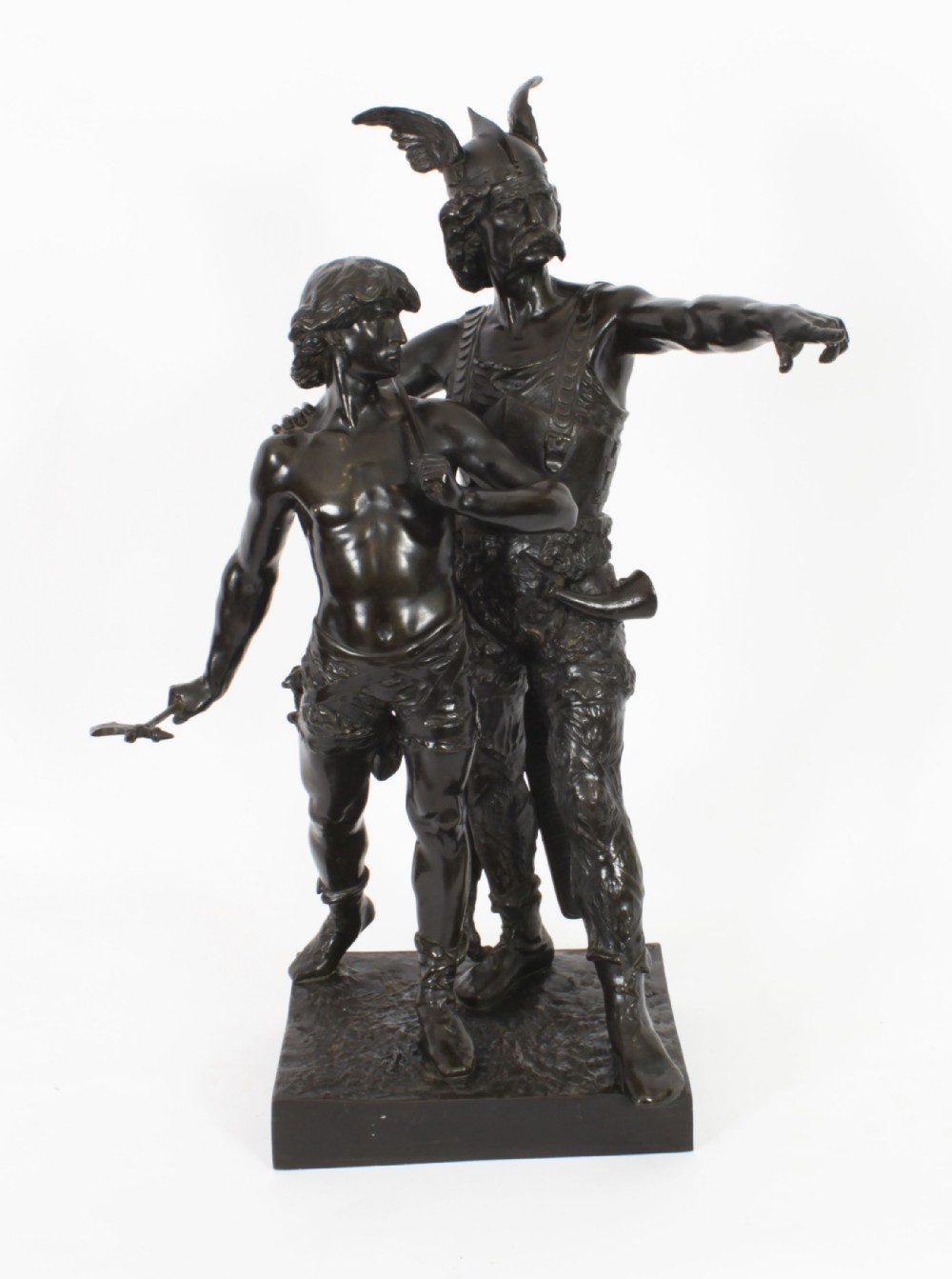
Archive II A 19th-century dark patinated bronze sculpture depicting a standing Gaulish warrior with a winged helmet pointing forward next to a young boy holding an axe on a rectangular base. View II
Archive III A 19th-century dark patinated bronze sculpture depicting a standing Gaulish warrior with a winged helmet pointing forward next to a young boy holding an axe on a rectangular base. View III
Archive IV A 19th-century dark patinated bronze sculpture depicting a standing Gaulish warrior with a winged helmet pointing forward next to a young boy holding an axe on a rectangular base. View IV
Archive V A 19th-century dark patinated bronze sculpture depicting a standing Gaulish warrior with a winged helmet pointing forward next to a young boy holding an axe on a rectangular base. View V
Archive VI A 19th-century dark patinated bronze sculpture depicting a standing Gaulish warrior with a winged helmet pointing forward next to a young boy holding an axe on a rectangular base. View VI
Archive VII A 19th-century dark patinated bronze sculpture depicting a standing Gaulish warrior with a winged helmet pointing forward next to a young boy holding an axe on a rectangular base. View VII
Archive VIII A 19th-century dark patinated bronze sculpture depicting a standing Gaulish warrior with a winged helmet pointing forward next to a young boy holding an axe on a rectangular base. View VIII
Archive IX A 19th-century dark patinated bronze sculpture depicting a standing Gaulish warrior with a winged helmet pointing forward next to a young boy holding an axe on a rectangular base. View IX
Archive X A 19th-century dark patinated bronze sculpture depicting a standing Gaulish warrior with a winged helmet pointing forward next to a young boy holding an axe on a rectangular base. View X
Archive XI A 19th-century dark patinated bronze sculpture depicting a standing Gaulish warrior with a winged helmet pointing forward next to a young boy holding an axe on a rectangular base. View XI
Archive XII A 19th-century dark patinated bronze sculpture depicting a standing Gaulish warrior with a winged helmet pointing forward next to a young boy holding an axe on a rectangular base. View XII
Archive XIII A 19th-century dark patinated bronze sculpture depicting a standing Gaulish warrior with a winged helmet pointing forward next to a young boy holding an axe on a rectangular base. View XIII
Archive XIV A 19th-century dark patinated bronze sculpture depicting a standing Gaulish warrior with a winged helmet pointing forward next to a young boy holding an axe on a rectangular base. View XIV
Archive XV A 19th-century dark patinated bronze sculpture depicting a standing Gaulish warrior with a winged helmet pointing forward next to a young boy holding an axe on a rectangular base. View XV
Archive XVI A 19th-century dark patinated bronze sculpture depicting a standing Gaulish warrior with a winged helmet pointing forward next to a young boy holding an axe on a rectangular base. View XVI
Archive XVII A 19th-century dark patinated bronze sculpture depicting a standing Gaulish warrior with a winged helmet pointing forward next to a young boy holding an axe on a rectangular base. View XVII
Archive XVIII A 19th-century dark patinated bronze sculpture depicting a standing Gaulish warrior with a winged helmet pointing forward next to a young boy holding an axe on a rectangular base. View XVIII
Archive XIX A 19th-century dark patinated bronze sculpture depicting a standing Gaulish warrior with a winged helmet pointing forward next to a young boy holding an axe on a rectangular base. View XIX
Archive XX A 19th-century dark patinated bronze sculpture depicting a standing Gaulish warrior with a winged helmet pointing forward next to a young boy holding an axe on a rectangular base. View XX
Archive XXI A 19th-century dark patinated bronze sculpture depicting a standing Gaulish warrior with a winged helmet pointing forward next to a young boy holding an axe on a rectangular base. View XXI
FURTHER BROWSING

Visitors also looked at these ⇣

Enlarged Archival View
Location
Manor Warehouse
318 Green Lanes
London
N4 1BX
United Kingdom
Verified Since Sep 2016
Items For Sale 659
Items Sold 2,608
Regent Antiques
Regent Antiques
Verified Since Sep 2016
View Dealer Info
Location: Manor Warehouse, 318 Green Lanes, London, N4 1BX, United Kingdom
Verified
Sep 2016
For Sale
659
Sold
2,608
A 19th-century dark patinated bronze sculpture depicting a standing Gaulish warrior with a winged helmet pointing forward next to a young boy holding an axe on a rectangular base.
Antique Bronze of Vercingetorix with his son by Emile Laporte 19th C
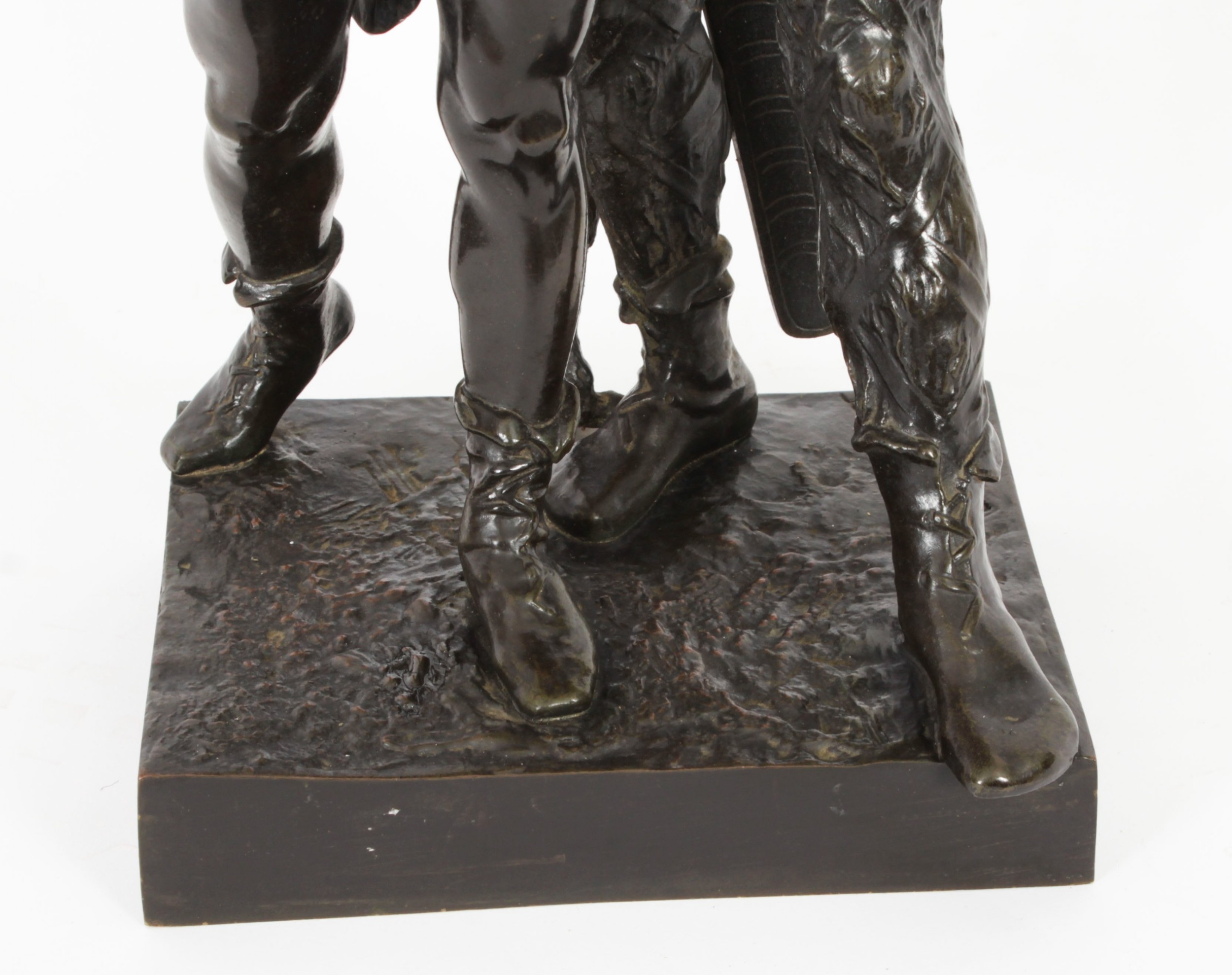
Ref: SA939467
A 19th-century dark patinated bronze sculpture depicting a standing Gaulish warrior with a winged helmet pointing forward next to a young boy holding an axe on a rectangular base.
Detail View 1
Detail View 2
Detail View 3
Detail View 4
Detail View 5
Detail View 6
Detail View 7
Detail View 8
Detail View 9
Detail View 10
Detail View 11
Detail View 12
Detail View 13
Detail View 14
Detail View 15
Detail View 16
Detail View 17
Detail View 18
Detail View 19
Detail View 20
Archival Detail
Every single antique dealer on our platform is individually approved by our internal team. We verify their professional trade history, ethical standards, and photographic quality to ensure a secure, high-standard buying environment. Upon joining, every dealer agrees to a strict 9-point code of conduct. While issues can occasionally arise, our dealers typically resolve them swiftly and directly with the buyer. In fact, since our founding in 2002, Sellingantiques has only had to step in to help resolve an issue on roughly five occasions—a true testament to the quality of our dealers and their dedication to your happiness.
Our dealers are highly experienced in packing and shipping fragile, high-value antiques. Because you are in direct contact with the dealer, you will be able to easily go through all available shipping and insurance options together to ensure your item arrives safely.
Antiques are the ultimate green purchase. By choosing historical pieces over newly manufactured goods, you completely eliminate the carbon footprint of modern mass production while preserving exceptional, timeless craftsmanship.

Nineteenth-century French bronzes frequently depicted historical, mythological, and nationalist figures, cast using precise foundry techniques such as lost-wax or sand casting to achieve high anatomical detail.

Sculptors modelled the initial figure in clay or wax, after which foundries created hollow metal castings using bronze alloys, finished with hand-chiselling and chemical patination.

Genuine examples display crisp casting details, foundry marks or artist signatures cast directly into the base, natural patina wear, and appropriate visual weight.

Place the bronze sculpture as a focal accent on a mantelpiece, library desk, or credenza against a neutral or deep-toned backdrop to highlight its silhouette.

Dust the surface regularly with a soft, lint-free cloth and apply a thin coat of microcrystalline wax annually to protect the patination from oxidisation and moisture.
items
Add keywords to the filter
Price
£100
£250000
Era
Movements
Material
Origin
Stock Location
Freshness
Online Payments
Categories