




Bronze Archer Sculpture
A bronze archer sculpture brings martial classical grace indoors, capturing ancient bowmen and mythological hunters in enduring metal.
Bronze Archer Sculpture
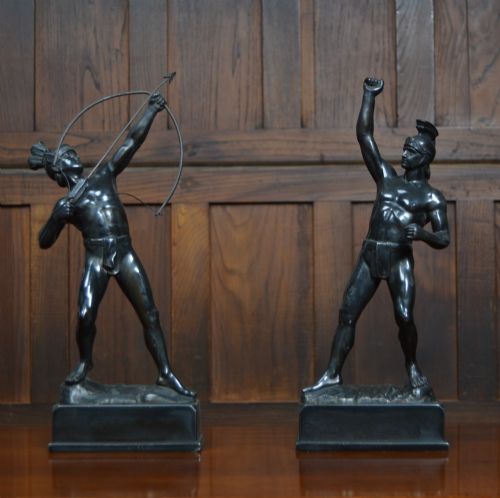
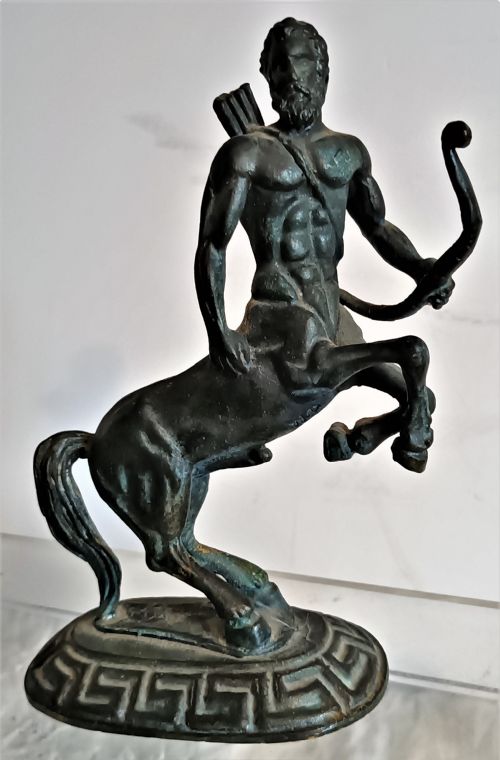
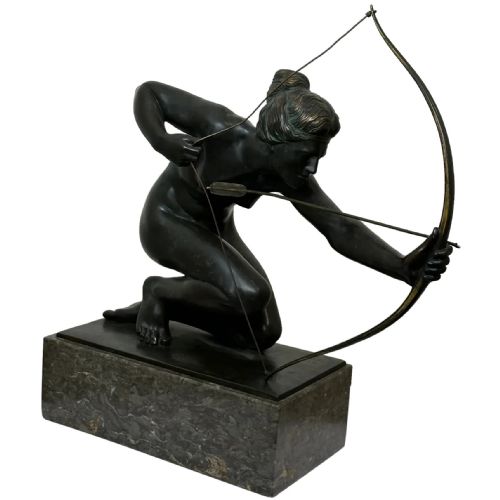
A bronze archer sculpture represents figures holding bows and arrows, including depictions of Diana the huntress and Greek bowmen from classical themes. These works emerge primarily from nineteenth century classical revival styles alongside later Art Deco interpretations.
The objects take the form of figures and statuary mounted upon bases of marble or onyx, blending mythological subjects with figurative art. Buyers most commonly encounter nineteenth century pieces and nineteen-twenties works on this page.
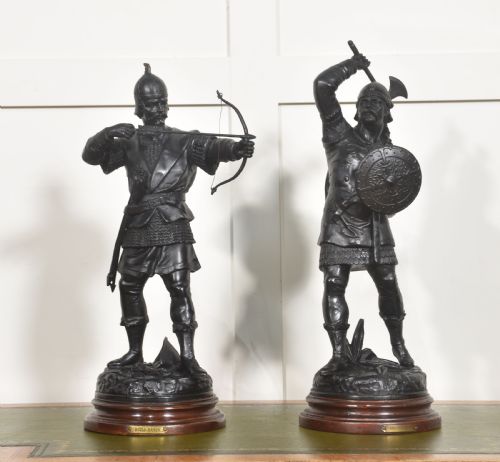
Examples range from grand French historicism to smaller cabinet figures, reflecting diverse nineteenth century interpretations of martial prowess. Each piece captures a moment of tension as the archer draws the bow.
Materials and construction
These figures utilise cast bronze, patinated bronze, and alternative metals such as spelter and zinc alloy. Makers often combined these cast elements with heavy stone bases made of marble or onyx.
Finishes range from dark patination to painted metal surfaces, applied to accentuate the musculature and drapery of the figures. Artisans mounted the metal sculptures securely to their stone plinths to provide stability.
Even ancient deities need solid foundations, which is why these mighty archers stand firmly anchored to heavy blocks of marble and onyx.
Assessing quality and execution
The choice of base material and the harmony between the sculpture and its marble or onyx plinth influence the overall character of the piece. Stronger works demonstrate balanced proportions and integrated signatures or foundry markings.
Eugene Barillot·Aug Moreau·Paul Joris·R Henn
The Bronze Archer Sculpture Glossary
- Spelter
- A zinc alloy frequently used as a substitute for bronze in nineteenth-century figure casting. It takes patination well to resemble more expensive metal.
- Patinated bronze
- Bronze treated with chemical solutions to produce a specific surface colour or aged finish. This layer protects the metal and defines the visual tone.
- Neoclassical
- A style drawing inspiration from the classical art and culture of ancient Greece and Rome. It dominates the classical revival pieces found in earlier periods.
- Art Deco
- A design style prevalent around nineteen twenty and nineteen thirty characterised by sleek lines and stylised forms. It reinterprets traditional figures through a modern lens.
Bronze Archer Sculpture: Frequently Asked Questions
What periods do these sculptures date from?
The listings span the Victorian era, the late nineteenth century, and the nineteen-twenties and nineteen-thirties.
Most items reflect either nineteenth century classical revivals or Art Deco movements.
Are these figures mounted on stone?
Several pieces incorporate heavy stone plinths made of marble or onyx.
These bases provide both structural stability and a decorative foundation for the figures.
How do I identify a Diana sculpture?
Diana figures typically depict the goddess holding a bow and arrow, often associated with the hunt.
Such works appear in both nineteenth-century classical styles and nineteen-thirties Art Deco designs.