
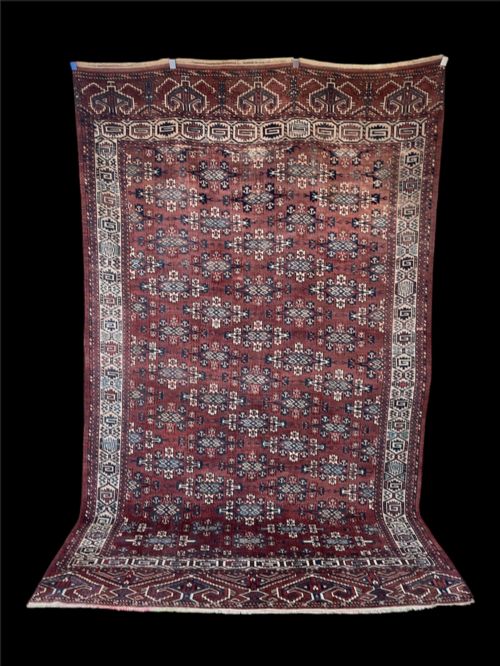


Antique Main Carpet
When you search for an antique main carpet, you are looking at heavy tribal floor coverings woven across Central Asia and Persia during the nineteenth and early twentieth centuries.
Antique Main Carpet
An antique main carpet is a substantial floor covering produced by tribal weavers, most frequently associated with Turkmen groups such as the Ersari, Yomut, Tekke, Chodor, and Kizyl Ayak. You will also encounter pieces originating from Baluch, Timuri, Khamseh, and Qashqai traditions.
These floor coverings served functional and domestic roles within tribal life, often forming central elements of household furnishings or dowries. The pieces available here span from the mid-nineteenth century up to the early twentieth century, capturing distinct regional patterns.
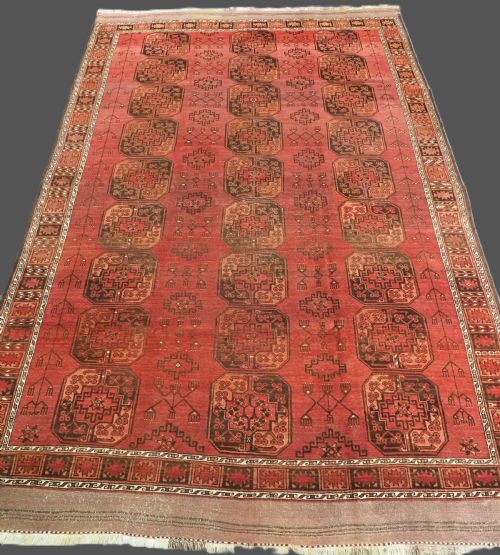
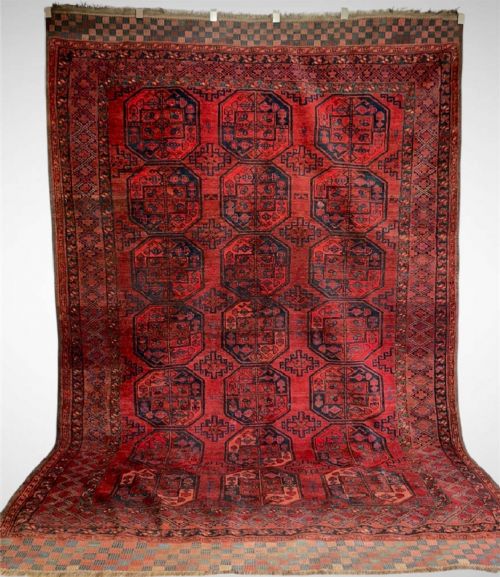
The most common formats on this page display traditional repeating medallions known as guls, alongside characteristic border motifs. Sizes range from smaller room formats up to large floor carpets.
How They Were Made
Weavers constructed these floor coverings using hand-spun wool, often incorporating natural dyes derived from local plants and minerals to achieve rich tones. Foundations frequently utilise wool, alongside structural elements made from goat hair or horsehair for added durability.
The traditional knotting and weaving techniques produced dense, hard-wearing piles capable of withstanding heavy daily use. Individual tribes relied on generations of accumulated knowledge to prepare and dye their materials before knotting each piece by hand.
Geographic origins span Central Asian oases, the Caspian steppes, and western Afghanistan, encompassing Ersari, Yomut, Tekke, and Baluch tribal traditions.
What Varies in Quality
The quality of an antique main carpet depends on the fineness of the knotting and the handled resilience of the wool. Tightly packed piles and secure foundations distinguish superior examples from standard utility pieces.
Visual depth and the successful application of natural dyes create variations in aesthetic appeal across different specimens. Pieces that retain rich, harmonious colour relationships alongside crisp tribal motifs generally represent the higher tier of the surviving range.
The Antique Main Carpet Glossary
- Gul
- A primary repeating medallion motif used across Turkmen and Central Asian tribal floor coverings. These octagonal or polygonal designs often identify the specific tribe or sub-group that wove the piece.
- Baluch
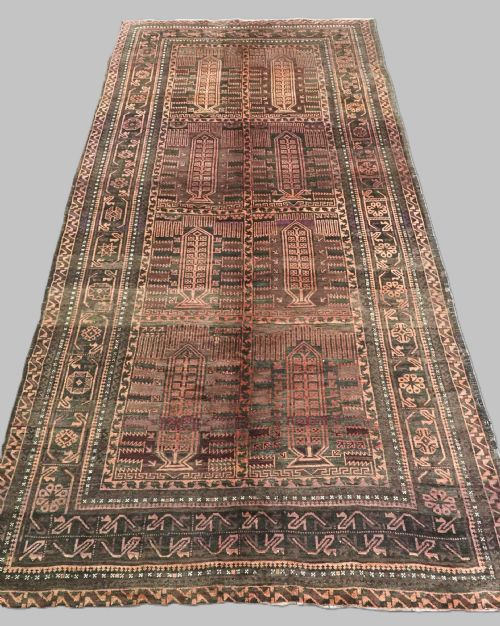
- A designation for rugs and carpets made by nomadic and semi-nomadic groups inhabiting the borderlands of Iran and Afghanistan. These works frequently feature deep earthy palettes and geometric field patterns.
- Ersari
- One of the major Turkmen tribal groups residing along the Amu Darya river basin and northern Afghanistan. Their large floor coverings are known for spacious compositions and prominent guls.
- Yomut
- A prominent Turkmen tribe occupying regions near the Caspian Sea. Their woven works frequently feature the distinctive kepse or dyrnak gul designs.
- Khamseh
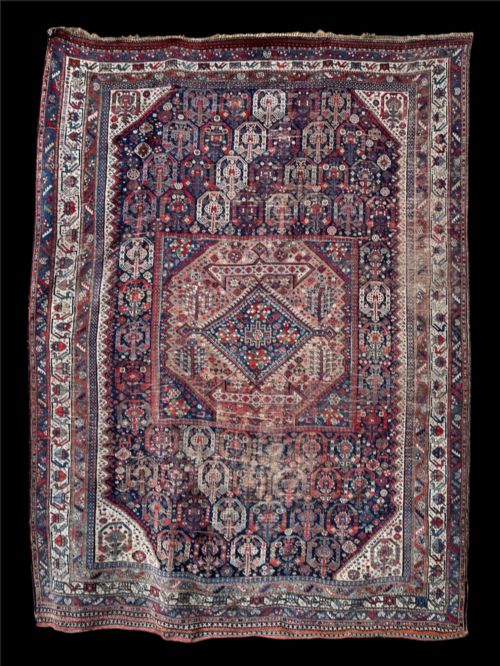
- A confederation of several pastoral tribes in southwestern Persia. Their output often incorporates whimsical animal figures and distinctive tribal motifs within the field.
Antique Main Carpet: Frequently Asked Questions
How were these carpets used originally?
Tribal communities utilised these large textiles as primary floor coverings within tents and communal dwellings, where they provided insulation against cold ground.
They also functioned as valuable components of dowries and marriage exchanges, reflecting the wealth and weaving skill of the maker's family.
Where did these tribal weavers live?
The makers inhabited the vast steppes, desert oases, and mountain ranges of Central Asia, stretching across modern-day Turkmenistan, Afghanistan, and parts of western Persia.
Nomadic and semi-nomadic groups moved seasonally across these landscapes, carrying their upright or horizontal looms with them.
How do I live with an antique carpet?
Place these sturdy floor coverings in moderate-traffic areas of your home, using an appropriate underlay to prevent slipping and reduce wear.
Keep them out of direct sunlight to protect the natural dyes from fading over time, and vacuum gently without using rotating brush bars.
How can I tell different tribal designs apart?
Examine the primary repeating medallions, known as guls, along with the secondary border ornaments and the overall colour palette.
Different tribes utilised distinct structural markers and geometric vocabularies, allowing experienced collectors to attribute pieces to groups like the Tekke or Yomut.