
Antique Mahogany Toilet Glass
An antique mahogany toilet glass brings practical elegance to a chest of drawers, offering a tilting mirror surface framed in rich timber.
Understanding antique mahogany toilet glass
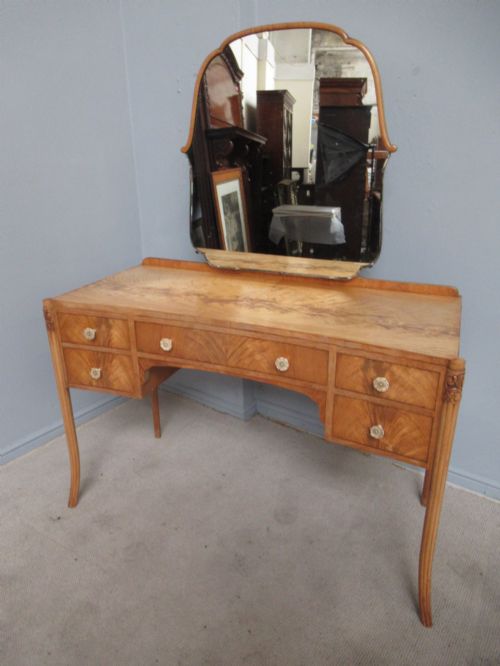
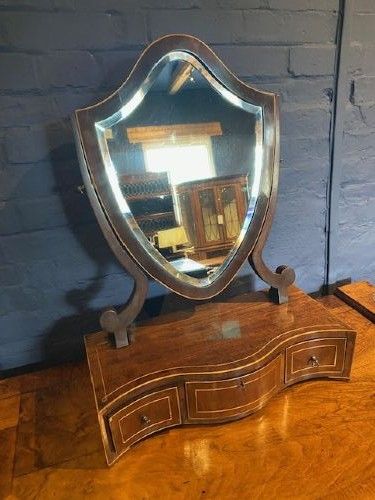
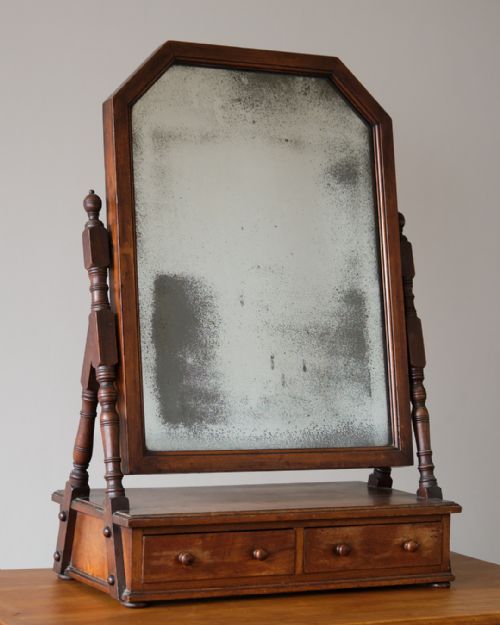
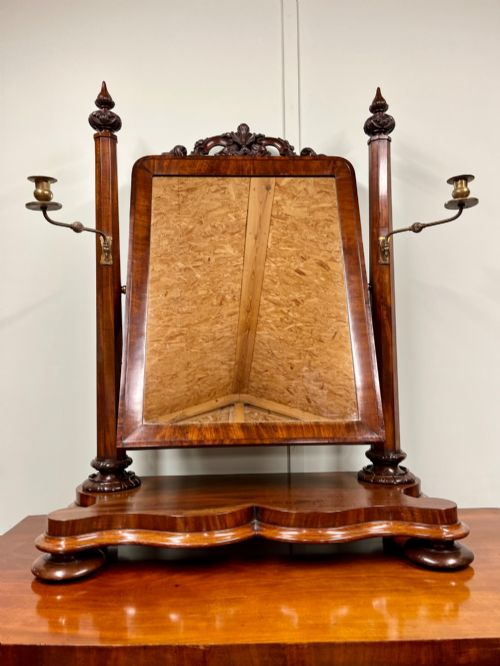
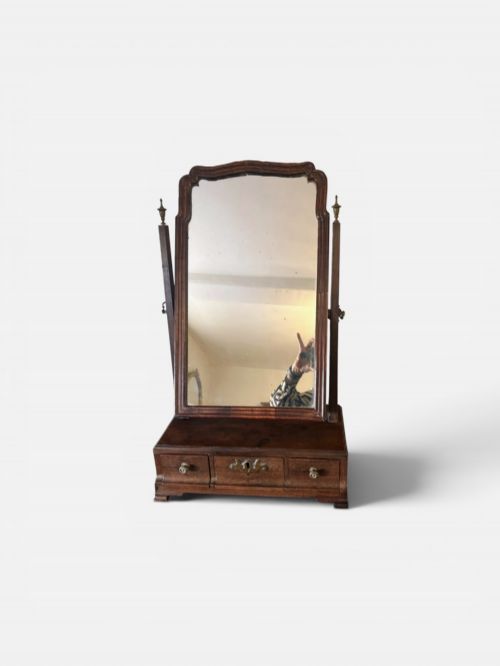
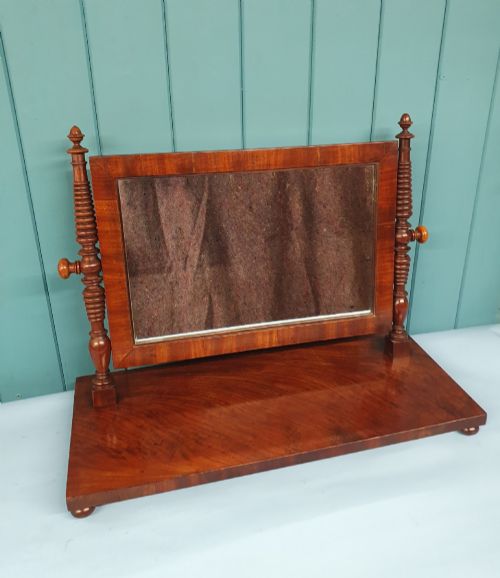
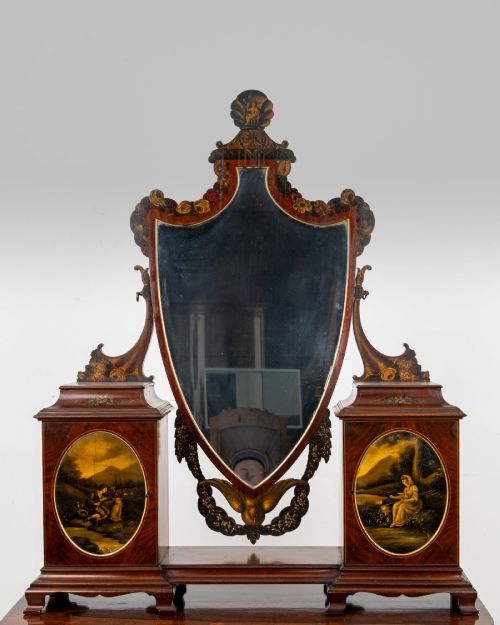
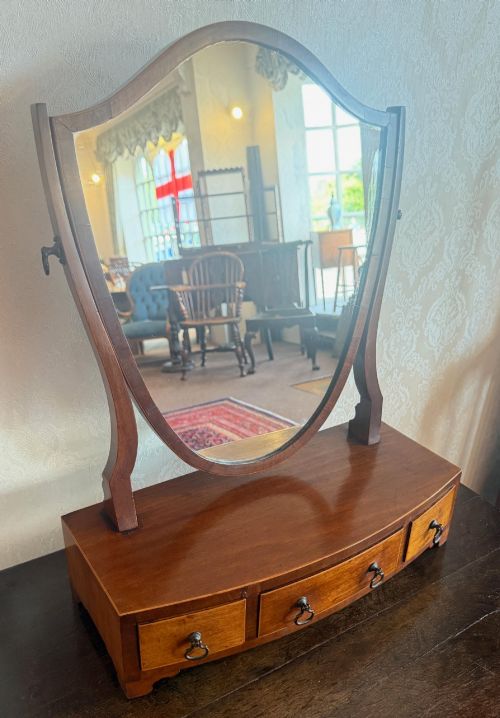
When you search for an antique mahogany toilet glass, you are looking at small tabletop dressing mirrors designed to sit on a chest or dressing table. These pieces date across the Georgian, Victorian, and Edwardian periods, appearing in forms such as swing mirrors and dressing chests with adjustable shield mirrors.
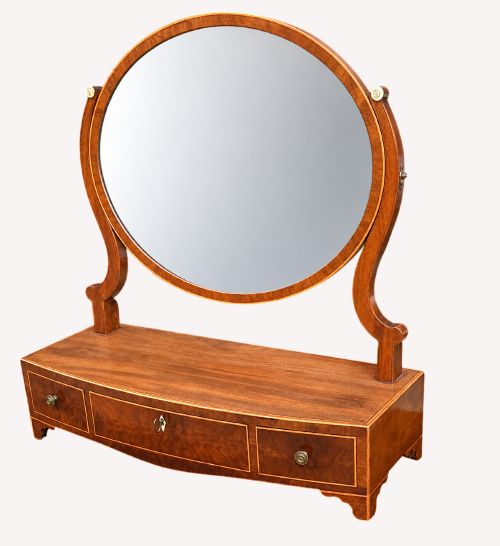
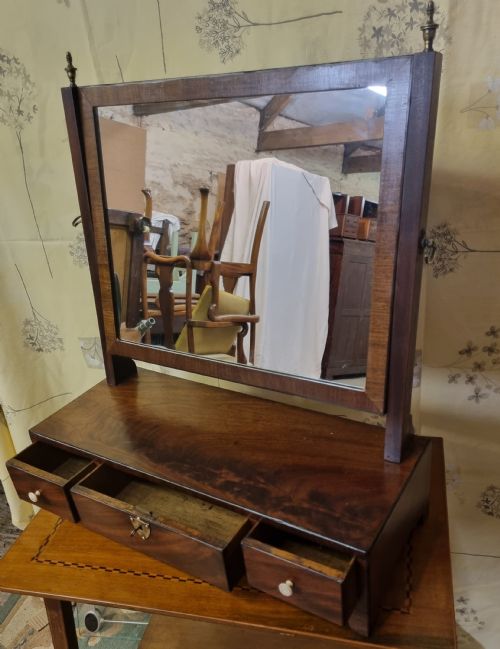
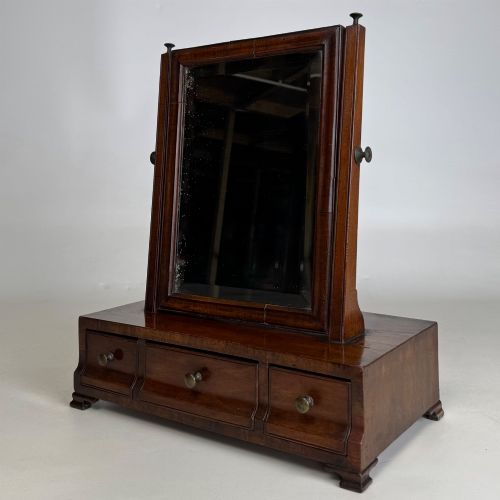
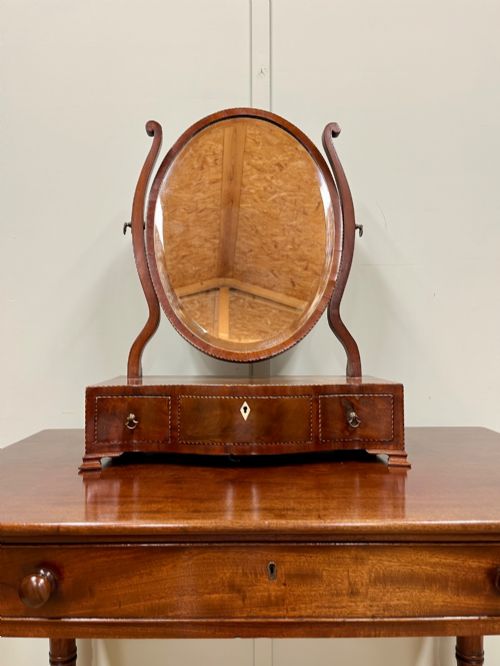
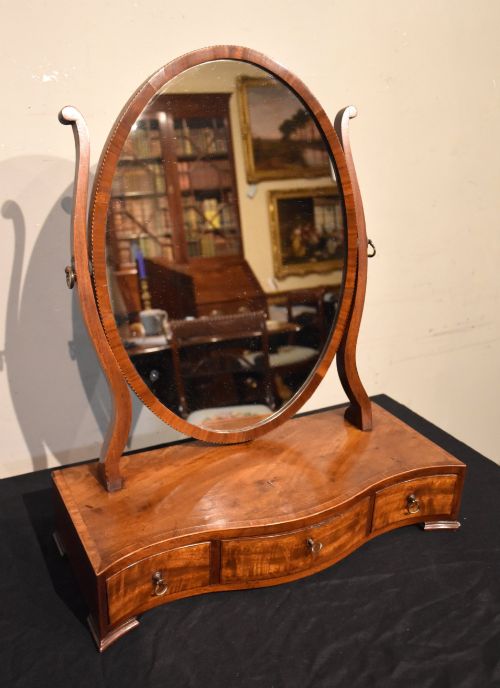
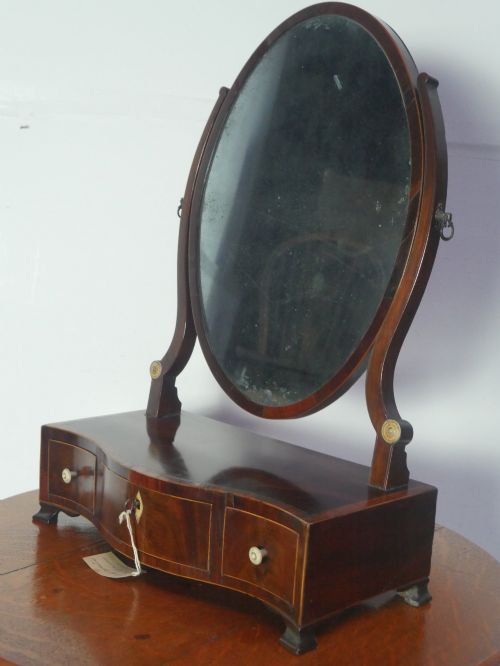
The most common versions on this page are Georgian and Victorian mahogany toilet mirrors, often featuring fitted drawers beneath the mirror frame. Some examples incorporate serpentine drawers or walnut elements, reflecting different regional preferences and workshop traditions.
Makers designed these mirrors to assist with grooming before full-length floor mirrors became commonplace in British bedrooms. They provide an adjustable angle through side pivots, allowing the user to tilt the glass as needed.
Materials and construction
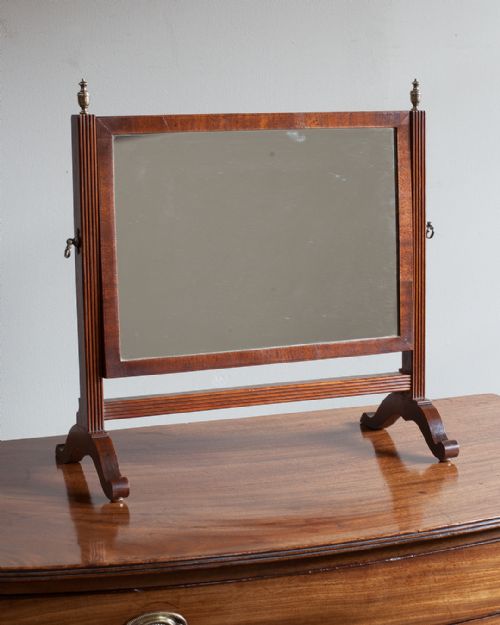
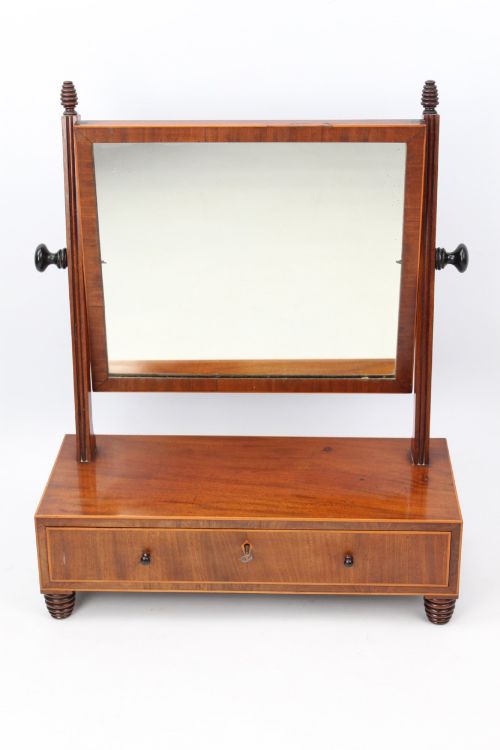
Cabinet makers built these pieces using solid mahogany and mahogany veneers, occasionally incorporating walnut timber for contrast. Brass fittings such as swing pivots and small knobs appear frequently across the frames and drawers.
The mirrored glass itself sits within a wooden surround, supported by upright arms attached to a box base or plinth. Some examples feature bone escutcheons or delicate inlay work to accent the structural grain of the wood.
Retail Price Guide 2026
Typical UK retail prices for mahogany toilet glass, calculated from the Sellingantiques database of over a million retail prices indexed since 2003. This retail price guide relies exclusively on Sellingantiques data; no external sources or auction records are used, so the figures do not describe the wider market.
Many a Victorian morning began with tightening a brass pivot screw that stubbornly refused to keep the mirror facing forward.
Assessing quality and finish
Quality in these mirrors rests upon the depth of the mahogany timber and the crispness of the joinery on the drawer boxes. Finer examples display carefully selected grain patterns and robust brass hardware that holds the swing mirror firmly at any angle.
The proportion between the mirror frame and the base dictates the visual balance of the piece. Superior items maintain elegant lines in the upright supports and subtle shaping in the base drawers, rather than heavy or clumsy proportions.
The Antique Mahogany Toilet Glass Glossary
- Toilet glass
- A traditional term for a dressing table mirror designed to sit on a chest of drawers. These portable mirrors date primarily from the eighteenth and nineteenth centuries.
- Swing mirror
- A mirror plate mounted on pivots between two upright arms, allowing it to tilt backward and forward. This mechanism relies on brass screw caps or threaded pins.
- Serpentine drawer
- A drawer front with a gently undulating, wave-like curve that bulges outward in the centre and recedes at the edges. This shape demands high skill from the cabinet maker.
- Shield mirror
- A dressing glass shaped like a traditional heraldic shield, popular during the Edwardian revival of earlier styles. It often sits atop a small dressing chest.
Frequently Asked Questions
What is a toilet glass?
A toilet glass is a tabletop dressing mirror designed for personal grooming. These pieces sit on top of a chest of drawers or a dedicated dressing table.
Historically, they formed an essential part of British bedroom furniture before the widespread adoption of large freestanding wardrobes and cheval glasses.
How do you use a swing mirror?
A swing mirror uses side pivots mounted on vertical arms to tilt the glass frame. You adjust the angle by hand to suit your height while sitting or standing.
Most pivots feature threaded screws or tension nuts that can be tightened if the mirror fails to hold its position.
Are these mirrors fixed or removable?
The mirror frame itself typically lifts away from the base by unscrewing the side pivot nuts, though the base unit remains a solid chest or box.
This construction allowed cabinet makers to transport the fragile glass components separately from the heavier wooden bases during the eighteenth and nineteenth centuries.
How do I date a mahogany mirror?
Dating relies on timber choice, construction methods, and stylistic details such as ogee feet or serpentine drawer fronts. Georgian examples often show hand-cut dovetails and solid mahogany frames.
Later Victorian and Edwardian pieces may incorporate machine-sawn elements, revival styling, or lighter mahogany veneers over secondary woods.