

Antique Mahogany Secretary
An antique mahogany secretary is a dual-purpose writing cabinet and bookcase, bringing Georgian and Victorian craftsmanship into a modern study.
Antique Mahogany Secretary
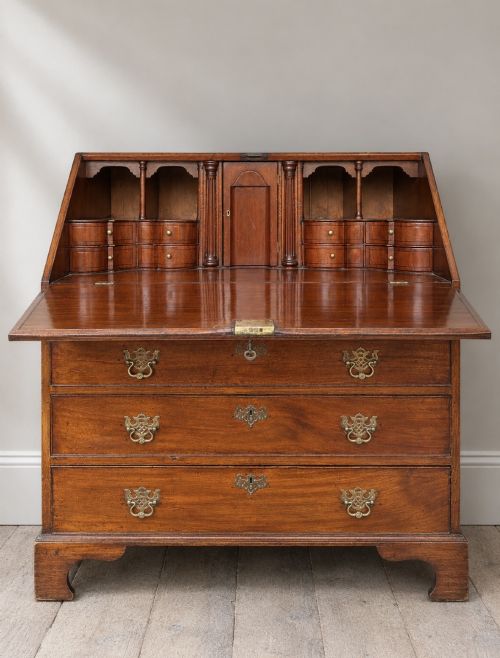
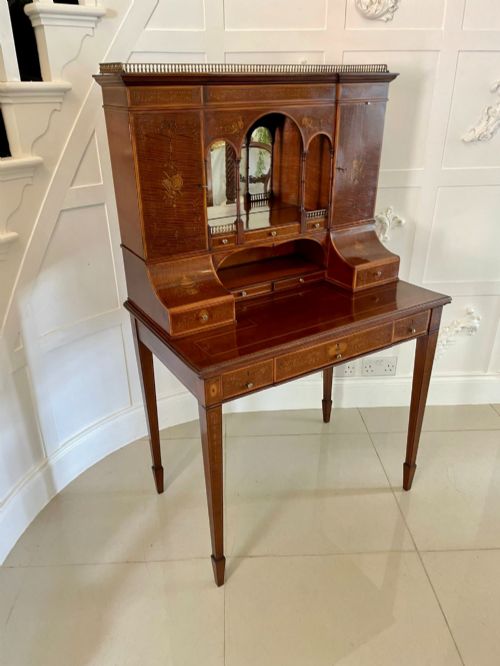
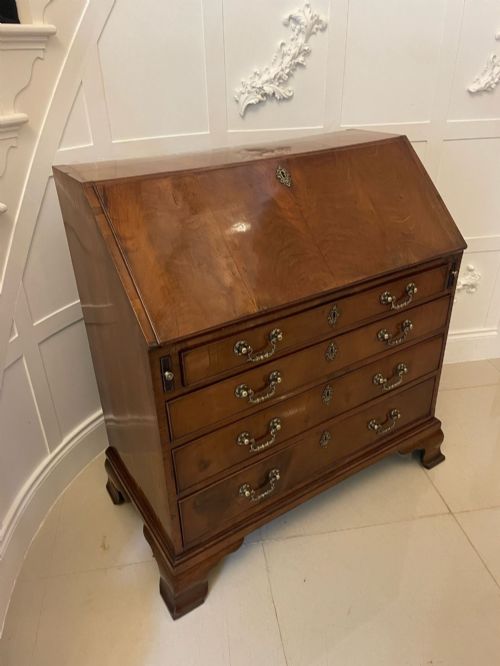
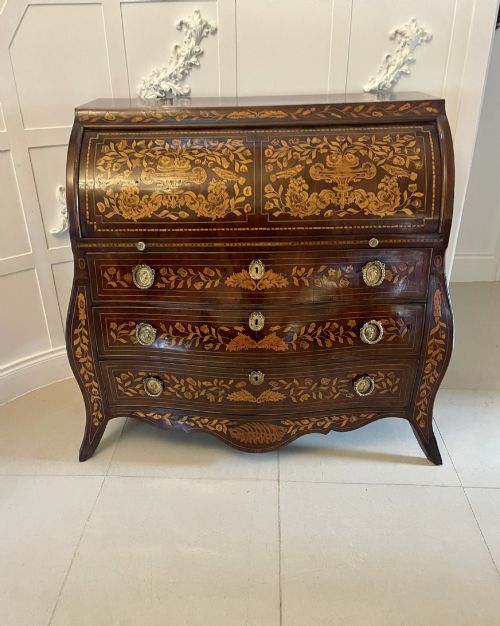
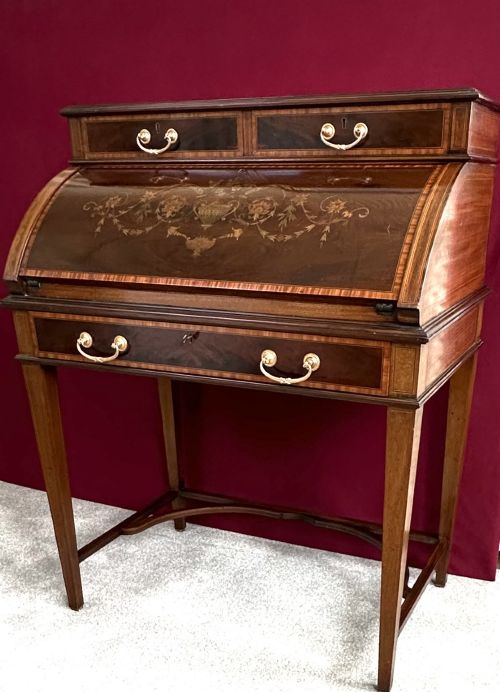
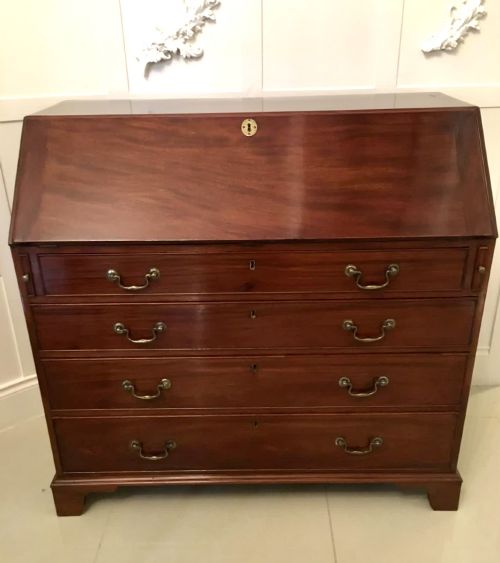
An antique mahogany secretary combines a fall-front writing desk with storage, appearing in forms such as bureau bookcases, secretaire cabinets, and cylinder desks.
The pieces on this page span the Georgian, Regency, William IV, Victorian, and Edwardian periods, reflecting shifting domestic fashions across centuries.
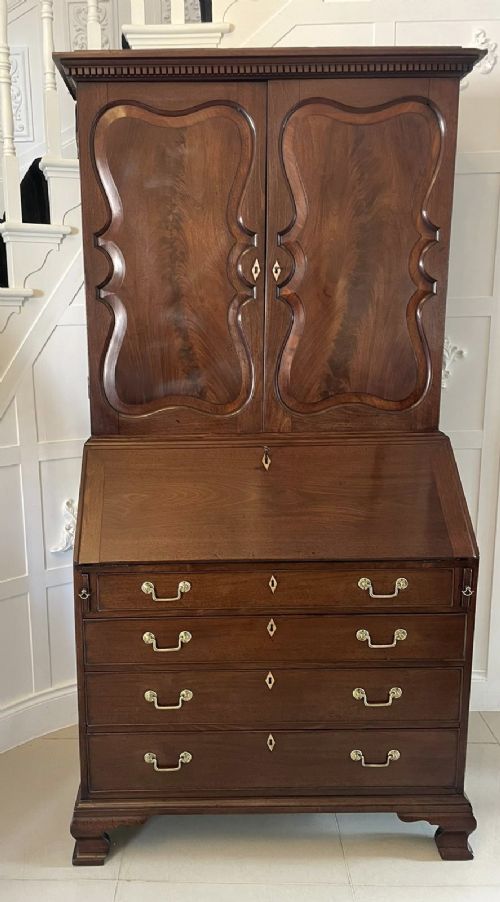
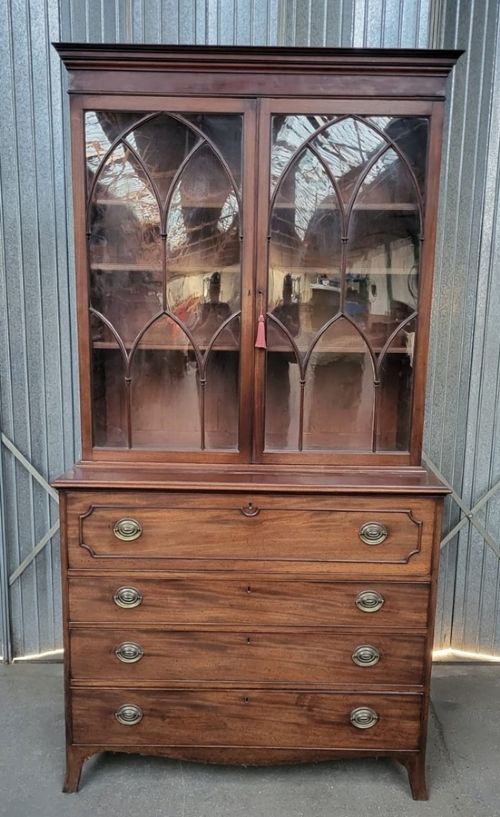
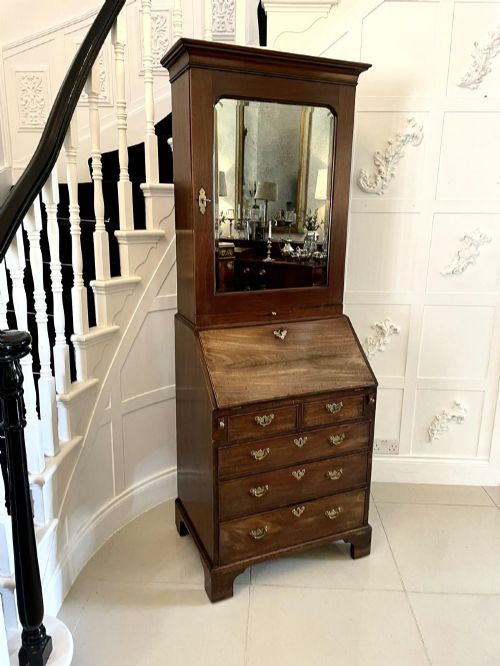
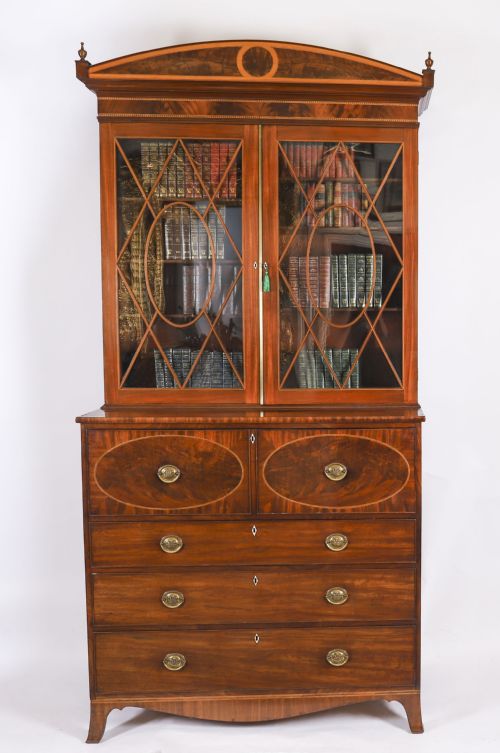
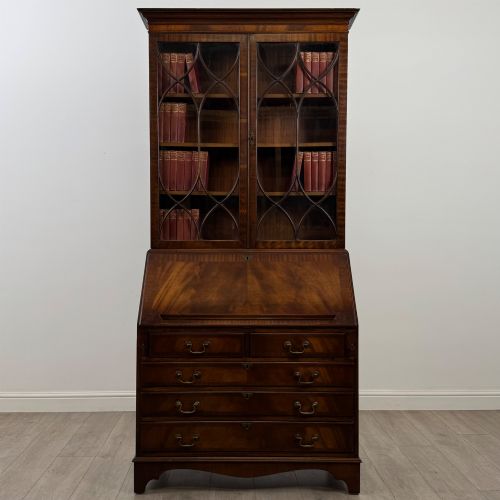
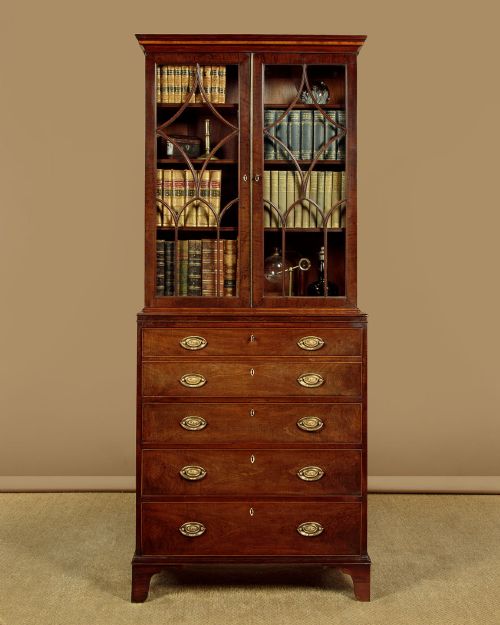
Bureau bookcases dominate the selection, pairing shelved upper cabinets with fitted lower writing compartments containing small drawers and pigeonholes.
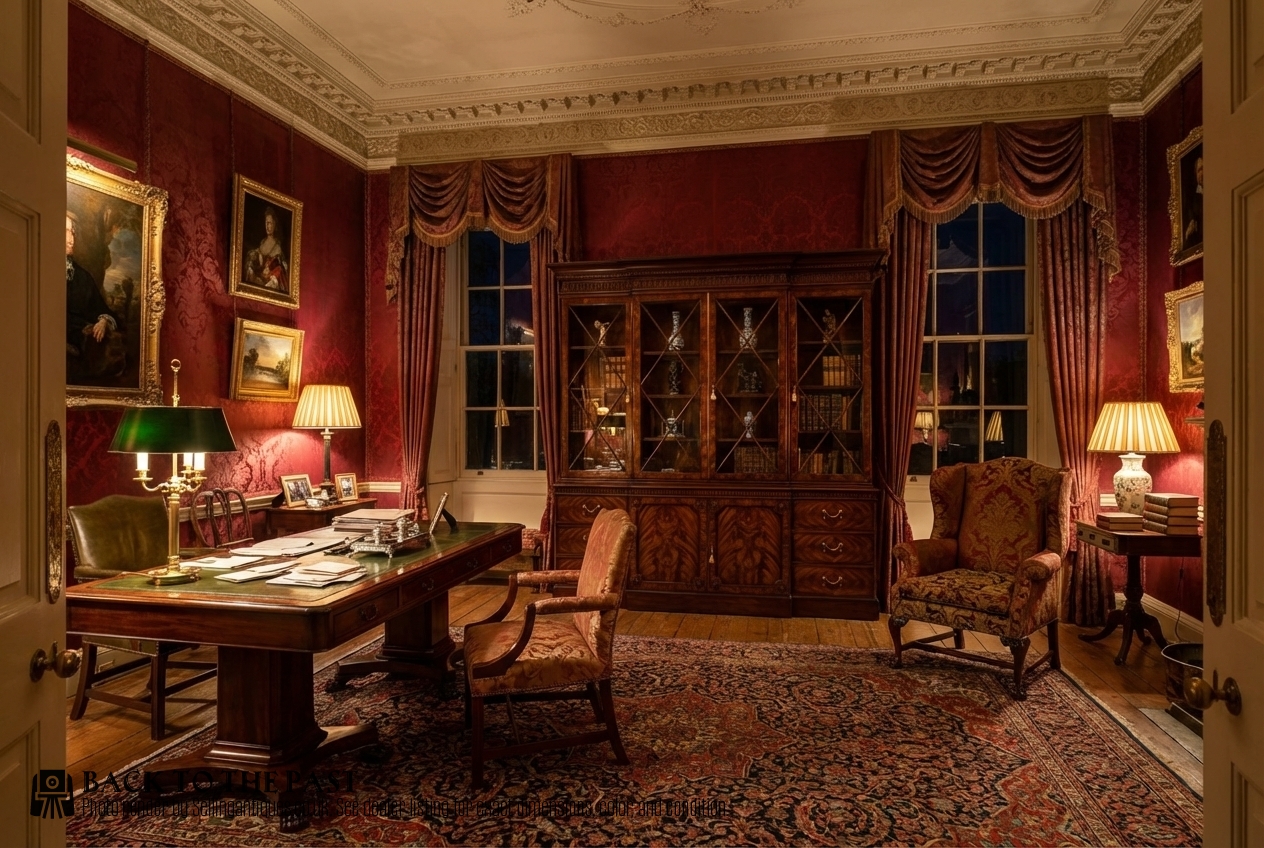
Woods, brass, and structural technique
Cabinetmakers utilised solid mahogany and figured veneers such as flame mahogany and satinwood, applying brass hardware for handles, escutcheons, and hinges.
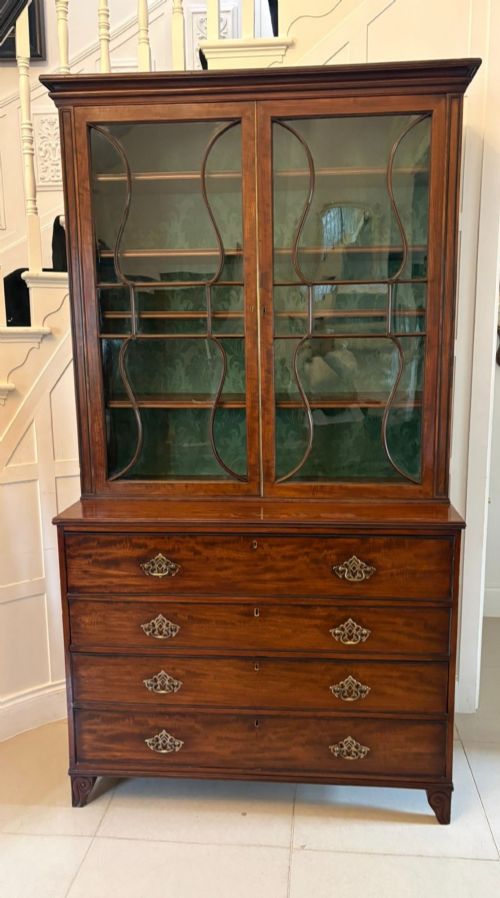
Structural integrity relied on bracket feet, pigeonhole joinery, and dovetailed drawer construction, occasionally incorporating glass panes for upper bookcase doors.
Antique Mahogany Secretary Retail Price Guide 2026
Typical asking prices for mahogany secretary among the pieces listed under this phrase on Sellingantiques today, from the lower quarter to the upper quarter. They describe what is for sale here now, not the wider market.
Materials recorded across the selection include mahogany, flame mahogany, satinwood, oak, brass, glass, mirror glass, and leather.
Distinctions in construction and decoration
Quality rests in the choice of timber figure, where highly figured flame mahogany and crisp floral marquetry inlay elevate a piece above plain stock.
Interior complexity dictates standing: simpler drop-front desks contrast with intricate fitted writing drawers, secret compartments, and finely glazed bookcase doors.
George Oakley·Thomas Chippendale·Gillows
The Antique Mahogany Secretary Glossary
- Secretaire
- A writing cabinet or desk featuring a pull-out or drop-front writing surface concealing smaller drawers and pigeonholes. This serves as the defining mechanical feature for these hybrid bookcase units.
- Bureau bookcase
- A tall cabinet combining a slant-front or fall-front desk base with an upper shelving section enclosed by wooden or glazed doors. These pieces provided dual storage for books and writing materials.
- Flame mahogany
- A veneer cut from the fork of the mahogany tree, producing a distinctive ripple pattern resembling flickering flames. Cabinetmakers reserved this decorative grain for primary facade surfaces.
- Marquetry
- The art of forming decorative patterns by fitting together contrasting veneers of wood and other materials. Floral motifs appear frequently on the desk falls and drawer fronts.
- Bracket feet
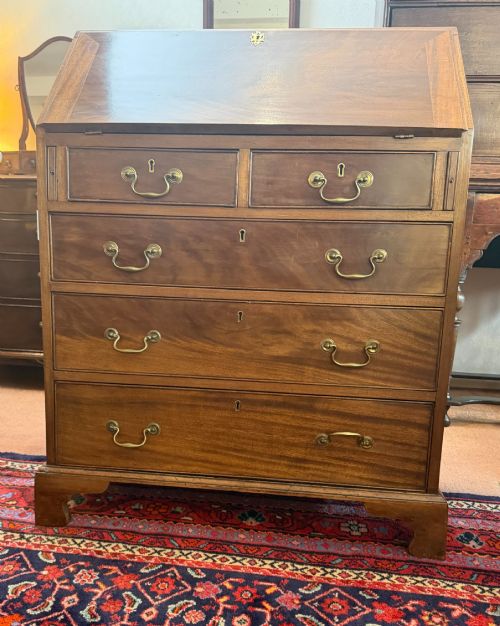
- A simple foot shape formed by two pieces of wood mitred at the corner, providing a stable architectural support for Georgian case furniture.
Antique Mahogany Secretary: Frequently Asked Questions
What is a secretary desk?
A secretary desk is a piece of furniture that combines a concealed writing surface with storage space, usually taking the form of a drop-front flap that opens over small internal drawers.
Many examples on this page pair this desk function with an upper bookcase enclosed by glass doors, creating a tall cabinet for both study and display.
How do I date an antique secretary?
Dating relies on stylistic clues, timber choice, and construction methods, moving from solid 18th-century Georgian proportions to lighter Edwardian or Regency forms.
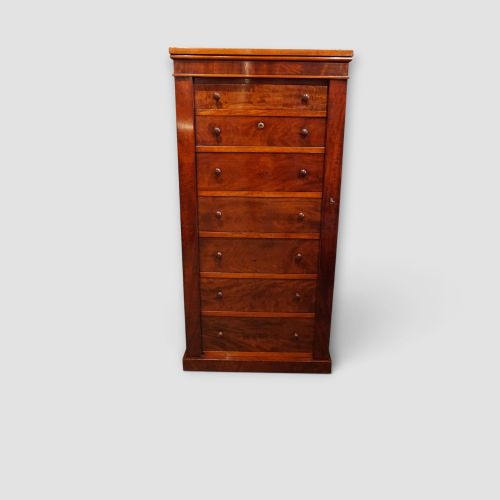
Earlier pieces often display bracket feet and figured mahogany veneers, while later 19th-century examples incorporate cylinder fronts or Wellington locking mechanisms.
Where were these desks placed?
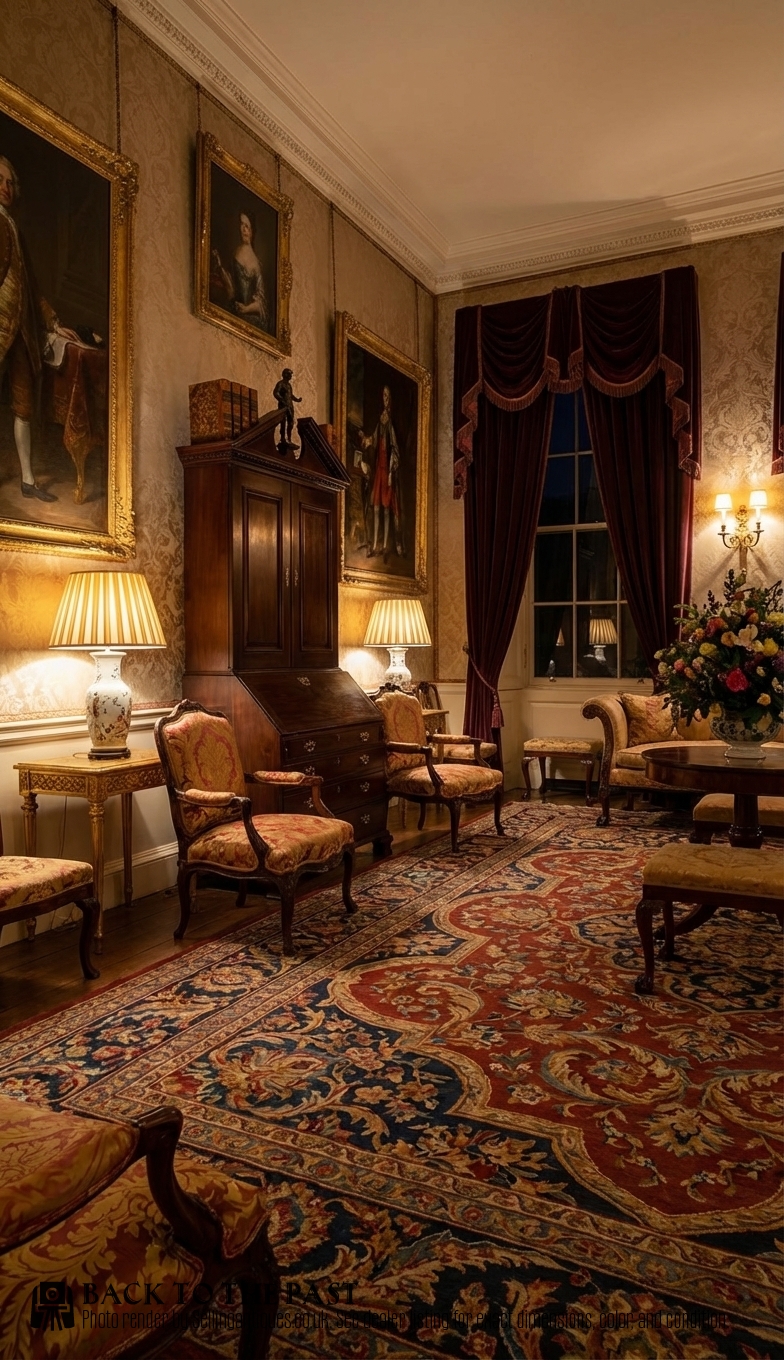
These cabinets belonged in formal libraries, studies, and drawing rooms where correspondence and estate management took place.
The upper bookcase held bound volumes, while the lower writing flap provided a private surface for letters and financial records.
How do I maintain mahogany furniture?
Mahogany requires stable room humidity and protection from direct sunlight to prevent the timber and internal veneers from drying out or fading over time.
Regular dusting with a dry cloth and occasional application of appropriate furniture wax preserves the finish and natural warmth of the wood.