
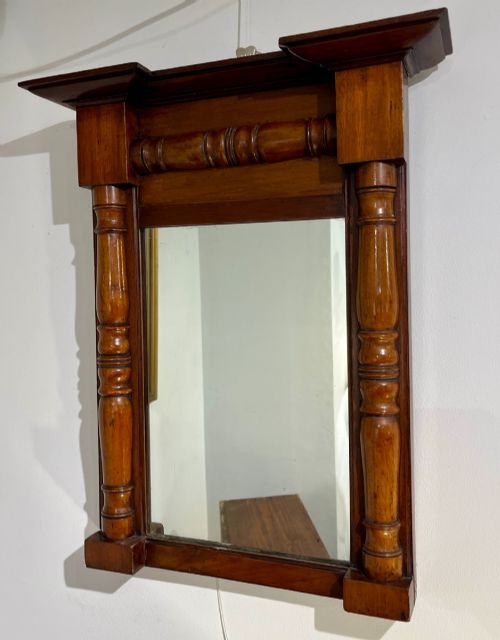
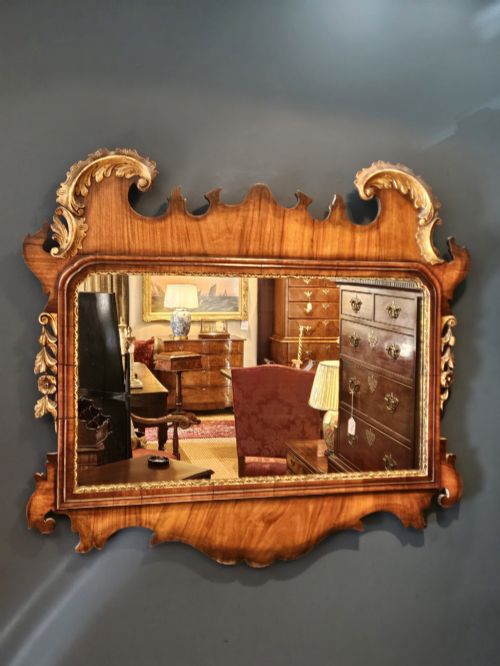

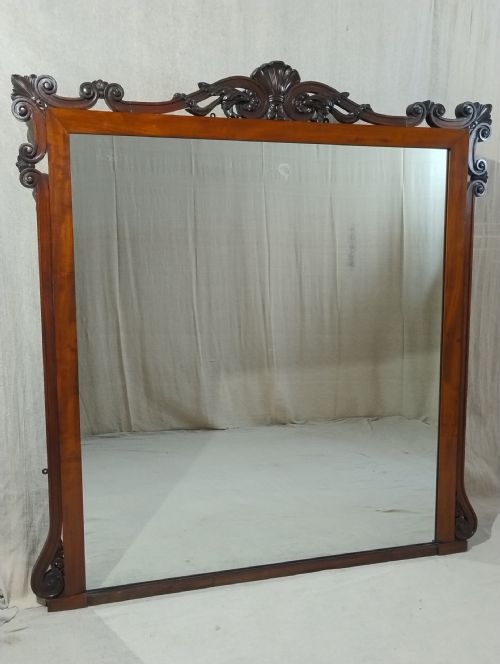

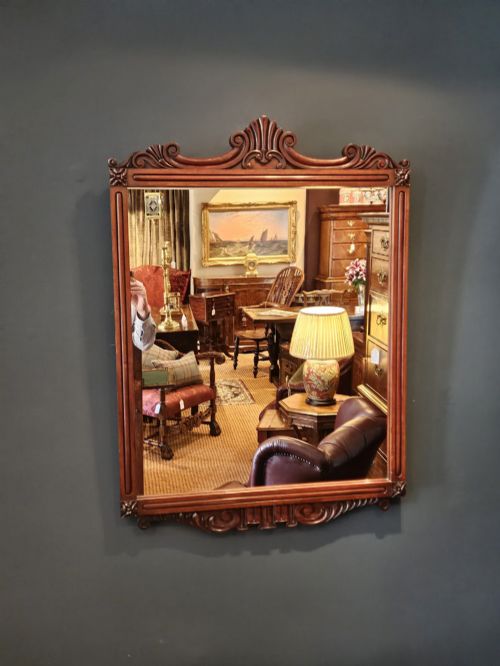
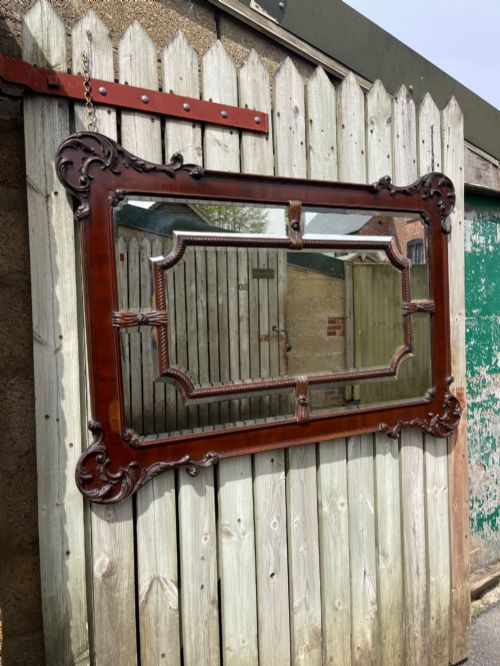


Antique Mahogany Overmantel
An antique mahogany overmantel brings architectural presence and reflected light to a fireplace, grounding a room with rich timber and period proportion.
Antique Mahogany Overmantel
When searching for an antique mahogany overmantel, you are looking at large wall mirrors and frames designed to sit directly above a fireplace mantelpiece. These pieces anchor domestic interiors by drawing the eye upward and echoing the hearth below with substantial timber mouldings.
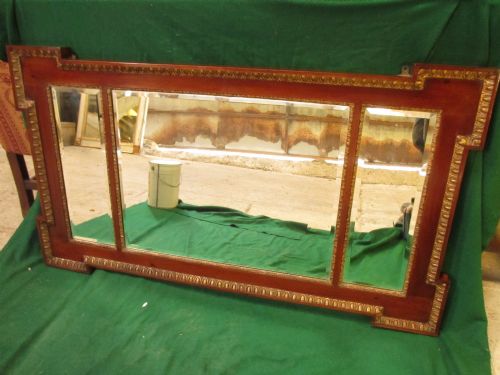
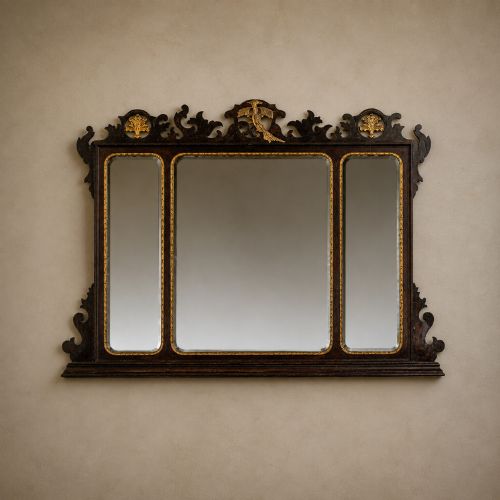
The versions most commonly met on this page date from the nineteenth century, including Victorian, Edwardian, and Regency periods. They appear as rectangular formats, triptychs with multiple plates, and grand architectural compositions influenced by earlier Georgian and Chippendale styles.
Beyond standard overmantel mirrors, the selection encompasses related forms such as pier mirrors, wall mirrors, and occasional fireplace surrounds. Their primary function remains the same: to distribute natural light across a room while serving as the principal decorative focus of a chimney breast.
Materials and construction methods
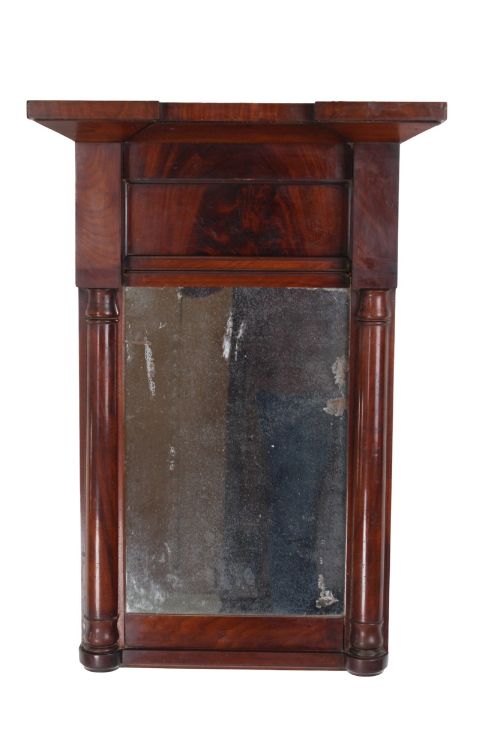
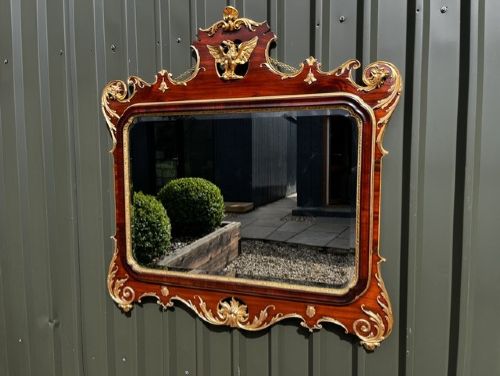
Makers utilised solid mahogany and flame mahogany veneer applied to a supportive secondary wood carcass, often accented with parcel gilt details. The natural grain of the timber provides deep reddish-brown warmth, which contrasts sharply against applied gold leaf or gilt wood ornaments.
Mirror glass sits within these timber frames, sometimes divided into multiple sections using slip divisions or wooden muntins. Carved crestings, such as the distinctive Ho-Ho bird, crown the top rails of revival styles, demanding high levels of joinery and carving skill from period workshops.
Watch for the whimsical Ho-Ho bird perched atop Victorian frames, keeping a silent wooden watch over centuries of drawing-room gossip.
Distinguishing quality across the range
Quality in these mirrors rests upon the selection of timber figures, particularly the vibrancy of flame mahogany veneer against plain grain. Finer examples display deeply undercut hand-carved ornamentation rather than cast composition or shallow surface moulding.
The Antique Mahogany Overmantel Glossary
- Overmantel mirror
- A large horizontal mirror designed specifically to hang on the wall directly above a fireplace mantel. These pieces were scaled to match the width of the fireplace surround below them.
- Pier mirror
- A tall, vertical mirror traditionally hung on the narrow pier of wall space situated between two windows. They share similar mahogany frames and glass construction with overmantels but possess distinct proportions.
- Parcel gilt
- A decorative technique where selected carved details or mouldings are partially covered in gold leaf while the rest of the mahogany surface remains exposed. This creates a striking contrast between dark timber and bright metallic highlights.
- Triptych
- A mirror plate divided into three distinct vertical sections, often found in larger Victorian and Chippendale revival overmantels. The tripartite division helps break up wide expanses of reflection.
- Flame mahogany veneer
- A highly decorative wood veneer sliced from the point where a branch joins the main tree trunk, producing a flame-like pattern. Cabinet makers applied this to the broad surfaces of the frame to catch the light.
Antique Mahogany Overmantel: Frequently Asked Questions
How do I hang a heavy overmantel mirror?
These substantial timber frames require secure fastening directly into masonry or heavy wall studs using appropriate brackets and steel fixings. Weight distribution is critical given the dense mahogany and glass construction.
Professional installation ensures the frame remains flush against the wall without placing undue strain on the hanging loops or the historic wooden joints.
What is the difference between an overmantel and a pier mirror?
Overmantels are constructed in wide horizontal formats to span the length of a fireplace mantel, whereas pier mirrors are built tall and narrow to fit between architectural windows.
While both utilise mahogany framing and mirror glass, their original placement in a historic home dictated their distinct dimensional proportions.
How do I clean antique mirror glass?
Clean the glass surface gently with a soft cloth dampened with distilled water or a mild, non-ammonia cleaning solution. Avoid spraying liquid directly onto the glass to prevent moisture seeping behind the plate.
Take care near the edges where the historic silvering backing may be fragile or deteriorated due to age.
Can I place these mirrors in a modern interior?
These architectural pieces work exceptionally well in contemporary spaces by adding warmth, historic texture, and reflected light to minimalist walls. Their rich timber tones ground neutral colour palettes and introduce a focal point.
Mounting them securely above a low sideboard or modern fireplace replicates their traditional domestic utility.
How do I identify a Chippendale revival piece?
Chippendale revival mirrors display characteristic eighteenth-century design motifs, such as asymmetrical scrollwork, gilded foliage, and perched bird crestings. They date predominantly to the Victorian and Edwardian eras when earlier cabinet-making styles experienced a surge in popularity.
The timber construction methods and modern backing boards usually reveal their later nineteenth or twentieth-century origins despite the historical style.