

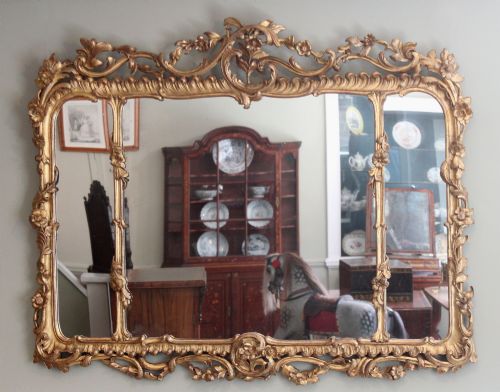


Three Plate Overmantel
A three plate overmantel brings architectural width and reflecting light to a chimney breast, dominated here by Regency and Victorian giltwood examples.
Three Plate Overmantel
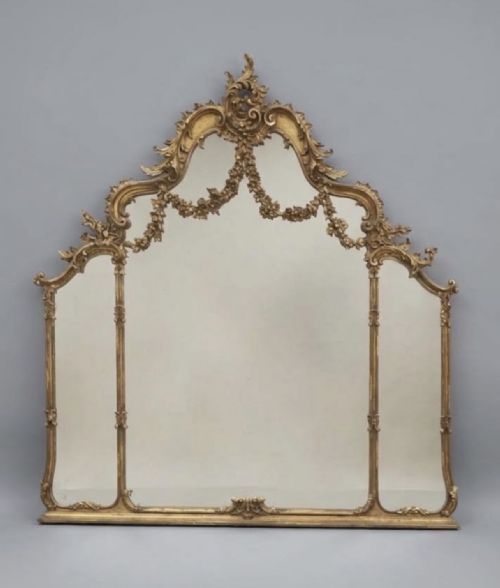
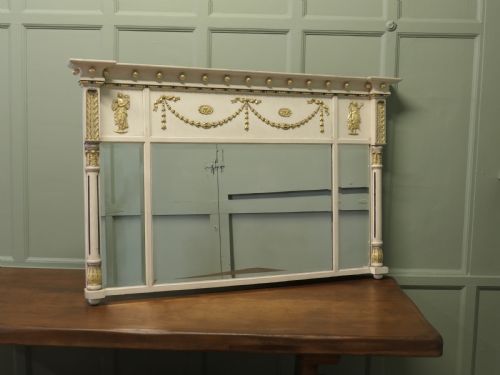
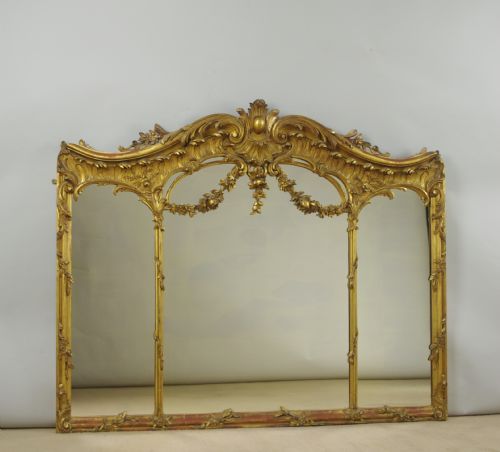
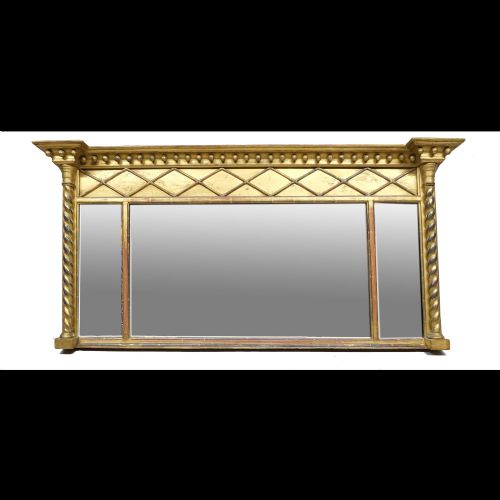
A three plate overmantel is a large horizontal mirror designed specifically to sit above a fireplace mantelpiece. The surface is divided into three distinct glass panels, often separated by vertical moulding slips or pilasters. When people search for a three plate overmantel, they find long, low proportions that anchor the fireplace wall within the room.
The versions most frequently met on this page date from the nineteenth century, drawing heavily on Regency, Victorian, and Rococo revival styles. Many feature classical friezes, such as laurel wreaths or architectural motifs, above the plates. Others appear simply framed in giltwood and gesso, spanning centuries from the eighteenth through to the early twentieth century.
Makers and craftsmen constructed these pieces to balance the heavy verticality of traditional fireplaces with a sweeping horizontal emphasis. They range from grand scale trumeau mirrors down to smaller domestic variations in mahogany, walnut, or painted wood. The form serves primarily to bounce natural daylight back into the living space while filling the empty wall above the grate.
Materials and construction
Makers built the structural carcases of pine, mahogany, walnut, or satinwood, applying moulded gesso to create crisp relief ornament. Over this foundation, artisans applied gold leaf by hand, sometimes combining it with ebonised or painted sections to create contrast. The reflective surfaces consist of mirror glass held securely within rebated wooden frames.
The division into three plates required precise joinery within the frame to support the weight of the glass panels safely. Composition ornament, often moulded from a mixture of whiting, resin, and glue, was applied over carved wooden details to achieve elaborate neoclassical or rococo friezes. Backboards of plain planked wood protected the silvered backs of the mirrors from dampness and dust.
Secret fox spots and gentle distortions in nineteenth-century glass prove the mirror has spent generations reflecting firesides, candlelight, and changing rooms.
What separates the best examples
Quality rests heavily on the depth and crispness of the original gilding and the integrity of the gesso mouldings beneath. Where relief work remains sharp and the gold leaf retains its warm tone, the piece demonstrates superior craftsmanship from its period. Heavy wear to the gilt surface or clumsy restoration of the composition ornaments alters the visual balance of the frame.
The condition and age of the mirror glass itself play a substantial part in the character of the object. Original plates often display desirable foxing and gentle distortion, whereas poorly executed replacements disrupt the reflection. The joinery of the sub-divisions and the solidity of the timber carcase determine how well the mirror withstands decades above a heat source.
Ciceri & Co. of Edinburgh
The Three Plate Overmantel Glossary
- Overmantel
- A mirror or decorative panel specifically scaled to hang above a fireplace mantelpiece. These pieces visually connect the hearth to the wider proportions of the room.
- Triptych
- An artwork or mirror divided into three sections or panels placed side by side. In these mirrors, the tripartite division creates a panoramic reflective surface.
- Gesso
- A plaster-like mixture applied to wood frames to provide a smooth base for gilding or to be moulded into relief decoration. Its quality dictates how sharply the decorative motifs are rendered.
- Trumeau
- A decorative mirror or panel fitted into the wall space between windows or above a mantel, often incorporating architectural framing. Grand examples feature detailed carved friezes at the top.
- Parcel gilt
- Woodwork or framing decorated with partial gilding, where selected carved details are covered in gold leaf against a contrasting painted or polished wood background.
- Composition
- A durable paste of whiting, oil, resin, and glue pressed into moulds to produce decorative ornaments for frames. It allows for intricate classical motifs without the labour of deep wood carving.
Three Plate Overmantel: Frequently Asked Questions
Can I place these mirrors above a working fireplace?
Historical interiors routinely placed three plate overmantels directly above active coal or wood-burning hearths. The rising heat and soot accumulation over decades contributed to the natural ageing and foxing seen on original glass plates.
Modern heating levels require caution to prevent excessive drying of the wooden carcases and gesso layers. Maintaining a modest distance from an intense heat source helps preserve the structural integrity of the frame.
What is the difference between a pier mirror and an overmantel?
Pier mirrors were traditionally manufactured to hang on the narrow wall space between two windows, often placed above a matching pier table. Their proportions are typically taller and narrower than those designed for a hearth.
Overmantels are explicitly built with wide horizontal formats to span the length of a chimney breast. While both share similar gilding and plate divisions, their original architectural function dictates their dimensions.
How do I clean antique mirror glass and giltwood?
Dusting with a soft, dry ostrich feather brush or microfibre cloth prevents particle buildup on both the carved surfaces and the glass. Avoid commercial chemical sprays, as ammonia damages both fragile silvering and nineteenth-century gilding.
Slight moisture on a cloth should be used sparingly on the glass alone, keeping all liquids away from the wooden frame and exposed edges of the plates.