
Gilded Overmantel
A gilded overmantel brings presence to a room, framing light and reflection above a fireplace with nineteenth-century scale.
Gilded Overmantel
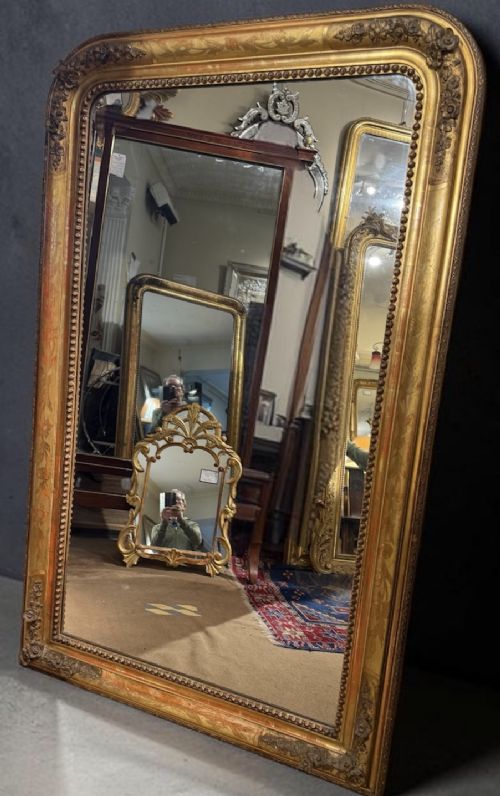
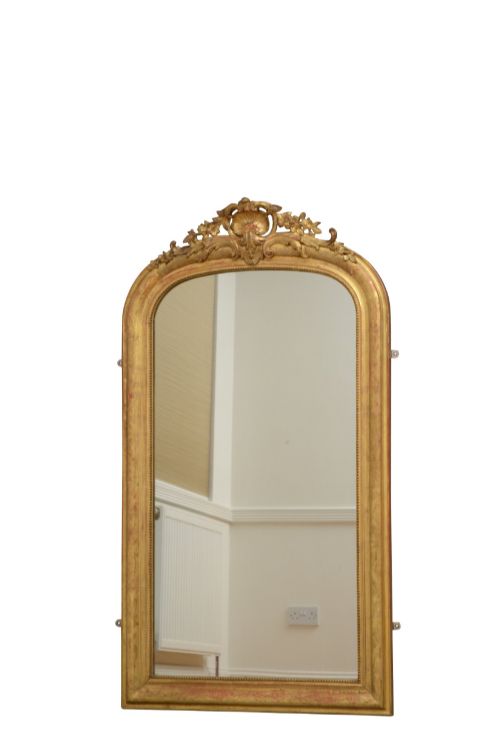
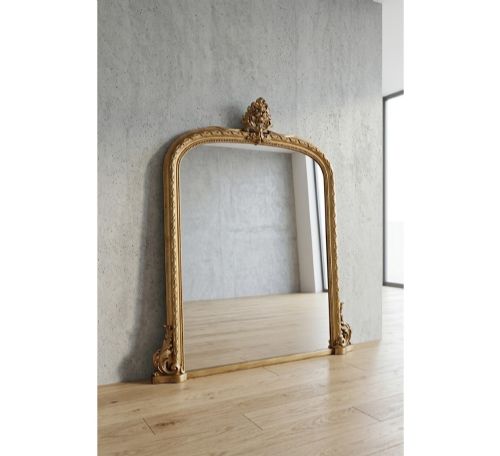
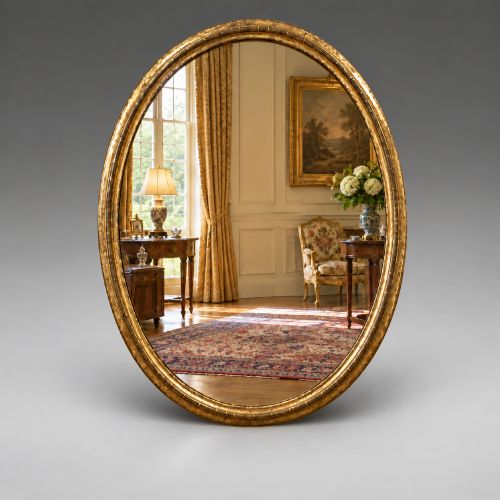
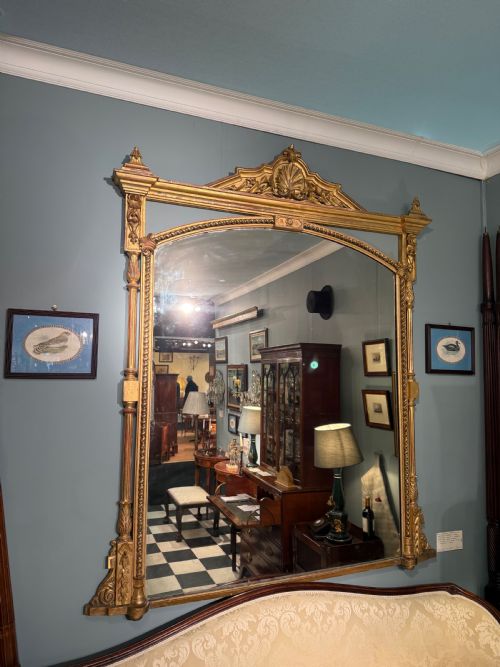
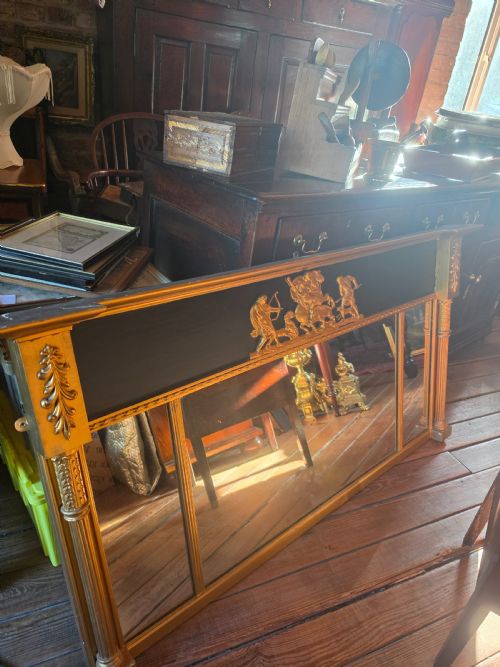
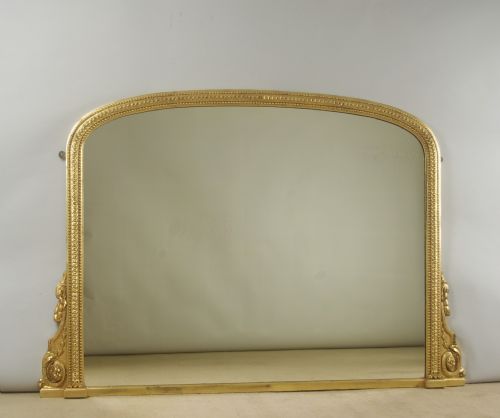
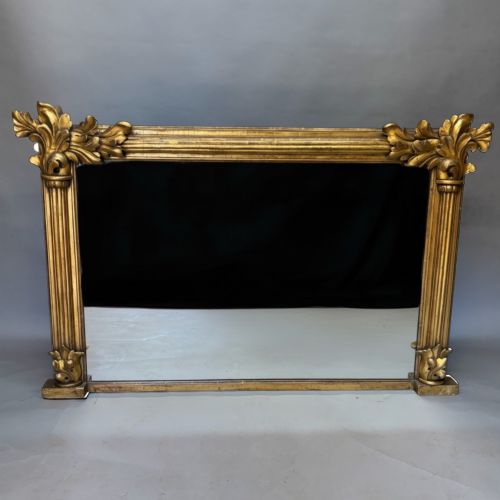
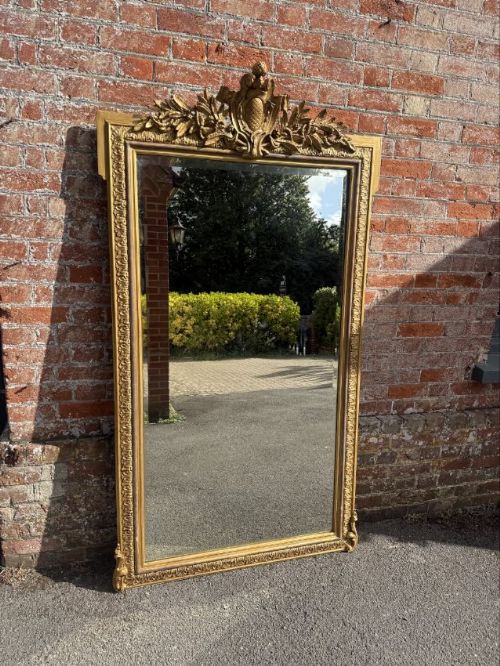
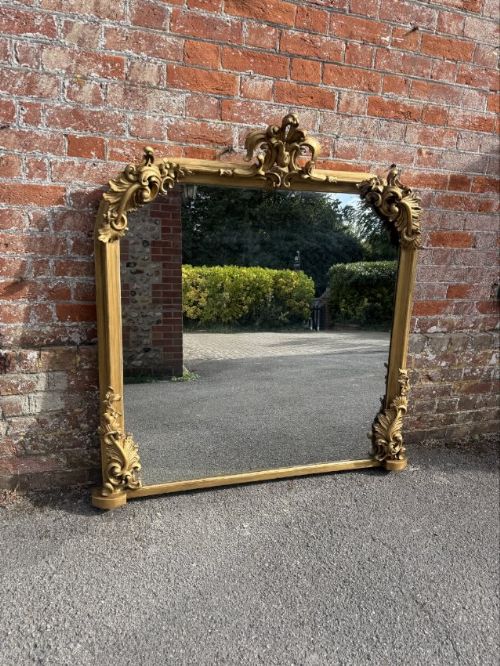
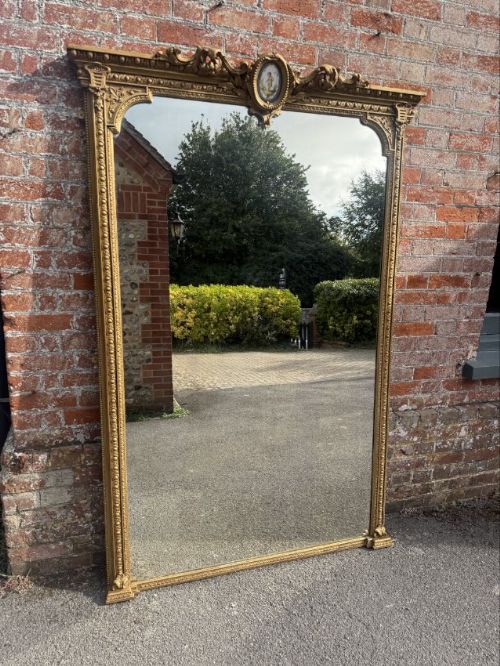
A gilded overmantel is a large wall mirror designed specifically to hang above a fireplace mantelpiece. The pieces gathered here belong primarily to the nineteenth century, spanning Victorian, Regency, and French Louis Philippe styles.
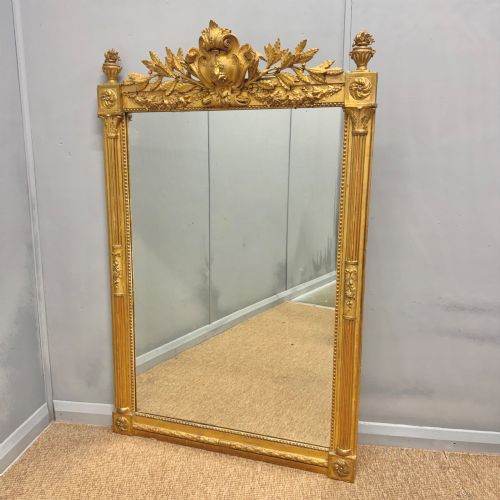
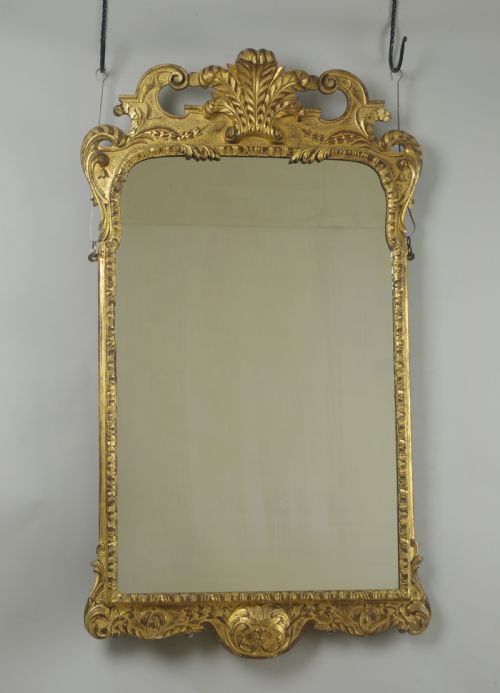
Most examples take the form of substantial architectural wall mirrors, often featuring arched tops, rectangular formats, or decorative crests. French and English workshops produced these pieces in varying dimensions, from domestic proportions to monumental country house scales.
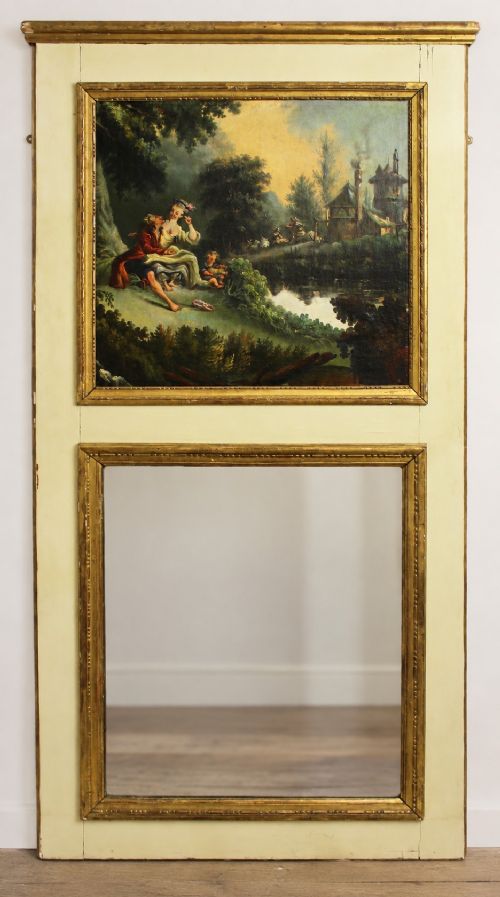
Origins divide notably between English carved wood frames and French designs such as Napoléon III leaner mirrors or trumeau panels. These objects served to bounce natural daylight around high-ceilinged reception rooms while anchoring the decorative scheme of the hearth.
Materials and construction
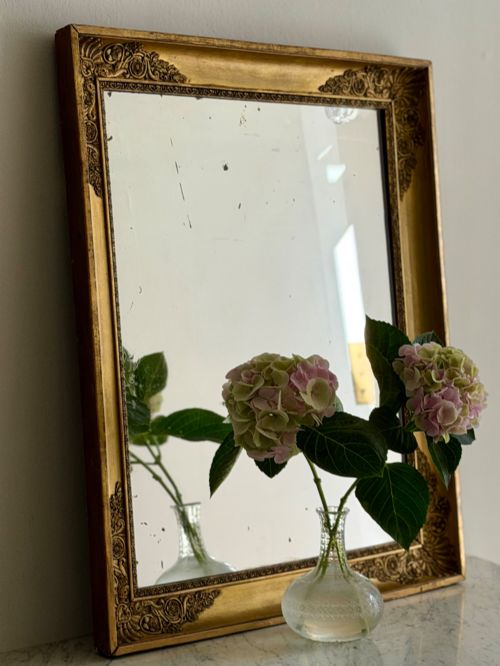
Frames rely on a foundation of solid wood, carved or assembled from timber and shaped moulding. Over this base, artisans applied layers of gesso to build up crisp relief details like rope twists, floral motifs, and classical pediments.
Gilding was achieved using gold leaf or water gilding techniques upon the prepared gesso surface, sometimes paired with bare gesso patches exposed through time. Original mirror plates often consist of mercury glass, which frequently exhibits characteristic foxing and soft, mottled reflections.
Materials documented across the collection include giltwood, gesso, composition, and original mercury glass plates.
Evaluating quality and craftsmanship
Quality rests in the depth and crispness of the hand-carved wooden or moulded gesso ornament decorating the frame. Superior pieces display cleanly defined architectural elements and harmonious proportions that suit grand domestic interiors.
The integrity of the original mirror plate heavily influences character, with authentic mercury glass commanding particular attention for its aged depth. Furthermore, the retention of the original gilded surface without heavy modern overpainting distinguishes finer survivors.
Arsène Rochette of Versailles
The Gilded Overmantel Glossary
- Gesso
- A plaster-like mixture applied to wooden frame foundations to create a smooth surface for carving and gilding. This material allows artisans to execute sharp relief ornament.
- Mercury glass
- An early type of silvered mirror glass produced by pouring a liquid mercury amalgam behind the glass plate. It creates a dark, atmospheric reflection often prone to foxing.
- Trumeau
- A decorative wall mirror incorporating an oil painting or panel above the glass plate. These French pieces frequently display pastoral scenes.
- Louis Philippe
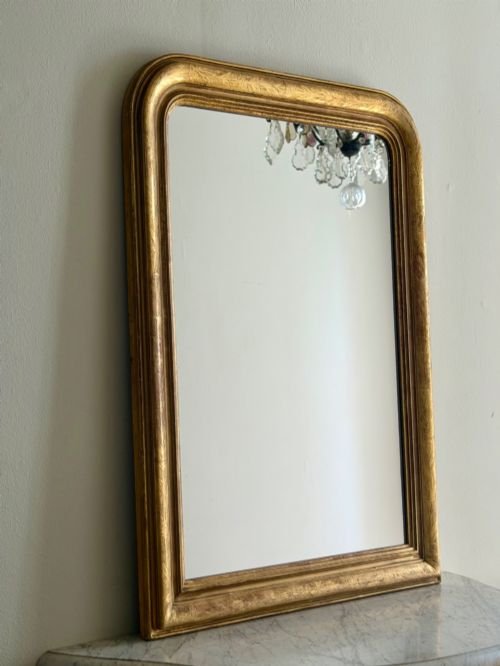
- A mid-nineteenth-century French style characterised by understated elegance, rounded top corners, and restrained classical moulding. These mirrors balance simplicity with decorative presence.
- Water gilding
- A traditional technique applying gold leaf over wet bole and gesso. This method permits the gold to be burnished to a high, reflective gloss.
Gilded Overmantel: Frequently Asked Questions
What is a gilded overmantel?
A gilded overmantel is a large decorative mirror intended to sit directly upon or hang above a fireplace mantel. These nineteenth-century pieces combine wooden frames, gesso ornamentation, and gold leaf finishes.
They function as both functional looking glasses and significant decorative focal points within period reception rooms.
How do you date a gilded mirror?
Dating relies on observing stylistic markers such as the rounded corners typical of Louis Philippe designs or the architectural symmetry of Regency pieces. Frame construction methods and the presence of original mercury glass also provide chronological clues.
Evidence from nineteenth-century periods shows distinct shifts in moulding profiles and decorative crests over the decades.
What is foxed mercury glass?
Foxed mercury glass refers to the speckled, dark ageing spots that develop behind historical mirror plates over many decades. This chemical breakdown creates a soft, uneven reflection valued for its authentic antique appearance.
It distinguishes older silvering techniques from modern, flawless mirror production.
How do I hang a heavy overmantel?
Due to their substantial weight and large wooden frames, these mirrors require secure wall fixings anchored directly into masonry or heavy studwork. Many period examples were designed to rest partially on the mantel shelf while being secured to the wall above for stability.
Professional installation is recommended given the considerable size and fragile nature of antique glass and giltwood.