
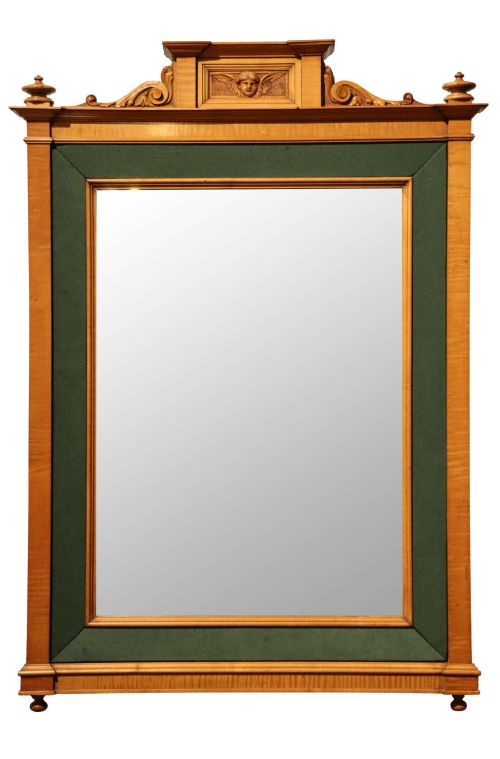
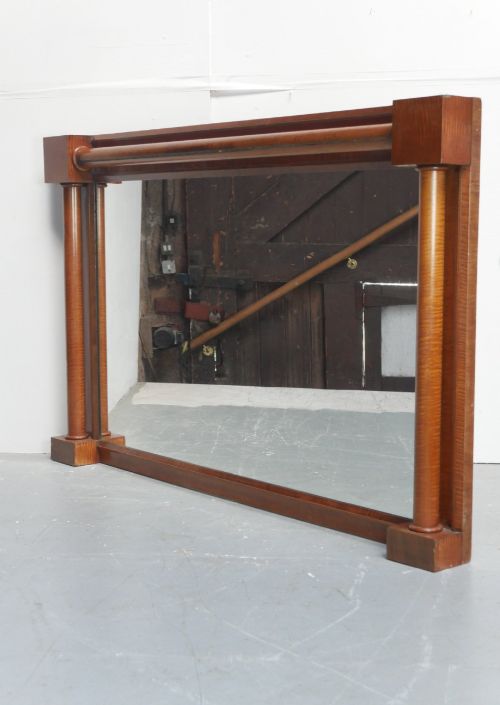


Satinwood Wall Mirror
A satinwood wall mirror brings a warm, pale timber tone and refined figured grain to an interior.
Satinwood Wall Mirror
When you search for a satinwood wall mirror, you are looking at timber hanging looking glasses framed in pale, highly figured wood.
The versions most commonly met on this page range from compact Edwardian ovals to large Victorian overmantels and Sheraton Revival designs.
Makers often combined satinwood with contrasting timbers such as mahogany or rosewood, adding marquetry or inlaid details to enrich the surface.
How they were made
Cabinetmakers constructed these frames using solid timber bases or pine carcases faced with fine veneers of satinwood, birch, or exotic hardwoods.
Wood inlay and marquetry techniques introduced contrasting dark and light elements, creating geometric borders or classical floral motifs.
Glass plates were silvered and set securely into rebated frames, sometimes accompanied by brass fixings and structural hanging loops.
What varies in quality
The distinction between ordinary and exceptional work lies in the choice of veneer, where highly figured, chatoyant grain distinguishes superior pieces from plain timber surfaces.
Intricacy and precision in the wood inlay demonstrate the hand of a skilled artisan rather than mass production methods.
The integrity of the original mercury or early silvered glass plate and the retention of matching secondary timbers heavily influence the character of the piece.
The Satinwood Wall Mirror Glossary
- Satinwood
- A dense, lustrous tropical timber prized for its pale yellow colour and natural sheen. It takes a high polish and forms the primary decorative surface for many revival pieces.
- Marquetry
- The art of applying small pieces of veneer to a structure to form decorative patterns. Artisans used contrasting woods to create pictorial or geometric designs.
- Overmantel mirror
- A large looking glass designed to hang directly above a fireplace mantel. These pieces frequently feature architectural proportions and extensive framing.
- Pier mirror
- A tall vertical looking glass designed to hang on the wall space between two windows. They often match console tables or side cabinets placed below them.
- Ebonised wood
- Timber treated with a chemical stain or black finish to imitate ebony. It provides a sharp, dark contrast against pale satinwood or birch.
Satinwood Wall Mirror: Frequently Asked Questions
What periods do these mirrors come from?
The pieces seen here span the nineteenth and early twentieth centuries, including Victorian, Edwardian, and Regency eras.
Revival styles such as Sheraton Revival and Egyptian Revival also heavily influence the design vocabulary of this period.
How should I clean the wood frame?
Dust the satinwood surface gently with a dry, soft microfibre cloth to remove everyday particles without scratching the finish.
Avoid household liquid cleaners, as moisture and harsh detergents can damage historic polish and lift delicate wood veneers.
Are the glass plates original?
Many surviving frames retain their original glass plates, which often display subtle irregularities, tiny bubbles, or light foxing.
Replacements do occur over long spans of time, so examining the backing boards and silvering helps determine the age of the plate.