


Mahogany Mantel Mirror
A mahogany mantel mirror brings depth and warmth to a room, framing reflections in timber and gilt.
Mahogany Mantel Mirror
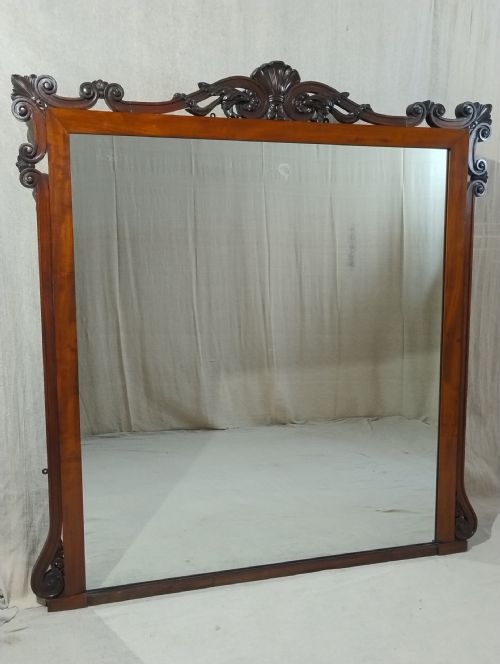
A mahogany mantel mirror is a significant interior furnishing designed to sit above a fireplace or hang upon a wall, bringing functional reflection and decorative presence into a room. These pieces appear frequently across Victorian, Edwardian and Georgian periods, taking forms such as overmantels, pier mirrors and wall mirrors.
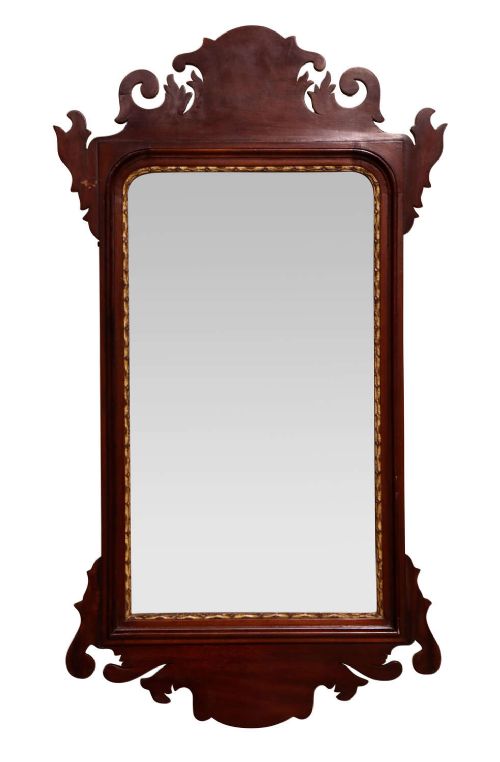
Makers drew on historic vocabularies, producing Chippendale revival fretwork, Rococo curves, and straightforward Edwardian frames with inlay or painted details. Whether positioned above a mantelpiece or secured to a drawing-room pier, each mahogany mantel mirror reflects the domestic ambitions of its era.
Quality and execution
The distinction between ordinary and exceptional pieces rests upon the crispness of the carving and the depth of the timber grain. Fretwork cut cleanly by hand and frames retaining their original silvered mirror plates demonstrate superior workshop execution.
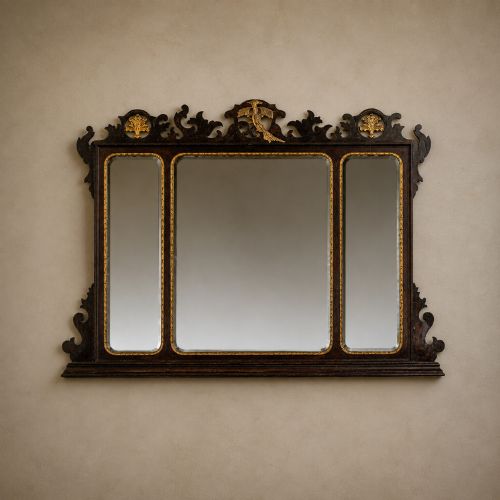
Proportion and decorative harmony separate standard production from masterwork design. Elaborate additions such as Ho-Ho bird crestings, marquetry inlay, or integrated brass and metal plaques elevate the architectural ambition of the mirror.
Certain Victorian frames feature whimsical Ho-Ho bird crestings perched proudly above the glass.
The Mahogany Mantel Mirror Glossary
- Overmantel mirror
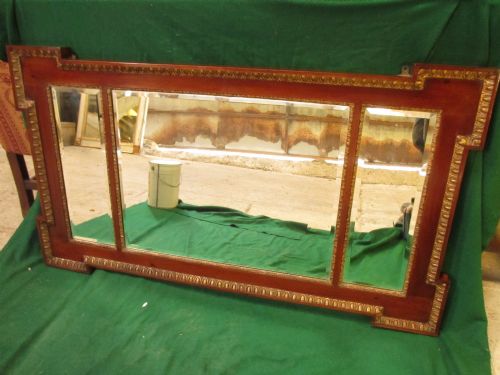
- A large mirror specifically proportioned to hang on the wall directly above a fireplace mantelpiece. These often feature horizontal formats and multi-plate configurations.
- Pier mirror
- A tall, narrow mirror designed to hang on the wall space between two windows, known as a pier. They often match the height of adjacent architectural joinery.
- Giltwood
- Wood that has been prepared and coated with thin sheets of gold leaf or metallic paint to create a brilliant decorative surface. It frequently highlights carved details on mahogany frames.
- Fretwork
- Thin wood pierced with decorative scrollwork and geometric patterns using a fretsaw. This technique characterises Chippendale style wall mirrors.
- Parcel gilt
- A decorative finish where selected portions of a wooden object are gilded while the remaining timber is left visible. It accentuates mouldings and carved motifs.
Mahogany Mantel Mirror: Frequently Asked Questions
How do I hang a heavy overmantel mirror safely?
Large overmantel mirrors carry substantial weight due to their dense timber frames and thick glass plates. Secure them directly into structural wall studs using appropriate heavy-duty brackets and fixings.
Professional installation is recommended to distribute the load evenly and protect both the wall and the antique frame from accidental strain.
Were these mirrors always meant to go above fireplaces?
Many large formats were purpose-built for the mantelpiece to reflect light from candles or windows into the room. However, pier mirrors and wall mirrors served different architectural functions between windows or along plain walls.
Domestic interiors of the nineteenth century utilised both types to create illusions of greater space and illumination.
How can I tell a Georgian mirror from a Victorian revival?
Georgian pieces display the restrained proportions and hand-carved details typical of eighteenth-century craftsmanship. Victorian revival works often adopt heavier dimensions and bolder massing while imitating earlier styles like Chippendale or Rococo.
Examining the construction methods, backboards, and fastener types helps clarify the exact period of manufacture.
What is triple plate glass?
Triple plate glass refers to a mirror construction where a single wide frame encloses three distinct adjacent glass panels. This technique allowed makers to span wide overmantels without casting a single massive, fragile sheet of glass.
Divided plates are held together by internal wooden muntins or brass divisions within the frame rebate.