




Antique Mahogany Dining Ends
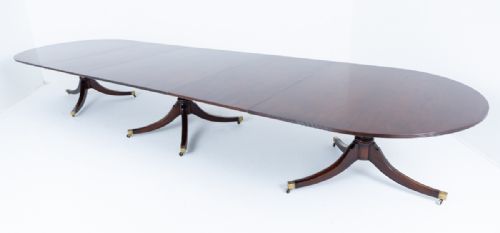
These antique mahogany dining ends are versatile table sections designed to expand for grand dinner parties or separate into console tables.
Antique Mahogany Dining Ends
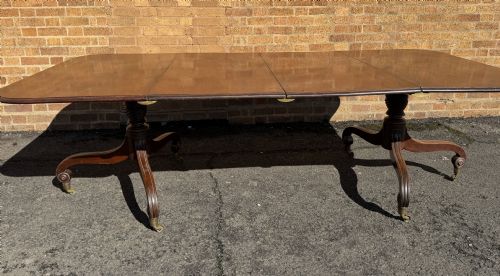
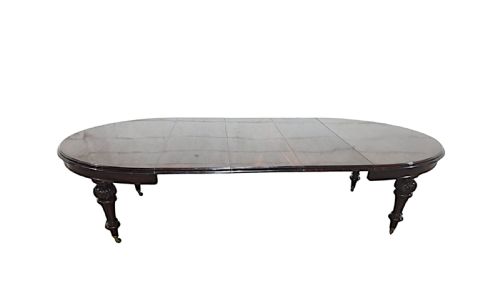
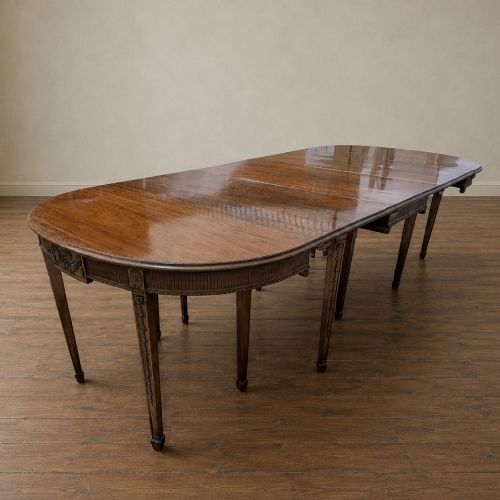
When you search for antique mahogany dining ends, you are looking at modular table sections, frequently formed as D-ends or demi-lune tables, which functioned as standalone console tables or united with leaves and pillars to create extensive dining surfaces. The pieces you are most likely to meet on this page span the Georgian, Regency, and Victorian periods, often appearing as pairs of console tables or drop-leaf tables that convert into full dining tables.
These items originate primarily from the 18th century, 19th century, and Edwardian eras, reflecting the adaptable dining habits of those periods. Makers utilised solid timber and clever joining mechanisms so that large banquet tables could shrink back to side tables against a drawing-room wall when the meal ended.
How they were made
Cabinet makers built these dining ends using dense mahogany, selected for its rich grain and durability, frequently incorporating brass fittings and castors to support heavy extending actions. Surfaces often display delicate satinwood or boxwood inlay work, adding fine linear detail to the edges and borders of the tops.
Construction techniques relied on sturdy pillar supports, drop-leaf hinges, and folding console mechanisms. Workshops shaped the solid timber and veneers by hand, ensuring that separate D-end tables mated flush against central leaves or matching sections.
Some clever tables hide deception mechanisms behind respectable side-table facades.
What varies in quality
The standard of timber selection and the precision of the joining mechanisms separate the finest examples from standard production. Superior tables demonstrate carefully matched mahogany grain patterns across multiple extra leaves and solid brass hardware that operates smoothly.
Mastery of inlay work and the integrity of the structural frame also dictate the grade of a piece. Finer workshops delivered crisp proportions, stable pillar supports, and uncompromised structural timber that endured decades of extension and reconfiguration.
William and Gibton·Robert Adam·Gillows·Waring and Gillow
The Antique Mahogany Dining Ends Glossary
- D-End
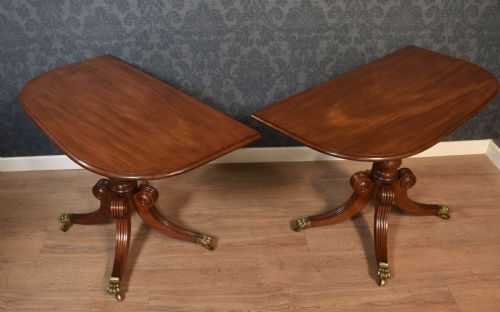
- A table end shaped in the semi-circular profile of the capital letter D. These sections stood against walls as console tables when not joined to a central dining table.
- Demi-Lune
- A half-moon shaped table top supported by legs. Pairs of these tables combined to form circular or oval dining surfaces.
- Pembroke Table
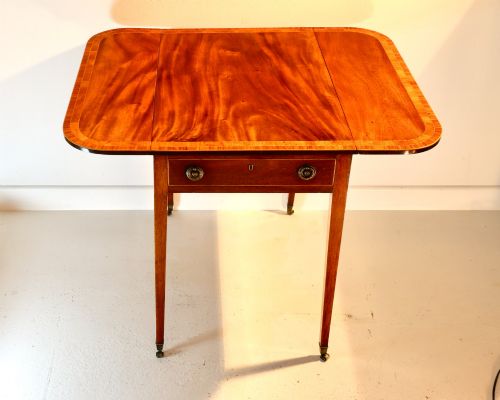
- A small table with hinged drop leaves on either side and a drawer. They offered versatile surface space in smaller Georgian and Victorian rooms.
- Twin-Pillar
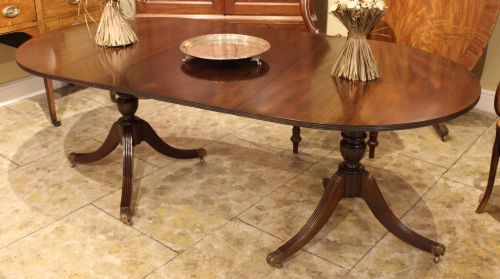
- A dining table construction where the top rests upon two separate column pedestals fitted with branching legs. This design provided better legroom for seated guests than traditional four-leg frames.
Antique Mahogany Dining Ends: Frequently Asked Questions
How do D-end tables work?
D-end tables function as modular furniture pieces that stand against room walls as console tables when unextended. Users pull them apart and insert leaves or central tables between them to create a long dining surface.
Mechanisms often involve brass clips or pegs to lock the sections firmly together during meals.
What is a pembroke table used for?
Pembroke tables served as multi-purpose parlour or breakfast tables with folding flaps that raised when extra surface area was required. Their drop leaves allowed them to sit compactly against walls.
Drawers fitted beneath the top held writing materials or small sewing items.
How can I tell Georgian from Regency tables?
Georgian dining ends often display restrained classicism, straight or tapered legs, and subtle mahogany figuring dating from the 18th century. Regency pieces from the early 19th century introduce bolder architectural forms, pillar supports, and brass inlays.
Maker influences like George III or George IV styles also guide period identification.
Can I use dining ends as console tables?
Dining ends function naturally as console or side tables when separated from their central leaves. Their flat straight edges push flush against walls.
Pairing demi-lune or D-end sections creates balanced side furniture in hallways or dining rooms.