



Brown Mahogany Wall Table
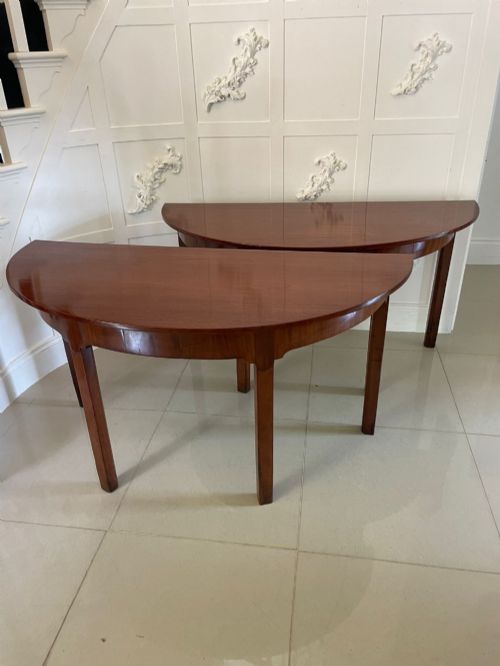
A brown mahogany wall table brings architectural balance to a hallway or drawing room while offering a practical surface for display.
Brown Mahogany Wall Table
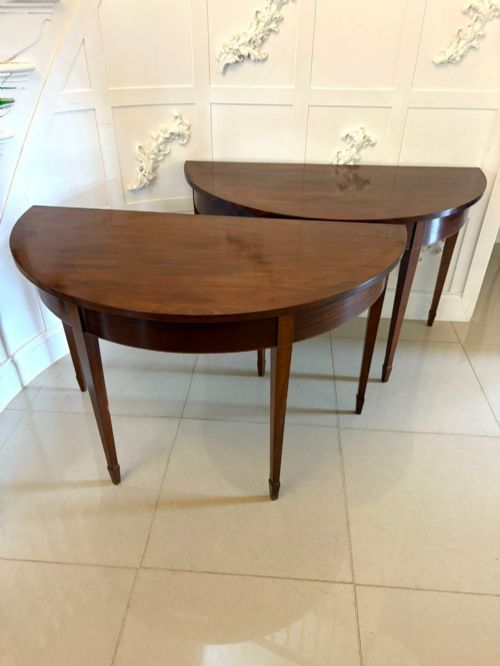
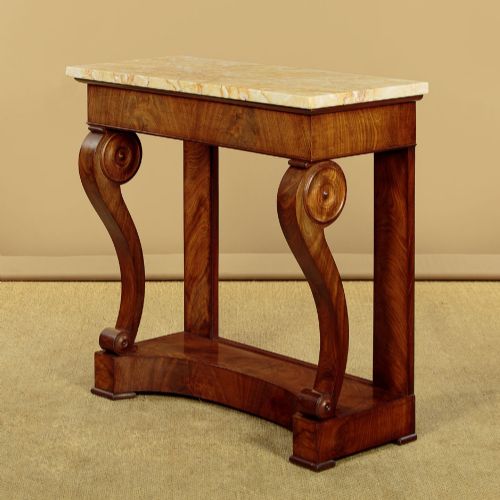
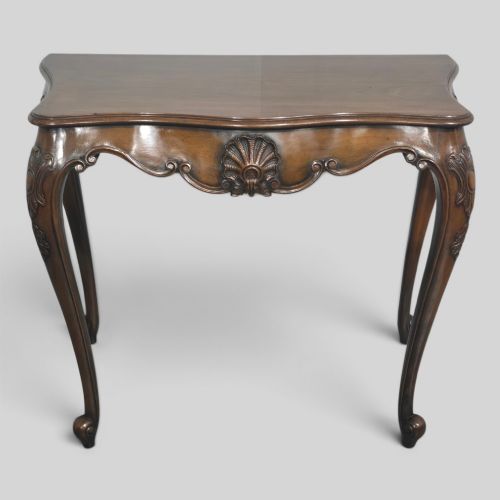
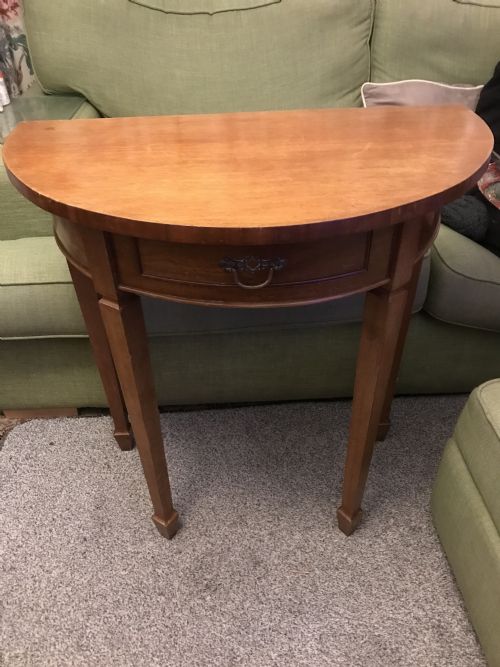
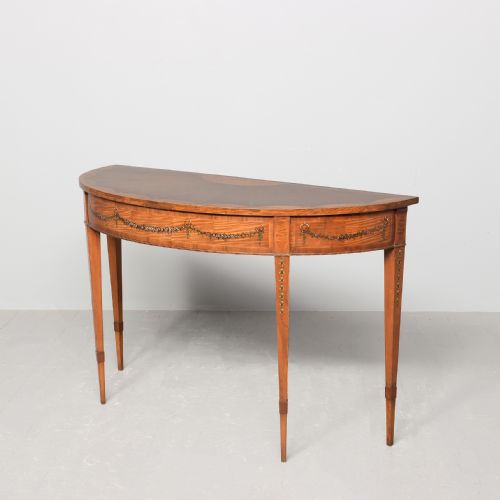
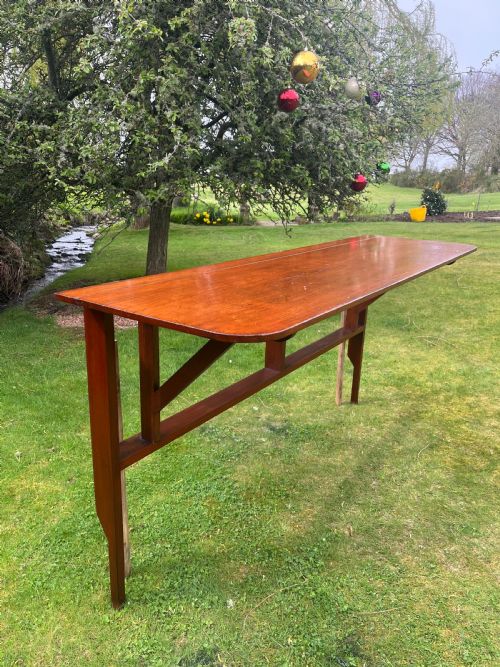
A brown mahogany wall table encompasses console, serving, and demi-lune forms designed to stand flush against a perimeter wall. These pieces emerge primarily from Georgian, Regency, and Victorian periods, alongside later Edwardian and revival interpretations.
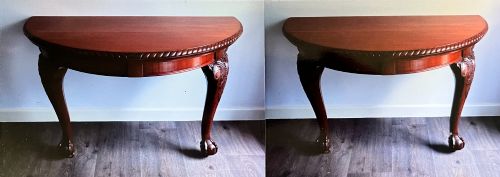
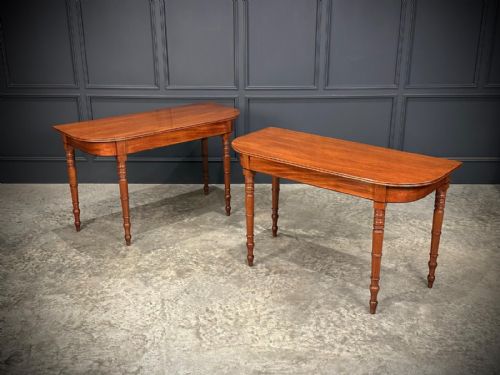
The selection here ranges from semicircular card tables and narrow hall pieces to substantial console and pier tables. Many items arrive in matched pairs, reflecting their original purpose in formal reception rooms.
How they were made
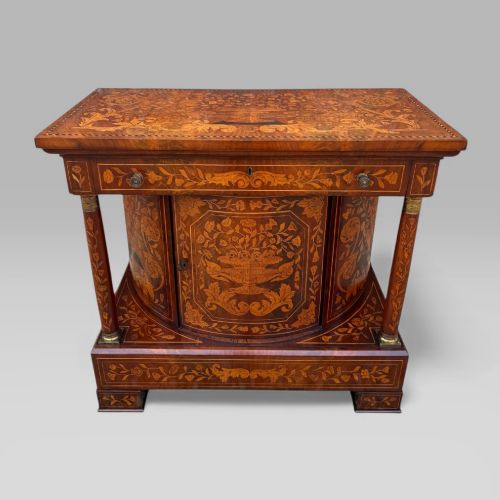
Cabinet makers utilised solid timber and flame mahogany veneer laid over secondary woods to create rich surface movement. Workshops frequently enhanced these timbers with contrasting stringing and crossbanding in satinwood, boxwood, and various inlaid motifs.
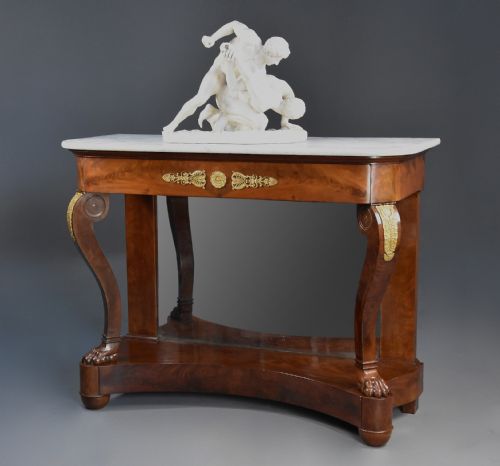
Many examples incorporate inset marble tops or glazed elements supported by brass mounts, ormolu, and carved wooden details. Joinery techniques ranged from traditional folding mechanisms on card tables to sturdy framework for heavy stone surfaces.
Listings span from the 18th century through the Georgian, Victorian, and Edwardian eras into the 1930s.
What varies in quality
The depth of figure within the mahogany veneer dictates much of the visual weight, with highly figured or flame grain commanding greater presence than plain timber. Precision in the marquetry inlay and the crispness of carved wooden details separate standard production from superior workshop output.
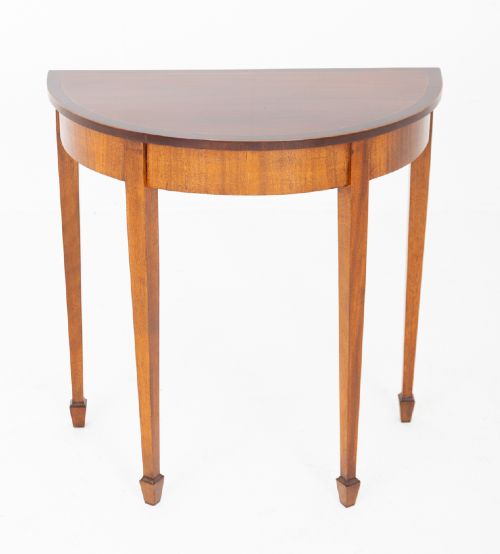
Integration of heavier materials like marble or glass requires robust internal framing to maintain stability against the wall. The proportion of the legs - whether terminating in spade feet, brass casters, or carved brackets - determines the overall elegance of the silhouette.
Edward and Roberts·Cording of London
The Brown Mahogany Wall Table Glossary
- Demi-lune
- A half-moon shape popular for console and hall tables designed to sit flat against a wall. This profile allowed tables to occupy minimal floor space in narrow corridors.
- Console table
- A table supported by wall brackets or console legs rather than four independent legs. These pieces historically stood beneath mirrors or windows.
- Crossbanding
- A border of veneer laid around the edge of a tabletop with the grain running perpendicular to the centre panel. This technique creates a distinct visual framing effect.
- Ormolu
- Gilded bronze mounts applied to furniture for decorative accent. The technique was particularly favoured in French and regency cabinet making.
- Marquetry
- Elaborate patterns created by fitting different veneers together on a surface. Craftsmen used various woods and contrasting materials to form pictorial or geometric designs.
Brown Mahogany Wall Table: Frequently Asked Questions
Where should I place a brown mahogany wall table?
These tables suit hallways, landings, and living rooms where floor space is limited. Their shallow profile allows them to sit neatly against a wall without obstructing passageways.
Pairing a console table with a matching wall mirror creates a balanced focal point in a dining room or entrance hall. They also function well as serving surfaces during gatherings.
How do I distinguish a Georgian table from a Victorian one?
Georgian tables typically exhibit restrained classical proportions, delicate inlay work, and lighter framing. Their design often reflects neoclassical or Chippendale influences.
Victorian pieces generally display heavier proportions, darker finishes, and more robust carving. They frequently incorporate marble tops or more exuberant revival styling.
What is a demi-lune table used for?
A demi-lune table provides a compact surface for lamps, clocks, or decorative objects against a flat wall. Many feature folding tops that open to create a larger table for cards or games.
Their semicircular shape makes them particularly versatile for tight spaces where rectangular corners would obstruct movement.