



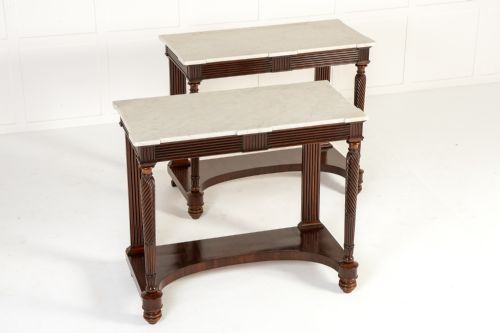
Mahogany Hall Table Pair
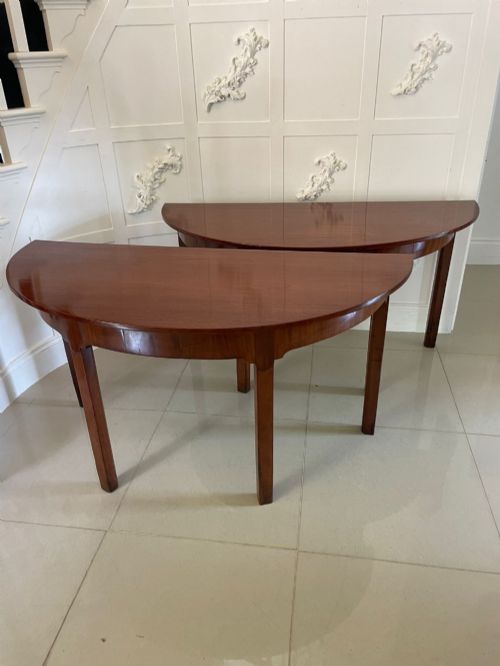
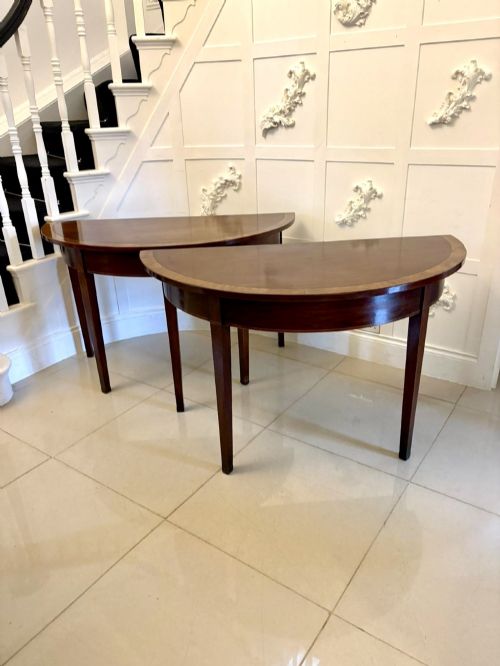
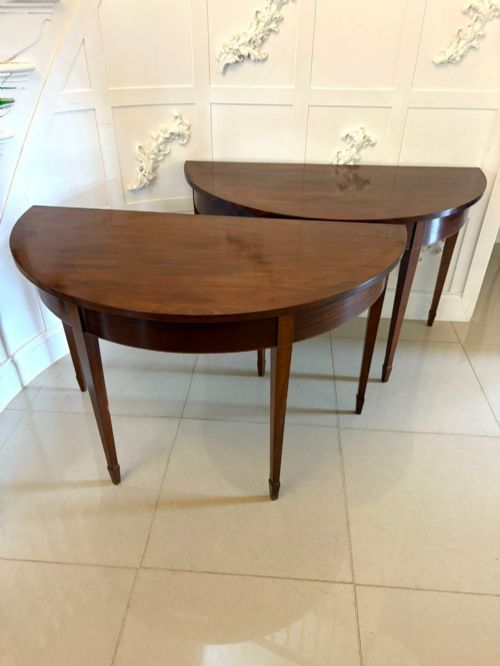
A mahogany hall table pair provides symmetrical elegance for a grand entrance, bringing balanced period design and rich timber grain to an interior.
Mahogany Hall Table Pair
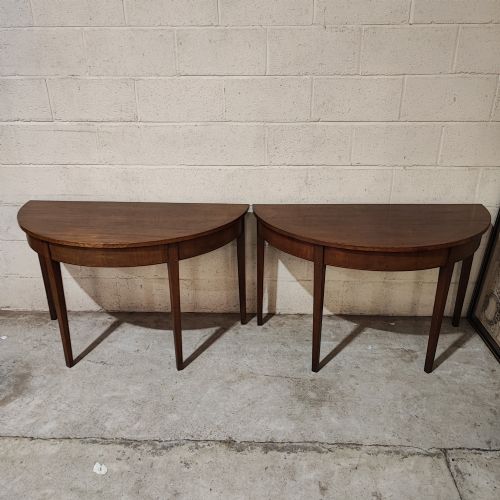
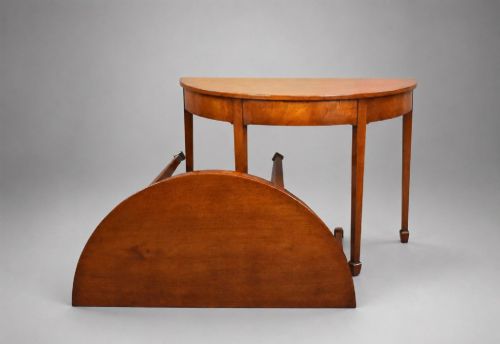
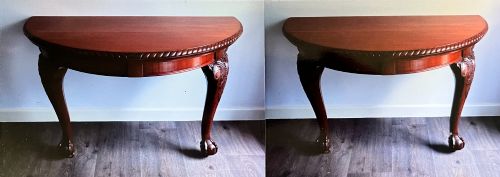
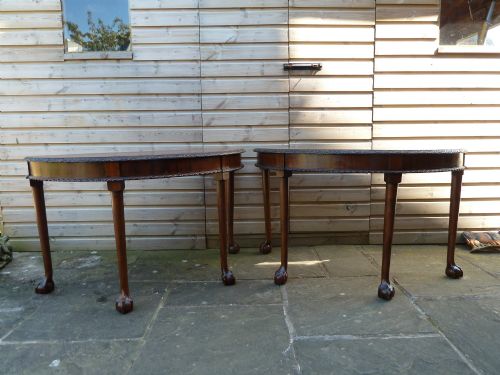
A mahogany hall table pair typically comprises matching side, console, or demi-lune tables designed to stand against an entrance wall, often separating to form a single large dining table when needed.
The selections span from strict Georgian and Regency designs to later Victorian and Edwardian revivals, offering both half-round and rectangular formats.
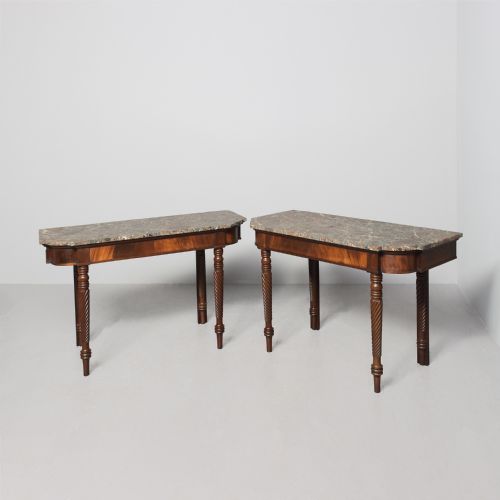
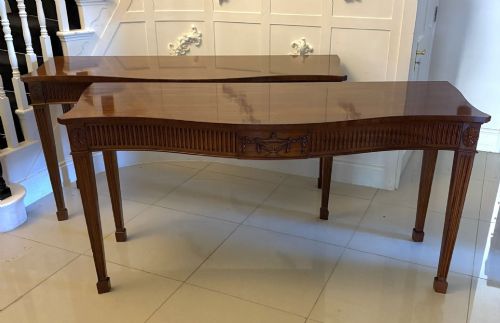
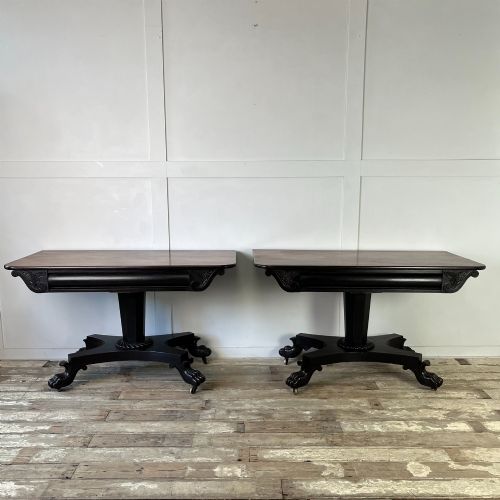
These matched sets range from restrained utilitarian hall pieces to heavily carved neoclassical works featuring marble inserts or intricate crossbanding.
Materials and construction
Cabinet makers utilised solid mahogany and rich mahogany veneers over secondary softwoods, occasionally incorporating contrasting satinwood stringing and brass mounts.
Structural integrity relied on mortise and tenon joints, complemented by substantial timber stretchers, rule joints on fold-over leaves, and hand-cut dovetails within the drawer construction.
Listings feature mahogany, marble, brass, and satinwood across periods spanning the Georgian, Regency, and Victorian eras.
Judging the execution
Superior examples display deeply figured flame mahogany grain matched across both surfaces, whereas lesser pieces utilise plain timber or simpler veneer matching.
Hand-carved details such as reeding, scrollwork, and neoclassical swags reveal the hand of a skilled artisan, contrasting with machine-routed or plainly moulded edges found in later revival pieces.
Gillows·Jean Joseph Chapuis
The Mahogany Hall Table Pair Glossary
- Demi-lune
- A half-moon shape popular for console tables designed to sit flush against a wall.
- D-end
- A rectangular table with one semi-circular end, often found in pairs that join to form a dining surface.
- Crossbanding
- A border of veneer laid with the grain running perpendicular to the main surface timber.
- Stringing
- A narrow inlay of contrasting wood used to outline drawers, tops, and legs.
- Console table
- A table supported by wall brackets or console legs, traditionally positioned in a hallway or formal reception room.
Mahogany Hall Table Pair: Frequently Asked Questions
How were these tables used originally?
In period homes, these matching tables flanked doorways or filled narrow entry spaces to hold lamps, calling cards, or decorative objects.
When constructed as D-end or folding formats, they separated to serve as side tables or united into a central dining table for guests.
How do I distinguish Georgian from Victorian pieces?
Georgian and Regency versions typically exhibit finer proportions, subtle brass details, and hand-carved mahogany elements that prioritize classical restraint.
Victorian and later revival pieces often feature heavier timber sections, more robust scroll carvings, and darker factory finishes.
Can I separate a pair into different rooms?
Splitting a matched set allows you to place identical accent surfaces in separate hallways, living areas, or bedrooms to create a cohesive interior theme.
Many collectors prefer keeping them paired together to maintain architectural symmetry along a single grand corridor.
What is the difference between a console and a hall table?
Console tables historically relied on wall brackets or distinct scroll supports, whereas traditional hall tables stood freely on four legs.
Over time, these terms became interchangeable within antique listings to describe narrow entrance furniture.