







Antique Mahogany Counter
An antique mahogany counter brings commercial history into a room with rich timber and glazed panels built for trade.
Antique Mahogany Counter
An antique mahogany counter serves as a solid timber work surface or display unit originating from shops, chemists, and commercial interiors of the nineteenth and early twentieth centuries. Pieces matching this phrase include large freestanding shop counters, bow-end shop counters, and glazed retail display stands built to showcase merchandise to customers.
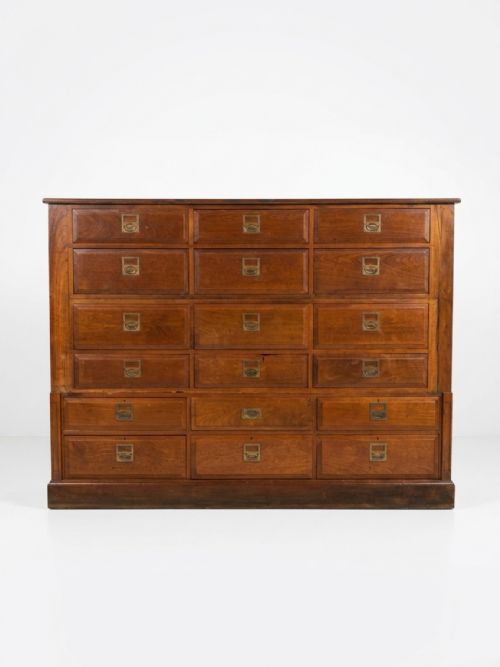
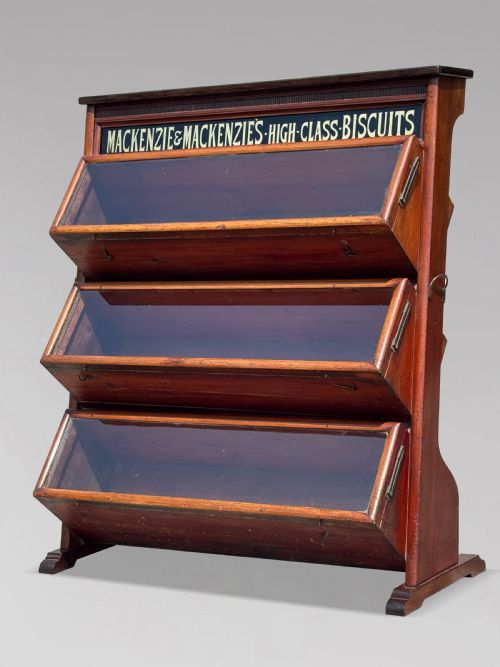
The versions most commonly met on this page span the Victorian, Edwardian, and 1920s commercial periods, often featuring glazed panels, brass fittings, and organised banks of drawers. Makers and retailers utilised durable timber to withstand daily public use while maintaining a formal presentation for goods like biscuits, chocolates, and haberdashery.
Buyers select these pieces for domestic interiors to function as kitchen islands, sideboards, or hallway display units that offer generous proportions and practical storage. The integration of mirror glass, pine backing, and panelled construction reflects the functional demands of historic retail trade.
How they were made
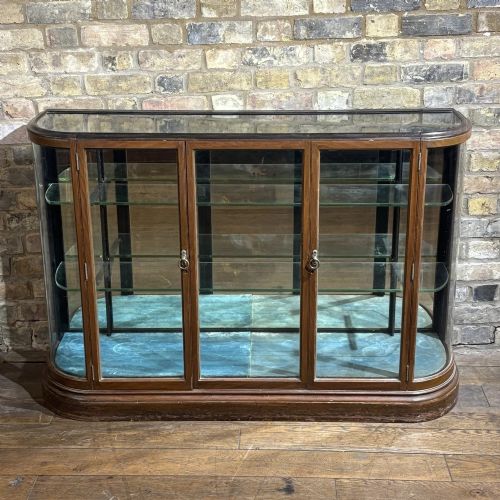
Makers constructed these counters using solid mahogany framing paired with secondary timbers like pine for internal carcases and drawer linings. Glazed sections utilised glass panes held by slender timber glazing bars to permit maximum visibility for goods inside cabinets and display cases.
Metal components such as brass brackets, handles, and hinges provided robust functional support for opening doors and lifting lids on countertop display units. Mirrored interiors were integrated into specific cabinets to bounce light through the display space and enhance the appearance of items on shelves.
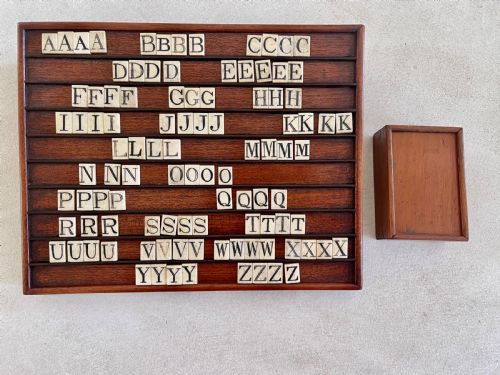
Alphabet letters carved from bone and hidden inside nineteenth-century slope boxes wait for keen collectors to spell out forgotten shop names.
What varies in quality
Quality in an antique mahogany counter rests on the depth of the timber grain, the crispness of moulded details, and the integrity of the original glass panels. Superior examples exhibit substantial proportions, well-figured mahogany surfaces, and intact manufacturer branding or hardware.
Commercial utility meant heavy use, so the survival of original bevelled glass, working locks, and unaltered secondary woods elevates a piece above standard utilitarian workshop fittings. The standard of joinery in the drawer construction and the retention of original mirror plates distinguish high-grade shop furniture from simpler utility builds.
G H Gledhill Halifax·F Sage & Co·John Stow Ltd of Bradford·Parnall & Sons of Bristol·Mappin & Webb·Orme & Sons Manchester
The Antique Mahogany Counter Glossary
- Mahogany
- A durable, reddish-brown tropical hardwood prized for furniture and shop fittings due to its stability and fine grain. It takes a high polish and resists warping over decades of commercial use.
- Shop Fitting
- Custom furniture and architectural elements designed specifically for the interior of a retail establishment. These pieces were built to withstand heavy daily interaction with the public.
- Haberdashery Cabinet
- A multi-drawer storage unit originally used in shops to sort small sewing items, ribbons, and fasteners. They feature numerous shallow drawers, often with glass fronts.
- Vitrine
- A glass-fronted display cabinet or case designed to showcase delicate objects or retail merchandise. The term denotes a piece focused primarily on visibility and protection.
- Countertop Display Cabinet
- A smaller glazed case designed to sit atop a main shop counter for eye-level customer browsing. These units frequently featured rear sliding doors for access by the shopkeeper.
Antique Mahogany Counter: Frequently Asked Questions
What is an antique mahogany counter?
An antique mahogany counter is a heavy timber shop fixture or display unit built during the nineteenth or early twentieth centuries for commercial trade. These pieces were designed to serve transactions and display goods behind glass.
Today, they function in homes as statement kitchen islands, sideboards, or display furniture, offering deep drawers and glazed shelving.
How do I date an antique mahogany counter?
Dating relies on construction methods, hardware styles, and timber characteristics typical of Victorian, Edwardian, and 1920s commercial design. Maker plates, brass fittings, and secondary woods like pine provide further chronological markers.
Comparing the joinery style to documented shop fittings from firms like F Sage or Parnall helps narrow the decade of manufacture.
Can I use a shop counter in a kitchen?
Yes, many buyers repurpose large shop counters and haberdashery cabinets as kitchen islands or preparation surfaces due to their sturdy proportions. The generous timber top handles daily tasks while the drawers store utensils.
Glass display sections can house tableware, and mirrored interiors add brightness to domestic spaces.
What maintenance do these counters need?
Routine care involves dusting timber surfaces with a dry cloth and applying appropriate wax periodically to nourish the mahogany grain. Glass panels require standard window cleaner applied carefully to avoid wood frames.
Protecting the surface from excessive moisture preserves the historic finish and secondary pine structures beneath.