




Dark Wood Retail Counter
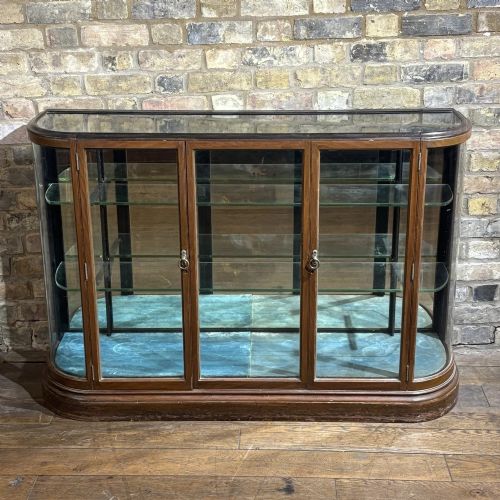
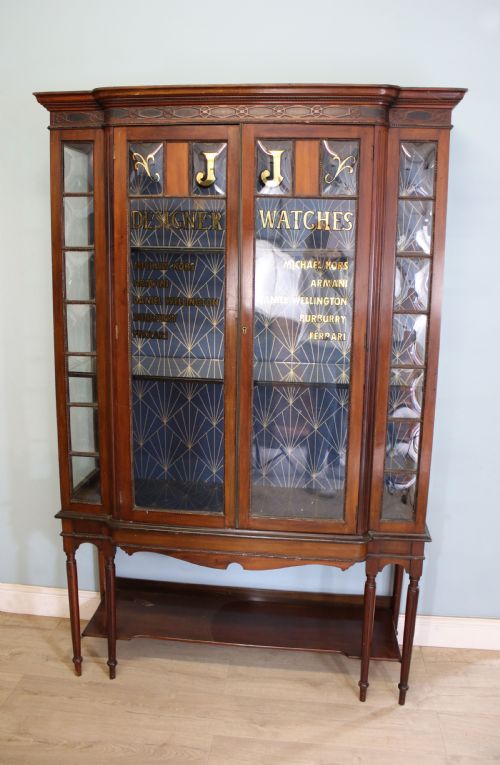
These dark wood retail counter pieces are utilitarian shop furnishings in mahogany, built to display goods effectively in commercial spaces.
Dark Wood Retail Counter
A dark wood retail counter serves as a functional shop furnishing designed for customer service and merchandise display within commercial environments. The selection includes serving counters, countertop display cabinets, and specialised advertising units tailored for confectionary and stationery.
Most examples originate from the Victorian and Edwardian eras, alongside early twentieth-century commercial pieces. These items range from large serving counters with adjustable feet to smaller countertop showcases intended for specific brands.
Victorian and Edwardian workshops produced these sturdy commercial fixtures to withstand daily retail use while presenting goods clearly behind glass. Buyers encounter distinct forms including bow end cabinets and specialised showcases bearing historical product branding.
Materials and construction
Cabinet makers utilised solid mahogany for the structural frames, creating durable enclosures that housed glazed panels for visibility. Brass hardware, such as hinges and handles, added functional strength and finished the cabinetry.
Internal elements often incorporated secondary materials like felt, leatherette, and paper to line the display surfaces. Joinery techniques ensured these shop fixtures could endure the constant demands of busy commercial interiors.
Listings span the Victorian and Edwardian eras into the early twentieth century, featuring mahogany construction combined with glass and brass.
Assessing quality
Quality in a dark wood retail counter lies in the calibre of the mahogany timber and the proportion of the framing. Superior examples display refined glazing bars and well-integrated branding elements that elevate them above standard utility furniture.
The sophistication of the commercial design dictates the overall standard, distinguishing simple serving benches from intricate bow end cabinets and maker-signed display units. Original functional fittings, such as adjustable feet, further indicate a higher tier of manufacture.
F. Sage & Co. London·Rowntree’s Chocolates·Venus Pencil
The Dark Wood Retail Counter Glossary
- Mahogany
- A durable hardwood commonly utilised for commercial shop fittings and display cabinets throughout the nineteenth and early twentieth centuries. Its dense grain made it ideal for heavy retail use.
- Bow end
- A curved cabinet end designed to soften sharp angles and maximise viewing angles for merchandise. This configuration appears frequently in period display units.
- Countertop display cabinet
- A smaller showcase designed to sit atop a main serving counter to highlight specific small goods. These units often feature glazed panels for all-round visibility.
- Adjustable feet
- Levelling mechanisms fitted to the base of larger shop counters to ensure stability on uneven floor surfaces. This practical addition points to functional commercial design.
Dark Wood Retail Counter: Frequently Asked Questions
What are dark wood retail counters?
These pieces are commercial shop furnishings constructed primarily from mahogany to serve customers and showcase merchandise securely. They encompass large serving counters and smaller glass display units.
Originating mostly from the Victorian and Edwardian periods, they reflect the practical demands of historical retail environments.
How were shop counters used historically?
Merchants utilised these sturdy wooden fixtures for customer transactions and for holding stock within commercial premises. Glazed sections allowed shoppers to inspect confectionary, stationery, and other goods while keeping items protected.
Countertop units specifically highlighted high-value or brand-specific products directly beside the main serving area.
How do I date a shop counter?
Dating relies on stylistic indicators and construction methods characteristic of the Victorian, Edwardian, and early twentieth-century eras. Reference to commercial aesthetics and specific branding helps place pieces within distinct decades.
Materials such as mahogany framing and brass hardware also provide chronological context for these utilitarian items.
How do I care for mahogany retail furniture?
Maintain the wood by keeping the furniture away from direct heat sources and sudden humidity changes to protect the timber and glass. Regular dusting preserves the polished mahogany finish.
Avoid harsh chemical cleaners on the wood, glass, and secondary lining materials such as felt or leatherette.