
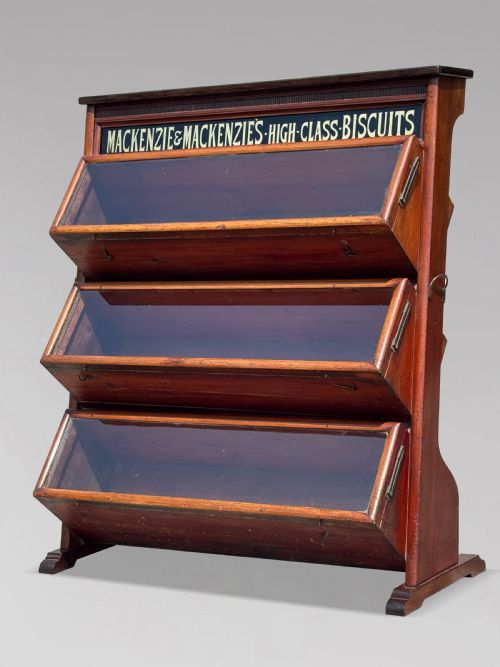


Victorian Commercial Counter
A victorian commercial counter brings the functional character of old mercantile interiors directly into domestic spaces.
Victorian Commercial Counter
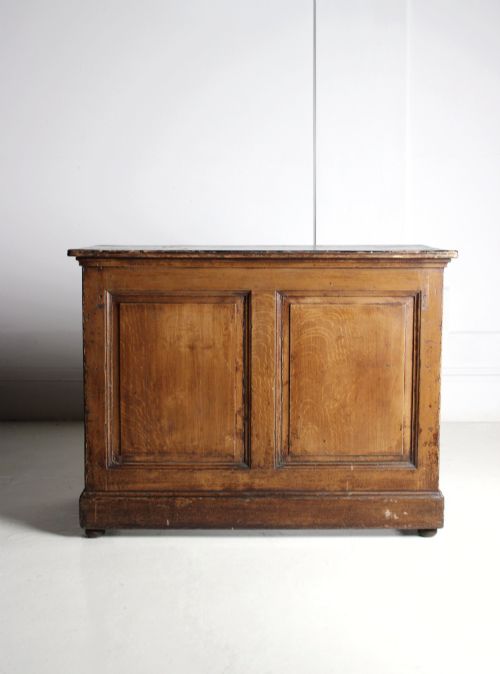
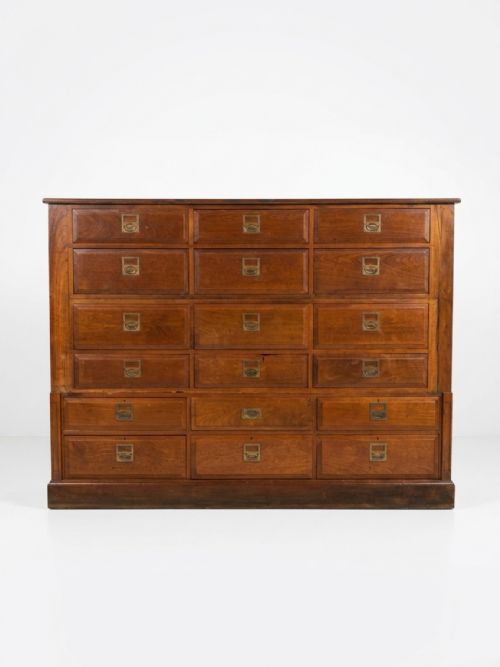
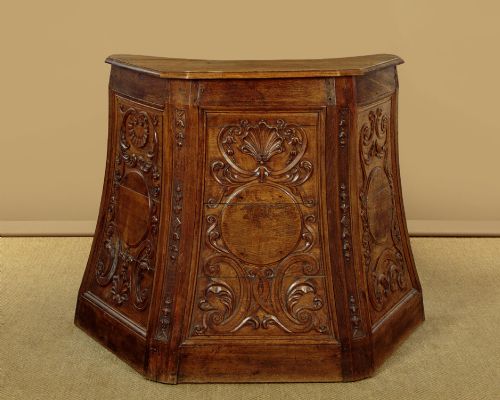
A victorian commercial counter encompasses heavy retail furniture and shop fittings built to serve customers in nineteenth century establishments. Buyers searching for a victorian commercial counter encounter sturdy timbers and practical storage configurations designed for daily trade.
The selections span from pharmacy drawer units and drapers tables to large display cabinets and bar fixtures. Mahogany and pine dominate these utilitarian forms, reflecting the robust materials required for heavy commercial use.
Many surviving examples retain original painted finishes or maker inscriptions that indicate their precise trade origins. These pieces range from modest tabletop cases to full front and back bar installations.
Materials and Construction
Cabinetmakers utilised dense hardwoods like mahogany alongside practical softwoods such as pine to construct these robust retail fixtures. Joinery prioritised durability, employing deep drawers, panelled framing, and substantial brass or iron hardware to withstand constant public interaction.
Glass panels were integrated into timber frames for product visibility, while mirrored interiors and adjustable feet provided functional utility in busy retail environments. Surfaces often received durable painted finishes or polished clear coats that resisted heavy wear.
Several surviving pieces still carry the precise scent of old apothecary herbs and long-forgotten drapery fabrics.
Assessing Craftsmanship and Condition
Quality in a victorian commercial counter rests upon the integrity of the original timber and the retention of authentic trade fittings. Pieces featuring intact manufacturer branding, original glazing, and specialised storage configurations demonstrate superior craftsmanship.
The balance between utilitarian durability and refined joinery distinguishes standard utility furniture from bespoke retail installations. Alterations to height or replaced hardware alter the original character, whereas untouched surfaces preserve historical context.
G H Gledhill Halifax·John Stow Ltd of Bradford·Manoah Rhodes & Sons Ltd·Ermen & Roby
The Victorian Commercial Counter Glossary
- Shop fitting
- Custom furniture and fixtures designed specifically for the interior layout of a retail establishment. These installations included counters, shelving units, and display cases tailored to particular trades.
- Haberdashery
- A retail trade dealing in small articles of clothing and sewing accessories. Cabinets and drawers from this sector typically feature numerous shallow compartments.
- Toleware
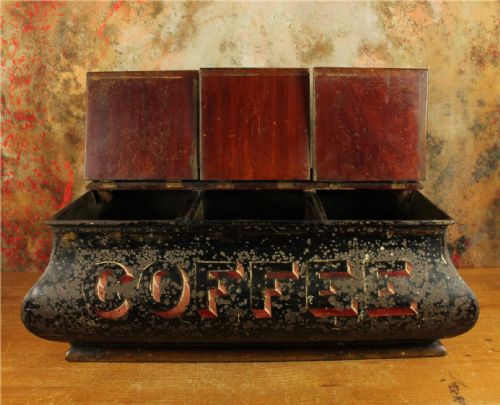
- Metal objects coated with a durable lacquer or paint finish, often associated with decorative storage boxes and canisters used in nineteenth century shops.
- Chemist drawer
- Specialised pharmaceutical storage units featuring multiple small drawers with ceramic or paper labels to organise medicinal ingredients and dried herbs.
Victorian Commercial Counter: Frequently Asked Questions
How were these counters used originally?
Merchants employed these heavy timber fixtures to display goods, weigh produce, and conduct transactions with customers across various retail trades.
Cabinets and multi-drawer units kept stock organised behind the barrier while the main counter surface provided a clean workspace for wrapping purchases.
What woods were commonly used?
Carpenters selected dense hardwoods like mahogany for prominent public-facing display cases and finer retail establishments.
Practical softwoods such as pine served utilitarian purposes in back-of-house storage units and were frequently finished with layers of paint.
How do I fit one in my home?
These substantial pieces function effectively as kitchen islands, sideboards, or reception consoles in large residential spaces.
Their generous proportions and integrated storage drawers offer practical utility while introducing distinct historical character to modern interiors.
Are maker marks common on them?
Many trade counters and display cases bear original manufacturer plaques, retailer engravings, or branded ceramic labels.
These inscriptions often identify the specific nineteenth century maker or the chemist, drapers, and grocers who originally commissioned the shop fitting.