
Antique Mahogany Console Server
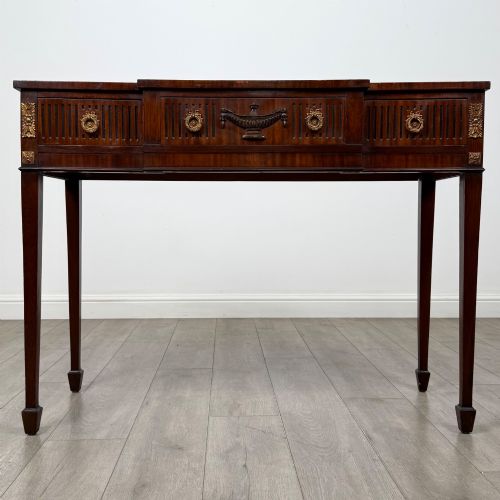
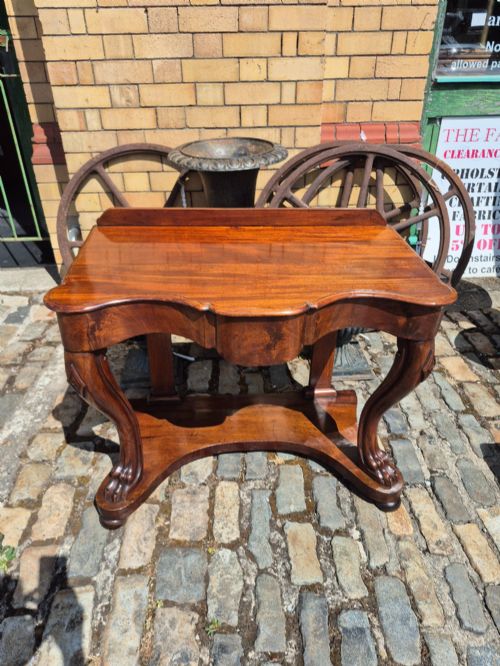
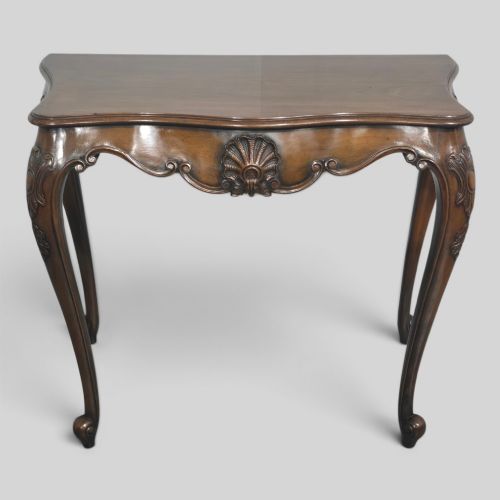
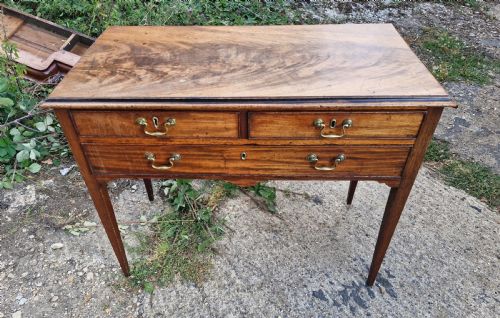
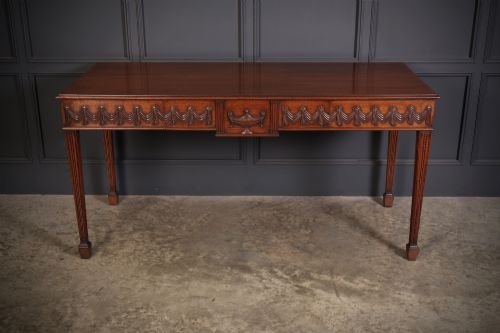
An antique mahogany console server brings substantial timber and period proportion to a hallway or dining room.

Antique Mahogany Console Server
When searching for an antique mahogany console server, buyers encounter a variety of forms including side tables, serving tables, sideboards, and chiffoniers. These pieces span periods from the eighteenth century through the Georgian, Regency, Victorian, and Edwardian eras.
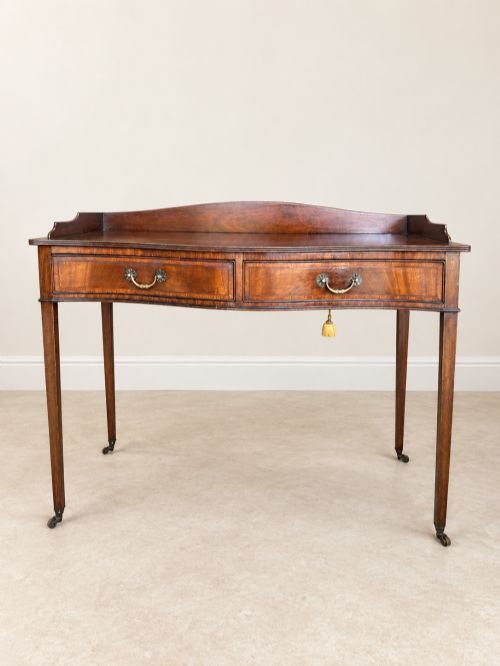
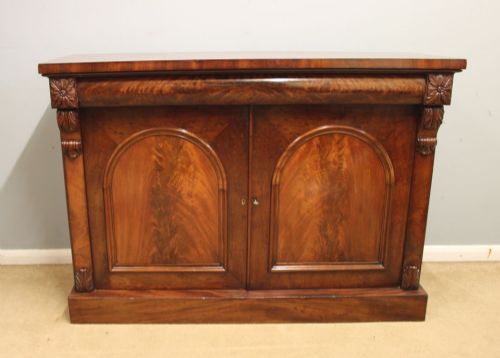
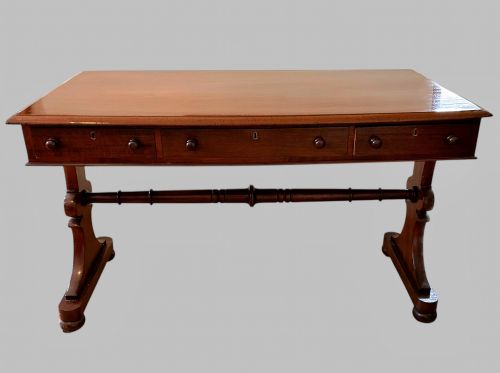
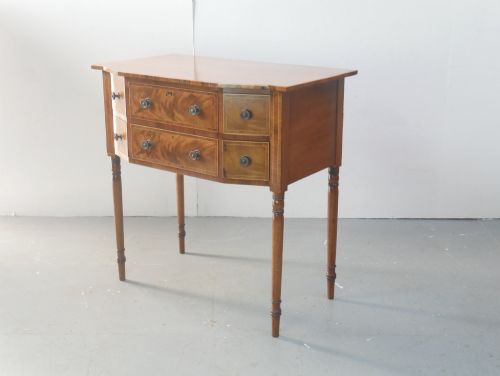
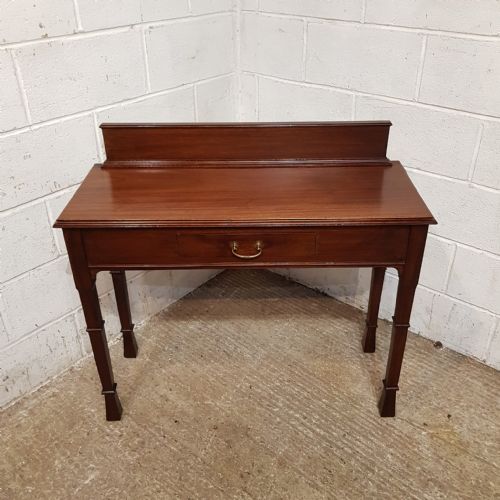
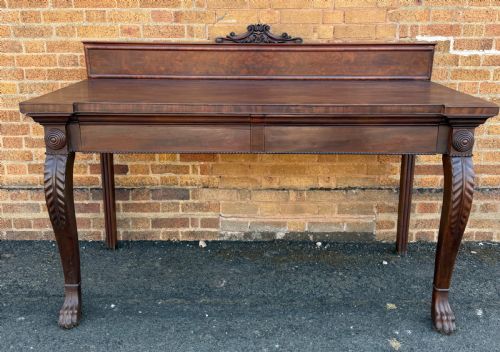
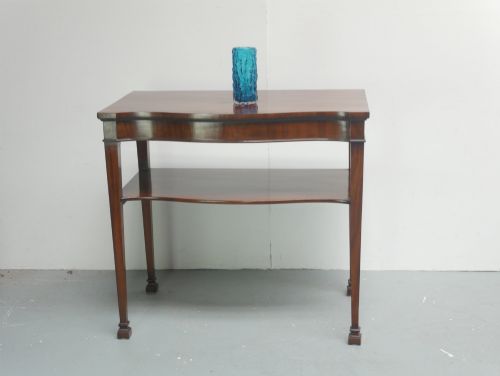
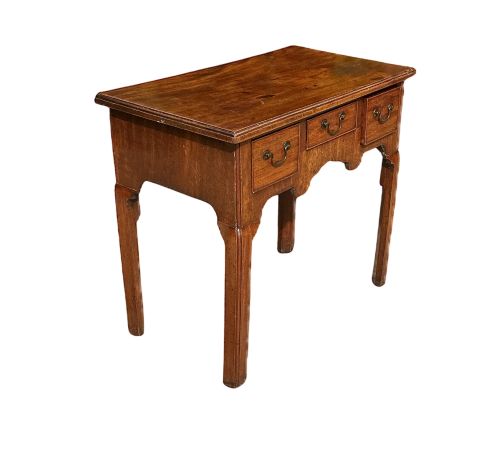
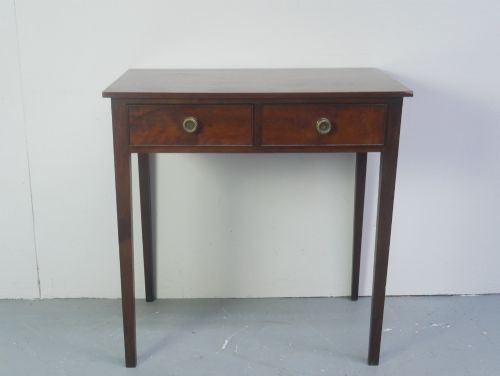
The most common versions on this page are Georgian and nineteenth-century side and serving tables, alongside Edwardian and later interpretations. Forms range from neat console tables and lowboys to expansive serpentine or bow-front servers designed for formal rooms.
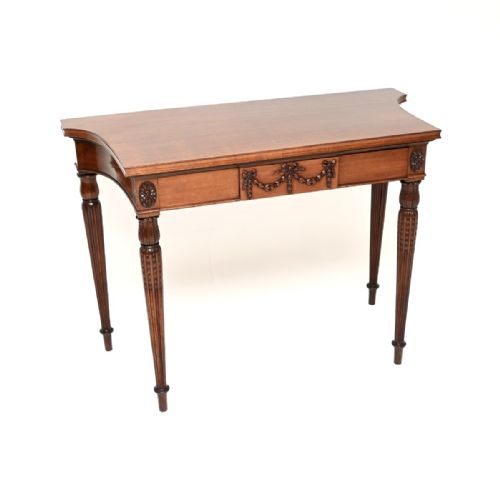
Origin and styling vary widely, taking in English country house furniture, Irish examples of imposing scale, and revival styles such as Sheraton and Adam. Each piece serves primarily as a surface for display or service, combining utilitarian function with period craftsmanship.
Judging quality and execution
The distinction between ordinary and superior pieces rests on the choice of timber and the precision of the cabinet work. Finely figured flame mahogany veneer, crisp boxwood and satinwood inlay, and well-executed carved details separate workshop masterworks from standard production.
Proportion and scale dictate the success of a design, where balanced drawer arrangements and integrated architectural brackets demonstrate the maker's competence. Structural integrity in the legs, rails, and joints underpins the longevity of these heavy timber items.
Materials recorded across the archive include solid mahogany, flame mahogany veneer, satinwood inlay, and brass hardware.
Gillows
The Antique Mahogany Console Server Glossary
- Console table
- A table designed to stand against a wall, frequently supported by brackets or legs at the front. These pieces often feature decorative front aprons and refined top surfaces.
- Lowboy
- A small eighteenth-century dressing or side table featuring one or more rows of drawers beneath the main surface. They typically stand on slender cabriole or straight legs.
- Serpentine front
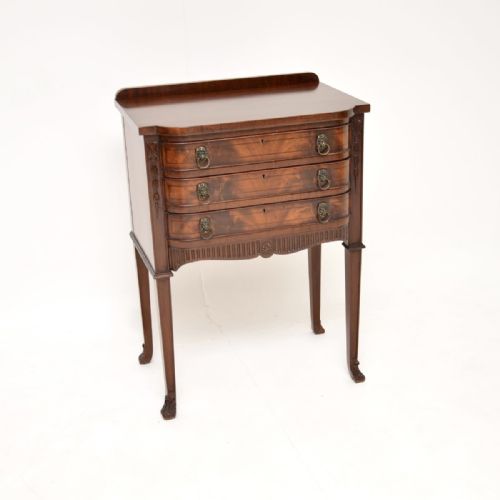
- A furniture front characterised by a concave central section flanked by two convex curves, or the reverse. This undulating form requires advanced woodworking skill to execute properly.
- Flame mahogany veneer
- A sliced section of timber taken from the fork of the mahogany tree where branches join the trunk. This cut produces a distinctive flickering flame pattern used on prominent drawer fronts and tabletops.
- Chiffonier
- A compact sideboard or cabinet developed during the nineteenth century, usually featuring enclosed shelving below and a raised superstructure or gallery top.
Antique Mahogany Console Server: Frequently Asked Questions
Where should I place a console server?
These tables suit hallways, living rooms, and dining spaces where their linear depth accommodates lamps, ceramics, or serving platters.
Their substantial timber presence anchors a room without projecting too far into walking paths.
How do I distinguish a serving table from a side table?
Serving tables tend to be longer and were historically built for dining rooms to hold food and silver during meals.
Side tables and console variants often offer more compact footprints suited to general display.
What periods are represented in these tables?
The selection includes eighteenth-century pieces alongside Georgian, Regency, William IV, Victorian, and Edwardian examples.
Later revival pieces from the late nineteenth and early twentieth centuries also appear frequently.
Are these pieces made of solid mahogany?
Many items combine solid mahogany frames with flame mahogany veneers applied to drawer fronts and tabletops.
Inlay work in satinwood and boxwood often accents these primary surfaces.