


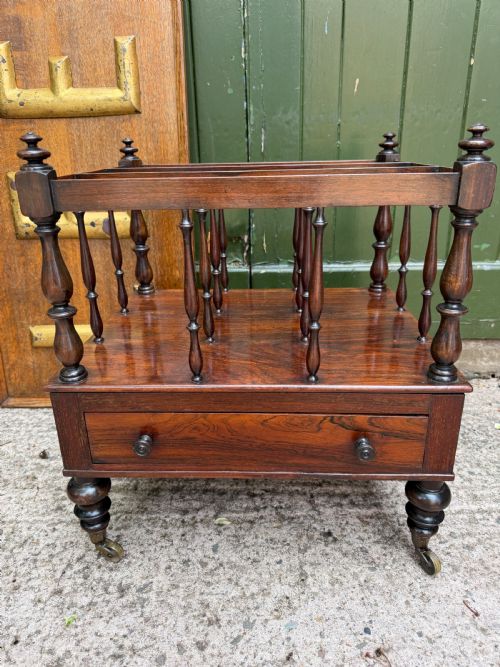


Antique Magazine Rack Drawer
An antique magazine rack drawer combines domestic organisation with timeless cabinetry, serving as a sturdy holder for periodicals and sheet music.

Antique Magazine Rack Drawer
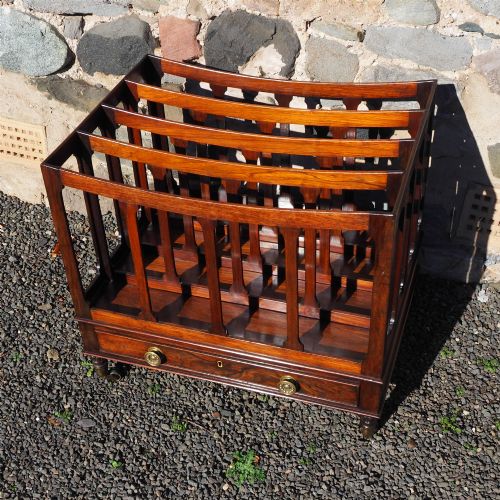
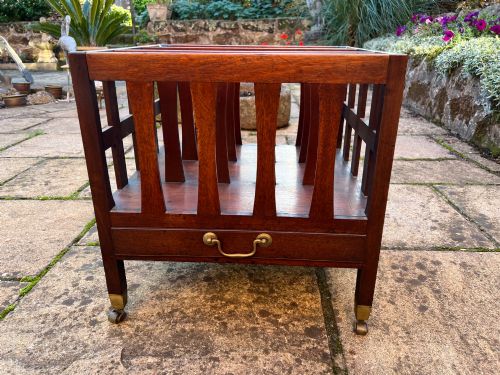
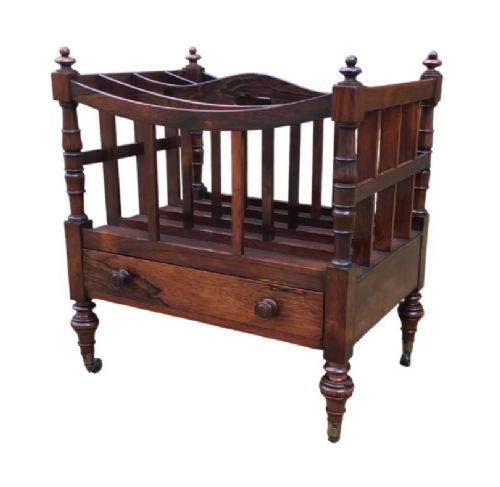
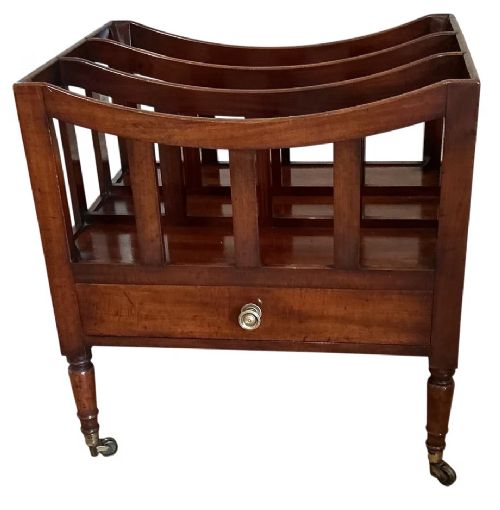
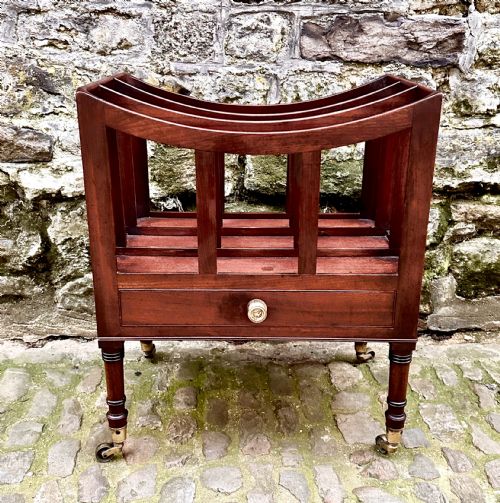
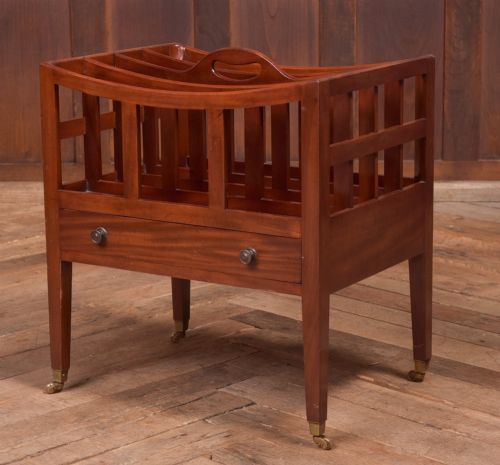
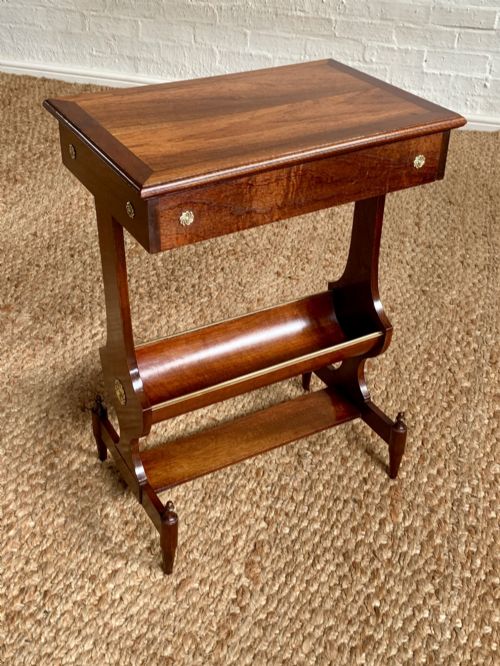
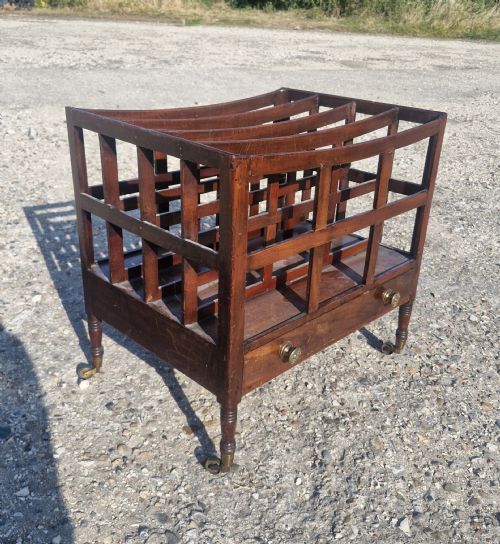
When you search for an antique magazine rack drawer, you encounter versatile pieces designed to hold newspapers, magazines, and sheet music within domestic spaces. These items frequently appear as canterburys, combining partitioned upper tiers with practical lower storage drawers.
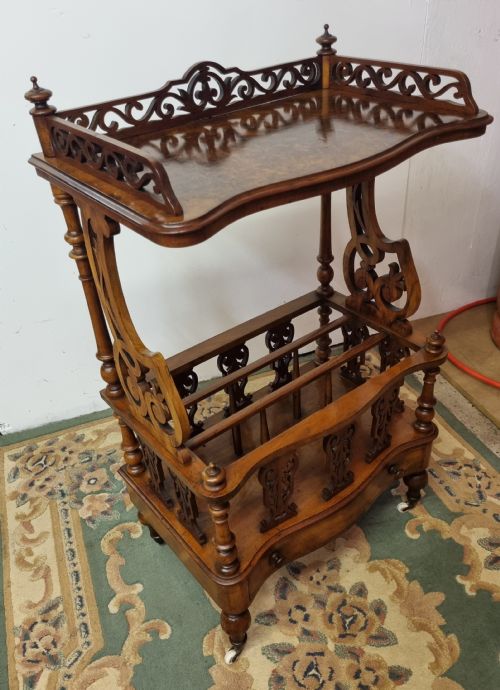
The pieces listed on this page span the Georgian, Regency, Victorian, and Edwardian periods, demonstrating how domestic storage evolved. Formats range from boat-shaped designs to freestanding occasional tables and whatnots.
Mahogany, rosewood, and burr walnut dominate the selection, often complemented by ceramic or porcelain elements. The integration of a drawer beneath the main rack provides additional utility for smaller reading accessories.
Materials and construction
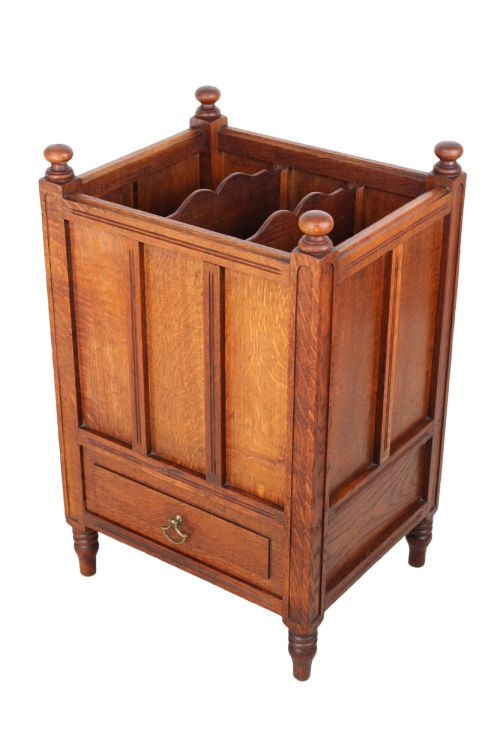
Cabinetmakers utilised dense timbers such as mahogany, rosewood, walnut, and oak to construct these pieces, ensuring structural stability for daily use. Burr walnut and figured walnut appear frequently to provide decorative grain patterns across panels and drawer fronts.
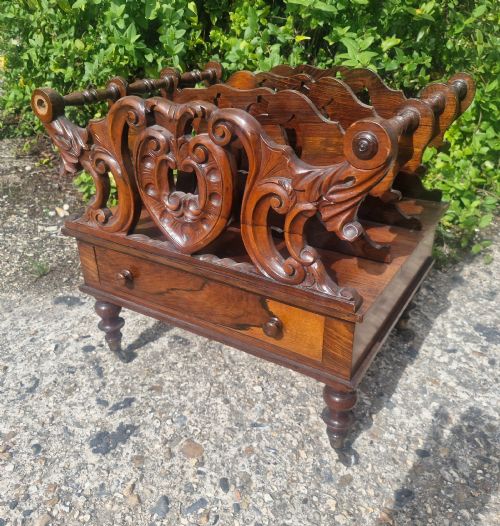
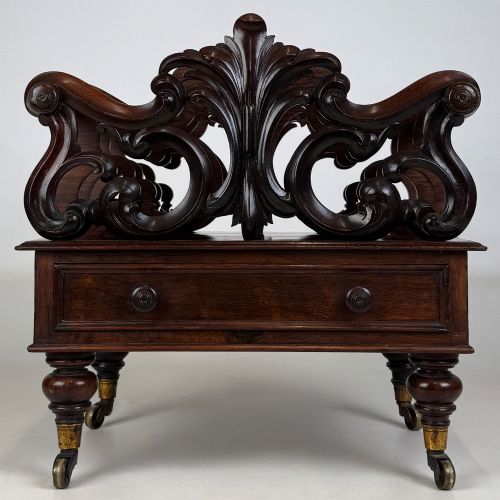
Brass fittings, castors, and turned legs support many examples, allowing mobility and adding functional detail. Carved elements, including Prince of Wales feathers, appear on select rosewood and mahogany frames.
Antique Magazine Rack Drawer Retail Price Guide 2026
Typical asking prices for magazine rack drawer among the pieces listed under this phrase on Sellingantiques today, from the lower quarter to the upper quarter. They describe what is for sale here now, not the wider market.
Listings feature woods including mahogany, rosewood, walnut, burr walnut, and oak across the 18th, 19th, and early 20th centuries.
Distinctions in quality
Quality rests upon the selection of timber veneers, the crispness of turned supports, and the integration of the drawer mechanism within the frame. Pieces utilising highly figured burr walnut or rich rosewood demonstrate superior material selection by the maker.
The joinery of the partitions and the inclusion of original brass castors separate standard production items from finer examples. Balanced proportions and refined carving elevate specific Regency and Victorian specimens.
Edwards and Roberts
The Antique Magazine Rack Drawer Glossary
- Canterbury
- A low stand with partitioned uprights for holding sheet music, newspapers, or magazines, often incorporating a drawer beneath. This form emerged in the 18th century and continued through the Victorian era.
- Whatnot
- A piece of open shelving with multiple tiers used for displaying or storing small objects. These often incorporate rack sections and lower drawers.
- Boat shaped
- A curved profile reminiscent of a hull, seen on the sides of specific Regency canterburys. This stylistic choice softens the rectangular geometry of the rack.
- Division
- An individual upright partition within the rack that separates stored periodicals or sheets of music. These divisions ensure papers remain upright.
- Castor
- A small wheel attached to the legs of furniture to facilitate movement across carpets and flooring. Many pieces utilise brass mountings for these wheels.
Antique Magazine Rack Drawer: Frequently Asked Questions
What is a canterbury used for?
A canterbury serves as a receptacle for newspapers, periodicals, and sheet music, keeping reading materials organised near seating areas. The lower drawer provides enclosed storage for smaller items.
Historically, these pieces stood in parlours and drawing rooms to manage the growing volume of printed media during the Georgian and Victorian periods.
How do I date a mahogany canterbury?
Dating relies on stylistic markers such as turned legs, carved details, and the overall timber finish. Regency examples often feature boat-shaped profiles and brass castors.
Later Victorian and Edwardian iterations introduce bolder serpentine shapes or simpler oak frames, reflecting changing domestic tastes.
Are these pieces sturdy enough for daily use?
Constructed from hardwoods like mahogany, walnut, and rosewood, these items were built to withstand regular handling of heavy paper goods. Their robust frames support everyday domestic requirements.
Care should be taken when moving them, particularly those fitted with original castors on uneven flooring.
What is the difference between a rack and a whatnot?
A standard rack focuses on partitioned storage for flat media with an optional drawer, whereas a whatnot incorporates multiple display tiers. Both forms share similar cabinetmaking techniques.
Some hybrid designs merge display surfaces with lower magazine storage and drawer space.