





Turned Leg Music Stand
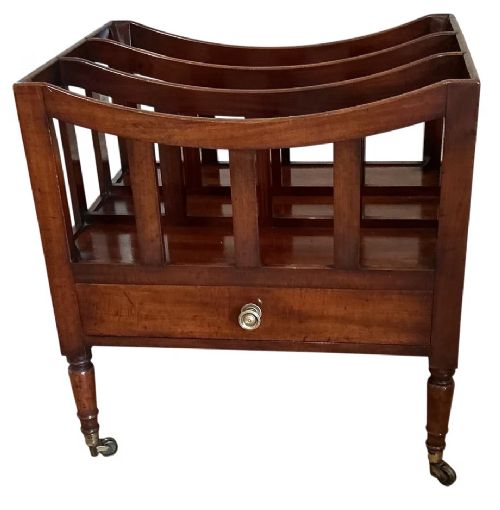
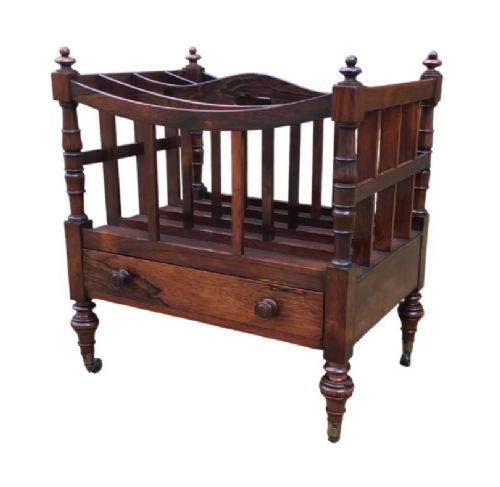
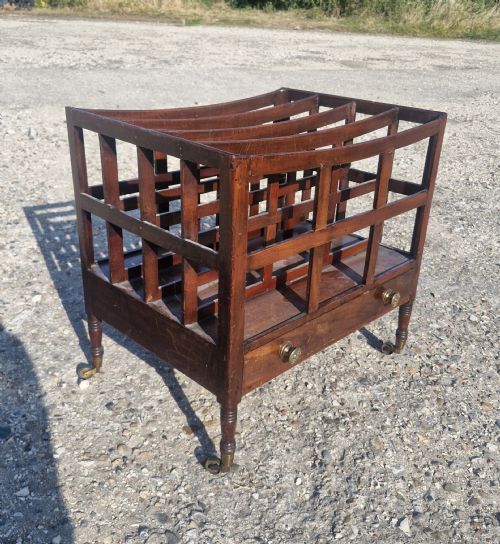
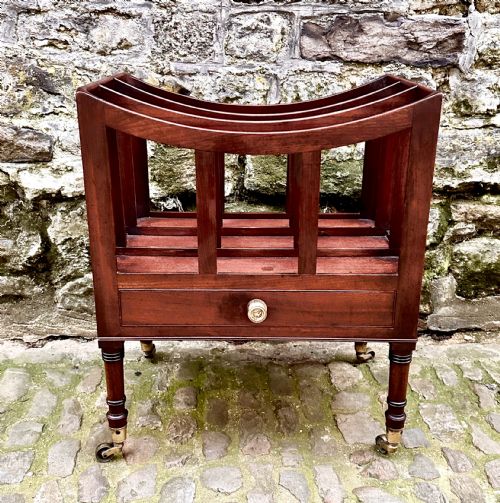
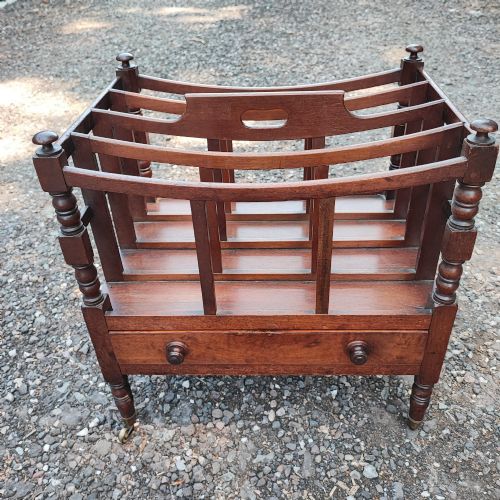
These turned leg music stand pieces are sturdy timber canterburys and magazine racks designed to hold sheets and folios.
Turned Leg Music Stand
When you search for a turned leg music stand, you are looking at nineteenth-century canterburys and magazine racks designed to hold folios and periodicals. Most examples on this page date from the Georgian, Regency, and Victorian periods.
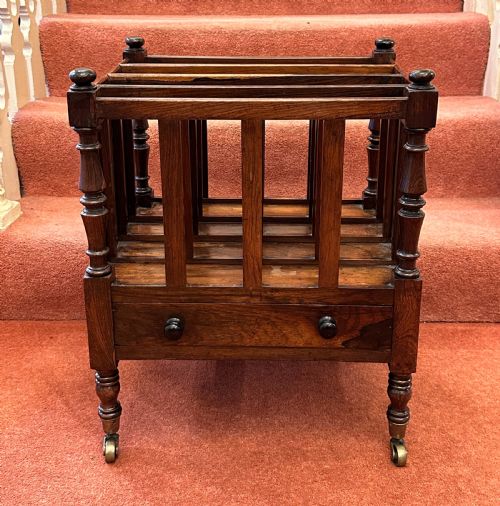
The standard form combines partitioned sections for paper storage with a lower drawer, sitting atop turned wooden legs fitted with castors. Boat-shaped designs and double-size variants appear frequently among the mahogany and rosewood pieces.

Materials and construction
Cabinetmakers built these pieces using solid mahogany, rosewood, burr walnut, and oak. Selected timbers display rich natural grain patterns, sometimes enhanced with decorative inlay work.
Joinery techniques focus on sturdy slatted divisions and framed bases to support the weight of heavy paper collections. Turned legs require precise lathe work, while brass castors enable smooth movement across the floor.
Turned Leg Music Stand Retail Price Guide 2026
Typical asking prices for turned leg music stand among the pieces listed under this phrase on Sellingantiques today, from the lower quarter to the upper quarter. They describe what is for sale here now, not the wider market.
Some nineteenth-century canterburys travelled on wheels so players could slide their sheet music closer to the candlelight without standing up.
Distinctions in quality
The distinction between standard utility items and finer pieces lies in the choice of timber and the crispness of the turning. Selected hardwoods display deeper figuring and more sophisticated proportions.
Hardware details such as original brass castors and tidy internal joinery elevate an example. Better workshops invested greater care in finishing the slats and drawer fittings.
The Turned Leg Music Stand Glossary
- Canterbury
- A low piece of furniture with upright divisions, used for holding music sheets and newspapers. It typically includes a shallow drawer at the base.
- Magazine rack
- A holder for periodicals and papers, often sharing the multi-sectioned format of traditional canterburys. These items serve a similar domestic function.
- Castor
- A small wheel mounted on a swivel assembly attached to the base of the legs. This allows heavy furniture to roll easily across carpets and wooden floors.
- Boat shaped
- A curving hull-like profile seen in specific Regency designs. This silhouette softens the rectangular geometry of the standard rack.
Turned Leg Music Stand: Frequently Asked Questions
What is a canterbury used for?
These pieces were originally built to organise sheet music and folios near a piano or seating area. Today they serve equally well for holding current magazines and newspapers.
Their divided compartments keep paper collections upright and accessible in a living space.
How do I identify a Regency piece?
Regency items typically display clean architectural lines, boat-shaped bodies, and refined turned supports. Cabinetmakers of this era favoured dense mahogany and rosewood.
Proportions remain restrained, often combining functional slatted divisions with precise brass fittings.
Are these stands sturdy enough for daily use?
Most examples are constructed from solid hardwoods like mahogany and oak, designed to handle heavy paper loads. The integrated legs and castors provide stable floor support.
Routine placement in a study or sitting room suits their original domestic purpose.
What woods were used?
Mahogany forms the majority of the available pieces, alongside rosewood, burr walnut, and oak. Selected items feature contrasting inlay work.
These dense timbers ensure the partitions remain rigid under the weight of stacked folios.