


Antique Luri Rug
An antique luri rug brings the bold, geometric spirit of western Persian nomads directly to your floor through rich tribal symbolism.
Antique Luri Rug
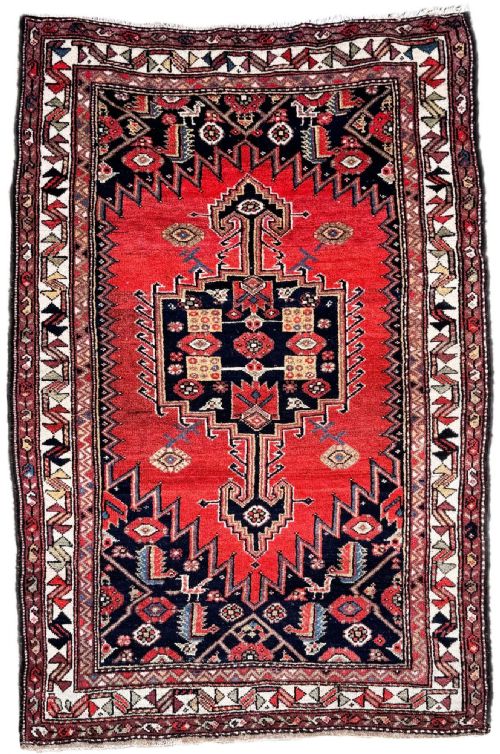
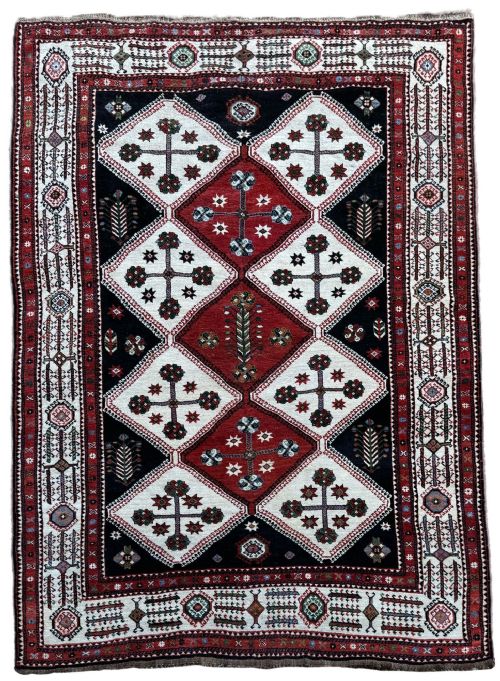
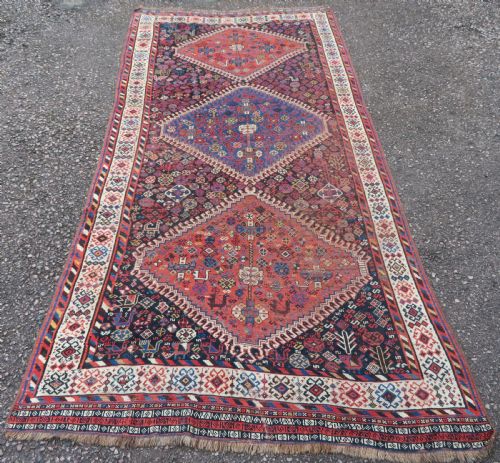
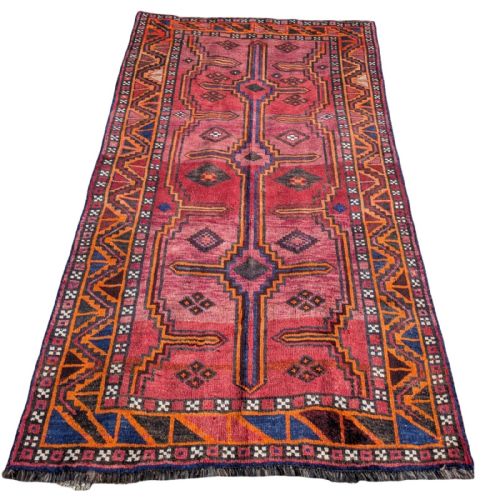
An antique luri rug originates from the tribal groups inhabiting Luristan and the broader western regions of Persia, capturing centuries of nomadic weaving traditions. These textiles encompass various functional forms, ranging from floor carpets and long kelleh runners to utilitarian bread sofreh, wheat-sacks, and saddle bag faces.
The aesthetic leans heavily into Persian tribal designs, displaying geometric motifs, repeat shield patterns, tree of life compositions, and sometimes figurative elements such as birds and animals. Most examples encountered date from the late nineteenth century through the early decades of the twentieth century, reflecting a period of traditional village and nomadic production.
Buyers seek out these specific tribal weavings for their rustic authenticity and distinct character, which differs markedly from formal city carpets. Whether opting for a small bag face or a room-sized carpet, each piece serves as a tactile record of Luri and Luri-Bakhtiari craftsmanship.
How they were made
The construction relies on hand-spun wool for both the pile and the foundational structure, providing a durable, resilient fabric suited to nomadic life. Artisans utilised natural dyes derived from local plants and minerals, resulting in saturated hues that age gracefully over time.
Weaving techniques involve tight hand-knotting alongside flatweave constructions, particularly visible in utilitarian items like wheat-sacks and double-faced saddle bags. This combination of sturdy wool and plant-based colourants ensures the dense pile withstands generations of domestic use.
Listings feature examples dated across the late nineteenth century and the early decades of the twentieth century, constructed from hand-spun wool.
What varies in quality
Quality in these tribal weavings rests primarily on the fineness of the knotting and the handling of the wool. Tighter structures allow complex geometric and pictorial motifs, such as birds or floral elements, to emerge with greater clarity.
The depth and vibrancy of the natural dyes also dictate the visual strength of the piece, with well-balanced palettes elevating the overall artistic merit. Additionally, the integrity of the original edges and ends influences desirability among collectors.
The Antique Luri Rug Glossary
- Sofreh
- A flatwoven or piled spread used for handling bread or sharing meals within nomadic households. These textiles often feature minimalist geometric layouts.
- Kelleh
- A long, narrow format of rug traditionally proportioned for specific areas of a tribal tent or dwelling. It sits between a standard rug and a full corridor runner.
- Tacheh
- A woven wheat-sack or storage bag utilised for agricultural transport by pastoral groups. They typically display robust utility paired with striking tribal patterns.
- Saddle bag face
- The decorative front panel of a utilitarian animal bag preserved after the backing wore away. These pieces function well as small decorative wall hangings or compact floor mats.
- Natural dyes
- Colourants extracted from organic sources such as roots, leaves, and insects before the advent of synthetic alternatives. They yield characteristic tonal variations across the wool pile.
Antique Luri Rug: Frequently Asked Questions
Where were antique luri rugs made?
These textiles were produced by nomadic and semi-nomadic tribes residing primarily in the Luristan province and the Chahar Mahal region of western and south-west Persia. The makers moved with their flocks across these mountainous territories, incorporating local visual traditions into their everyday weaving.
Because production was tied to tribal life rather than urban workshops, the designs reflect a distinct regional identity separate from major Persian city centres.
How do I care for wool pile rugs?
Regular, gentle vacuuming without a rotating power brush helps keep surface dust from settling deep into the hand-spun wool pile. Keeping the textile out of direct, harsh sunlight prevents the natural plant dyes from fading prematurely.
Professional cleaning tailored to antique tribal carpets should be utilised periodically rather than standard household washing methods. This protects the structural integrity of the foundation yarns.
What is the difference between a rug and a kelleh?
A standard rug typically follows a roughly proportional rectangular layout suited to general domestic floor spaces. A kelleh represents a specific long format, being noticeably narrower than its length, designed to fit traditional room dimensions.
Both forms share the same hand-spun wool materials and tribal iconography, differing solely in their spatial geometry.
Are bag faces authentic tribal pieces?
Bag faces originate as the decorative fronts of working animal sacks used for transport and storage by nomadic tribes. When the rear panels deteriorated through heavy use, the robust piled fronts were often salvaged as standalone rugs.
Collectors prize these smaller formats because they concentrate the weaver's finest knotting and design work into a compact area.