


Persian Luri Rug
A persian luri rug brings the robust tribal artistry and wool textures of western Persia directly to a floor.
Persian Luri Rug
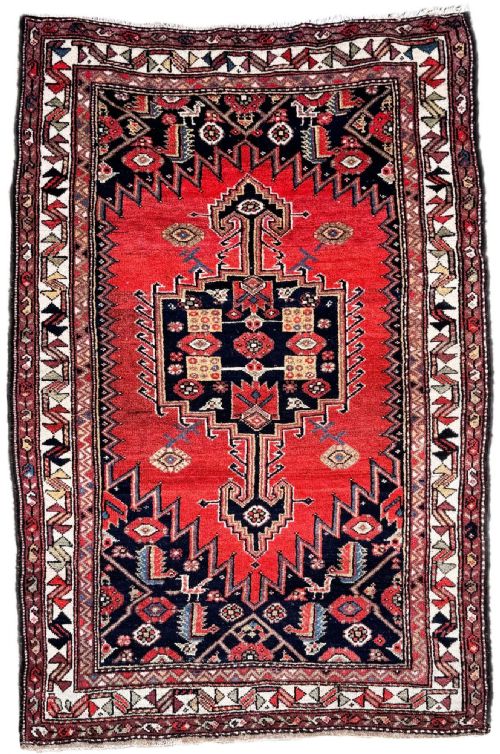
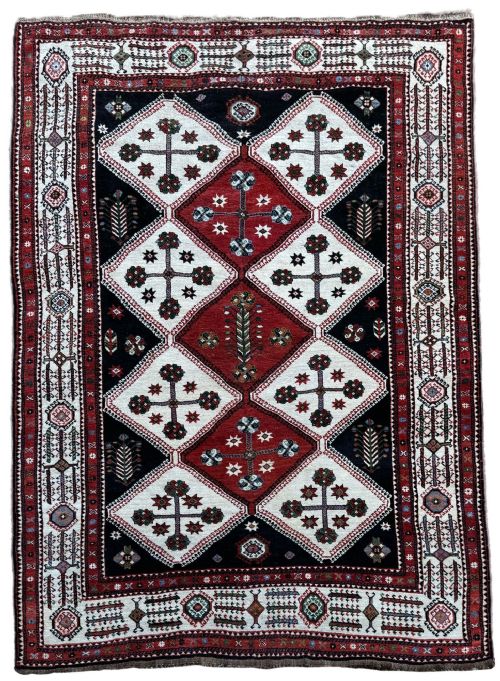
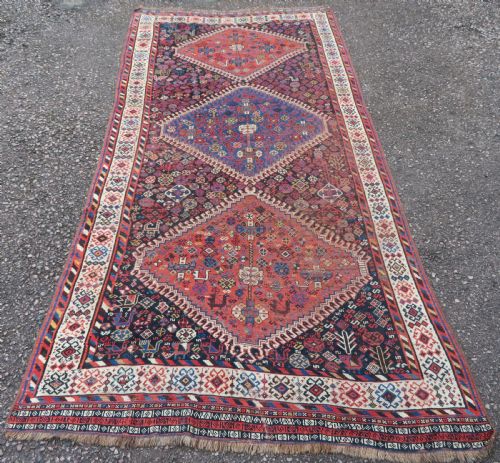
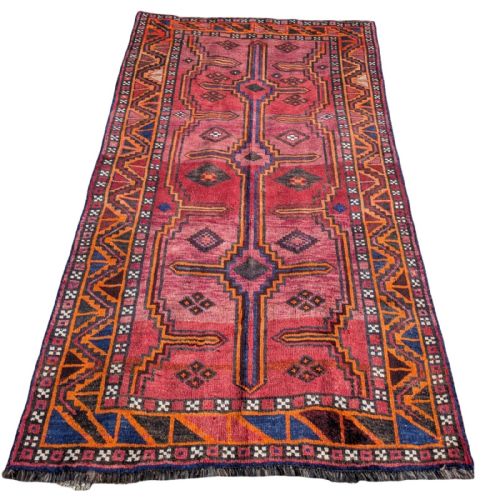
When searching for a persian luri rug, collectors encounter woven objects originating from the tribal groups of western Persia, specifically Luristan and the Chahar Mahal region. These pieces span from the late nineteenth century into the early decades of the twentieth century, capturing a period of traditional nomadic production.
The format varies considerably beyond standard floor coverings, including larger carpets, long narrow runners, kelim rugs, bread sofreh, wheat-sacks known as tacheh, and half or double-faced saddle bags. Buyers find both room-sized examples and smaller utility textiles created for nomadic daily life.
Designs frequently incorporate tribal motifs, tree of life patterns, repeating shield designs, flowers, birds, and occasional animal figures. Many pieces share aesthetic ties or regional interest with neighbouring Qashqai, Khamseh, and Bakhtiari tribal weaving traditions.
Materials and construction
The foundational material across these textiles is wool, frequently processed as hand-spun wool to create a sturdy, tactile pile and flatweave structure. This organic fibre provides the physical substance for both heavy floor carpets and flexible utility bags.
Weavers utilised natural dyes to colour the wool, yielding rich, enduring shades that develop subtle variations over time. These traditional colouring methods underpin the distinctive palette seen in nineteenth and early twentieth-century tribal work.
Listings feature wool, natural dyes, and hand-spun wool across periods spanning the late nineteenth century to the nineteen-thirties.
Distinctions in quality
The distinction between standard village output and superior weaving lies in the crispness of the design execution and the handling of the wool. Finer pieces demonstrate tighter knotting, greater precision in geometric or pictorial motifs such as birds and flowers, and a more substantial handle.
Colour depth also separates examples, as pieces employing well-saturated natural dyes offer a visual vibrancy that simpler commercial dyes fail to match. The integrity of the original format, whether a complete carpet or an intact saddle bag face, contributes significantly to the standing of an individual textile.
The Persian Luri Rug Glossary
- Sofreh
- A flatwoven textile used primarily for spreading meals or handling bread within nomadic households. These utility cloths often feature striking geometric fields.
- Tacheh
- A traditional tribal wheat-sack or storage bag utilised by nomadic groups for transport and domestic organisation. They are frequently collected today for their compact pictorial designs.
- Kelleh
- A format descriptor for a rug that is longer than it is wide, falling short of a full gallery runner. This shape suits specific hallway or room proportions.
- Pile
- The cut surface of a rug formed by the ends of knots tied to the warp and weft threads. It provides the tactile cushion and warmth of the textile.
- Natural Dyes
- Colouring agents derived from plants, insects, and minerals rather than synthetic chemical sources. They produce the complex, mellow tones characteristic of older tribal rugs.
Persian Luri Rug: Frequently Asked Questions
How do I care for a tribal rug?
Vacuum gently without a rotating brush roll to remove grit from the wool pile. Professional cleaning should be undertaken periodically by specialists familiar with antique vegetable-dyed textiles.
Keep the textile out of direct, continuous sunlight to protect the natural dyes from fading. Using a breathable underlay prevents slipping and allows air circulation beneath the piece.
Were saddle bags used on animals?
Yes, pieces such as saddle bags and tacheh wheat-sacks were functional items carried by pack animals during nomadic migrations. They served practical storage needs for daily possessions before entering domestic use.
Today, many survive as bag faces because the reverse panels wore out through friction against the animal. Collectors frame or display these surviving panels as independent flatweaves or small rugs.
What is the difference between a rug and a carpet?
The distinction rests primarily on physical dimensions rather than structural technique. Carpets generally denote larger floor-covering formats suitable for anchoring a room.
Rugs cover smaller areas, runners provide length for corridors, and specialised utility textiles serve different domestic functions. All share similar wool foundations and tribal design vocabularies.
How are periods told apart?
Dating relies on assessing the handling of the wool, the chemistry of the natural dyes, and the structural wear patterns. Late nineteenth-century pieces often display a heavier, more relaxed tribal drawing style.
Pieces from the early twentieth century may show slightly tighter commercial influences while retaining traditional motifs. Comparing structural density and palette against dated benchmark examples clarifies the era of origin.