
Antique Locking Tallboy
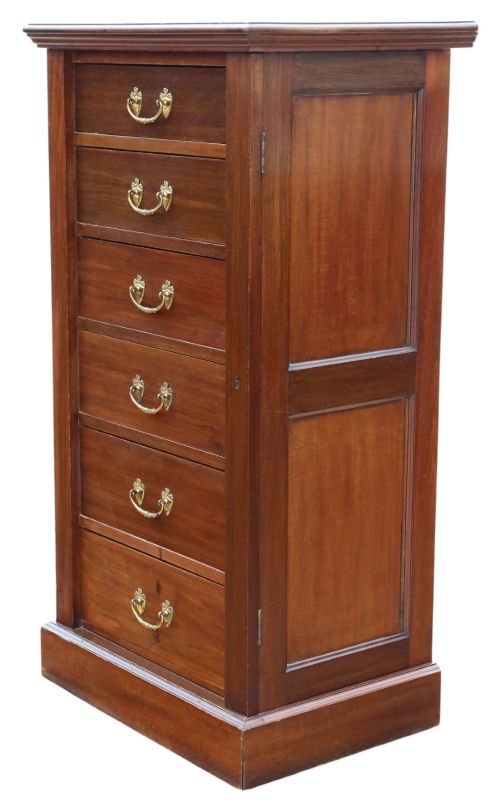
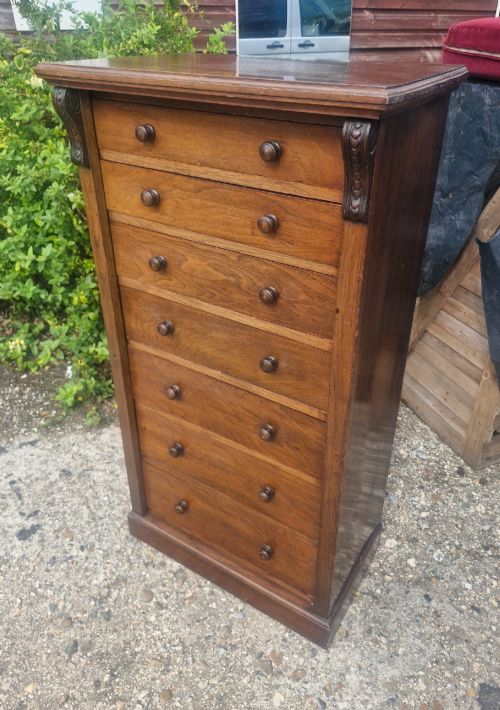
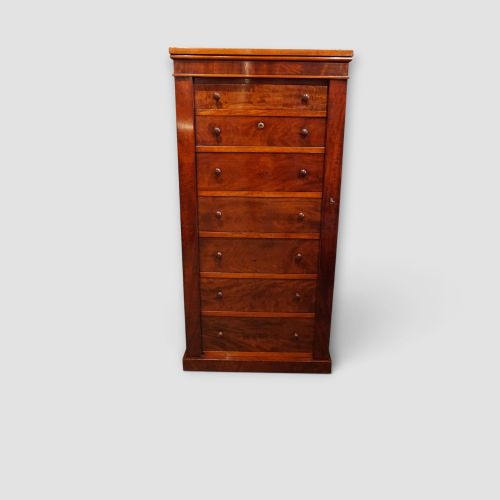
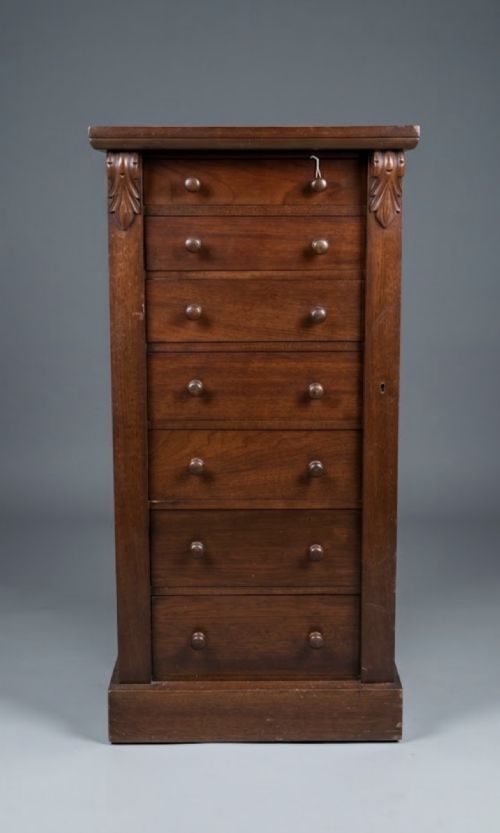
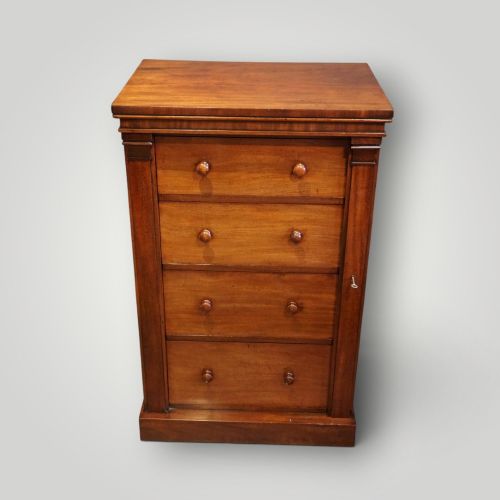
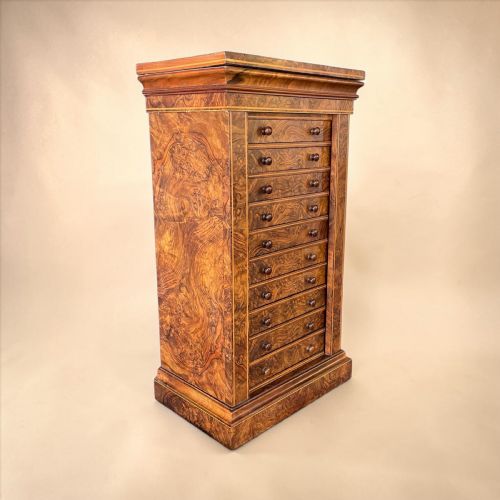
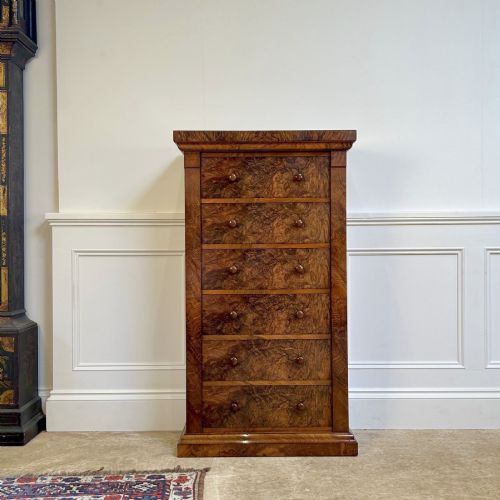
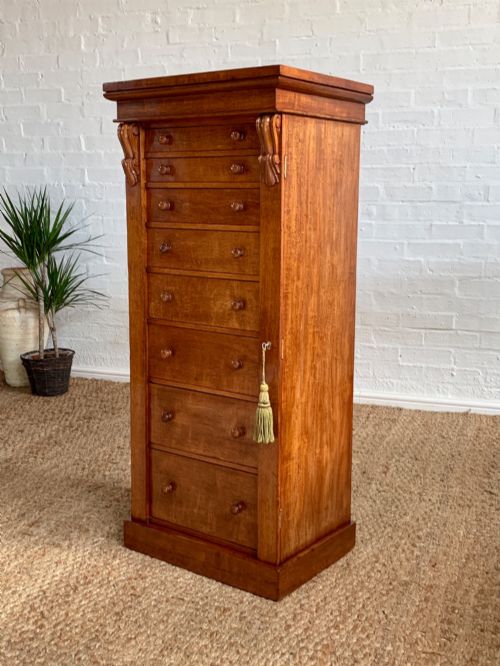
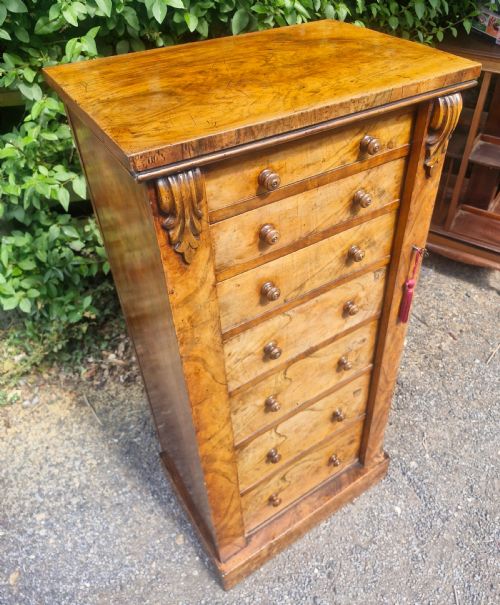
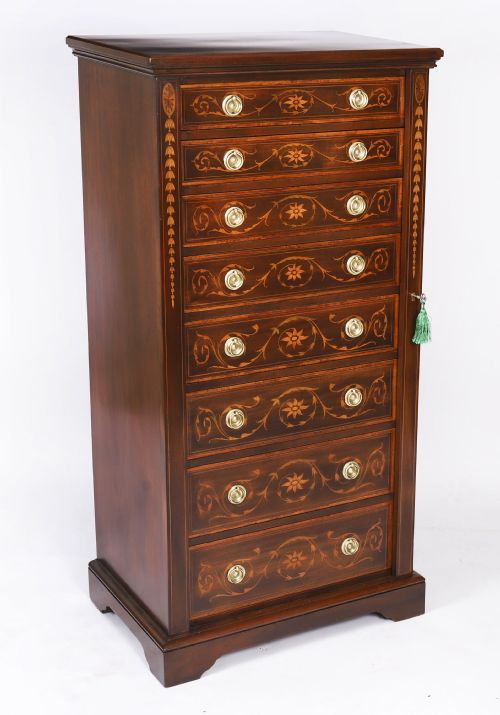
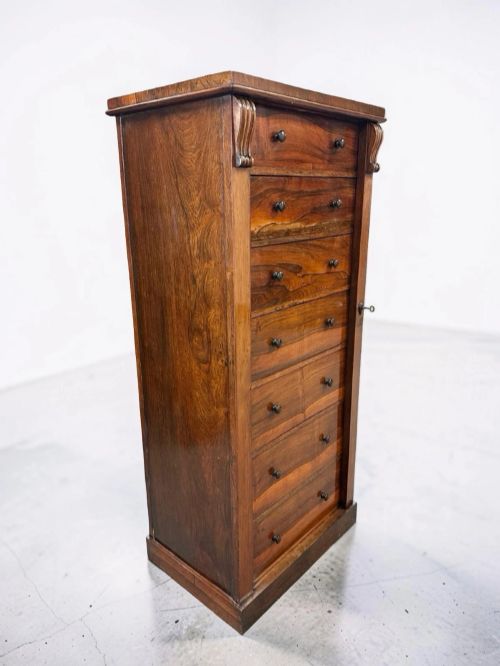
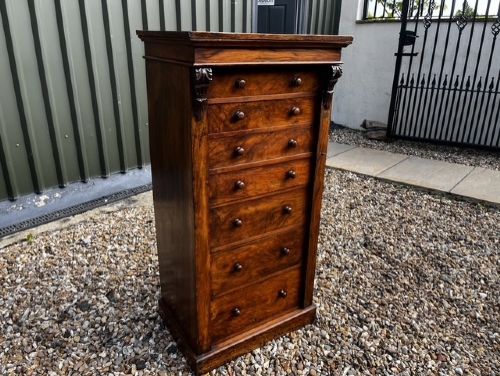
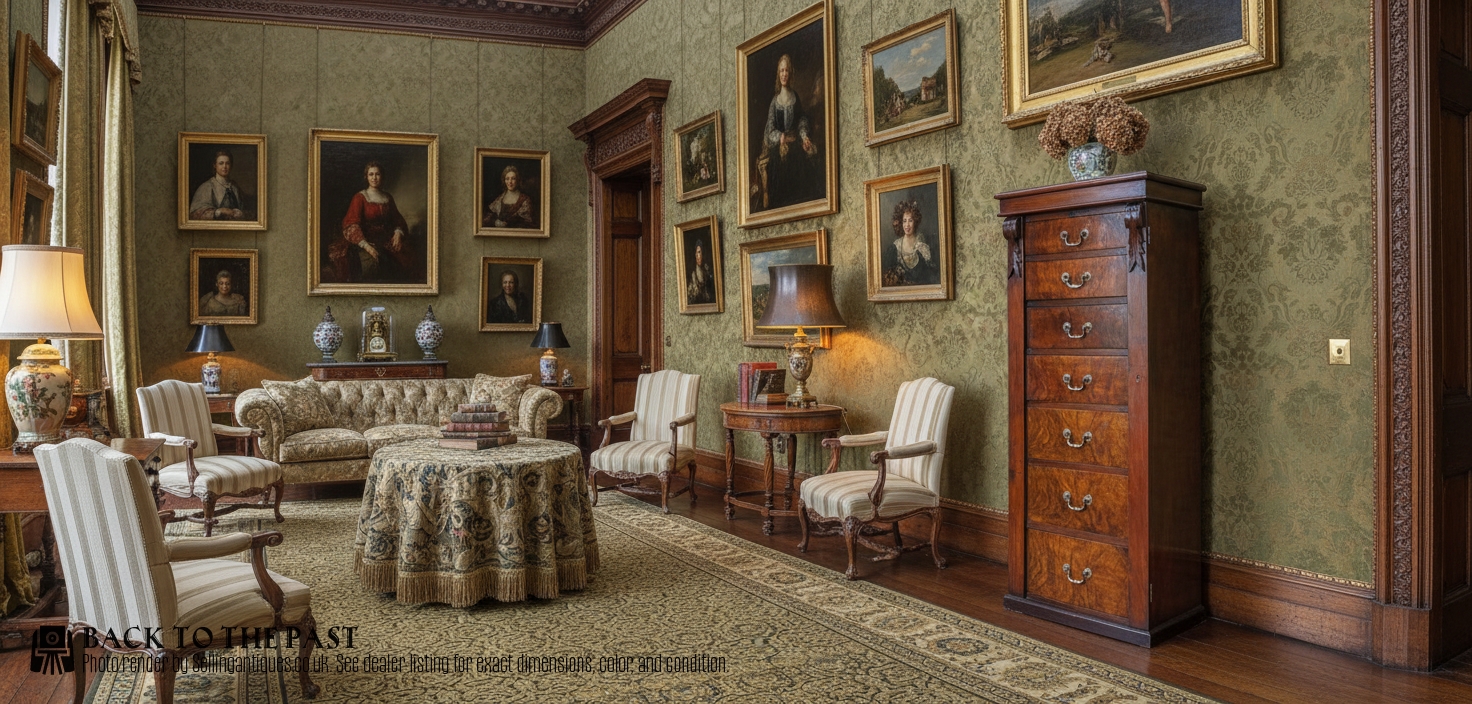
An antique locking tallboy, known traditionally as a Wellington chest, provides vertical storage secured by a hinged pilaster bar.
Antique Locking Tallboy
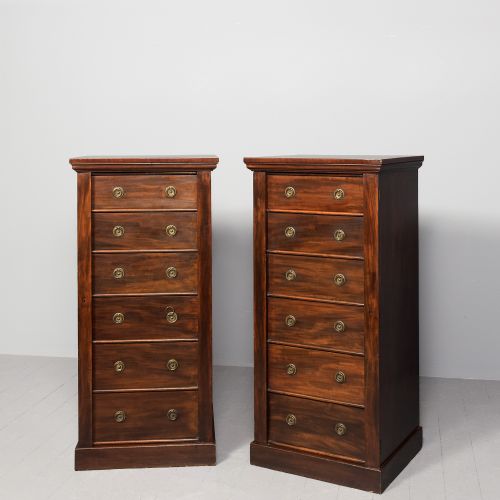
When you search for an antique locking tallboy, you are looking at tall, narrow chests of drawers designed to maximise storage while occupying a minimal floor footprint. The versions you are most likely to meet on this page hail primarily from the Victorian and Edwardian eras, constructed as slender stacks of multiple drawers.
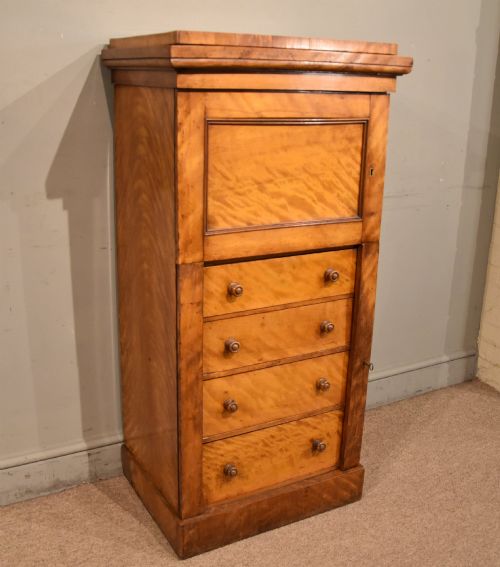
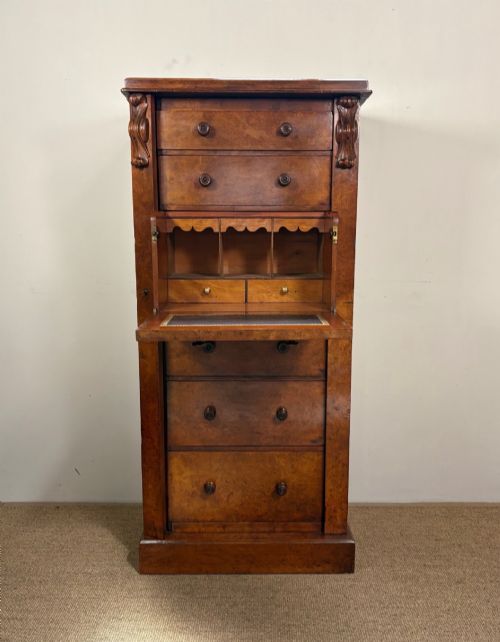
These pieces are defined by a distinctive locking mechanism where a hinged wooden flap or locking pilaster on the right side swings or lifts to secure every drawer simultaneously. The evidence shows frequent appearances of mahogany and walnut timbers, often configured into tall formats housing five to seven drawers alongside occasional secretaire variants with folding desk flaps.
Materials and Construction
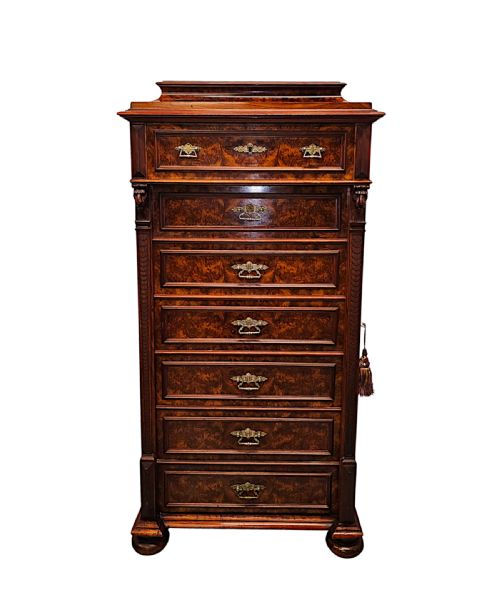
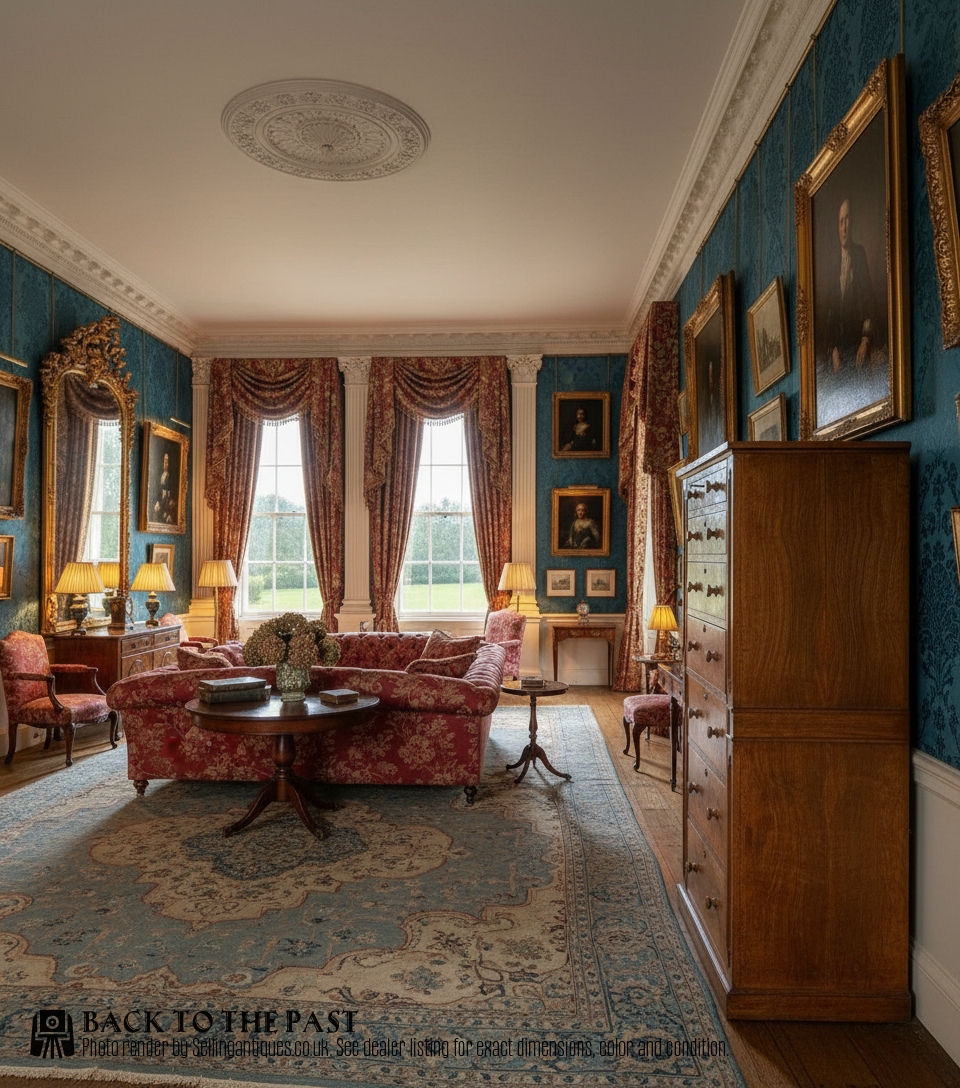
Cabinet makers utilised dense hardwoods such as mahogany, oak, and walnut, frequently applying figured veneers like burr walnut or flame mahogany to the primary drawer fronts. The structural integrity relies on solid secondary timbers for the drawer linings and carcase frames, assembled with traditional dovetail joints.
The signature locking action depends on precise joinery of the vertical locking stile or flap, which catches the edges of the drawer fronts when shut and secured by a brass key-operated lock. Surface finishes were typically built up using shellac French polish to highlight the natural grain patterns of the timber.
One listed chest retains its original country house scumble paint, proving that even formal bedroom furniture occasionally received a playful decorative disguise.
Distinctions in Execution
Quality reveals itself in the choice of timber veneers and the crispness of the drawer construction, where superior examples employ symmetrical flame mahogany or richly figured burr walnut across the entire vertical stack. The internal locking mechanism itself indicates grade, ranging from simple hinged bars to sophisticated locking flaps integrated with secretaire writing compartments.
Attention to detail extends to the hardware, such as original turned timber knobs or brass drawer pulls, and the neatness of the hand-cut dovetails joining the drawer boxes. Finer pieces demonstrate seamless veneer matching and substantial timber thickness in the main carcase walls.
J Shoolbred·Gillows·Holland & Sons·S Mordan & Co
The Antique Locking Tallboy Glossary
- Wellington chest
- A tall, narrow chest of drawers featuring a locking side pilaster or flap that secures all drawers at once. This form gained popularity during the nineteenth century for bedroom and study use.
- Secretaire
- A cabinet or chest incorporating a hinged writing flap that pulls down to reveal a fitted interior of small drawers and pigeonholes. It combines a writing desk with standard drawer storage.
- Pilaster
- A vertical architectural member projecting from a pier, which in these chests acts as the locking bar that swings or lifts to block the drawer openings. It is often secured by a key at the top or side.
- Flame mahogany
- A veneer cut from the fork of a mahogany tree where the grain pattern resembles flickering flames. It was prized by cabinet makers for grand decorative surfaces.
- Burr walnut
- Timber taken from a tree growth or wart, producing an intricate, swirling grain pattern. This highly decorative veneer appears on luxury Victorian iterations.
Antique Locking Tallboy: Frequently Asked Questions
Why is it called a locking tallboy?
The term describes a tall chest of drawers equipped with an integrated locking bar that secures the entire column of drawers simultaneously.
This specific vertical format originated in the nineteenth century to keep valuable papers and personal items secure within a compact footprint.
How does the locking mechanism work?
A hinged wooden flap or pilaster on the right side of the chest pivots or lifts to block the drawer edges.
When the main lock at the top or middle is turned with a key, it fastens this vertical bar in place, preventing any drawer from opening.
What are secretaire versions used for?
Secretaire variants include a middle drawer that folds down horizontally to serve as a writing desk.
Behind this folding flap lie small compartments and pigeonholes designed for stationery, letters, and ink supplies.
How do I date a Victorian piece?
Dating relies on observing the secondary timbers, drawer construction techniques, and overall stylistic flourishes present in the carcase.
Mid-nineteenth-century examples often display solid mahogany and hand-cut dovetails, while later Victorian and Edwardian pieces may introduce satin birch or inlaid stringing.