



Narrow Seven Drawer Chest
A narrow seven drawer chest offers exceptional vertical storage with small footprints, making it the ideal answer for compact bedrooms and studies.
Narrow Seven Drawer Chest
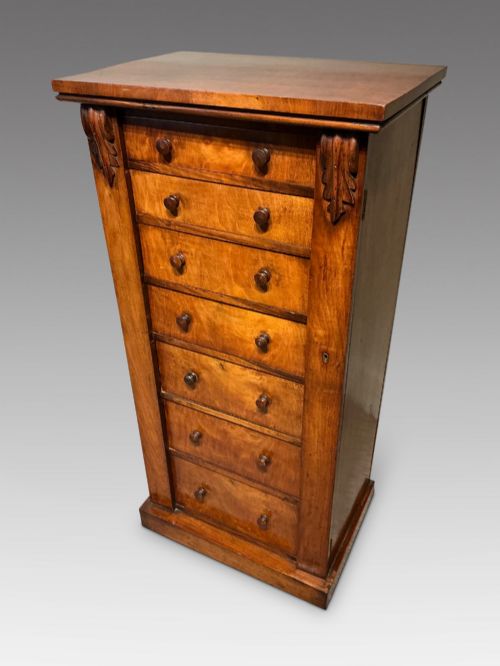
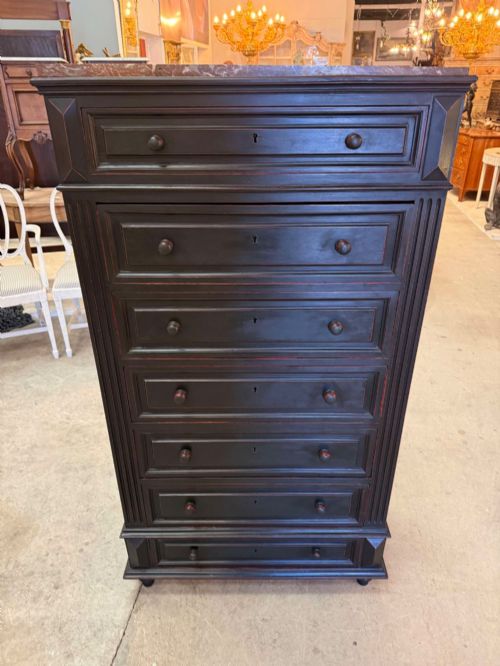
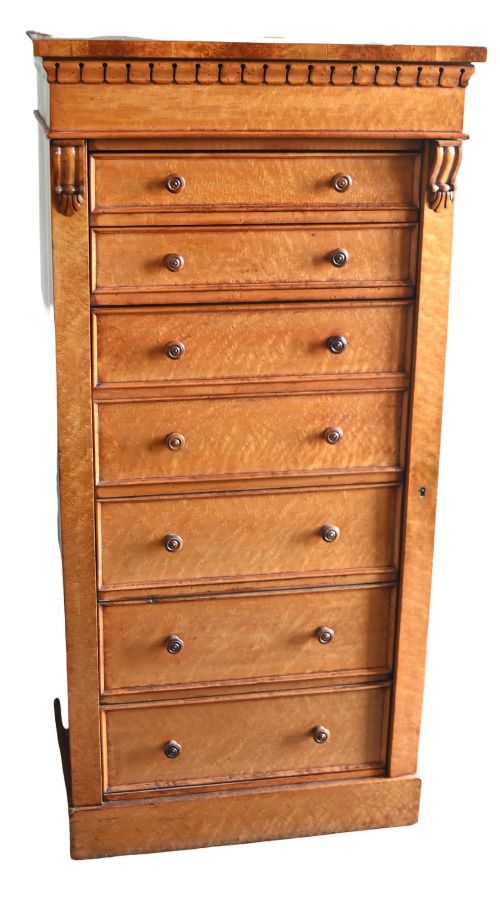
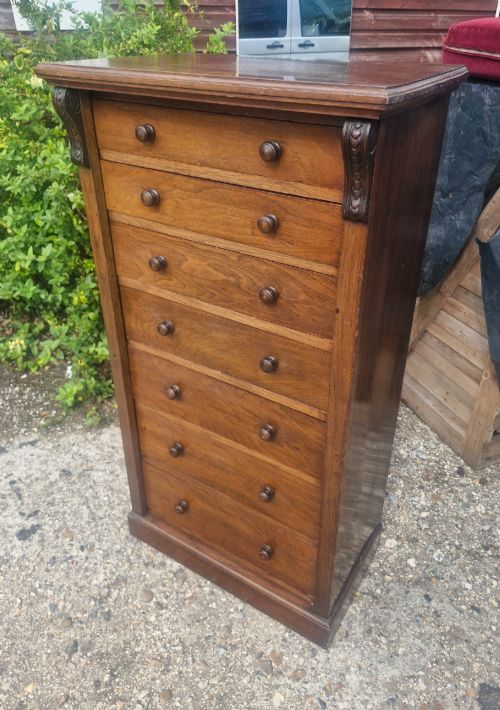
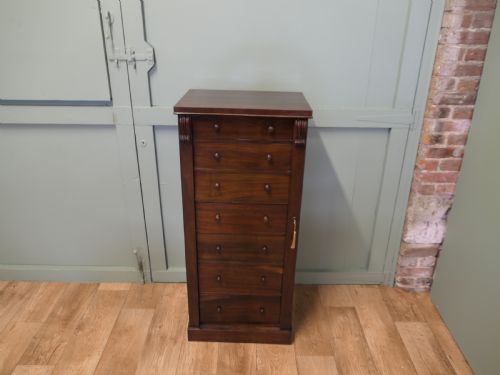
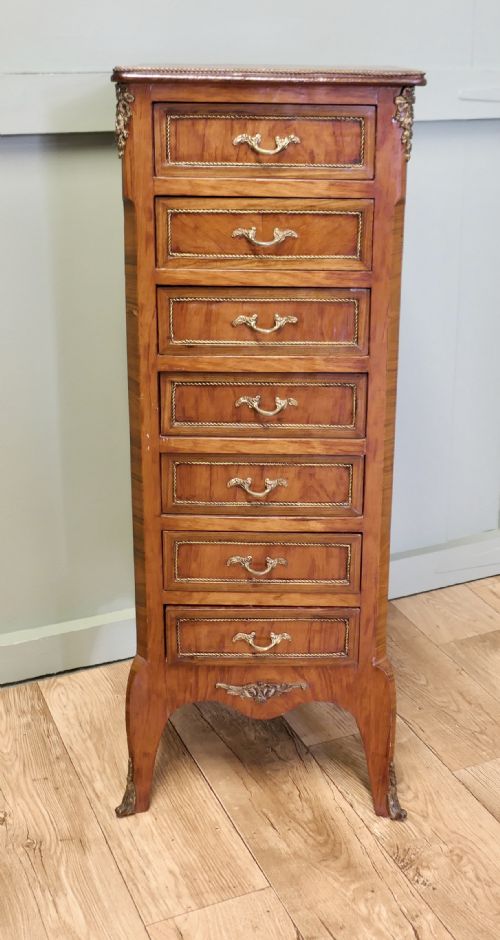
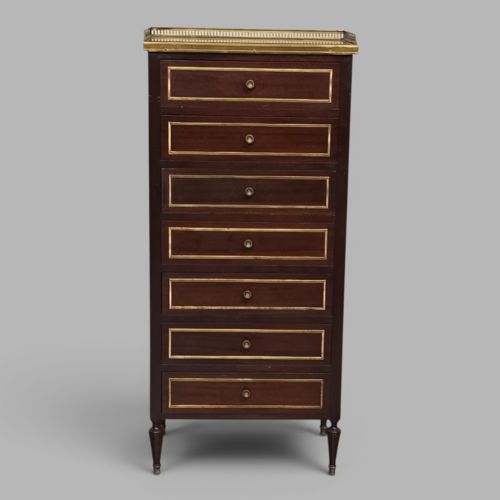
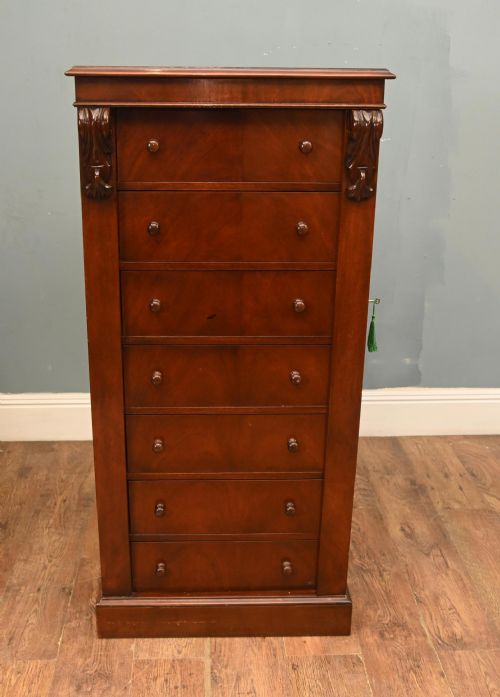
A narrow seven drawer chest is primarily represented on this page by the traditional Wellington chest, alongside tall slim cabinets and Semainiers. These pieces date from the Victorian and Edwardian eras, stretching back through the nineteenth century into revival styles.
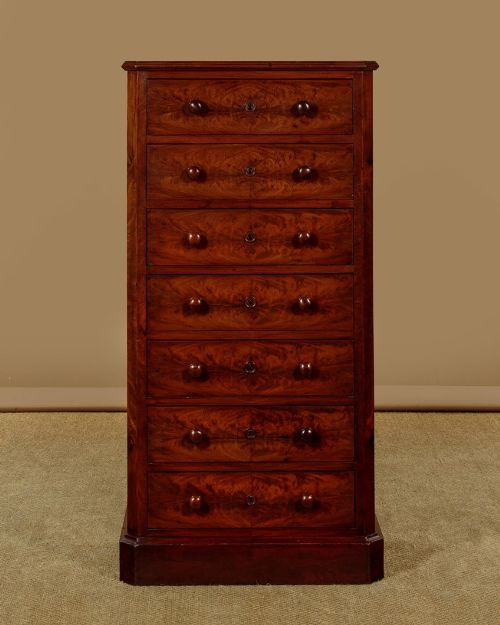
The form is characterised by its slender proportions, designed specifically to fit narrow spaces while providing seven distinct tiers of storage. Mahogany, walnut, and burr walnut dominate the selection, often complemented by satinwood inlay or marble tops on French examples.
Materials and construction methods
Cabinetmakers utilised dense timbers such as mahogany, oak, and walnut as the structural foundation for these tall chests, frequently applying figured veneers like burr walnut or birds-eye maple to the primary drawer fronts. Timber selection dictated both the weight and the visual depth of the piece.
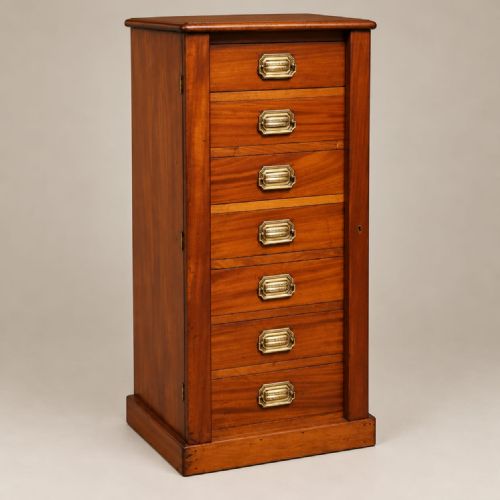
Brass hardware, including drop handles and locking mechanisms, was integrated alongside specialised mechanisms such as the locking stile found on Wellington chests. French pieces often incorporated marble tops and intricate marquetry to elevate the surface finish.
Narrow Seven Drawer Chest Retail Price Guide 2026
Typical asking prices for narrow seven drawer chest among the pieces listed under this phrase on Sellingantiques today, from the lower quarter to the upper quarter. They describe what is for sale here now, not the wider market.
Legend connects the locking stile on Wellington chests to the Duke of Wellington, though documentation remains quietly elusive.
Distinguishing quality across pieces
The choice of timber veneer and the precision of its matching define the visual merit of a chest, particularly on walnut and burr walnut models where grain patterns create natural decoration. Subtle details like fine stringing inlay and original brass fittings indicate a higher standard of manufacture.
Structural integrity relies on the tight tolerances of the seven drawers and the smooth operation of any locking stiles or internal mechanisms. Superior examples maintain crisp mouldings and undisturbed patination across the timber surface.
Maple & Co.
The Narrow Seven Drawer Chest Glossary
- Wellington chest
- A tall, narrow chest of drawers traditionally featuring seven tiers and a hinged locking stile on one side that secures all drawers simultaneously.
- Semainier
- A French tall chest of drawers, traditionally implying seven drawers for each day of the week, often finished with a marble top.
- Pillar chest
- A cylindrical or very slender column-like set of drawers designed for minimal floor space utilisation.
- Marquetry
- Decorative woodwork where pieces of veneer are fitted together to form geometric or pictorial designs on the surface.
Narrow Seven Drawer Chest: Frequently Asked Questions
What is a Wellington chest?
A Wellington chest is a tall, narrow cabinet typically housing seven drawers. It is distinguished by a vertical locking bar on the side.
This hinged flap secures the drawers in place when locked, offering a neat security feature for valuables.
How were these chests used?
These tall chests provided practical vertical storage for clothing, linen, and personal papers in rooms with limited floor space. The seven drawers allowed distinct categorisation of contents.
Their narrow footprint made them versatile additions to bedrooms, dressing rooms, and studies throughout the nineteenth and early twentieth centuries.
How do I identify a Semainier?
A Semainier is the French equivalent of the tall seven drawer chest, often featuring fine marquetry or a marble top. The term derives from the French word for week.
These pieces lean towards decorative continental styling while maintaining the same vertical storage purpose as their British counterparts.
What woods were commonly used?
Cabinetmakers relied heavily on mahogany, walnut, and burr walnut for their rich colour and durability. Secondary timbers included oak and pine.
Exotic veneers like birds-eye maple and rosewood appear on select pieces, adding distinctive visual texture to the drawer fronts.