


Antique Leather Thrones
These antique leather thrones are commanding seats built to anchor a room, combining heavy timber frames with tactile hide upholstery.
Antique Leather Thrones
When you search for antique leather thrones, you look for substantial seating designed to project authority, frequently taking the form of high-backed armchairs with architectural presence. The examples you meet on this page lean heavily towards the nineteenth century, drawing on earlier historical periods for their grandeur.
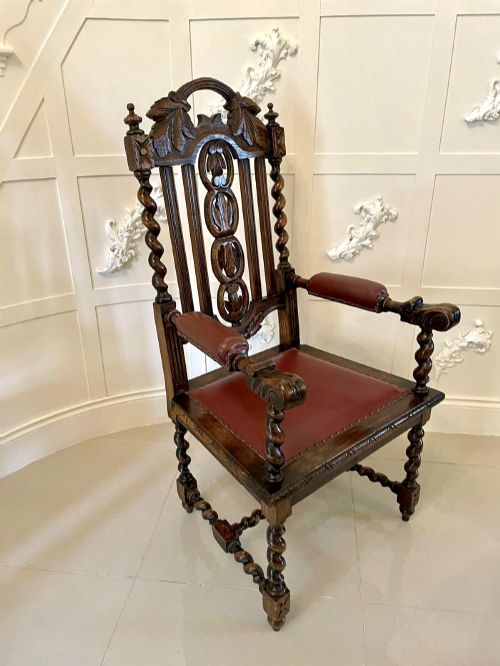
The dominant forms are oak and walnut armchairs, often described as throne chairs or library armchairs. They emerge from revivals of Gothic, Jacobean, and Renaissance styles, utilising dark woods and heavy carvings to recreate the weight of earlier centuries.
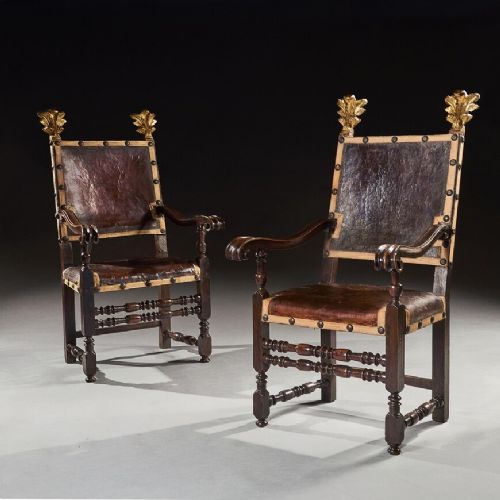
You will also encounter specific regional variations, such as Italian Baroque parcel-gilt walnut pieces alongside British Victorian oak interpretations. These chairs serve as focal points in studies, halls, and principal rooms rather than casual seating.
How they were made
The frames rely on durable timbers, predominantly oak and walnut, chosen for their strength and capacity to take deep, intricate carving. Artisans shaped these woods into barley twist supports, panelled backs, and scrolling arms.
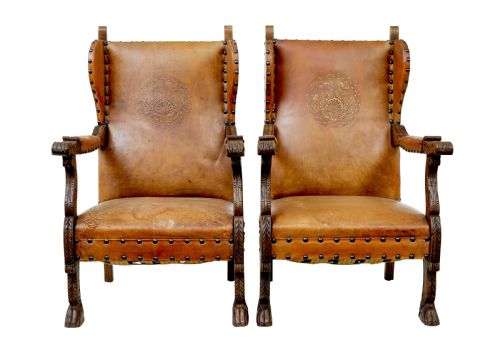
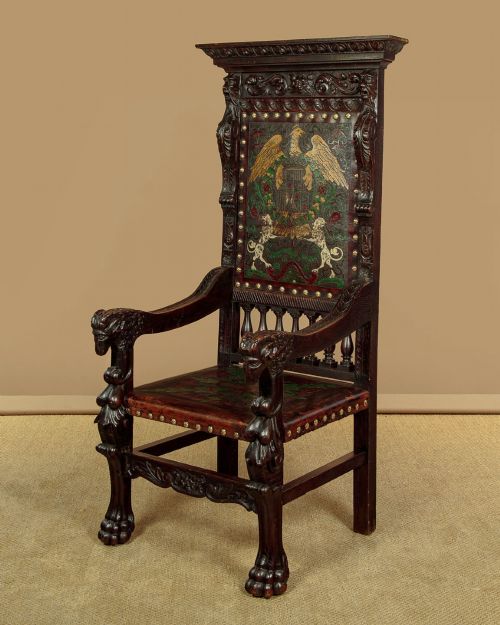
Leather provides the primary upholstery, frequently attached with brass studwork, embossed with patterns, or buttoned for texture. Some pieces incorporate painted wood or gold leaf detailing to highlight the carved motifs on the timber frame.
Several pieces feature buttoned leather that has absorbed generations of stiff-backed posture and contemplative fireside sighs.
What varies in quality
The distinction between standard seating and exceptional work lies in the depth and crispness of the timber carving. Superior chairs exhibit hand-chiselled details on the crest rails and arms rather than shallow machine moulding.
Upholstery treatment also marks the hierarchy, with thick embossed leather and precise brass studding separating bespoke commissions from simpler workshop productions. The choice of solid walnut or heavy quarter-sawn oak elevates the piece above lighter native softwoods.
A.W.N. Pugin
The Antique Leather Thrones Glossary
- Parcel-gilt
- Partially gilded with gold leaf. This technique highlights specific carved details against a dark wood background.
- Barley twist
- A turning style resembling a twisted rope. It appears frequently on the legs and stretchers of revival seating.
- Embossed leather
- Hide stamped with raised patterns. It adds rich texture to the back panels and seats of formal chairs.
- Gothic Revival
- An architectural and decorative style drawing on medieval forms. It introduces pointed arches and heavy tracery to chair backs.
- Armorial
- Featuring a coat of arms or family crest. These carved or painted emblems denote specific lineage.
Antique Leather Thrones: Frequently Asked Questions
Where did people use antique leather thrones?
These imposing chairs historically stood at the head of a dining table, in a master study, or within a grand entrance hall to project status and authority.
In modern interiors, they function best as standalone statement pieces in a library, large living room, or hallway where their scale has room to breathe.
How do I care for old leather upholstery?
Historic leather requires gentle maintenance to prevent the hide from drying and cracking over time. Regular dusting and occasional specialist conditioning preserve the suppleness of the material.
Keep these chairs away from direct heat sources and strong sunlight, which accelerate the deterioration of both the timber and the leather.
How can I tell a Victorian copy from a seventeenth-century original?
Examinations of the timber joints, tool marks, and overall wear patterns help distinguish between periods. Seventeenth-century pieces display hand-cut joinery and timber shrinkage consistent with centuries of age.
Revival pieces from the nineteenth and twentieth centuries often feature machine-sawn components and stylised interpretations of earlier motifs, even when constructed from old oak.
Are these heavy chairs difficult to move?
Solid oak and walnut frameworks combined with thick leather upholstery result in substantial weight. Moving them requires care to protect both the floor and the structural joints of the chair.
Because of their heft, plan their placement carefully within a room before settling them into their permanent position.