


French Style Leather Chairs
French style leather chairs bring classic continental seating into a room, offering rich tactile character through traditional upholstery and time-tested timber frames.
French Style Leather Chairs
When you search for french style leather chairs, you enter a diverse category spanning armchairs, office sets, desk chairs, side chairs, and dining chairs. These seats draw upon historical design idioms ranging from the formal grace of the eighteenth century up to the cleaner lines of the twentieth century.
You are most likely to meet nineteenth-century examples on this page, alongside pieces from decades spanning 1800 to 1930. The forms vary from substantial library armchairs to delicate side chairs and specialised desk furniture.
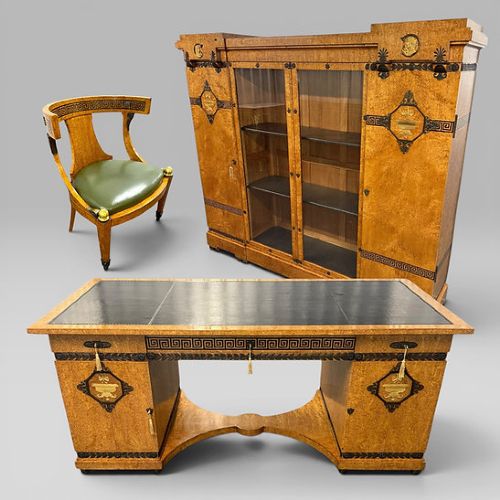
The aesthetic lineage includes recognised continental movements such as French Empire, French Neoclassical, Louis XV, Louis XVI, Directoire, and Rococo Revival. Each style brings specific proportions and decorative carvings that distinguish a formal salon seat from a utilitarian study chair.
How they were made
Frames rely upon traditional hardwoods including walnut, mahogany, oak, satinwood, and cane, providing structural integrity behind the decorative carved surfaces. Artisans shaped these timbers using hand-carving techniques suited to the particular design period.
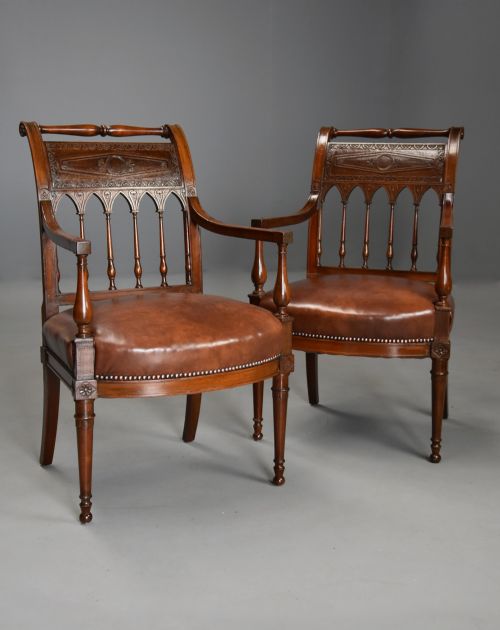
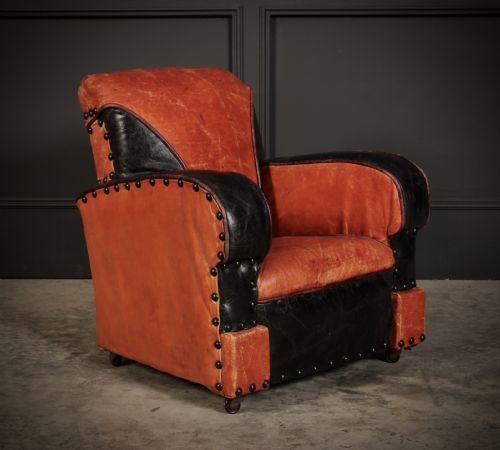
Upholstery incorporates supple leather surfaces, frequently complemented by brass hardware, bronze mounts, and ormolu detailing. Buttoned finishes appear on library armchairs, while others combine leather elements with wooden frames and caning.
Listings feature periods spanning from 1800 through the 1930s, utilising leather, brass, walnut, mahogany, cane, hardwood, satinwood, and bronze.
What varies in quality
The distinction between standard examples and the finest pieces rests upon the precision of the timber carving and the grade of the leather. Expert hand-shaping of walnut or mahogany frames creates clean, deep relief work that mechanical production cannot replicate.
Integration of secondary materials also dictates standard, with cast ormolu mounts, bronze accents, and brass studwork adding architectural definition to the upholstery. Superior examples demonstrate a cohesive relationship between the carved frame and the mounted metal elements.
Mercier Frères
The French Style Leather Chairs Glossary
- Ormolu
- Gilt bronze mounted onto furniture as decorative hardware and trim. It provides a bright metallic contrast against dark hardwoods like mahogany.
- Directoire style
- A transitional design period bridging classical revival and earlier monarchical styles. It favours cleaner lines and restrained neoclassical motifs.
- Fauteuil
- An open-arm armchair with upholstered back and seat framed in exposed carved wood. The arms typically feature padded rests.
- French Empire
- A monumental style characterised by classical proportions and military-inspired motifs. Pieces from this tradition often utilise heavy mahogany and striking metal mounts.
French Style Leather Chairs: Frequently Asked Questions
What defines a french style leather chair?
These seats combine continental aesthetic traditions, such as Louis XV or Empire styling, with traditional leather upholstery. They encompass everything from formal library armchairs to specialised desk chairs.
Makers built these pieces using timber frames like walnut and mahogany, incorporating decorative carving and metal mounts to reflect specific historical periods.
How do I identify different periods?
Dating relies upon observing stylistic clues, such as the heavy mounts of the Empire period or the curved lines typical of Louis XV designs. Examining the timber species and construction methods also helps narrow down the era.
Cabinetmakers adapted their techniques across the centuries, shifting from ornate hand-carved walnut in the eighteenth century to streamlined forms by the Art Deco era.
Where were these chairs used historically?
They served functional and decorative roles in studies, libraries, salons, and formal dining rooms. Desk chairs and office sets were designed for writing rooms and administrative spaces.
Larger library armchairs provided comfortable seating for reading and entertaining, whilst smaller side chairs furnished reception areas.
How do I care for leather upholstery?
Maintaining leather requires keeping the material away from direct heat sources and strong sunlight to prevent drying out. Regular dusting and gentle conditioning help preserve the natural suppleness of the hide.
Avoid harsh chemical cleaners, opting instead for specialist leather care products suited to antique and vintage surfaces.