

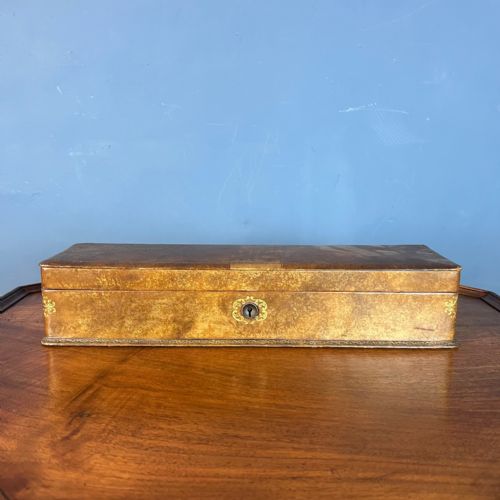

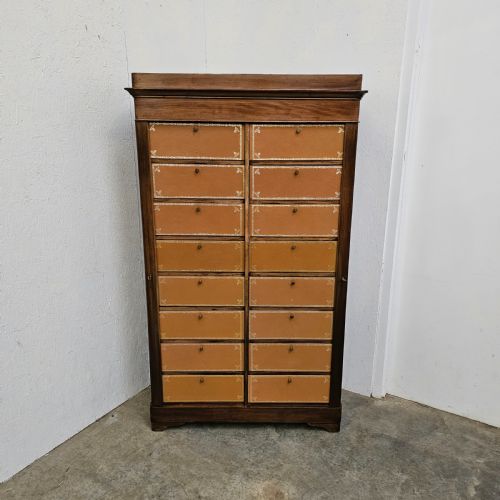


Antique Leather Document Chest
An antique leather document chest brings heavy brass work and rich hide right into your study.
Antique Leather Document Chest
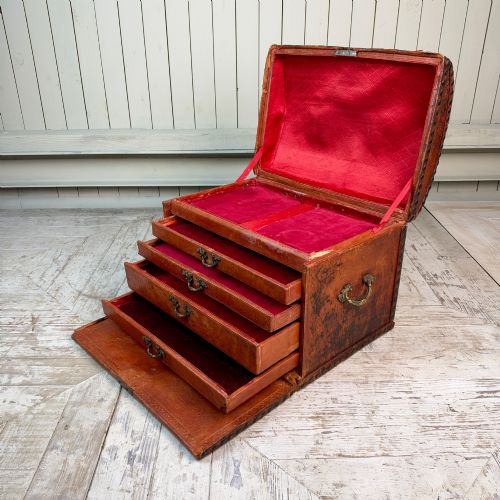
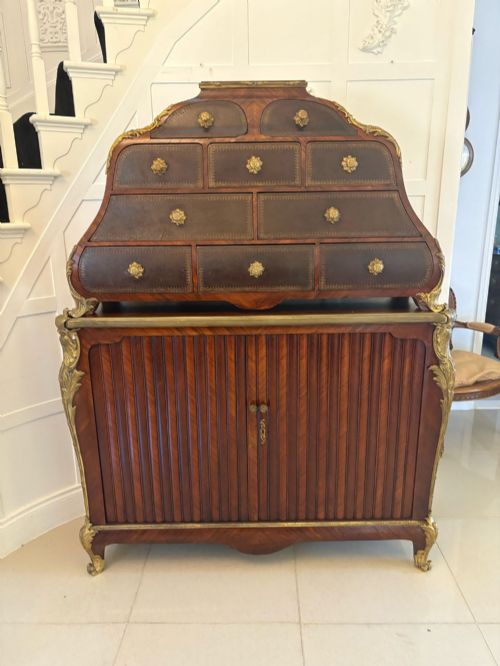
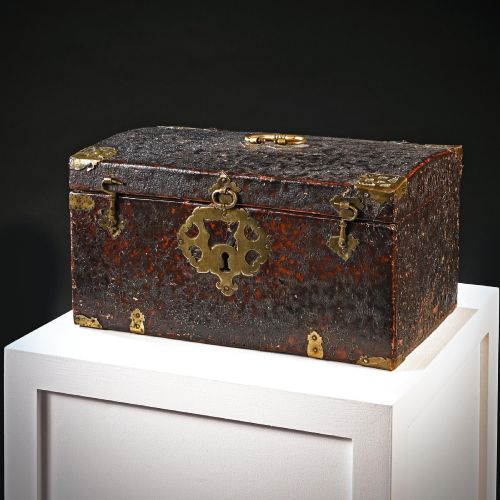
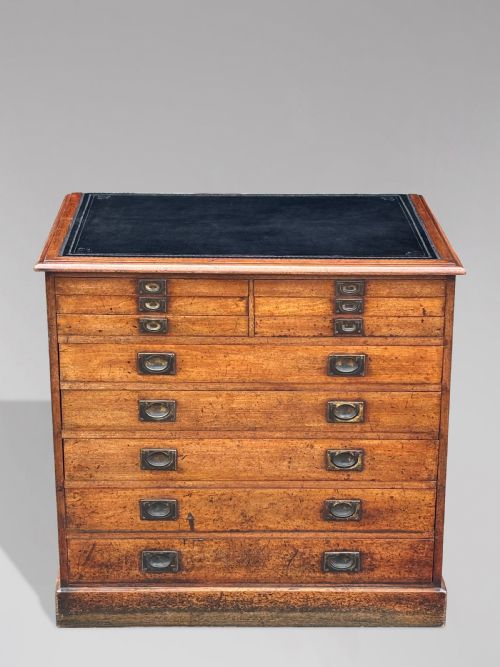
When you search for an antique leather document chest, you encounter sturdy storage solutions spanning from the seventeenth century through to the early twentieth century. These pieces range from travelling boxes and campaign cases to tall cartonnier chests of drawers.
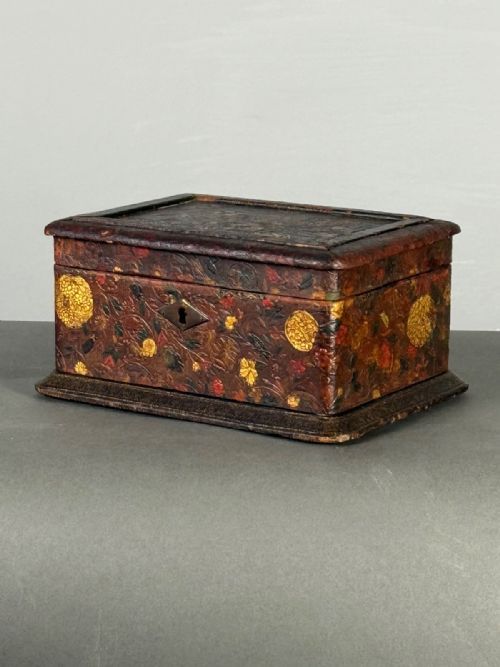
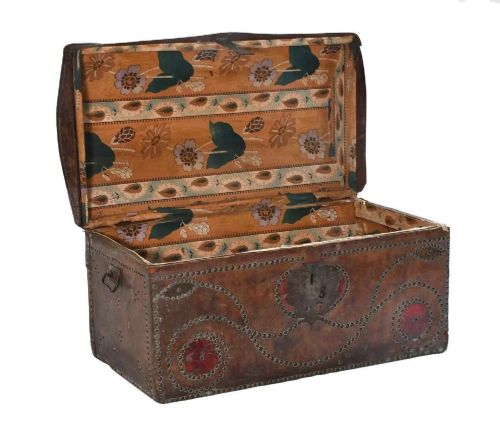
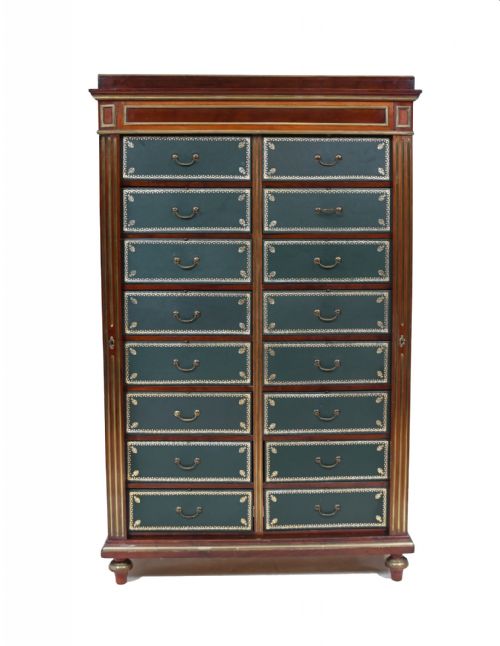
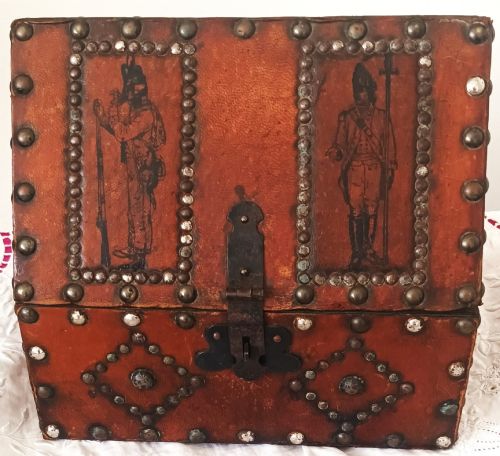
The most common examples on this page are nineteenth-century pieces, alongside earlier eighteenth-century studded trunks and French mahogany or walnut cartonnier filing cabinets. Buyers find a mix of portable writing caskets, jewellery boxes, and larger campaign trunks.
Origins stretch across English workshops and French ateliers, encompassing Regency designs, George II pieces, and Charles X models. Each type serves a distinct organisational purpose, from desktop desk accessories to floor-standing storage.
How they were made
Makers built these chests using solid wood carcasses, often mahogany, walnut, or camphor, which they then covered in leather. They secured the hide with brass studs and decorated surfaces using gold leaf tooling.
Metal hardware played an essential structural and decorative role, featuring iron and brass lock plates, carrying handles, and corner brackets. Interiors often lined with paper or fabric to protect sensitive documents and valuables.
Antique Leather Document Chest Retail Price Guide 2026
Typical asking prices for leather document chest among the pieces listed under this phrase on Sellingantiques today, from the lower quarter to the upper quarter. They describe what is for sale here now, not the wider market.
Listings feature pieces spanning from the seventeenth century through to 1920, incorporating mahogany, walnut, camphor wood, brass, and gold leaf.
What varies in quality
The distinction between ordinary and exceptional pieces lies in the crispness of the gold leaf tooling and the weight of the brass mounts. Finer examples display meticulous hand-stitching and robust internal framing that withstands centuries of use.
Timber selection dictates the integrity of the piece, with dense hardwoods like mahogany and walnut offering superior durability compared to softer secondary woods. Maker marks, such as those by Chapple and Sons or Susse Freres Paris, elevate the standing of a chest.
Susse Freres Paris·Chapple and Sons
The Antique Leather Document Chest Glossary
- Cartonnier
- A piece of furniture designed to hold papers, documents, or cartons, frequently arranged with multiple small drawers or compartments. These tall chests were particularly popular in nineteenth-century French interiors.
- Campaign case
- Portable furniture made for travel, typically fitted with brass corners, recessed handles, and robust locks. Officers and travellers utilised these strong trunks to move personal belongings safely.
- Chasse
- A reliquary-shaped box or casket with a pitched roof lid, often adapted for storing precious documents or trinkets. Georgian examples frequently feature decorative leather bindings.
- Gold leaf
- Hammered gold beaten into extremely thin sheets, applied to leather surfaces for decorative tooling and lettering. Artisans used this technique to highlight borders and crests.
Antique Leather Document Chest: Frequently Asked Questions
What is a cartonnier chest?
A cartonnier is a specialised filing cabinet or chest designed with multiple internal compartments or drawers to hold papers and documents. French cabinet makers produced these tall units in mahogany and walnut.
They often incorporated leather-covered document boxes within the framework, making them practical for administrative use in studies and libraries.
How do I date a leather chest?
Dating relies on examining the underlying timber, the style of brass hardware, and the method of leather tooling. Seventeenth-century examples feature heavy ironwork and simpler construction, while Regency and Victorian pieces show refined campaign mounts.
Makers' signatures, paper linings, and specific lock designs also help narrow down the period of manufacture.
Were these chests used for travel?
Many of the leather chests on this page, particularly campaign cases and travelling boxes, were explicitly built for mobility. They feature heavy brass corners and recessed side handles to withstand long journeys.
Other forms, such as tall cartonnier cabinets and jewellery caskets, remained stationary in homes and offices.
How do I care for old leather?
Antique leather requires a stable environment away from direct sunlight and excessive humidity to prevent the hide from drying out and cracking. Gentle dusting preserves the surface without damaging delicate gold leaf tooling.
Avoid modern chemical cleaners that strip the original patination accumulated over centuries of handling.