




18th Century Travelling Trunk
An 18th century travelling trunk is a robust wooden box sheathed in leather, hide, or iron, built to survive the carriage and ship.
18th Century Travelling Trunk
An 18th century travelling trunk serves as a heavy-duty container designed for personal possessions during journeys across country or overseas. These pieces appear in forms such as dome top trunks, storage chests, and fitted military boxes.
The versions most commonly met on this page span the 18th century, Georgian period, and circa 1750, with occasional Victorian or 1890 examples also appearing. Regional styles include Dutch, Spanish, Scandinavian Baroque, and English Country.
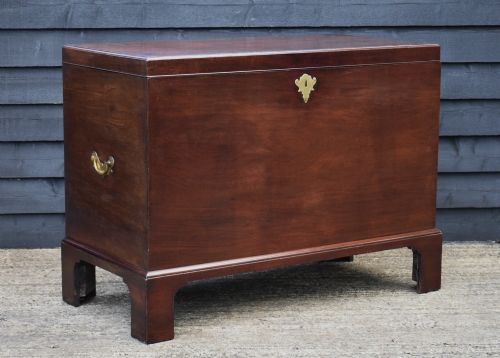
Makers fashioned these storage chests from oak, mahogany, and pine, frequently reinforcing the bodies with wrought iron, brass studs, and carry handles. They range from large shipping chests down to small dome top boxes.
How they were made
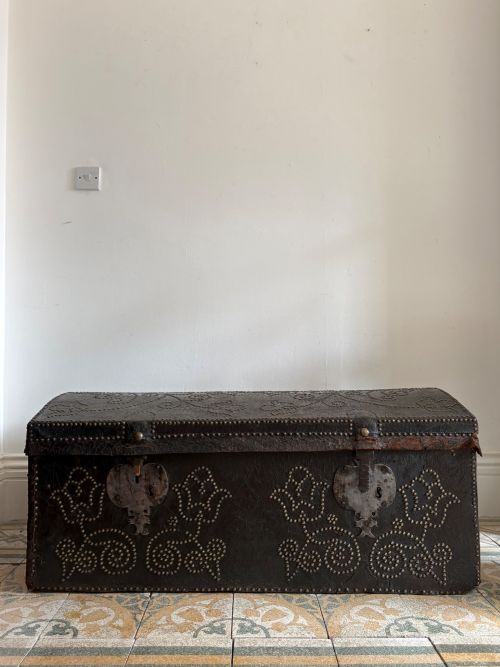
Craftsmen built the core structure using solid timber boards of oak or mahogany, joined together to withstand the rigours of transit. External surfaces were then wrapped in protective cowhide, leather, or red leather.
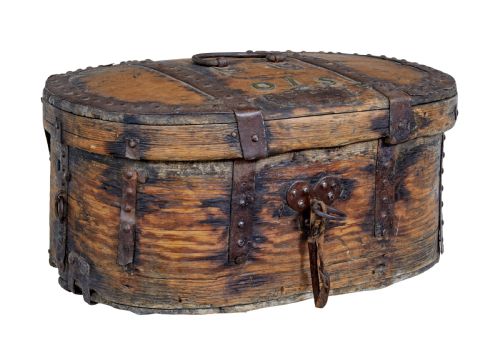
Durability was enhanced through iron straps, wrought iron banding, and brass studwork driven into the hide or wood. Side carry handles were integrated to assist porters and carriage crews.
Brass studwork on early leather trunks often maps out geometric patterns that doubled as maker signatures.
What varies in quality
Quality in an 18th century travelling trunk rests upon the integrity of the core timber frame and the survival of its original skin or iron mounts. Superior examples retain their dense leather or hide coverings intact alongside heavy forged hardware.
Refinement of the internal layout and regional decorative details also separate standard storage trunks from exceptional survivals. Items bearing period labels or elaborate brass stud patterns sit at the upper end of the range.
The 18th Century Travelling Trunk Glossary
- Dome top
- A curved lid construction designed to shed water during outdoor transport. This shape also allowed packers to pile additional items on top.
- Hide
- Untanned or heavy tanned animal skin used to sheath the exterior of a trunk for weather resistance. It provides a tough outer barrier against friction.
- Wrought iron
- Iron beaten into shape by a blacksmith to create structural straps and bindings. It reinforces the corners and seams of the wooden box.
- Military chest
- A specialised travelling box partitioned for an officer's personal equipment and valuables. These often feature mahogany construction and brass carrying handles.
18th Century Travelling Trunk: Frequently Asked Questions
What is an 18th century travelling trunk?
An 18th century travelling trunk is a heavy wooden storage chest covered in leather, hide, or iron, built to protect belongings during carriage and ship travel.
These utilitarian boxes were made in various regional styles, including Dutch, Spanish, and Scandinavian Baroque forms, featuring dome top lids and carry handles.
How were these trunks used?
Owners packed clothing, documents, and valuables inside these sturdy containers for journeys across land and sea. Porters and carriage operators lifted them using the side carry handles.
They functioned as portable wardrobes and secure strongboxes while moving between country houses, inns, and ships.
How do you date an antique trunk?
Dating relies on examining the construction methods, timber types such as oak or mahogany, and exterior materials like red leather or wrought iron. Specific regional characteristics and period labels also help assign pieces to the 18th century, Georgian era, or later Victorian times.
Dome top profiles and hand-forged hardware typically point towards the earlier 1750 and 1800 brackets.
Where were these chests made?
Makers constructed these trunks across Britain, Ireland, and continental Europe. Dutch, Spanish, and Scandinavian workshops produced distinctive leather and iron-bound variants.
English cabinet makers created fine mahogany military versions for officers on campaign.