
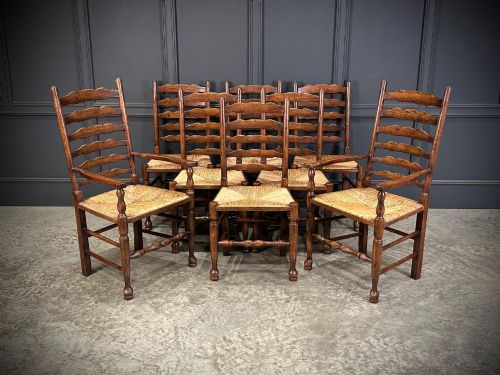


Antique Ladder Back Carvers
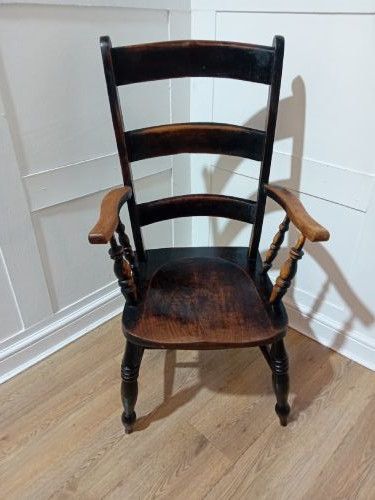
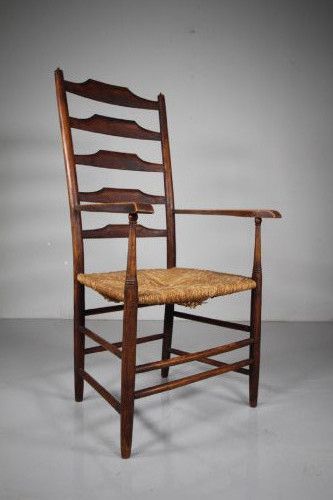
Antique ladder back carvers bring genuine country character and robust seating to a room, offering sturdy arms and stepped horizontal back rails.
Antique Ladder Back Carvers
Antique ladder back carvers are sturdy seated armchairs defined by horizontal slats or ladders across the backrest, designed historically for comfort at the head of a table. When searching for antique ladder back carvers, buyers encounter everything from modest regional country kitchen chairs in ash and elm to refined mahogany formal dining carvers from the Georgian and Victorian eras.
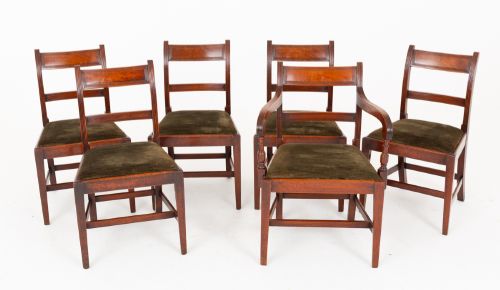
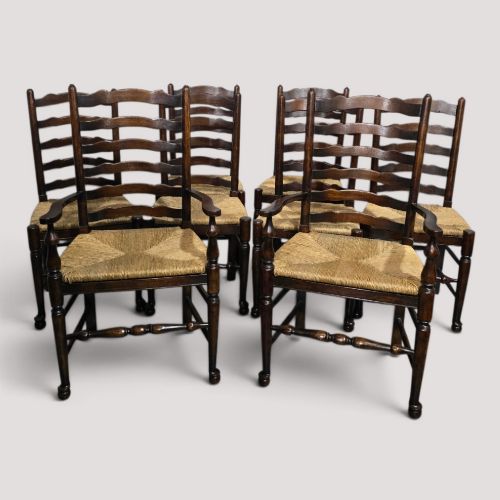
The pieces appearing on this page span several centuries of woodworking tradition, ranging from eighteenth-century Scottish and English examples to twentieth-century Arts and Crafts revivals. Many survive as individual armchairs or as parts of larger dining sets accompanied by matching single side chairs.
Regional variations shape these armchairs significantly, pointing towards maker traditions in places like Cheshire, Lancashire, or the Thames Valley. Buyers find both rustic rush-seated country models and sophisticated Chippendale revival carvers sharing the same structural ancestry.
How they were made
Makers constructed these carvers using native hardwoods like oak, ash, mahogany, elm, and beech, often combining multiple timbers within a single frame for structural strength. Turning lathes shaped the upright posts and arm supports, while traditional joinery methods secured the horizontal ladder rails into the back uprights.
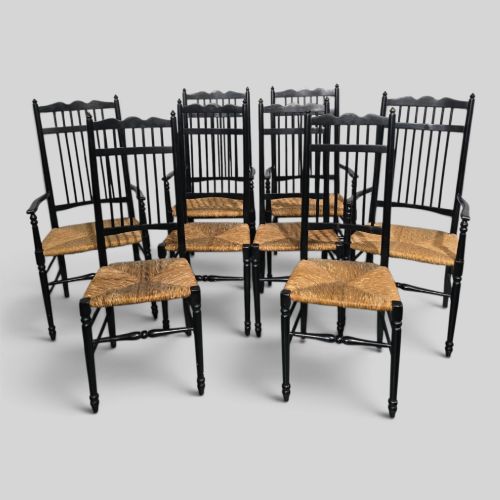
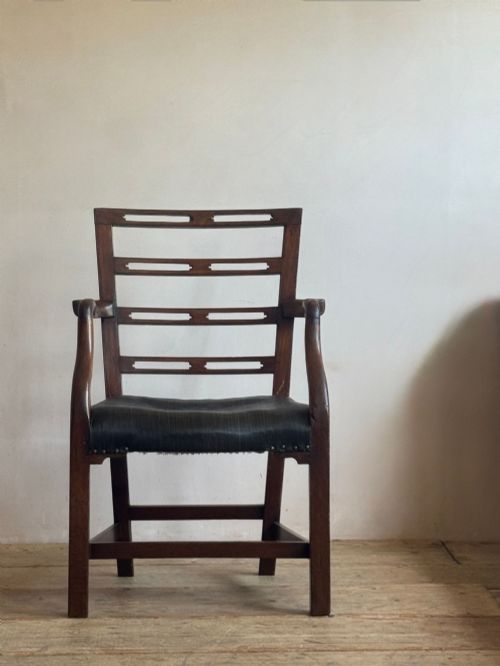
Seats commonly consisted of woven rush cordage tightly wrapped around internal rails, or upholstered pads finished in fabric, velvet, or leather. Painted finishes or polished timber treatments protected the natural grain and added colour to domestic interiors.
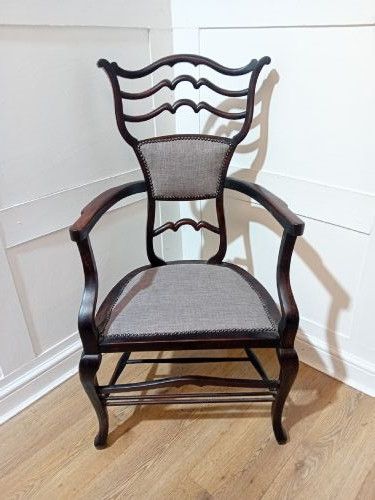
Several armchairs boast wavy ladder rails designed to fit the human spine better, proving country chairmakers understood ergonomics centuries ago.
What varies in quality
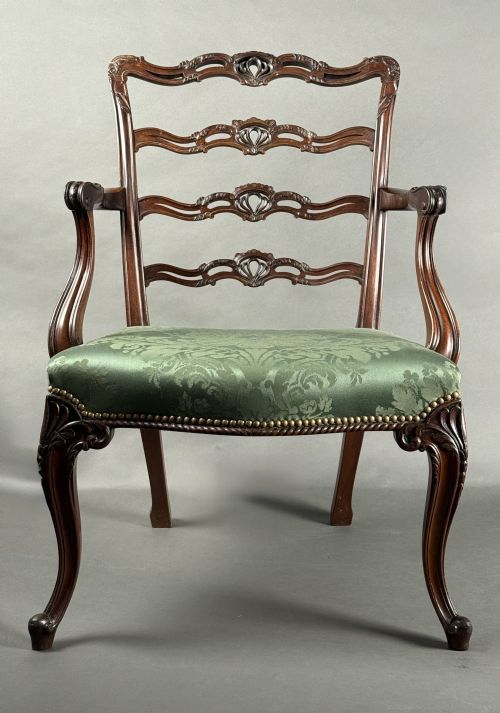
Quality in these carvers rests upon the integrity of the timber selection and the precision of the turning and joinery. Finer examples display carefully profiled ladder rails with subtle shaping or pierced decoration, whereas utility seating relies on simpler, heavier turned posts.
The survival of original surface finishes and the tightness of the rush seating or upholstery web greatly influence the integrity of a piece. Armchairs retaining their original timber patination and uncompromised structural joints command higher regard among collectors.
Philip Clissett·Liberty & Co·Dicon Nance St.Ives Studio
The Antique Ladder Back Carvers Glossary
- Carver
- An armchair designed to match a set of dining chairs, typically featuring wider proportions and supportive armrests. These pieces usually sat at the head and foot of a formal dining table.
- Rush seat
- A seating surface woven from dried marsh rushes around a wooden frame. This traditional method creates a resilient, textured pad common in country vernacular furniture.
- Spindle back
- A chair back constructed from vertical turned wooden rods rather than horizontal slats. This construction method offers a lighter visual weight while maintaining robust back support.
- Chippendale style
- A furniture design style inspired by the eighteenth-century cabinetmaker Thomas Chippendale, known for elaborate carved details and ribbon-back motifs. Revivals of this style appeared frequently during the nineteenth and twentieth centuries.
- Harlequin set
- A collection of chairs that share similar periods, materials, or stylistic traits without forming an exact matching set from a single workshop. Such groups were often assembled over time to suit larger dining rooms.
Antique Ladder Back Carvers: Frequently Asked Questions
What is a ladder back carver?
A ladder back carver is an armchair featuring horizontal slats across the backrest, combining sturdy armrests with traditional country or formal seating design.
These chairs served primarily as dining carvers placed at the head of a table or as occasional seating in domestic spaces.
How do I date an antique ladder back?
Dating relies on examining the timber species, tool marks, turning styles, and construction methods used in the frame. Eighteenth-century examples often show hand-planed surfaces and pegged joints, whereas later revivals incorporate nineteenth and twentieth-century manufacturing techniques.
Comparing the profile of the ladder rails and the wear patterns on the feet also helps establish the era of manufacture.
Are rush seats durable?
Rush seats woven from natural marsh grasses offer surprising resilience and strength when kept in dry indoor environments. Regular use polishes the dried fibres, creating a firm and supportive platform over decades.
Avoiding excessive moisture protects the organic cordage from breaking down prematurely.
Can I mix carvers with different chairs?
Mixing carvers with different chairs is a traditional approach that creates a collected harlequin dining arrangement. Combining chairs of similar periods, timbers, or regional styles maintains visual harmony around a dining table.
Matching the wood tone or chair height helps tie disparate seating elements together successfully.