

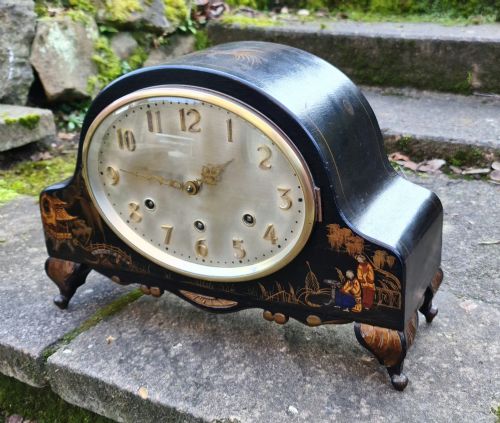
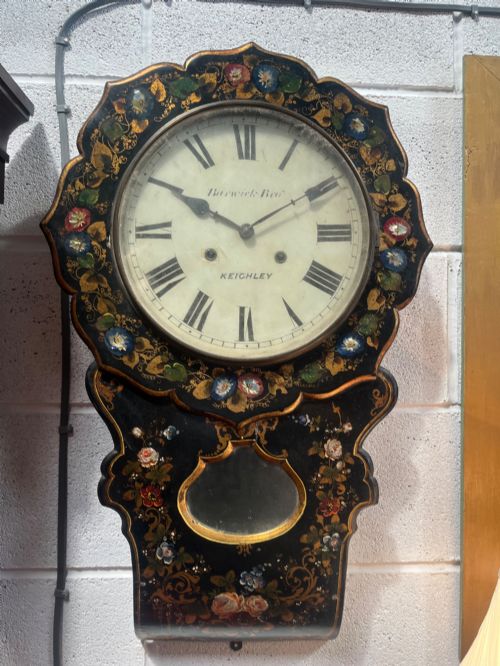
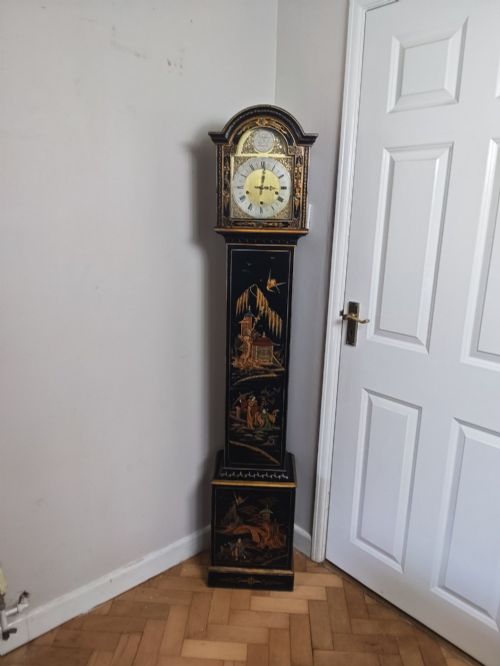
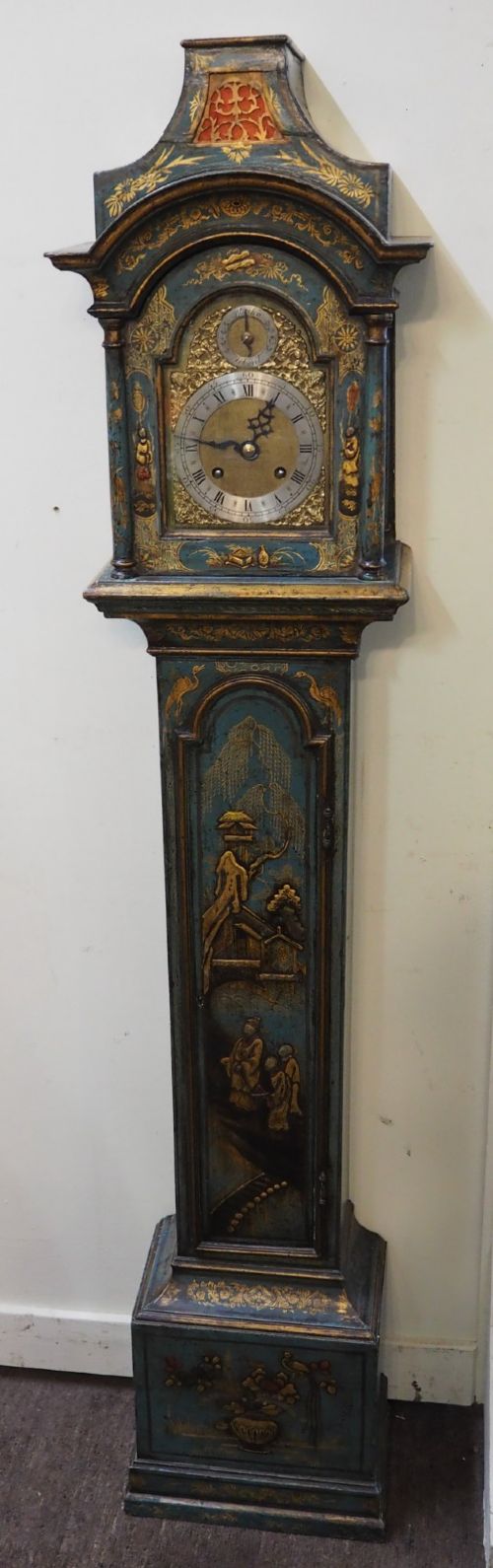


Antique Lacquered Clock
An antique lacquered clock brings rich Chinoiserie decoration and substantial presence into a room, offering timekeeping housed in hand-finished surfaces.
Antique Lacquered Clock
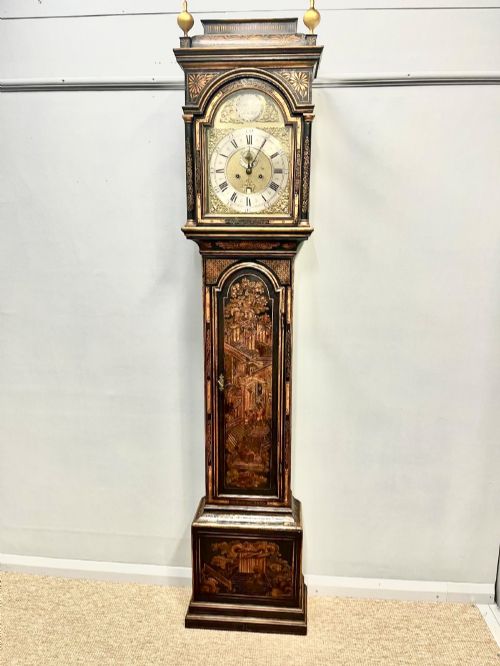
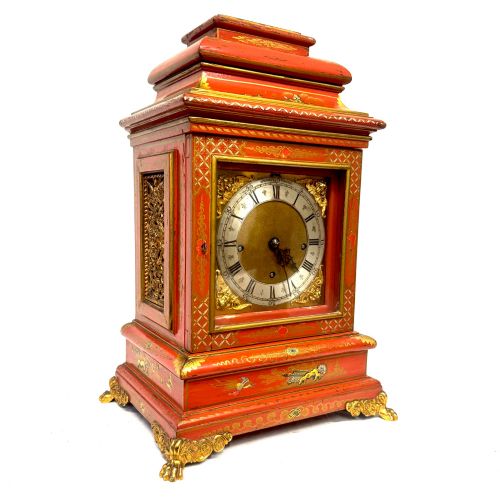
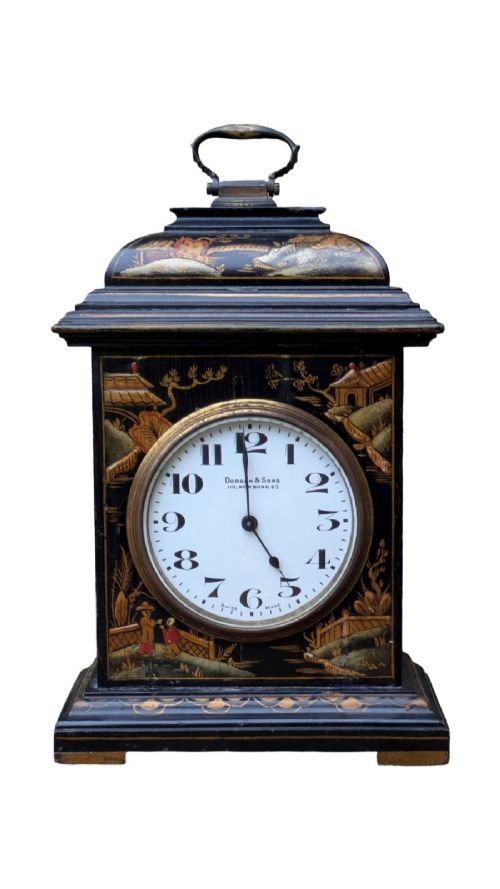
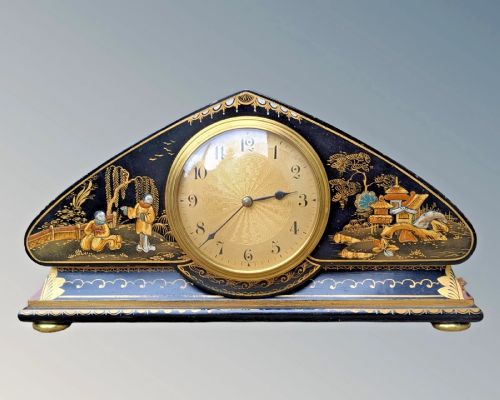
An antique lacquered clock spans tall longcase timepieces, compact mantel models, and wall-hanging variations. Buyers seeking this phrase most frequently encounter tall Grandfather and Grandmother longcase clocks alongside smaller desk and bracket designs.
The objects originate from Georgian beginnings through 18th-century craftsmanship up to later 19th-century and 1930s revivals. Many examples display distinct Chinoiserie motifs, incorporating gilt detailing upon dark, green, cream, or red lacquered wood surfaces.
How they were made
Makers built the structural carcases using timber before applying multiple layers of lacquer and japanning varnish. Artisans then built up raised gilt decoration, often depicting traditional figures, landscapes, and floral patterns.
Movements utilise brass components, glass dial covers, and enamel faces, frequently paired with pendulum drives or musical chimes. Bracket and mantel formats incorporate specialised mechanical escapements and occasionally French movements.
Antique Lacquered Clock Retail Price Guide 2026
Typical asking prices for lacquered clock among the pieces listed under this phrase on Sellingantiques today, from the lower quarter to the upper quarter. They describe what is for sale here now, not the wider market.
Materials recorded across the selection include brass, glass, enamel, gilt, and lacquered wood.
What varies in quality
The refinement of the hand-painted and gilt Chinoiserie decoration dictates the visual standard of the case. Superior examples display crisp detail in the figures and foliage against the lacquered background, whereas lesser items show flat or generalized ornamentation.
William Kipling London·Wise of Reading·Thomas Utting of Yarmouth·Gardner of London·James Smith London·Chater And Son London
The Antique Lacquered Clock Glossary
- Chinoiserie
- European decorative style reflecting Chinese artistic traditions. It appears on lacquer furniture and clock cases through motifs of pagodas, figures, and landscapes.
- Japanning
- European imitation of East Asian lacquerwork. Artisans applied layers of varnish and resin, curing them before adding raised gold designs.
- Longcase clock
- Tall freestanding timekeeping case housing a pendulum and weights. These are also known as grandfather or grandmother clocks depending on their height.
- Bracket clock
- Portable table or mantel clock originally designed to sit on a wall bracket. They frequently feature carrying handles and glazed side panels.
- Escapement
- Mechanical mechanism within the clock movement that controls the release of power. It translates the uncoiling of a spring or falling of a weight into regulated ticks.
Antique Lacquered Clock: Frequently Asked Questions
What is an antique lacquered clock?
An antique lacquered clock is a timepiece housed in a wooden case finished with traditional lacquer or japanning techniques. These pieces often feature decorative Chinoiserie painting in gold and colours.
They range from towering 18th-century longcase clocks to smaller 20th-century mantel and bracket clocks. Each combines mechanical timekeeping with ornate surface decoration.
Where should I place a longcase clock?
A longcase clock requires a stable, level floor and a secure fixing to the wall behind the waist to prevent tipping. Keeping the pendulum aligned ensures the escapement ticks evenly.
Avoid positioning these tall wooden cases near direct heat sources, damp areas, or strong sunlight. Stable indoor conditions protect the lacquer and wood structure over time.
How do I distinguish 18th-century pieces from later revivals?
Eighteen-century pieces display period joinery construction, hand-beaten brass movements, and patinated lacquer surfaces accumulated over centuries. Signatures of makers like William Kipling or James Smith appear on the brass dials.
Later 19th-century and 1930s revival examples often utilise different mechanical standards, such as Westminster chimes or French movements, combined with cleaner internal timber construction.