



Oriental Lacquer Clock
An oriental lacquer clock brings rich Chinoiserie ornament and hand-finished gloss to a room, offering a striking anchor for a traditional interior.
Oriental Lacquer Clock
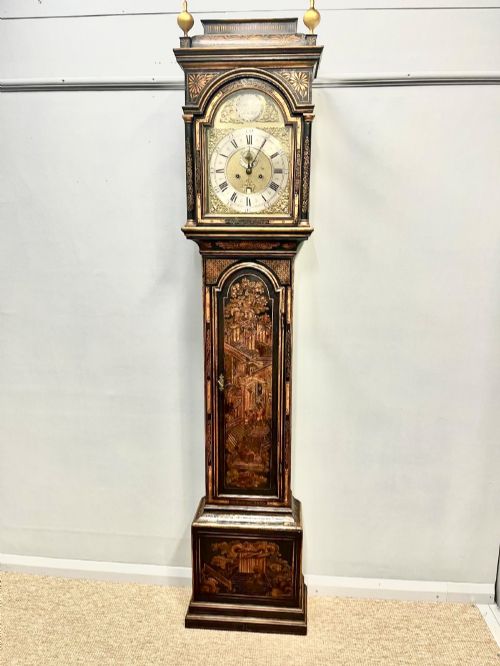
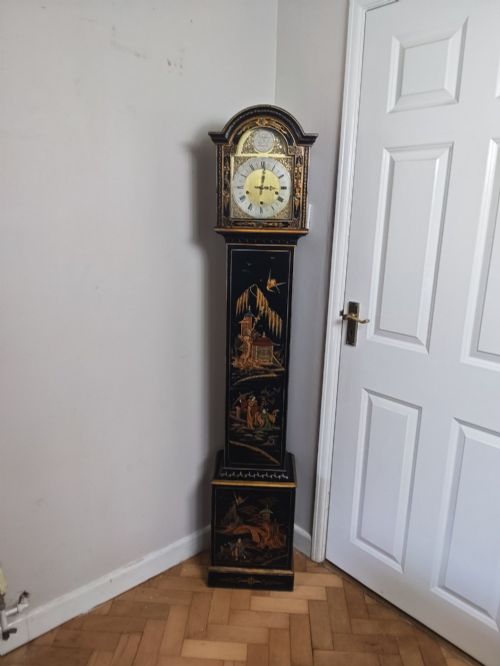
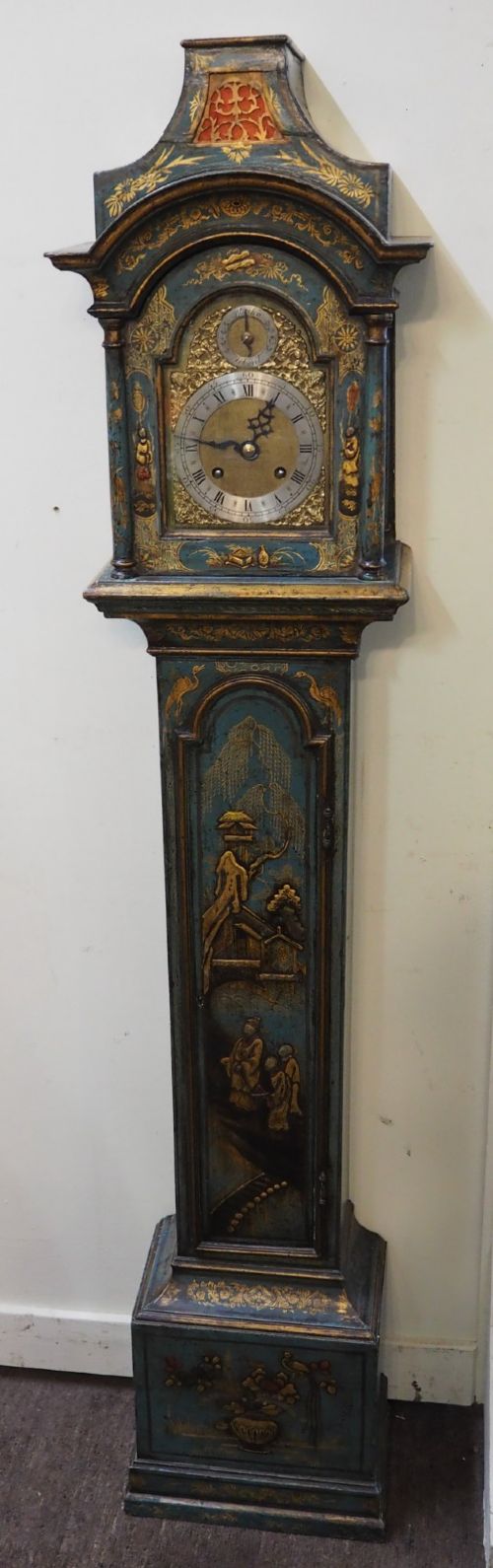
An oriental lacquer clock spans tall floor-standing models and compact mantel pieces, carrying deep decorative finishes rooted in Chinoiserie design. You will encounter tall longcase and grandmother clocks alongside smaller mantel examples across this page.
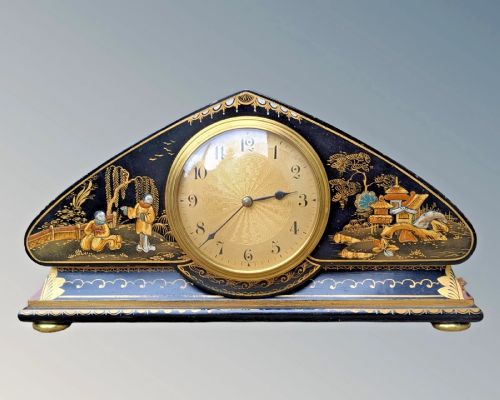
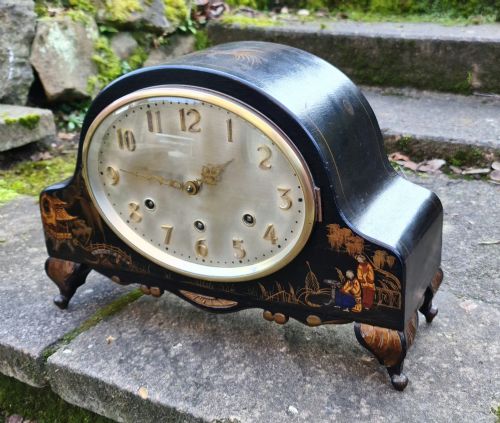
The periods represented stretch from the 18th century through the Georgian era into 19th-century examples, with a strong concentration of 1920 and 1930 revival pieces. These later iterations capture the decorative ambition of earlier centuries in more accessible domestic sizes.
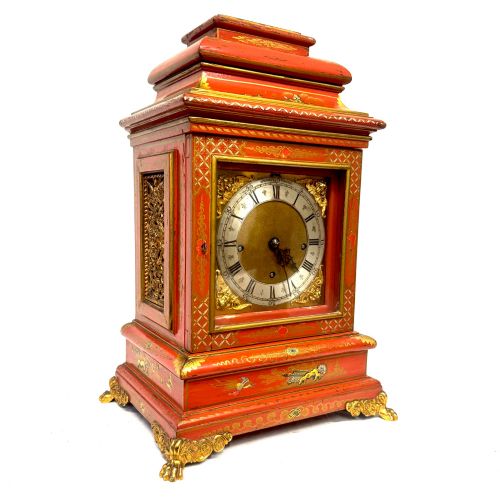
Mantle and bracket clocks offer portable colour through cream, green, and blue finishes, while longcase versions command a corner with towering painted panels. Every piece relies on the interplay between the wooden carcass and the lustrous surface layer.
Materials and construction methods
Makers built these clock cases from wood before applying layers of lacquer, finishing many surfaces with gold leaf and gilt detailing. Glass protects the dial face, while brass movements regulate the internal timekeeping and mechanical chimes.
Enamel dials frequently feature alongside brass chapter rings, providing a crisp contrast to the dark or tinted lacquer surrounding them. The combination of cabinet-making and surface finishing required distinct artisanal skills to achieve a durable, reflective sheen.
Oriental Lacquer Clock Retail Price Guide 2026
Typical asking prices for oriental lacquer clock among the pieces listed under this phrase on Sellingantiques today, from the lower quarter to the upper quarter. They describe what is for sale here now, not the wider market.
Listings span multiple eras from the 18th century to 1930, uniting traditional longcase forms with colourful Chinoiserie mantel clocks.
Assessing quality in lacquer and movement
Depth of finish dictates the visual success of the piece, separating flat painted surfaces from builds with layered, polished lacquer and refined gold leaf application. The complexity of the Chinoiserie scenes painted across the case reveals the hand of a more accomplished decorator.
Internal mechanics also separate standard pieces from finer examples, particularly when comparing simple timepieces to those housing musical movements or Westminster chimes. A robust mechanical movement paired with a substantial wooden case holds its integrity far better over decades of use.
Gardner of London
The Oriental Lacquer Clock Glossary
- Chinoiserie
- European artistic interpretation of Chinese and East Asian decorative motifs, heavily featuring figures, landscapes, and pagodas rendered in gold on lacquer grounds.
- Grandmother clock
- A slender, scaled-down version of a longcase clock, standing shorter than a full-size grandfather clock while retaining the traditional weight-driven or spring-driven movement.
- Bracket clock
- A portable table or shelf clock, historically designed to sit upon a wall bracket, often featuring a fine handle and glazed side panels to display the movement.
- Longcase clock
- A tall, weight-driven pendulum clock housed in a tall wooden case designed to stand directly on the floor, also known colloquially as a grandfather clock.
- Chapter ring
- The metal ring on a clock face that bears the hour numerals, typically engraved or painted in black against a silvered or brass background.
Oriental Lacquer Clock: Frequently Asked Questions
What is an oriental lacquer clock?
An oriental lacquer clock is a timepiece housed in a wooden case finished with traditional lacquer and Chinoiserie decoration. These range from tall longcase models to smaller mantel clocks.
They serve as both functional timepieces and decorative focal points, reflecting historical European fascination with East Asian design aesthetics across multiple centuries.
How do I date a lacquer clock?
Dating relies on examining the casework style, the materials used in the movement, and the character of the painted Chinoiserie decoration. Georgian and 18th-century examples show different cabinet proportions compared to 1920 and 1930 revival pieces.
Looking closely at the hinges, dial construction, and internal mechanical components helps confirm whether a piece originates from an earlier period or a later revival.
Where should I place a longcase clock?
Longcase clocks require a stable, dry location against a solid wall where they can stand level without floor vibrations disturbing the pendulum. Hallways, landings, and reception rooms provide ideal settings for these tall pieces.
Keeping them away from direct sunlight and temperature extremes protects the delicate lacquer finish and prevents the wooden case from warping over time.
What maintenance do these clocks need?
Mechanical movements require periodic cleaning and oiling by a professional clockmaker to ensure accurate timekeeping and prevent wear on the gears. Winding should be done carefully according to the specific movement type.
The lacquer exterior needs only gentle dusting with a soft, dry cloth, avoiding harsh chemical polishes that can damage the delicate gilt and painted surface layer.