



Antique King Bed
An antique king bed anchors a large bedroom with solid period presence, offering generous proportions built long before modern mass production standardism.
Antique King Bed
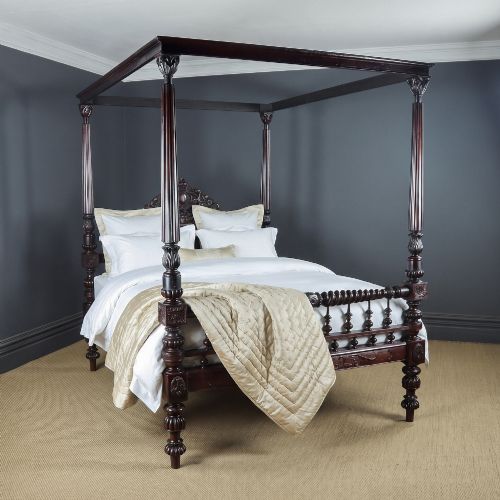
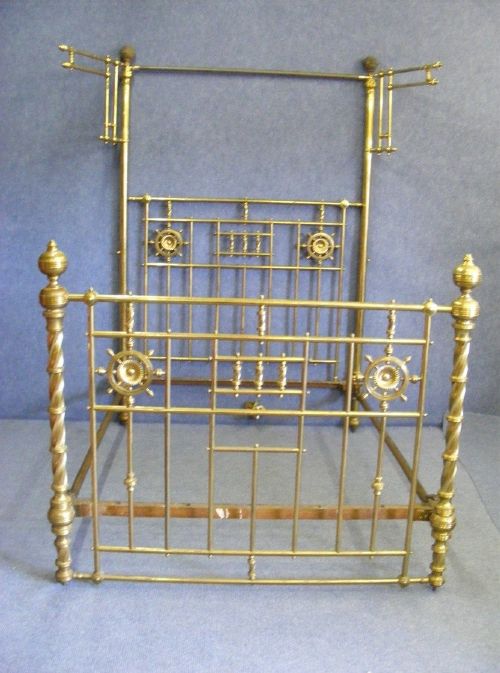
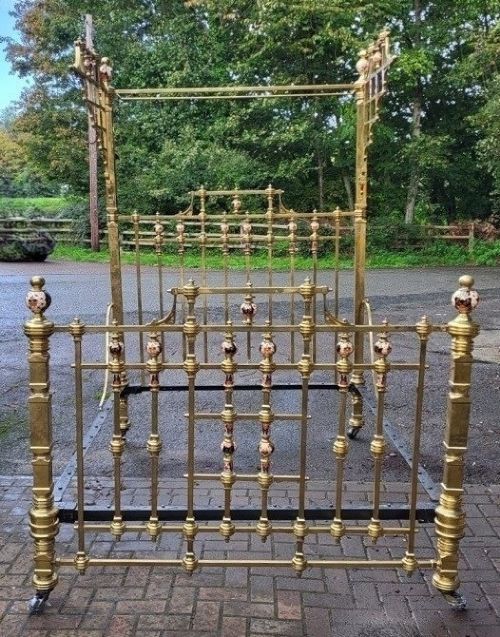
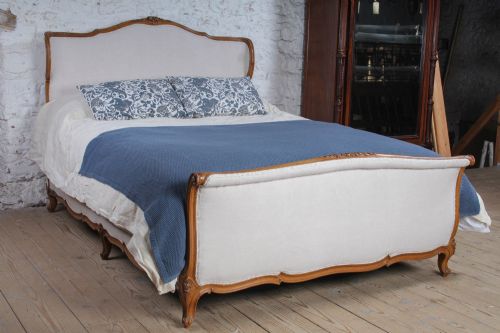
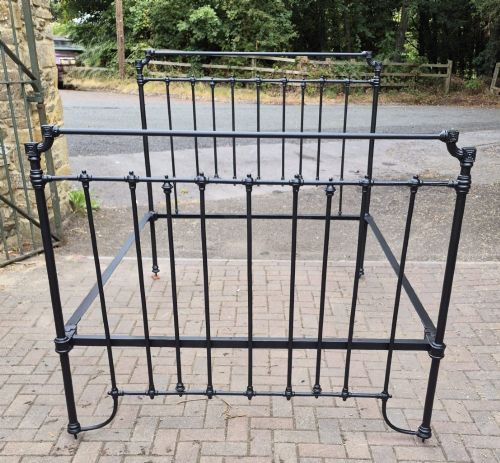
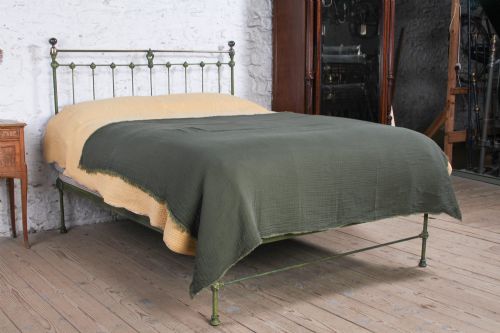
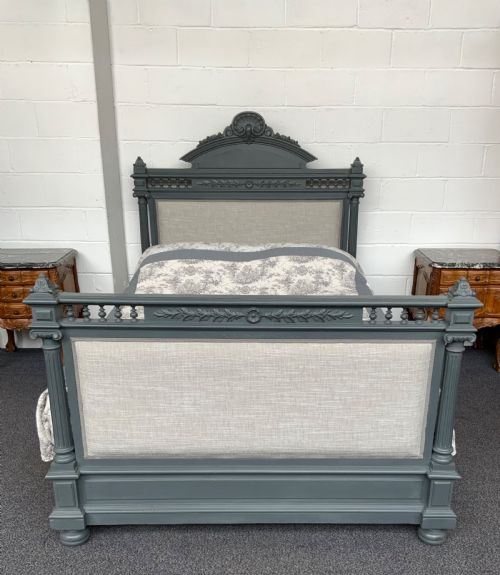
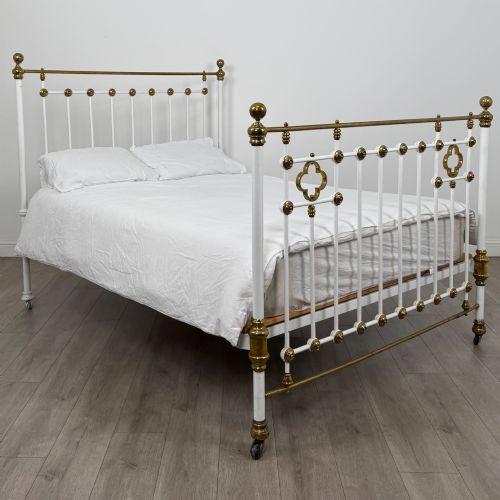
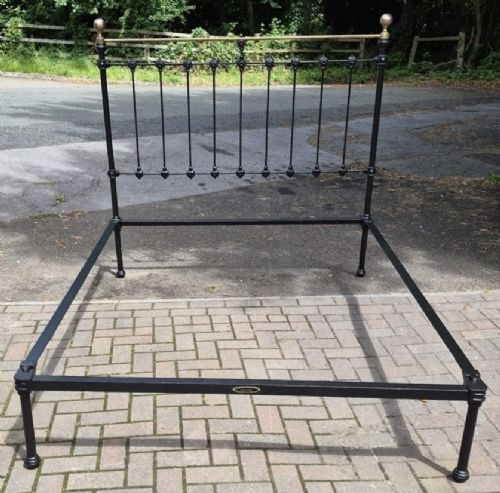
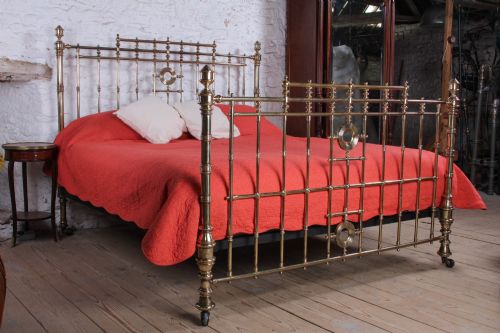
When searching for an antique king bed, buyers encounter substantial frames stretching across Victorian, Edwardian, and nineteenth-century periods, alongside continental French and Anglo-Indian colonial designs. These sleeping platforms range from imposing four-poster mahogany structures to robust brass and iron bedsteads featuring decorative metalwork and cast components.
The selections available bring together varied regional proportions, including wide super king iterations and distinct no-end configurations from Irish workshops. Walnut and mahogany woods sit alongside painted and black-finished iron frameworks, establishing varied visual weights for period interiors.
Most examples hail from the late nineteenth century, reflecting robust industrial manufacturing methods combined with hand-finished decorative details. Buyers find both monumental four-posters intended for high-ceilinged rooms and lighter brass-and-iron combinations well suited to contemporary domestic spaces.
Materials and construction
Makers utilised heavy timbers such as mahogany, walnut, and maple for wooden bed frames, often embellishing surfaces with kingwood parquetry, marquetry inlays, or carved mouldings. French pieces frequently integrated ormolu mounts and marble elements, while cabinet makers applied French polishing to deepen the grain.
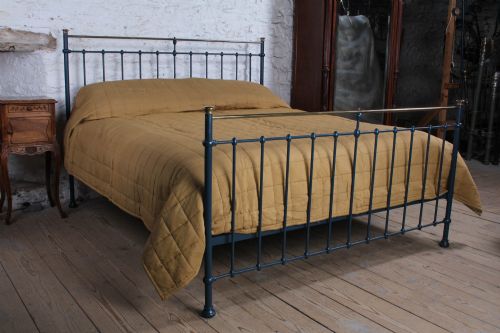
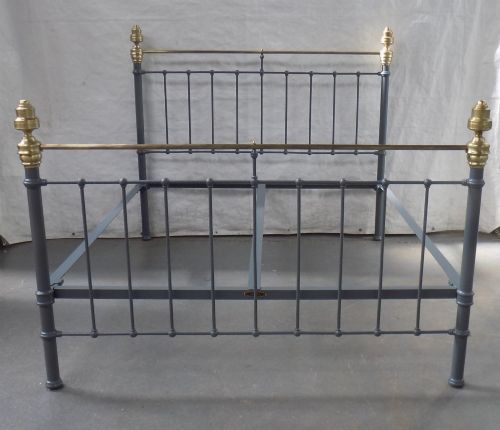
Metal structures combined brass tubing with cast iron and wrought iron components, utilising intricate decorative castings and tapered posts to add architectural definition. Makers such as Winfield employed specialised casting techniques to produce durable frames finished in black or verdigris patinas.
Some nineteenth-century iron frames rolled out of workshops with integrated castors designed to chase away dust bunnies.
Factors separating the range
Quality reveals itself in the crispness of brass castings, the depth of hand-carved wooden details, and the integrity of original joints and fixtures. Exhibition-grade pieces demonstrate superior metal finishing and more ambitious stylistic ambition, such as complex Gothic Revival tracery or elaborate Louis-style mounts.
The selection of timber grain and the precision of marquetry inlay distinguish standard production models from workshop pieces bearing identifiable maker signatures. Original components, uncompromised structural integrity, and retained maker marks elevate an example above standard domestic utility frames.
Maple & Co·RW Winfield·James Shoolbread & Co
The Antique King Bed Glossary
- Bedstead
- The complete framework of a bed, including headboard, footboard, and rails, excluding the mattress and bedding. This term appears frequently in nineteenth-century listings.
- Four Poster Bed
- A bed with four vertical columns supporting an upper canopy or tester frame. These commanding structures often feature carved mahogany or colonial timber work.
- Half Tester Bed
- A wall-mounted or headboard-attached canopy that extends only partway over the upper portion of the bed. This form typically pairs a brass or iron frame with drapery provisions.
- Ormolu
- Gilt-bronze mounts applied as decorative ornaments to furniture frames. French neoclassical and Louis-style pieces often employ these metallic details.
- Parquetry
- Geometric wood-mosaic work used for surface decoration on headboards and furniture. Kingwood veneers are frequently arranged in repeating patterns to create visual texture.
Antique King Bed: Frequently Asked Questions
How do I fit a modern mattress?
Many period frames require custom mattress sizing or subtle internal adapter slats to accommodate modern dimensions safely.
Working with standard proportions can sometimes necessitate bespoke bedding to ensure a correct fit within antique side rails.
Are metal frames structurally stable?
Nineteenth-century iron and brass frames utilise heavy-gauge metal and robust mechanical joints designed for long-term endurance.
Modern assembly hardware usually integrates smoothly with original sockets without altering the historical structure.
How do I identify French regional styles?
French pieces often display carved walnut or kingwood surfaces influenced by Louis XV and Louis XVI design vocabularies.
Characteristic curves, cabriole motifs, and subtle ormolu mounts distinguish these continental frames from British Victorian equivalents.