
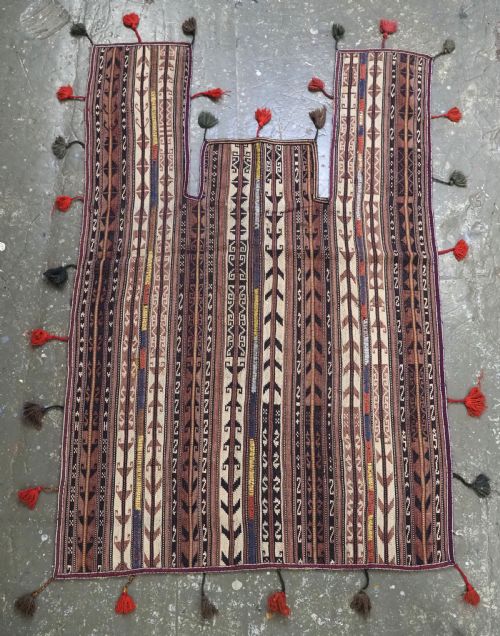


Antique Kilim Tapestry
An antique kilim tapestry brings flatweave textiles and tribal rugs into a room with rich pattern and history.
Antique Kilim Tapestry
An antique kilim tapestry encompasses flatwoven rugs, covers, cushions, and panels produced by tribal and regional makers across the Caucasus, Anatolia, Persia, Central Asia, and Eastern Europe. These textiles include nomadic storage bags, ceremonial horse blankets, eating cloths, and floral European pieces intended for floors, walls, and furniture upholstery.
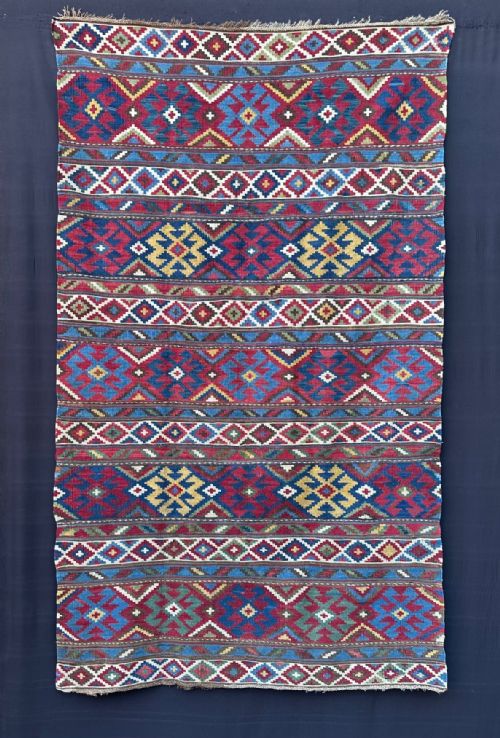
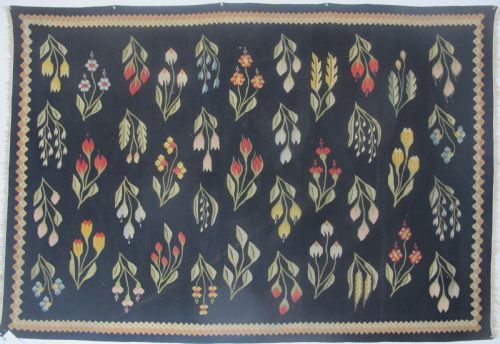
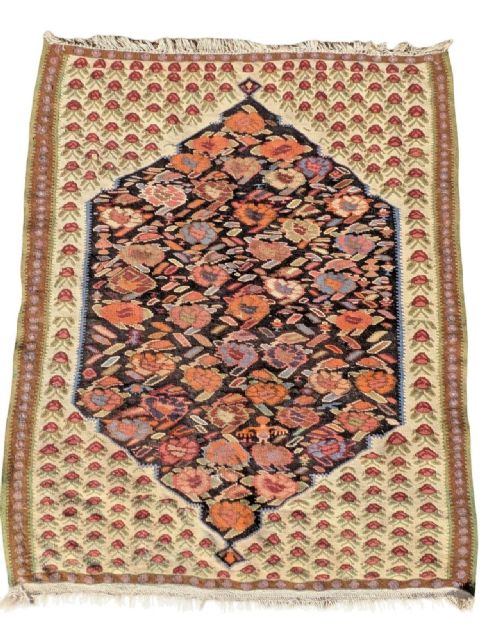
The pieces on this page span the Victorian era through the early twentieth century, showing distinct regional weaves such as Bessarabian, Qashqai, Yomut, Uzbek, and Pirot designs. Buyers frequently encounter geometric runners, floral panels, and smaller utility cloths that have transitioned from functional tribal items to decorative interior focal points.
How they were made
These textiles rely on wool and cotton foundations, often worked with natural dyes that produce deep, nuanced tones over decades of ageing. Certain panels incorporate camel hair grounds or are constructed by joining multiple narrow strips together to form larger carpets and covers.
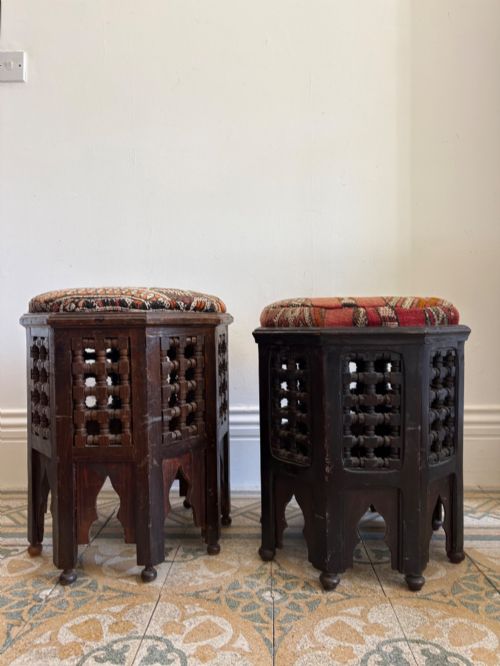
Makers utilised slit-weave flatmarking techniques alongside embroidery and tapestry methods to build sharp graphic motifs or flowing floral patterns. Furniture applications integrate these flatweaves onto hardwood frames made of walnut and mahogany, sometimes paired with brass or inlaid details.
Several nomadic items retain their original purpose as animal blankets and eating cloths before finding new lives on modern floors.
What varies in quality
The clarity and complexity of the regional design separate standard domestic weaving from exceptional tribal or workshop output. Finer pieces maintain precise geometric alignment or botanical detail across the entire plane without awkward distortion in the strips or borders.
The integrity of the natural dyes and the handled condition of the wool directly influence the visual strength of the piece. Superior examples retain saturated, harmonious palettes that have mellowed evenly rather than harsh or unstable colour transitions.
The Antique Kilim Tapestry Glossary
- Kilim
- A flatwoven carpet or rug produced without a pile by tightly interweaving warp and weft threads. This technique creates a lightweight textile that is reversible and historically served diverse nomadic functions.
- Sofreh
- A traditional woven eating cloth or spread used by nomadic groups for meals and food preparation. These cloths often feature utilitarian geometric layouts specific to Afghan and Persian makers.
- Mafrash
- A large rectangular storage bag or chest panel used by tribes like the Yomut and Shahsavan for transporting household goods on animal pack frames. They are typically woven in flatweave or sumakh techniques.
- Cicim
- An embroidered flatweave style where supplementary pattern threads are sewn onto the completed foundation fabric. This creates a raised surface texture distinct from standard interlocking slit-weave kilims.
- Suzani
- A rich embroidered textile originating from Central Asia, often worked on a cotton or wool ground in striking botanical motifs. These pieces are frequently repurposed as wall hangings or decorative covers.
Antique Kilim Tapestry: Frequently Asked Questions
How were antique kilims used originally?
Nomadic and village groups utilised these flatweaves for floor coverings, animal trappings, bedding storage, and eating cloths in daily tribal life.
Over time, many of these textiles migrated into European and Western homes as decorative wall hangings, table covers, or upholstery for Victorian armchairs and footstools.
What is the difference between a kilim and a tapestry?
A kilim is constructed as a true flatweave where the pattern is created by interlocking the coloured weft threads directly into the warp.
Tapestries often reference European floral weaving styles from regions like Bessarabia and Romania, which utilise distinct pictorial or botanical needlepoint methods.
How do I care for an antique flatweave?
Protect these textiles from direct, prolonged sunlight to prevent natural dye fading and gently vacuum them using low suction without a rotating brush head.
Professional specialist cleaning is recommended for antique wool and cotton pieces to preserve the integrity of the historical fibres.
How do I identify regional tribal designs?
Regional attribution relies on examining the specific colour palette, structural strip counts, and characteristic geometric or floral motifs employed by the weavers.
Caucasian pieces often display crisp, bold medallions, whereas Persian tribal works and Central Asian strips utilise distinct borders and animal-inspired symbols.