




Antique Jam Pan
An antique jam pan brings heavy metal warmth and utilitarian history straight from the Georgian or Victorian hearth to the modern kitchen.
Antique Jam Pan
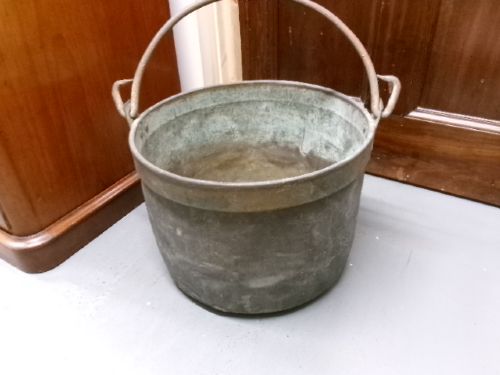
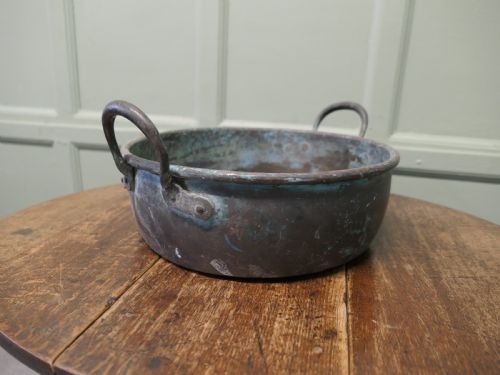
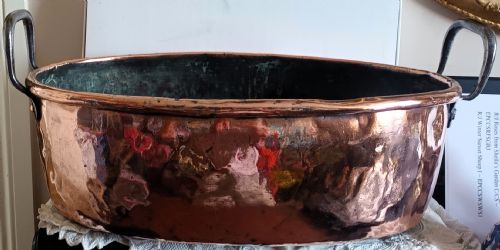
When you search for an antique jam pan, you are looking at heavy metal vessels designed for boiling fruit, sugar and cream across open fires or stoves. The pieces gathered here span from the mid eighteenth century through the Victorian era, taking forms such as preserving pans, cream setting pans, cauldrons and saucepans.
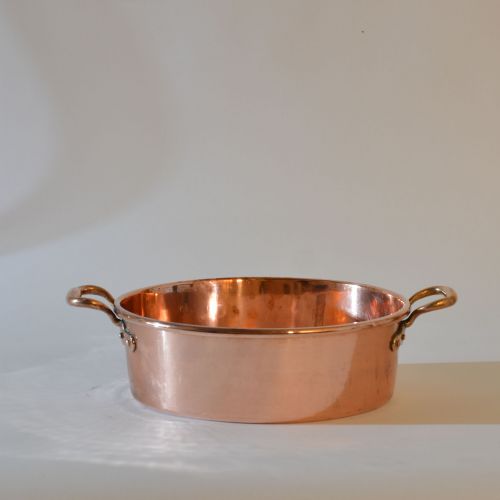
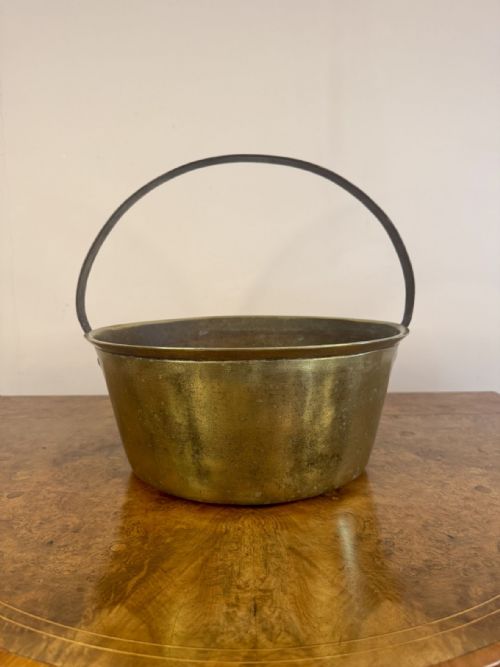
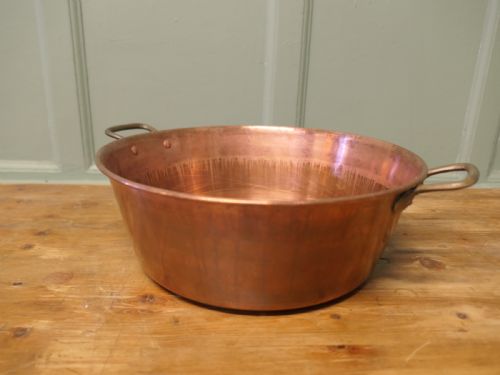
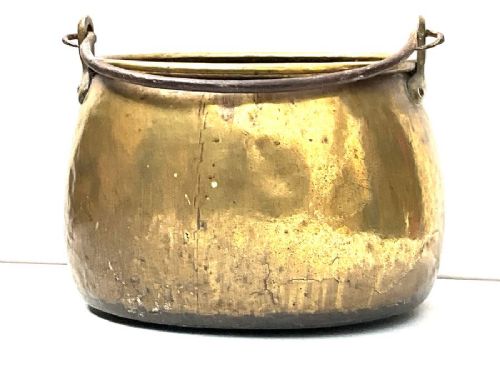
You are most likely to meet substantial copper vessels featuring brass handles or iron swing handles, often bearing the weight and scale required for large domestic preserves. Alongside these copper examples, the selection includes brass pans and bronze preserve warmers spanning Georgian country houses and Victorian farmhouses.
The objects cross boundaries between utilitarian cookware and fireside accessories, appearing in kitchenware and hearth collections alike. Each piece carries the distinct marks of domestic utility, whether shaped as a shallow preserving dish or a deep cooking vessel.
Materials and construction
Makers formed these vessels primarily from heavy gauge copper, brass, and bronze, often pairing bodies of one metal with contrasting handles of wrought iron or cast brass. Copper predominated for its superior thermal conductivity, allowing heat to distribute evenly during delicate sugar boiling.
Construction techniques relied on durable metalworking methods suited to heavy daily use in the kitchen. Many pieces feature riveted joints securing swing handles or fixed brass grips to the main bowl, while others show the thick, heavy casting characteristic of Georgian and Victorian metalware.
Antique Jam Pan Retail Price Guide 2026
Typical asking prices for jam pan among the pieces listed under this phrase on Sellingantiques today, from the lower quarter to the upper quarter. They describe what is for sale here now, not the wider market.
Listings feature 18th Century, Georgian, 19th Century and Victorian periods, constructed from copper, brass, iron, wrought iron, tin and bronze.
Distinguishing quality in metalware
Quality rests in the thickness of the metal sheet and the integrity of its construction, distinguishing heavy domestic vessels from lighter display pieces. Superior examples show substantial weight, robust riveting and well-balanced handles that bear the load of a full preserving charge.
Subtle details such as maker stamps, clean shaping of brass drop handles and the smoothness of the rolled or hammered rim elevate particular pieces. The distinction lies in how cleanly the metal was worked and whether the vessel retains its original structural hardware without excessive modern repairs.
Liptons
The Antique Jam Pan Glossary
- Jam pan
- A wide, open metal vessel designed specifically for boiling fruit and sugar to make preserves. These pans feature rounded bases to facilitate stirring.
- Preserve pan
- A deep cookware vessel used in Georgian and Victorian kitchens for fruit preserves and confectionary. They typically incorporate sturdy handles for lifting heavy loads.
- Cream setting pan
- A wide, shallow pan used historically in dairies to allow cream to rise to the surface of milk. They appear in copper and are prized for their generous proportions.
- Swing handle
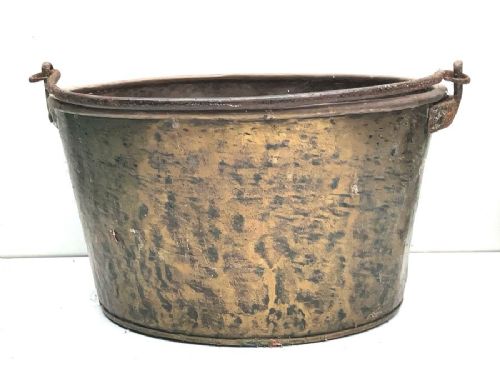
- A movable bail handle attached to opposite sides of a pan or cauldron, usually forged from wrought iron or cast brass. This allows the vessel to hang over an open fire or tilt easily.
- Cauldron
- A large round cooking vessel with a rounded base and handles, designed for hearth use. In antique contexts, these are heavy bronze or copper pots built for open fires.
Antique Jam Pan: Frequently Asked Questions
What is an antique jam pan used for today?
These vessels serve primarily as striking decorative accents in modern kitchens, country houses and fireside settings. Many collectors utilise them to display dried flowers, logs or kitchen utensils.
While robust enough for traditional cooking, their historical patina and heavy metal construction make them favoured statement pieces for interior styling and rustic display.
How do I date an antique copper pan?
Dating relies on observing manufacturing techniques, handle styles and material choices across different periods. Georgian pieces often display specific handle attachments and heavier bronze or copper casting.
Victorian examples frequently incorporate standardised brass swing handles or maker stamps. Comparing the rim construction and riveting style helps place the piece within the eighteenth or nineteenth century.
Are brass and copper pans safe for cooking?
Many antique copper pans were originally lined with tin to prevent food from reacting with the copper during preserves making. Over decades of use or cleaning, this lining often wears away.
Using them for modern food preparation usually requires professional retinning. Most buyers choose to enjoy them as decorative objects rather than active cookware.
What is the difference between a jam pan and a saucepan?
A jam pan is typically wider and shallower with an open top designed to encourage rapid evaporation during fruit preserving. Saucepans are deeper and narrower with long single handles for general boiling and simmering.
Preserving pans require wide mouths so the cook can stir large quantities of sticky sugar mixture safely without splashing.