


Antique Italian Prickets
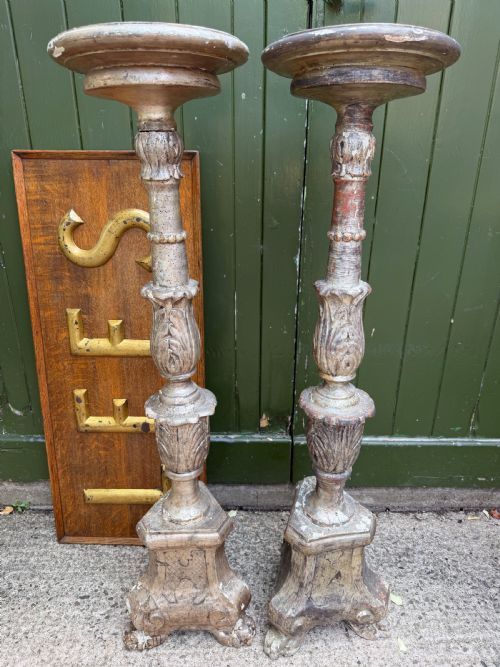
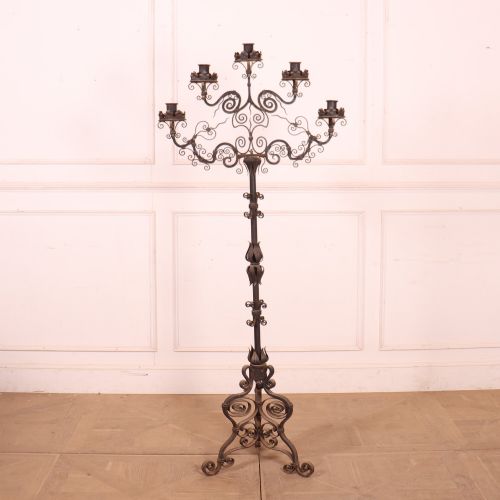
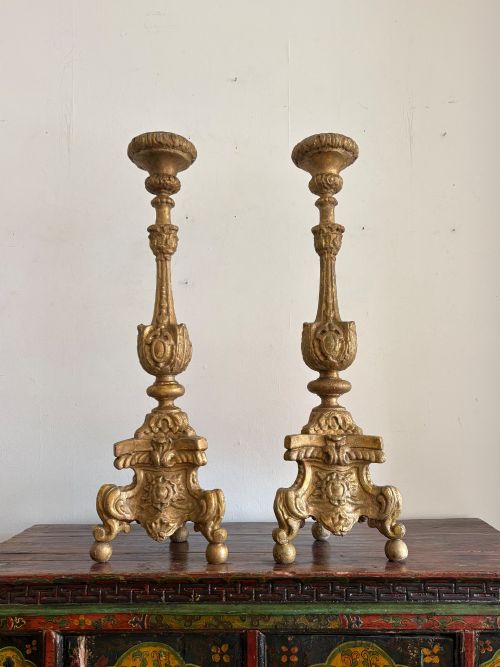
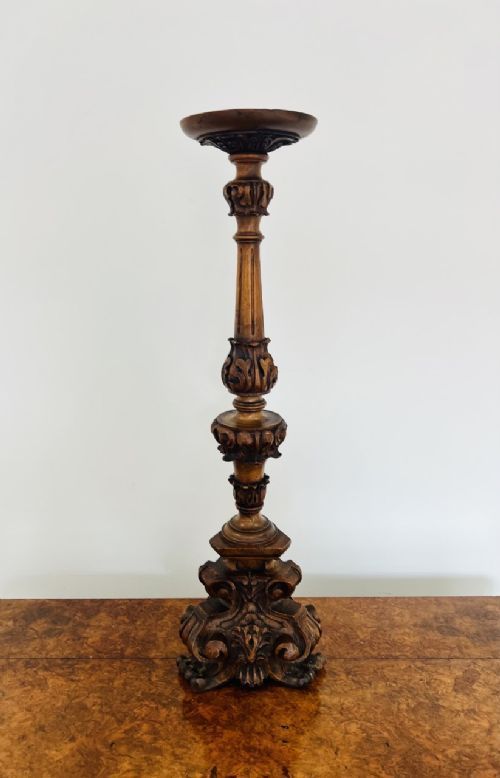
These antique italian prickets are devotional altar pieces and grand floor stands built to hold candles with an upright metal spike.
Antique Italian Prickets
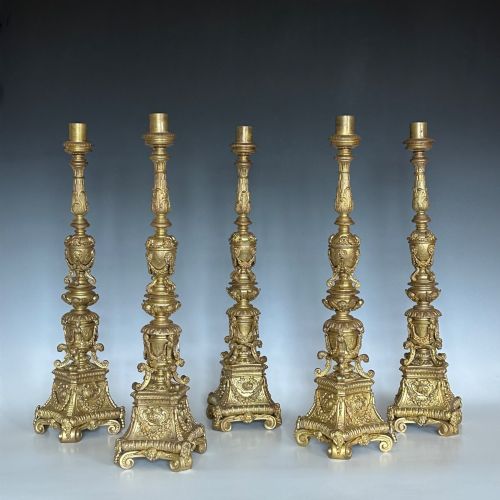
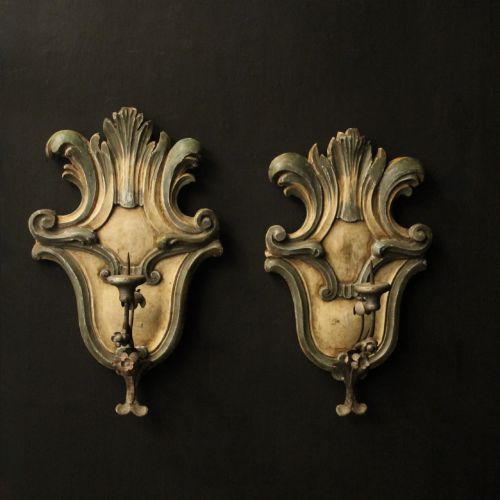
When you search for antique italian prickets, you encounter items designed to secure large altar candles directly onto a central spike rather than inside a socket. These objects emerge in various forms, including towering floor standards, paired altar sticks, and wall sconces.
The selection ranges from seventeenth and eighteenth century liturgical survivals to nineteenth century revivals and later adaptations. Many examples function today as table lamps or standard lamps following conversion.
The dominant aesthetic draws heavily on Baroque, Neoclassical, and Florentine traditions, translating ecclesiastical grandeur into domestic scale.
How they were made
Carved timber forms the core of many pieces, utilising woods such as pine, walnut, and general carved wood finished with gesso. Artisans then applied layers of gold leaf, silver leaf, or mecca varnish to achieve a rich metallic sheen.
Cast metals also feature prominently, with brass, gilt bronze, and ormolu cast into ornate shapes before hand finishing. Polychrome pigments occasionally highlight carved details on wooden surfaces.
Several items retain their original metal spikes despite decades of wiring changes for modern light bulbs.
What varies in quality
The distinction between ordinary and exceptional pieces lies in the depth and sharpness of the carving. Hand-chiseled wooden foliage and crisp cast metal ornamentation display an artisan's precise control over the material.
Surface finish dictates visual success, with historic gilding or silvering ageing gracefully compared to heavy-handed modern repaintings. Structural heft and substantial proportions also separate monumental altar pieces from domestic adaptations.
The Antique Italian Prickets Glossary
- Pricket
- A metal spike mounted on a candlestick or altar stand designed to impale the base of a candle and hold it upright. This form predominates in ecclesiastical contexts before the widespread adoption of sockets.
- Torchere
- A tall ornamental stand or candlestick designed to carry a single light source. These pieces often feature slender shafts rising from carved tripod or weighted bases.
- Gesso
- A plaster-like mixture applied to wood surfaces to prepare them for gilding or painting. Artisans carve and smooth this layer to create crisp decorative reliefs.
- Mecca
- A transparent golden or yellowish varnish applied over silver leaf to simulate the appearance of gold leaf. This technique produces a warm, distinct metallic tone.
- Altar-type
- A descriptive term referencing the ecclesiastical origins of large candlesticks and stands built for church altars. These items are typically heavier and more ornate than domestic equivalents.
Antique Italian Prickets: Frequently Asked Questions
What is a pricket candlestick?
A pricket candlestick uses an upright metal spike instead of a socket to hold the candle in place.
This traditional design is common in older ecclesiastical metalwork and wooden altar stands.
How do I date an antique pricket?
Dating relies on examining the construction of the wood, the wear of the gesso, and the application of gold or silver leaf.
Stylistic cues such as Baroque scrolls or Neoclassical symmetry also point toward specific centuries.
Why are many wired for electricity?
Numerous tall candlesticks and torcheres were converted into table lamps or standard lamps during the nineteenth and twentieth centuries.
This adaptation allowed heavy altar pieces to serve practical lighting needs in domestic interiors.
Where were these pieces used?
They originated primarily in Italian churches, chapels, and wealthy domestic households for ceremonial or ambient illumination.
Grand floor-standing models flanked altars, while smaller versions sat on tables or mounted to walls.