
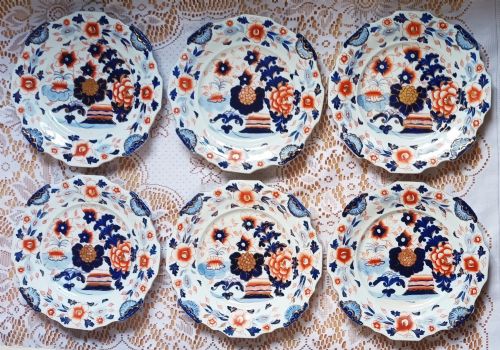


Antique Ironstone Plate
An antique ironstone plate brings robust utility and vibrant pattern to the table, offering a heavy earthenware body designed to endure centuries of daily service.
Antique Ironstone Plate
An antique ironstone plate combines the durability of stoneware with the refined appearance of porcelain, offering a substantial weight that suits both display and dining. The examples found here span the Georgian, Regency, and Victorian periods, alongside later Victorian and Edwardian iterations.
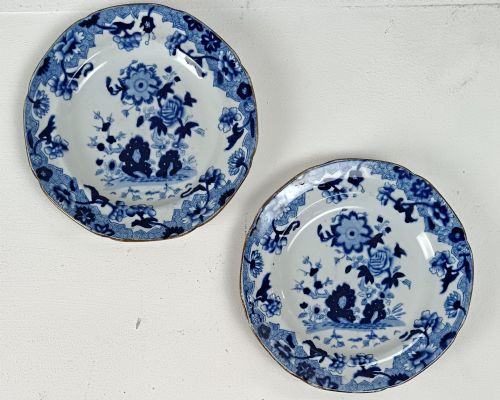
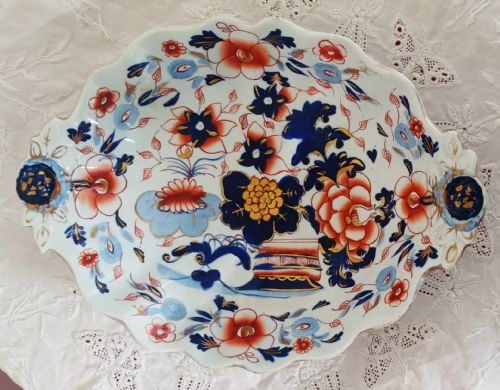
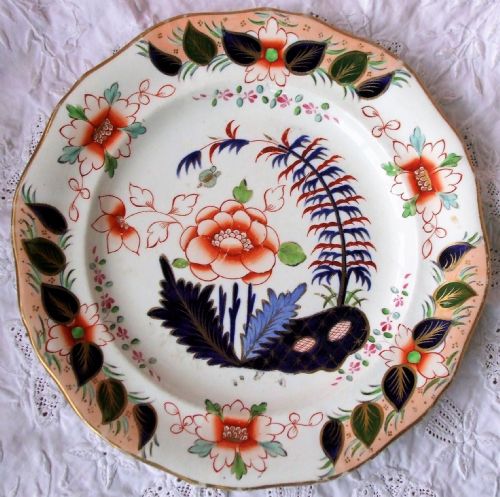
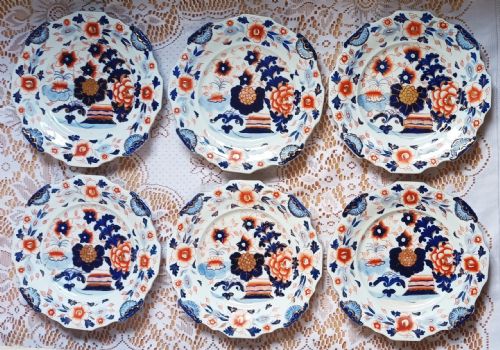
The assortment includes standard dinner plates, tea plates, soup bowls, and larger charger plates or serving platters. Many display traditional Chinoiserie, Japan, and Imari patterns executed in rich enamels, often enhanced with gold leaf and gilding.
Makers such as Spode, John Davenport, John Ridgway, and C.J. Mason dominate the production of these ceramics. Buyers frequently select these pieces for their dense ceramic body, which resists chipping far better than standard earthenware.
Manufacture and materials
Potters created ironstone china using a dense body of earthenware mixed with feldspar, china stone, and scoria, producing a heavy and resilient ceramic material. This clay mixture was fired at high temperatures to achieve strength before receiving a smooth glaze.
Decoration relied on hand-painted enamels, transfer printing, or a combination of both techniques. Many pieces feature underglaze blue transfer prints embellished with overglaze enamel colours and gilding.
Specialised items such as drainers, comports, and cheese dishes required separate moulding techniques before glazing and firing. Gold leaf application and hand-painting added decorative finish to the surface of chargers and dessert services.
Listings feature 19th-century, Georgian, and Victorian periods, utilising materials such as ironstone, enamel, ceramic, glaze, gold leaf, and earthenware.
Evaluating quality and execution
Quality rests in the crispness of the transfer print and the precision of the hand-painted enamels. Finer examples display carefully applied gilding and rich, multi-coloured palettes without blurring along the pattern lines.
The weight and potting of the ceramic body also indicate standard, with superior pieces showing uniform thickness and stable glazing free from excessive kiln flaws. Early nineteenth-century productions often exhibit greater depth in their relief moulding and glaze lustre.
Spode·John Davenport·John Ridgway·C.J. Mason·Mason
The Antique Ironstone Plate Glossary
- Ironstone China
- A patented heavy earthenware developed in the nineteenth century for durability. It provides a robust alternative to porcelain while accepting complex enamel decoration.
- Chinoiserie
- A European artistic style reflecting Chinese motifs and landscapes. It appears frequently in blue and white or polychrome transfer-printed patterns.
- Imari
- A decorative style inspired by Japanese export porcelain utilising iron red, cobalt blue, and gold leaf. These patterns feature prominently on nineteenth-century chargers and plates.
- Charger
- A large decorative plate utilised historically for service or display rather than individual dining. They often showcase elaborate hand-painted bird or landscape motifs.
- Ashet
- A Scottish and northern English term for a large meat platter or serving dish. These large ceramic vessels accompany dinner services.
Antique Ironstone Plate: Frequently Asked Questions
What is ironstone china?
Ironstone china is a heavy, durable ceramic material patented in the nineteenth century to withstand hard daily use.
It bridges the gap between earthenware and porcelain by offering superior strength while retaining a smooth glazed surface suitable for intricate decoration.
How do I care for antique plates?
These ceramic pieces require careful hand washing with mild soap to preserve their delicate enamels and gilding.
Harsh detergents and automatic dishwashers should be avoided because they can damage the glaze and wear away the gold leaf over time.
Can I use these plates for dining?
Many of these sturdy earthenware items remain fully functional for modern dining and serving purposes.
However, pieces featuring extensive gold leaf or delicate hand-painted enamels are better reserved for light use or display cabinets.
How do I identify a Georgian plate?
Georgian pieces generally date from the early nineteenth century and often feature deep relief moulding and early transfer-printed patterns.
Makers from this era, such as Mason and Spode, frequently marked their wares with impressed or printed backstamps indicating the patent.