

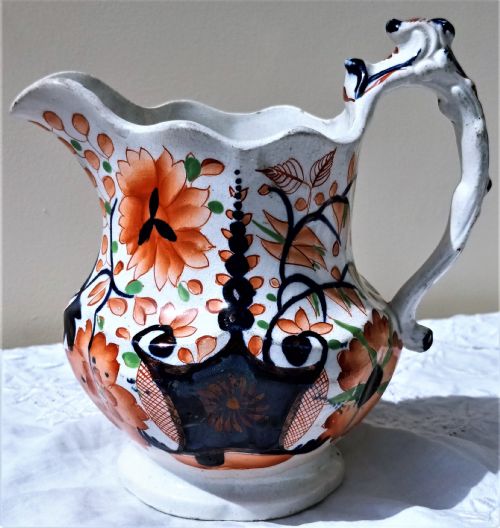
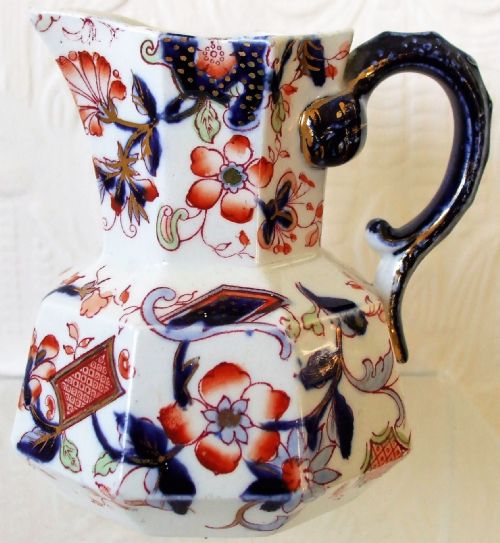
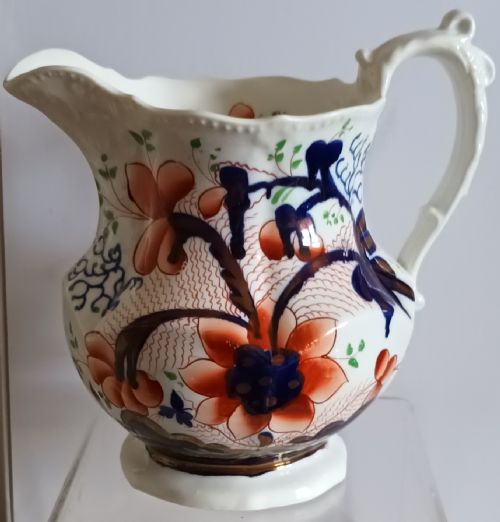


Antique Ironstone Pitcher
These heavy ceramic vessels bring robust 19th-century utility and vivid transfer-printed or hand-painted patterns straight to a kitchen or washstand.
Antique Ironstone Pitcher
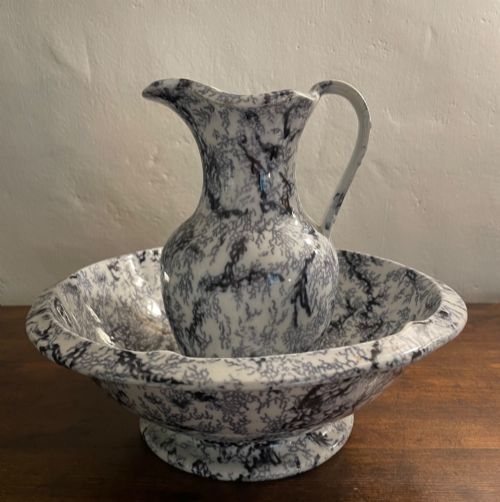
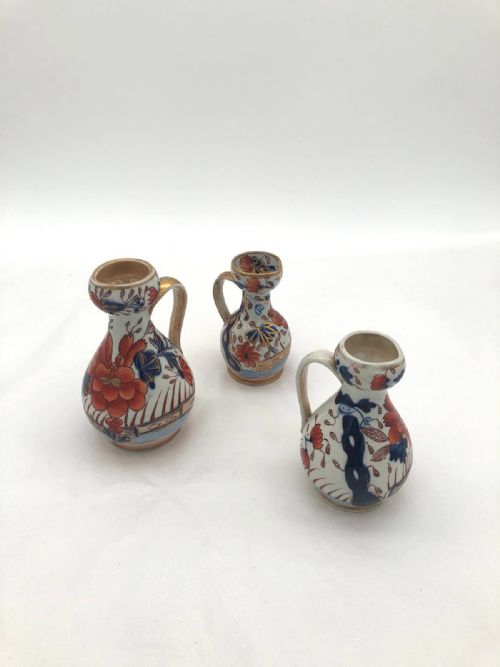
An antique ironstone pitcher is a durable ceramic pouring vessel designed for domestic use during the 19th century, frequently appearing alongside matching basins or as part of larger toilet sets. Most examples on this page date from the Georgian and Victorian eras, taking forms ranging from modest miniature jugs to large washbasin ewers.
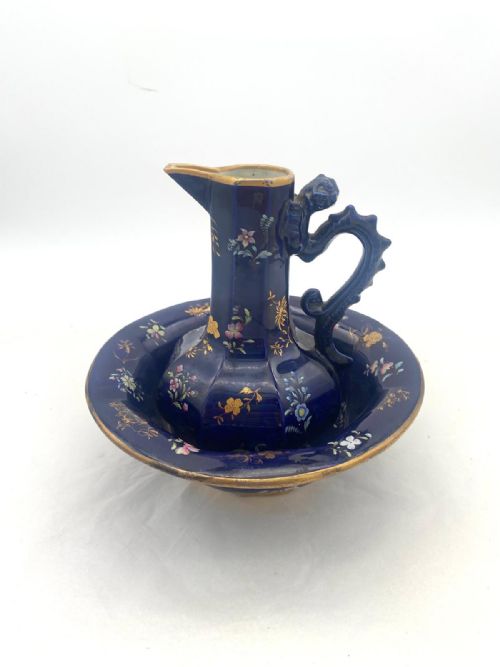
Makers utilised dense earthenware bodies built to withstand heavy daily handling, resulting in substantial pieces that often feature octagonal profiles or serpentine handles. Alongside standard household water carriers, collectors encounter specialised shapes such as puzzle jugs and serpent-handled hydra forms.
Materials and manufacture
Potters constructed these pitchers using a dense, vitreous earthenware body known as ironstone, which was fired at high temperatures to achieve superior strength compared to traditional soft-paste pottery. A thick glaze seals the porous clay base, providing a smooth, glossy surface ready to receive intricate cobalt blue transfer prints, polychrome enamels, or rich gilding.
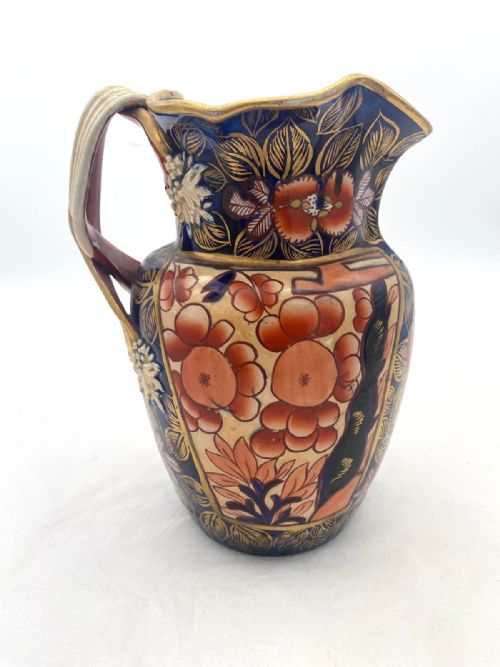
Many patterns combine underglaze transfer printing with hand-applied enamel colours and gold leaf highlights, particularly on pieces featuring Chinoiserie, Imari, or botanical motifs. Handles and spouts are frequently moulded into elaborate shapes, including grotesque dragon heads and serpentine curves, before being securely attached to the main body prior to firing.
Current listings demonstrate a strong representation of 19th-century and Victorian eras, utilising ironstone, earthenware, glaze, and gold leaf.
Determining quality in ironstone pitchers
Quality rests heavily on the crispness of the moulded relief work and the precision of the hand-applied enamels over transfer-printed outlines. Pieces featuring complex decorative schemes, such as cobalt blue grounds with extensive gold leaf or unusual structural forms like elephant foot patterns and hydra handles, stand apart from plain utility wares.
The integrity of the glaze and the preservation of any gilt or enamel highlights dictate the desirability of a vessel. Well-executed pieces maintain sharp detailing in their transfer prints and robust structural balance across spouts and handles, reflecting the skill of the original workshop.
Mason's Ironstone·Keeling and Co·Livesley Powell and Co·Davenport
The Antique Ironstone Pitcher Glossary
- Ironstone
- A patented heavy earthenware developed in the 19th century for its durability and stone-like strength. It serves as the primary body for these pitchers and basins.
- Hydra jug
- A vessel style featuring a characteristic serpent-shaped handle and a flared spout. This form appears frequently in early 19th-century production.
- Flow blue
- A transfer-printing technique where cobalt blue pigment intentionally blurs into the surrounding glaze during firing. This creates a hazy, soft-edged decorative effect on the ceramic surface.
- Chinoiserie
- European artistic interpretation of Chinese and East Asian decorative motifs. These patterns often display pagodas, exotic flora, and figures.
- Gaudy Welsh
- A brightly coloured folk pottery style utilising cobalt, iron red, and pink lustre over white ceramic bodies. It is commonly found on 19th-century domestic wares.
Antique Ironstone Pitcher: Frequently Asked Questions
What is ironstone?
Ironstone is a heavy, durable type of earthenware patented in the 19th century to imitate porcelain while offering greater resistance to daily wear and chipping.
It forms a dense, opaque white body that accepts glazes and enamels exceptionally well, making it the standard material for large domestic pitchers and wash sets.
How were these pitchers used?
These vessels served practical domestic functions, primarily holding water for washing at a bedroom basin or carrying liquids in the kitchen.
Larger examples formed part of matching jug and basin sets, while smaller variants functioned as tableware or decorative display pieces.
Are these pitchers waterproof?
Most pieces retain their original watertight qualities thanks to the thick interior and exterior glaze applied during manufacture.
Collectors should inspect pieces for hairline cracks or historical repairs that might compromise their ability to hold liquids safely today.
How do I date an ironstone pitcher?
Dating relies on observing the ceramic body, glaze characteristics, pattern styles, and any impressed or printed factory marks on the base.
Earlier 19th-century pieces often feature hand-painted Chinoiserie or Imari palettes, whereas later Victorian examples frequently employ mass-produced transfer printing.