






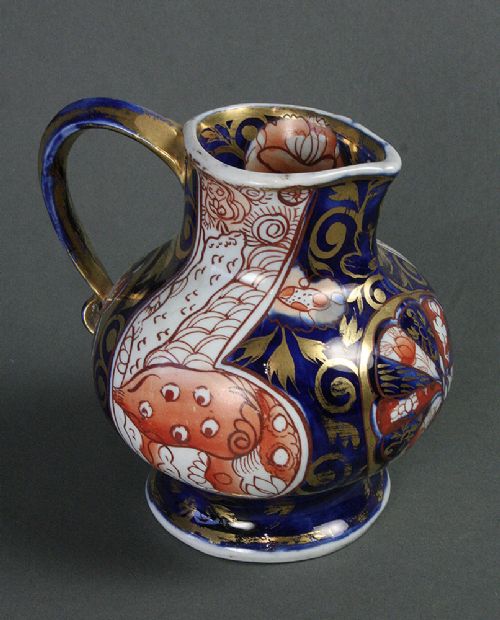
19th Century Ironstone Jug
These 19th century ironstone jug examples offer robust utility and striking decoration, prized by collectors for their substantial weight and bold patterns.
19th Century Ironstone Jug
A 19th century ironstone jug represents a durable class of ceramic vessels produced extensively throughout the Victorian and Georgian eras. Buyers exploring this category encounter sturdy pitchers, ewers, and wash sets designed for both heavy domestic service and display.
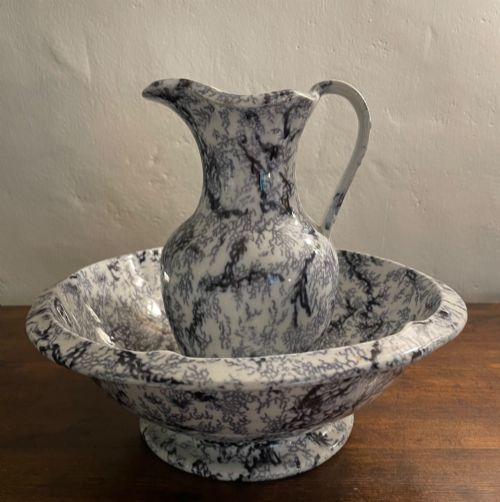
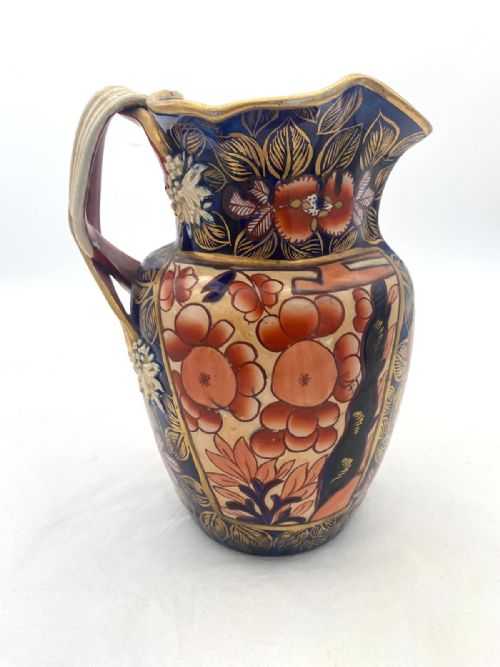
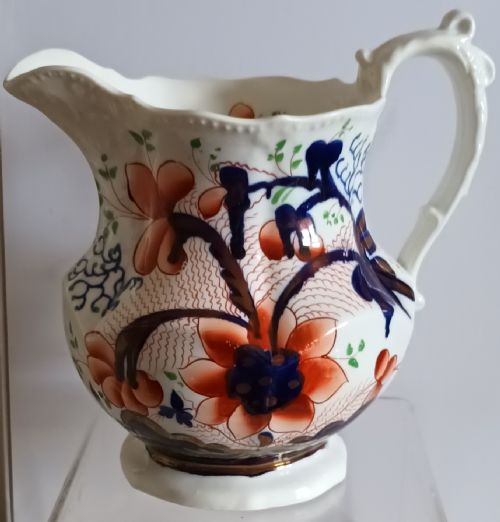
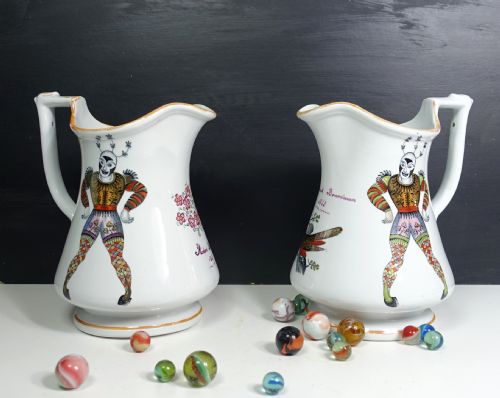
The selections on this page span decorative jugs, tea service components, and puzzle jugs originating across the nineteenth century. Common stylistic expressions include Chinoiserie motifs, Gaudy Welsh patterns, and flow blue decoration on thick earthen bodies.
Forms range from miniature Hydra shapes with snake handles to large octagonal sets and elephant foot patterns. Most specimens reflect the robust industrial output of Staffordshire potteries during the height of the period.
How they were made
Potters constructed these vessels using heavy ironstone ceramic mixed with earthenware materials to achieve a dense, durable body capable of resisting everyday wear. Kiln firing fixed the vitrified clay before artisans applied thick glaze layers.
Decoration relied on hand-painted or transfer-printed pigments, frequently enhanced with cobalt blue ground, copper lustre, enamel, and gold leaf or gilt details. Specialised shapes like grotesque handles and snake forms required individual moulding and careful attachment before firing.
19th Century Ironstone Jug Retail Price Guide 2026
Typical asking prices for 19th century ironstone jug among the pieces listed under this phrase on Sellingantiques today, from the lower quarter to the upper quarter. They describe what is for sale here now, not the wider market.
Listings in this category span the nineteenth century, featuring ironstone, enamel, ceramic, glaze, gold leaf, earthenware, gilt, and copper lustre.
What varies in quality
Quality in a 19th century ironstone jug depends heavily upon the crispness of the moulded relief and the complexity of the painted or printed surface decoration. Pieces featuring intricate Chinoiserie scenes, rich cobalt blue grounds, and intact gold leaf stand apart from plain utilitarian versions.
The sophistication of the form also dictates standing, with specialised shapes such as Hydra handles, grotesque elements, and complete wash set basins commanding greater attention than standard pitchers. Maker attribution to notable potteries adds further distinction to individual examples.
Mason's Ironstone·Davenport
The 19th Century Ironstone Jug Glossary
- Ironstone
- A heavy, durable type of earthenware patented in the nineteenth century to imitate Chinese porcelain. It provides a robust body for domestic vessels.
- Flow Blue
- A Staffordshire pottery technique where cobalt blue pigment bled slightly into the white glaze during firing, creating a misty, soft-edged effect.
- Hydra Shape
- A classical pitcher form featuring a distinct flared rim and a scrolled snake handle, often associated with early nineteenth century production.
- Copper Lustre
- A metallic glaze finish applied to ceramics to impart a warm, reflective copper sheen, popular during the Victorian and Georgian eras.
- Gaudy Welsh
- A vibrant style of pottery decoration characterised by bright enamel colours including cobalt blue, iron red, and copper lustre accents.
19th Century Ironstone Jug: Frequently Asked Questions
What is 19th century ironstone?
Ironstone is a dense, heavy ceramic material developed to provide a tough, chip-resistant alternative to Chinese porcelain.
Potters used it extensively for domestic pitchers, wash sets, and tableware throughout the nineteenth century.
How were these jugs used?
These vessels served practical daily functions in the Victorian and Georgian home, including water pouring, tea service, and washing.
Larger sets often included matching basins for bedroom hygiene, while smaller examples functioned as creamers or decorative mantel ornaments.
How do I identify patterns?
Patterns on these vessels typically draw on nineteenth century design trends, ranging from Asian-inspired Chinoiserie scenes to bold floral Gaudy Welsh motifs.
Transfer printing and hand-painting frequently defined the surface style, sometimes accented with gold leaf or copper lustre.
How do I care for ironstone?
Living with these pieces involves gentle hand washing with mild soap to protect the surface glaze and any delicate enamel or gilt decorations.
Avoid harsh chemical detergents and abrasive scrubbers that can damage the historical finish over time.