






Antique Inlaid Stool
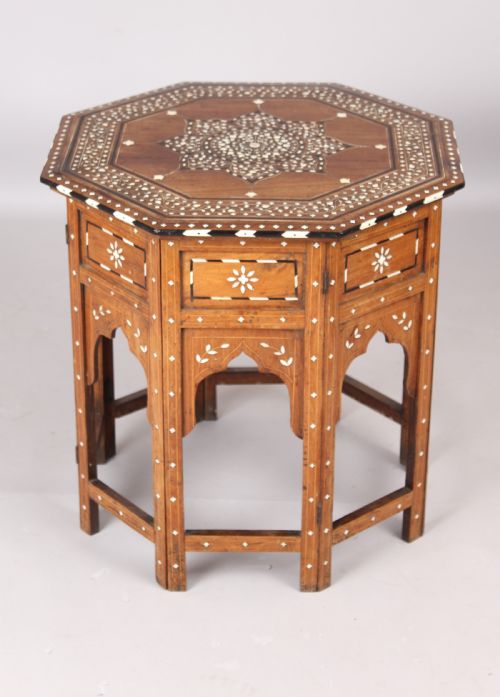
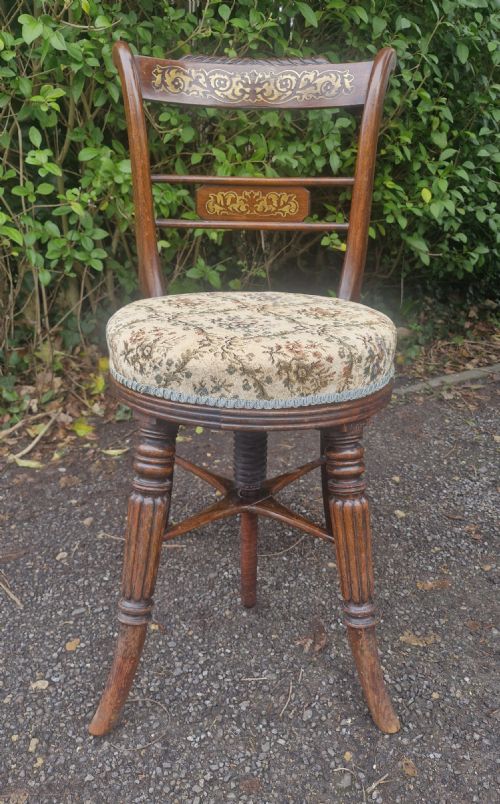
An antique inlaid stool brings refined Edwardian and Victorian craftsmanship into a room, offering both practical seating and decorative detail.
Antique Inlaid Stool
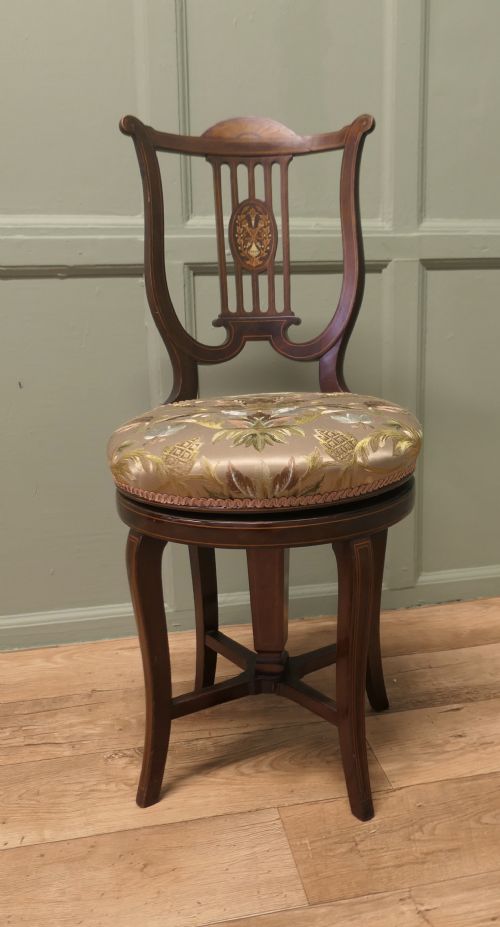
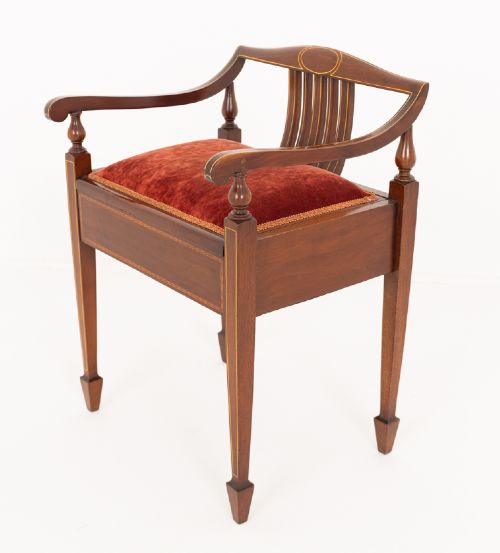
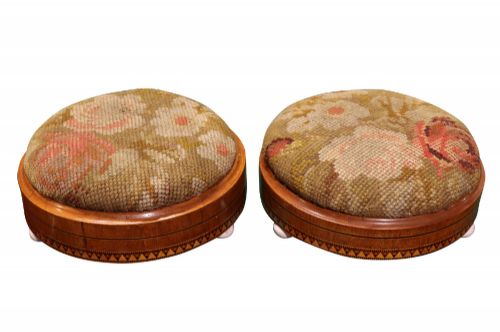
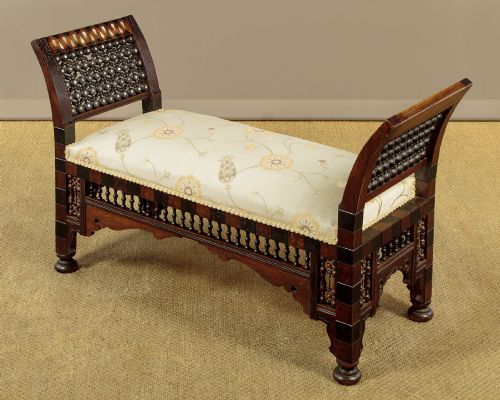
When you search for an antique inlaid stool, you encounter diverse forms designed for specific domestic settings. The Edwardian and Victorian periods provide the largest share of these pieces, frequently appearing as piano stools, duet stools, and footstools.
Makers often fashioned these seats from mahogany, rosewood, and walnut, integrating various compartments or open frames. Many examples display specific stylistic influences, such as Sheraton Revival marquetry or simpler geometric lines.
How they were made
Cabinetmakers constructed the frames primarily using timbers like mahogany, walnut, and rosewood, ensuring structural stability for daily use. Satinwood and boxwood veneers were then precision-cut and embedded into the primary wood to form detailed patterns.
Upholstered elements utilised textiles such as velvet, leather, and tapestry, secured over horsehair or traditional stuffing. Metal fittings, including brass handles or hinges, occasionally complemented the timber and inlay work.
Piano stools occasionally hide secret sheet music compartments beneath hinged seats, ready for impromptu recitals.
What varies in quality
The precision of the cabinetwork and the intricacy of the timber veneers distinguish finer examples from standard production. Distinct contrast between the base wood and the satinwood or boxwood inlay reveals the skill of the original workshop.
The integrity of the frame construction and the choice of secondary timbers also dictate overall worth. Pieces retaining their original upholstery materials and functional mechanical parts command greater interest.
James Shoolbred
The Antique Inlaid Stool Glossary
- Inlay
- A decorative technique where small pieces of contrasting wood or other materials are inserted into recessed portions of a base timber. This method creates flat, geometric or pictorial surface patterns.
- Marquetry
- An elaborate form of inlay utilising various tinted wood veneers to assemble complex pictorial designs. It frequently appears on tabletop surfaces and piano stool lids.
- Satinwood
- A durable, yellowish timber prized for its lustrous sheen and smooth grain. It serves extensively for contrasting stringing and detailed motifs in Sheraton Revival pieces.
- Duet stool
- An extended seating form designed to accommodate two pianists side by side. Many incorporate internal storage compartments beneath the hinged seat.
- Sheraton Revival
- A late nineteenth and early twentieth century design movement drawing inspiration from eighteenth century neoclassical furniture. It prioritises light proportions, mahogany frames, and delicate floral inlay.
Antique Inlaid Stool: Frequently Asked Questions
What is a duet stool?
A duet stool is an extended seating platform built for two musicians to share while playing a piano. These versions often feature hinged lids that lift to reveal sheet music storage inside.
Such pieces date predominantly from the Victorian and Edwardian eras, combining practical utility with decorative inlay work across the top surface.
How do I identify Edwardian inlay?
Edwardian inlay typically employs pale satinwood or boxwood set flush into darker mahogany or rosewood surfaces. The motifs lean towards symmetrical neoclassical ribbons, urns, and delicate swags.
This aesthetic reflects the Sheraton Revival style popular around the turn of the twentieth century, distinguishing these items from heavier Victorian designs.
Were these stools used only for pianos?
While many surviving examples served musicians, makers also produced piano dressing table stools, window seats, and general footstools. Their compact proportions made them versatile additions to drawing rooms and parlours.
Consequently, the internal fittings and framing dimensions vary according to the intended domestic function.
What fabrics were used for upholstery?
Original upholstery schemes relied on durable textiles including patterned tapestry, velvet, leather, and woven kilim remnants. These materials were secured over firm traditional stuffing to withstand regular weight.
Many surviving pieces retain later reupholstery, though remnants of the original fabric sometimes remain visible beneath the frame.