


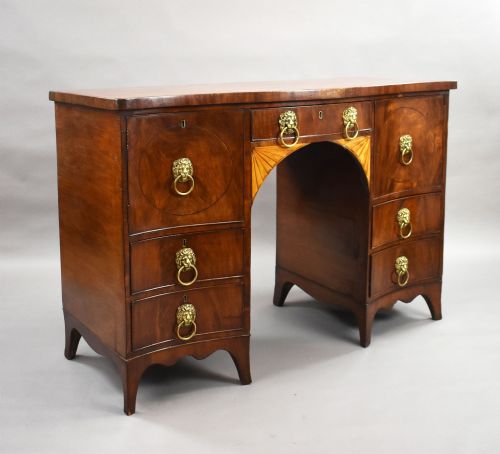

Antique Inlaid Buffet Table
An antique inlaid buffet table brings timeless dining room utility and refined surface decoration into the home through rich timber and delicate stringing.
Antique Inlaid Buffet Table
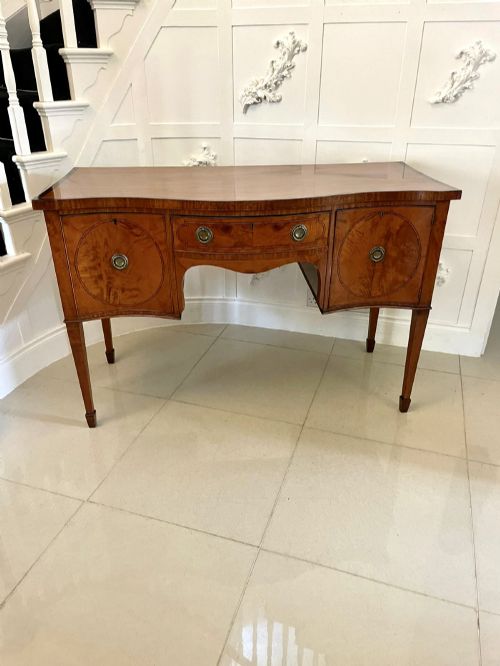
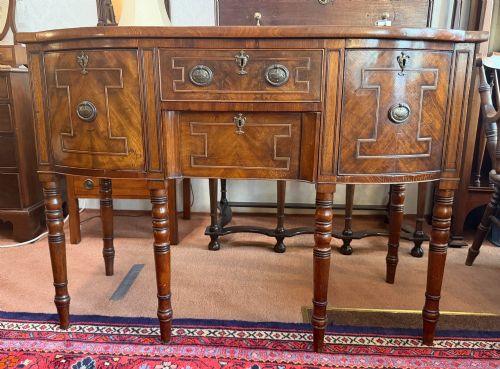
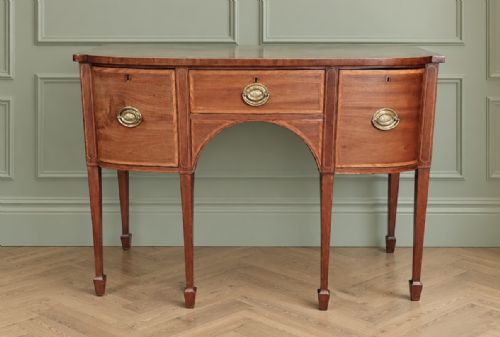
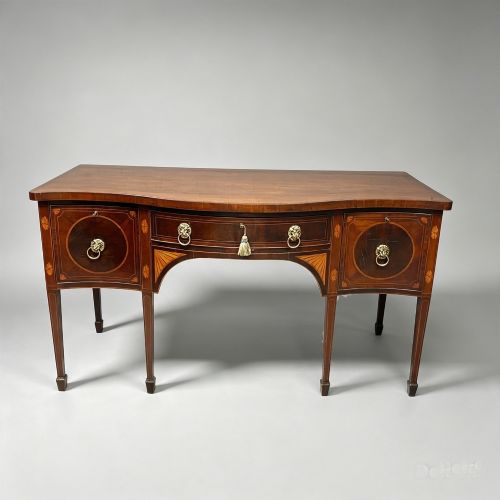
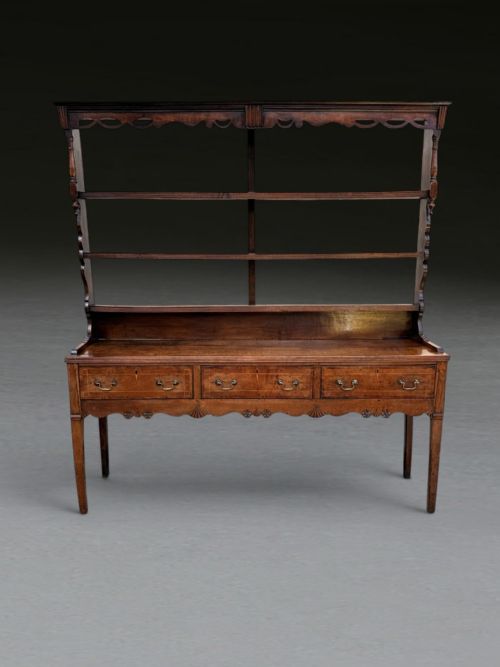
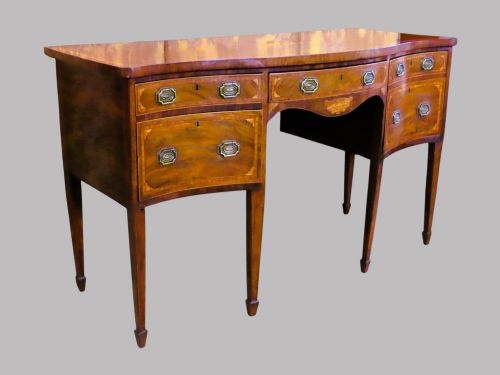
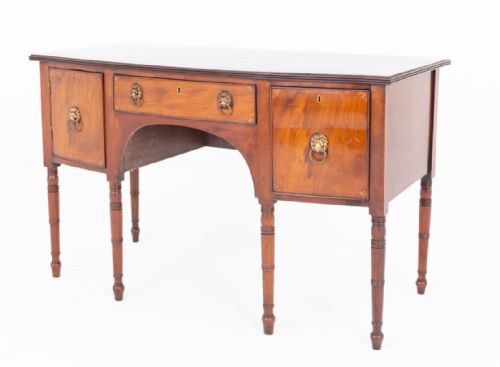
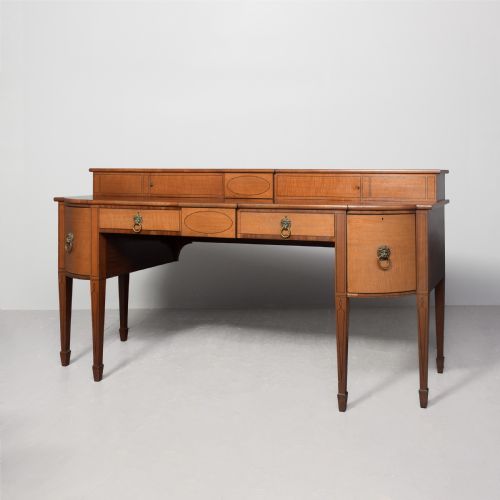
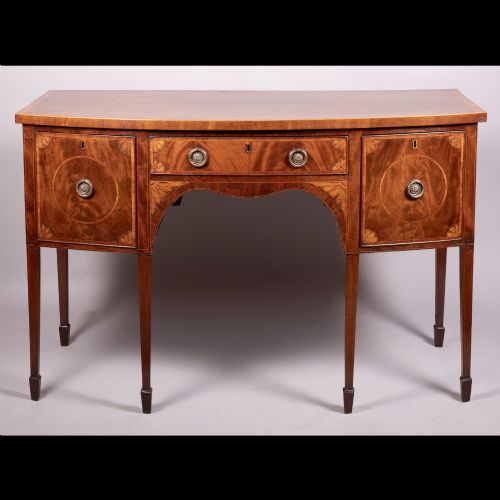
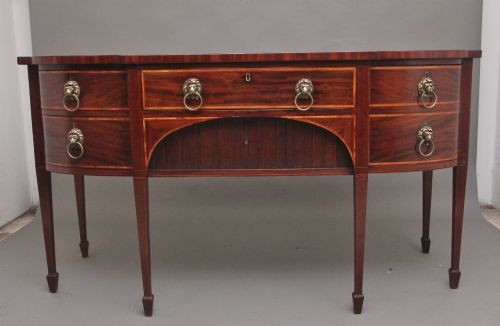
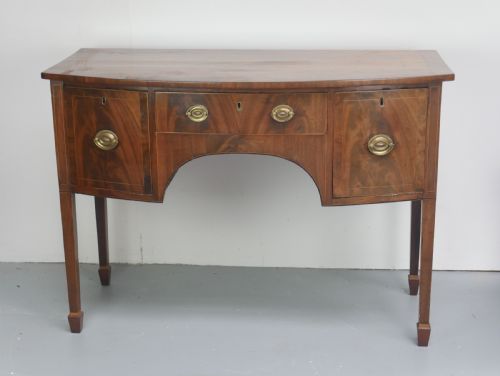
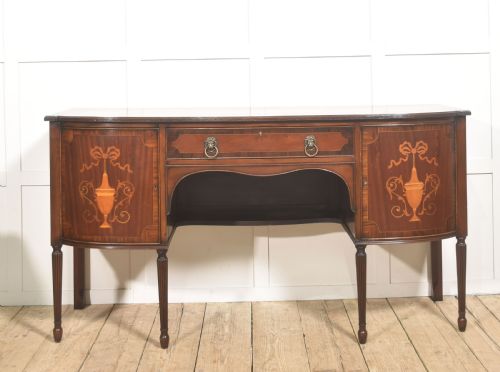
When you search for an antique inlaid buffet table, you encounter a selection of formal dining furniture primarily catalogued as sideboards, servers, and dresser bases. These items span the Georgian, Regency, and Edwardian periods, appearing in forms ranging from compact bow-fronts to grand serpentine and breakfront shapes.
The pieces listed here showcase the cabinetmaker's art through contrasting woods and linear details. Mahogany forms the primary structure on the vast majority of examples, paired with lighter timbers to create geometric and floral motifs.
Origins include English workshops alongside Scottish examples featuring distinct proportions and stage-backs. Most items date from the eighteenth and nineteenth centuries, offering practical storage alongside decorative presence.
How they were made
Mahogany serves as the fundamental structural timber across these pieces, selected for its stability and rich grain. Cabinetmakers combined solid sections for frames with carefully chosen veneers for drawer fronts and tabletops.
Inlay work relied on contrasting species such as satinwood and boxwood, cut into fine lines and intricate patterns then let into recesses in the primary wood. Brass also appears as an inlay material on select Regency pieces, adding metallic contrast to the dark mahogany surfaces.
Construction techniques involved traditional joinery, with dovetailed drawer boxes and hand-turned or tapered legs supporting the heavy carcasses. Crossbanding frames the main veneer panels, protecting the edges and enhancing the visual depth of the front elevation.
Listings feature mahogany as the dominant primary timber, frequently enhanced with satinwood inlay and boxwood stringing across Georgian and Regency periods.
What varies in quality
The calibre of timber selection dictates the visual impact of each piece, with highly figured mahogany and crisp, unblemished satinwood inlay marking out the superior examples. Plain grain patterns and dull or flat secondary timbers indicate standard commercial production rather than master craftsmanship.
Precision in the inlay work separates ordinary items from exceptional ones. Sharp, tight joints in the boxwood and satinwood stringing demonstrate superior hand skills, whereas gaps or filler in the geometric lines point to hurried execution.
Proportion and architectural harmony also govern value. Pieces that maintain balanced curves across bow-front or serpentine shapes without awkward timber distortions represent the pinnacle of period cabinet making.
The Antique Inlaid Buffet Table Glossary
- Bow-front
- A cabinet front that curves outward in a convex shape, popular in late eighteenth and nineteenth-century dining furniture. This design softens the room's geometry while providing extra internal depth.
- Serpentine
- A shaped front featuring a concave centre flanked by convex ends, or the reverse. It requires advanced woodworking skill to veneer and inlay accurately.
- Crossbanding
- A strip of veneer applied to the border of a tabletop or drawer front with the grain running perpendicular to the main panel. This frames the primary wood and protects vulnerable edges.
- Satinwood
- A durable, light-coloured tropical timber utilised extensively for contrasting inlay and stringing on dark mahogany furniture. It catches the light to create a golden shimmer.
- Boxwood
- A dense, pale wood employed for fine stringing lines and delicate floral inlays. Its uniform texture allows for precise cutting.
- Stage-back
- A raised tier at the rear surface of a sideboard designed to display serving platters. This feature is particularly prevalent on Scottish examples.
Antique Inlaid Buffet Table: Frequently Asked Questions
What is the difference between a sideboard and a buffet?
Sideboards and buffets both provide dining room storage and serving surfaces, though terminology varies by period and region. In eighteenth and nineteenth-century British cabinet making, these terms often overlap in trade descriptions.
Most pieces featuring drawers and cupboards were built to hold linens, cutlery, and serving dishes during formal meals.
How do I identify a Georgian piece?
Georgian pieces date from the reigns of Georges I through IV, spanning the eighteenth and early nineteenth centuries. Look for hand-cut dovetails, dense solid mahogany, and restrained classical proportions.
Inlay during the earlier decades tends to be subtle, becoming more elaborate during the Sheraton revival periods.
Where should I place a serpentine sideboard?
A serpentine sideboard requires adequate wall space to showcase its curved front elevation without obstruction. Avoid positioning the timber directly against heating radiators or in strong sunlight.
These pieces function well in traditional dining rooms or spacious hallways as focal points.
What distinguishes Sheraton revival furniture?
Sheraton revival items were manufactured during the Victorian and Edwardian eras, replicating the lighter, neoclassical styles of the late eighteenth century. They often combine mahogany with satinwood crossbanding and delicate bellflower motifs.
Construction details and secondary woods help distinguish these later interpretations from genuine eighteenth-century originals.