
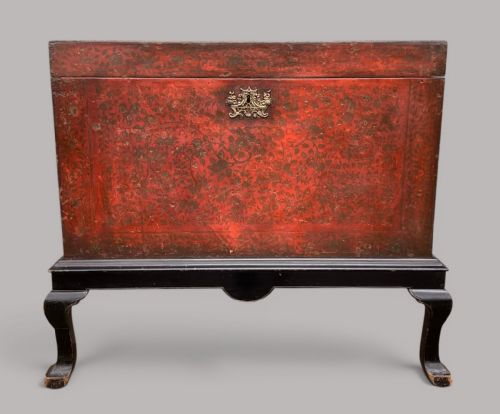
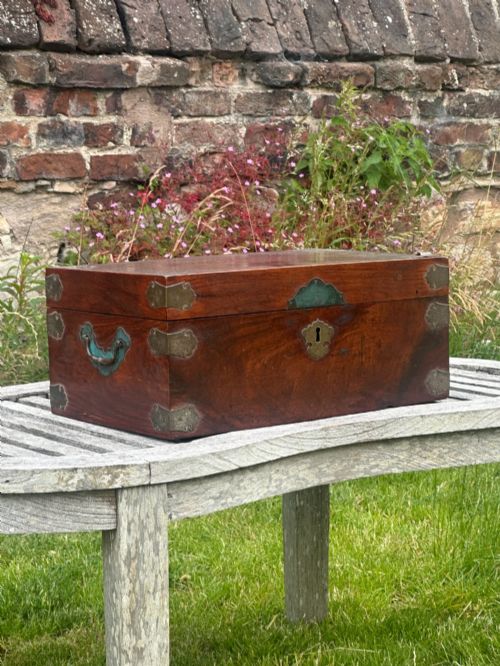
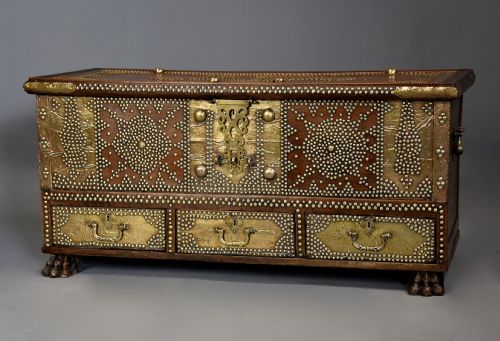
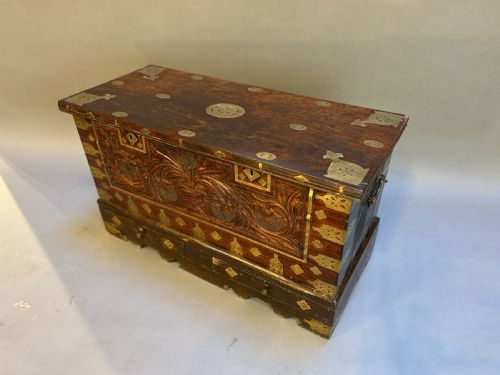
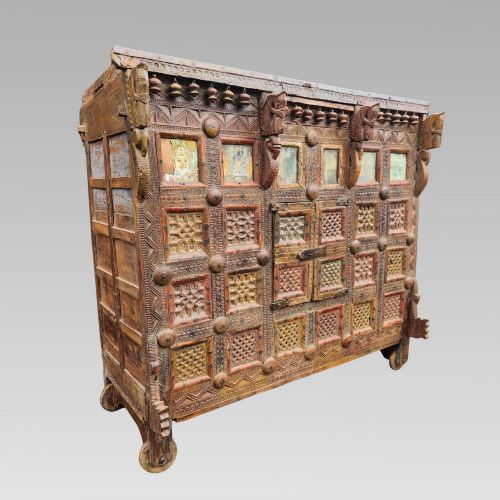
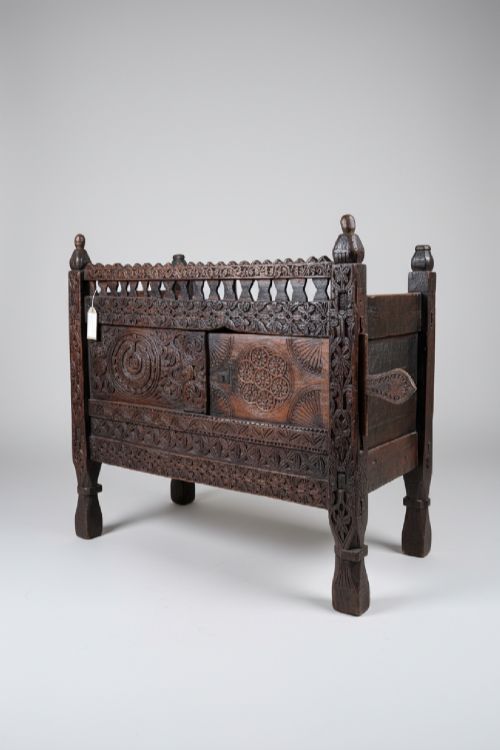

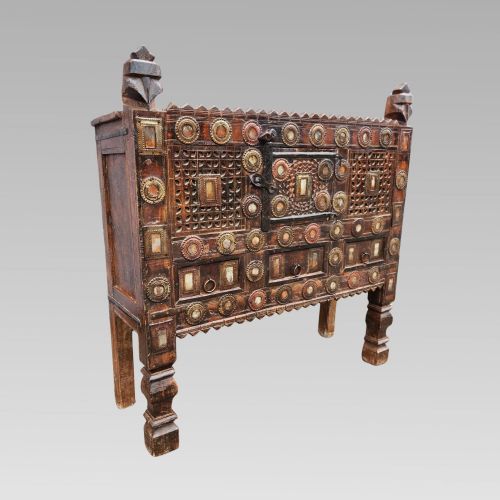
Antique Indian Coffer
An antique indian coffer brings substantial timber storage and colonial history directly into a room, offering heavy brass work and deep regional character.
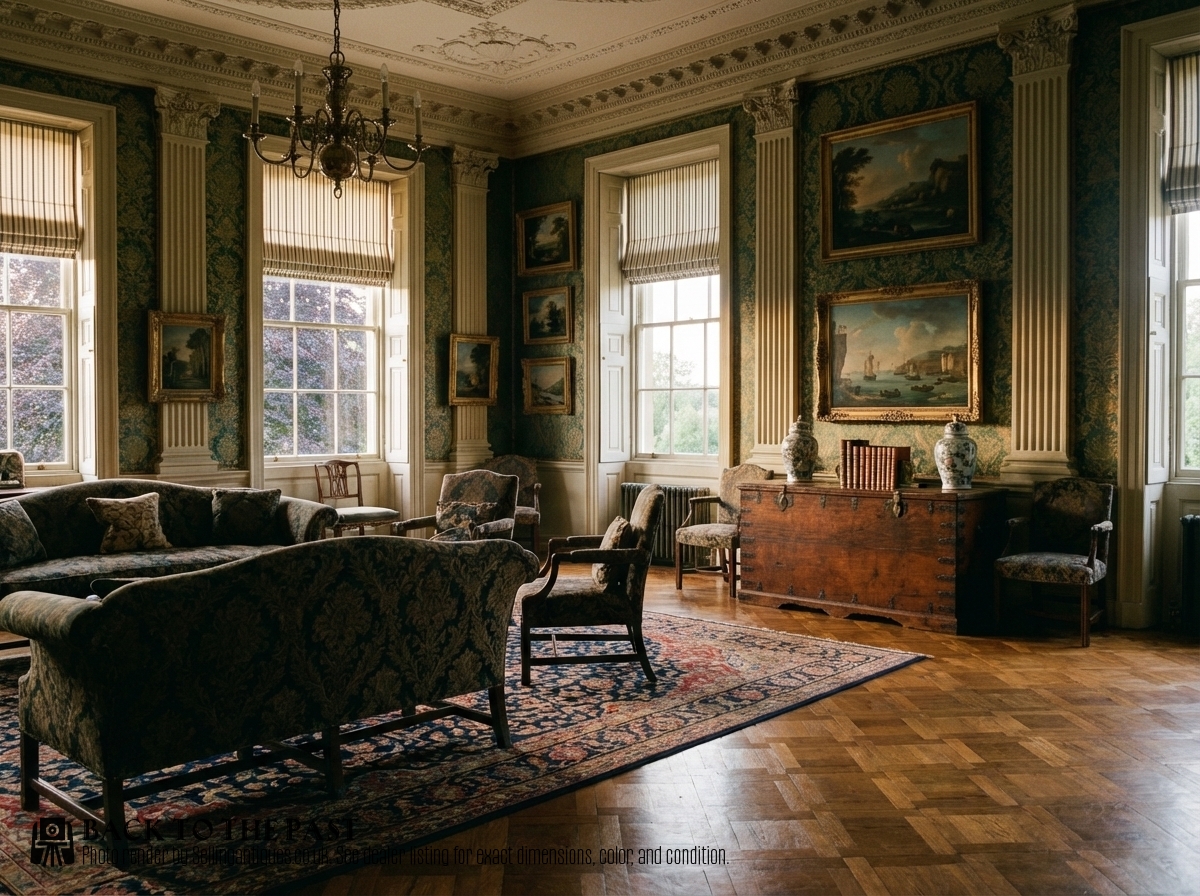
Antique Indian Coffer
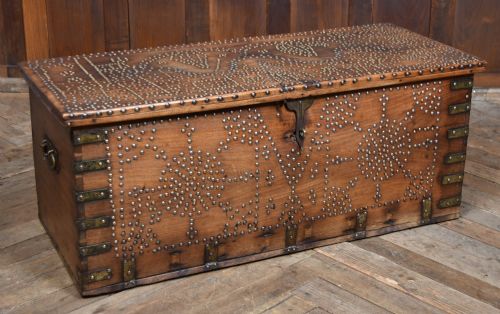
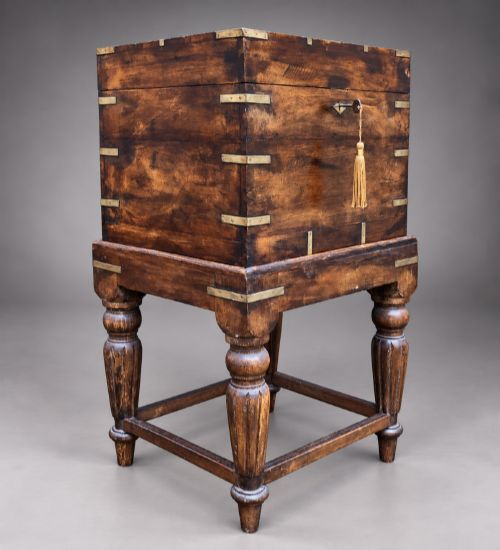
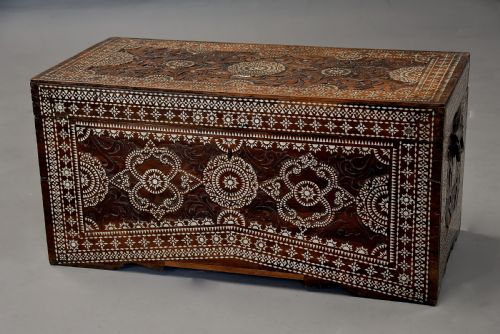
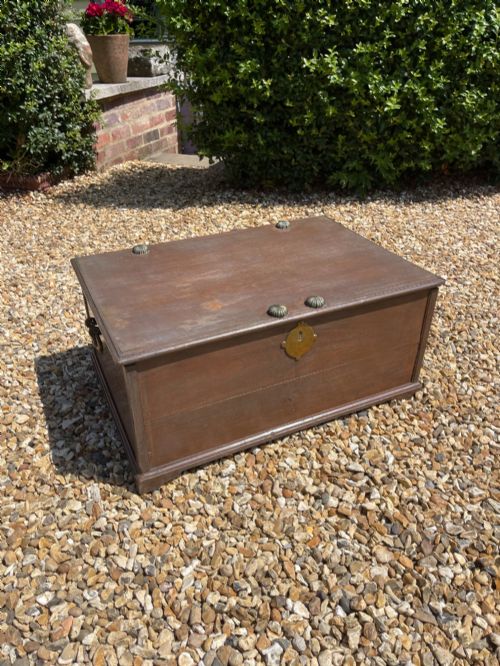
When you examine an antique indian coffer, you encounter heavy storage chests originating from nineteenth-century contexts, including Victorian campaign pieces, dowry chests from Rajasthan, and Zanzibar blanket boxes. These items serve primarily as functional trunks, blanket boxes, and wine cellarettes designed for travel or domestic storage.
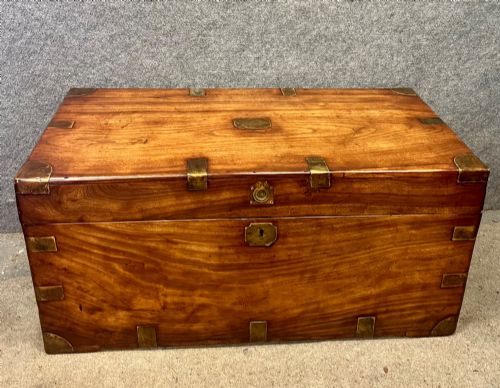
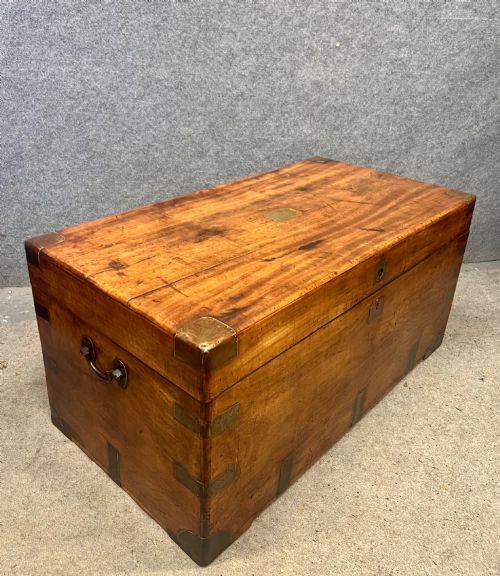
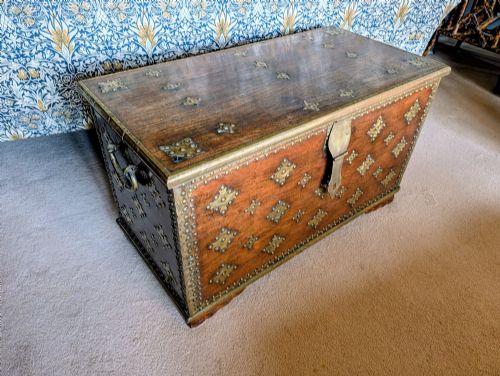
The version you are most likely to meet on this page is a nineteenth-century teak or padouk trunk, frequently reinforced with brass straps and corner brackets. They range from compact deed boxes to monumental dowry chests, embodying styles such as Anglo-Indian, Colonial, and traditional regional designs.
Materials and construction
Carpenters constructed these pieces using dense tropical timbers such as teak, padouk, camphor wood, and ebony, which resisted humidity and insect damage during transport. These woods were often left with a natural finish or treated with red lacquer.
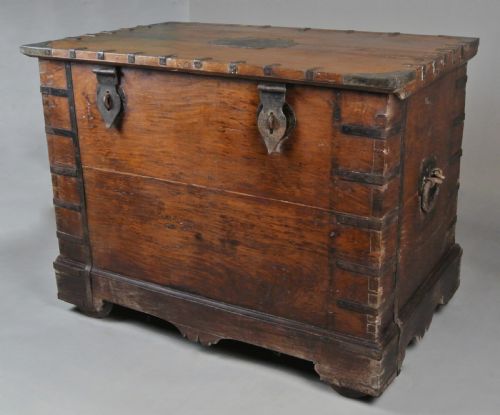
Metal reinforcement defines the structure, utilising heavy brass straps, brass corner pieces, and iron bands secured with numerous studs. Inlays of mother-of-pearl and intricate carving appear on specific regional dowry chests and ceremonial cabinets.
Antique Indian Coffer Retail Price Guide 2026
Typical asking prices for indian coffer among the pieces listed under this phrase on Sellingantiques today, from the lower quarter to the upper quarter. They describe what is for sale here now, not the wider market.
Listings feature nineteen-century production dates prominently, alongside Victorian campaign pieces constructed from teak, camphor wood, and padouk.
What separates the best from the rest
Quality rests upon the integrity of the timber selection and the complexity of the brass or iron mounting work. Denser woods like padouk and satinwood combined with extensive hand-engraved brass binding elevate an item above plain utilitarian pine or softwood alternatives.
The presence of original fitted interiors, functioning locks with unusual mechanisms, and untouched surface patination distinguish superior specimens. Heavily altered pieces or those with mismatched replacement hardware sit lower down the scale.
The Antique Indian Coffer Glossary
- Zanzibar chest
- A heavy timber storage trunk characterised by brass studding and intricate brass plate work, often associated with maritime trade routes. These chests frequently incorporate concealed interior compartments and heavy carrying handles.
- Campaign trunk
- A portable storage chest made in sections or fitted with recessed brass handles for military transport. Officers utilised these sturdy boxes during nineteenth-century campaigns.
- Damchiya
- A traditional carved dowry chest or storage cabinet originating from regions such as Rajasthan. They typically feature panelled fronts, small drawers, and decorative turned elements.
- Cellarette
- A dedicated lockable container designed for holding bottles of wine or spirits. In colonial settings, these were heavily constructed from padouk or teak and mounted on sturdy stands.
- Padouk
- A dense, reddish-brown tropical hardwood prized for its durability and rich grain. Makers selected this timber for high-end campaign furniture and blanket boxes.
Antique Indian Coffer: Frequently Asked Questions
How were these coffers used originally?
Owners utilised these chests for transporting personal belongings, uniforms, and valuables across land and sea during the nineteenth century. Many functioned as dowry chests, holding household textiles and marriage gifts.
In domestic settings, they served as secure storage for blankets, documents, and wine reserves within colonial households.
How do I care for camphor wood or teak?
Maintain these tropical hardwoods by keeping them away from direct heat sources and sudden humidity changes, which can cause timber to split. Apply a microcrystalline wax periodically to nourish the surface without trapping moisture.
Avoid using harsh chemical polishes on brass mounts, as gentle dusting preserves the historic metal patination.
What distinguishes a campaign trunk from a standard chest?
Campaign trunks feature flush-mounted brass drop handles and reinforced corners designed to withstand frequent military travel. They are constructed in sections or built for easy lifting by side carrying handles.
Standard domestic chests lack these specific transport adaptations and focus instead on decorative carving or stationary display.
How do I identify a Zanzibar chest?
Zanzibar chests are instantly recognised by dense arrangements of brass studs, geometric brass strapwork, and elaborate central hasp plates. They are typically built from heavy teak or rosewood with hidden interior till drawers.
These pieces reflect maritime influence and trade connections across the Indian Ocean.