






Antique Imari Urns
Antique imari urns bring together robust ceramic bodies and vibrant enamel palettes, drawing collectors who appreciate historic Japanese and British decorative arts.
Antique Imari Urns
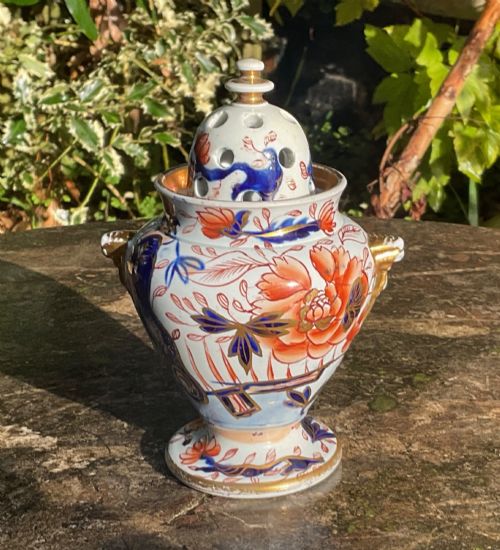
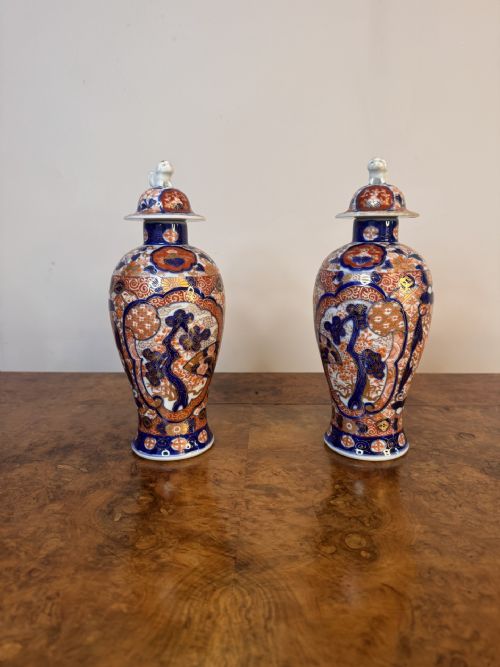
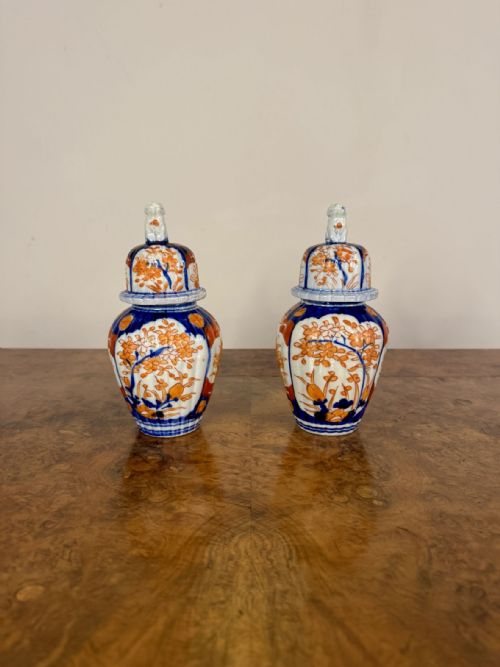
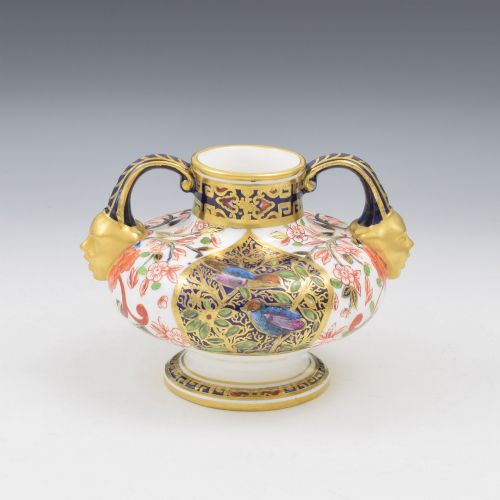
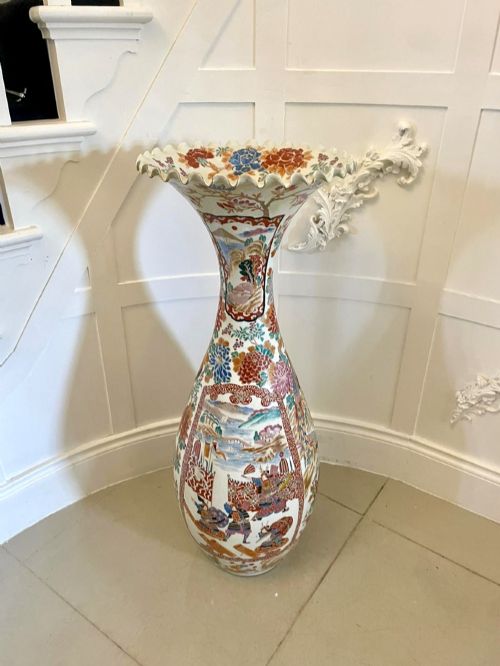
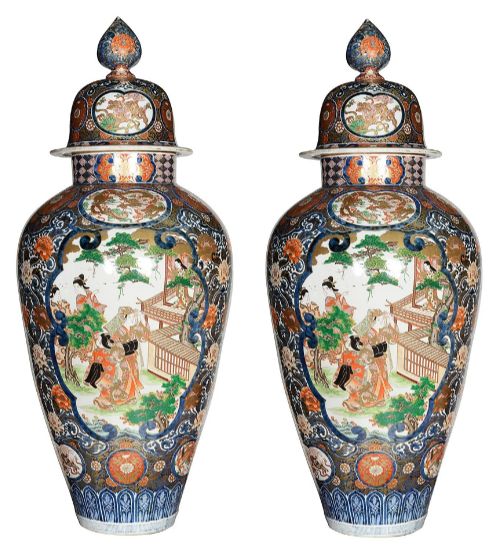
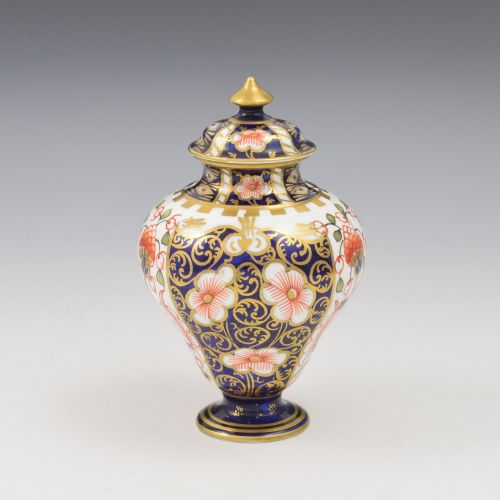
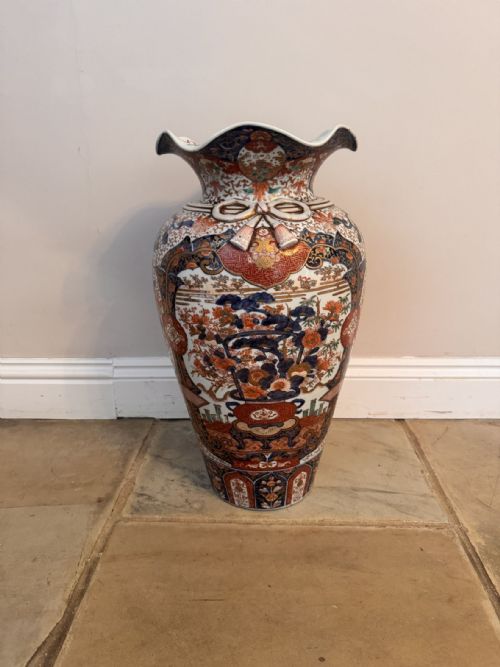
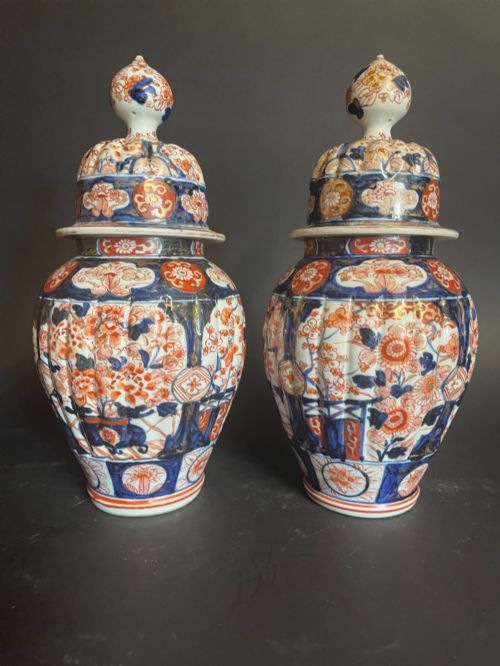
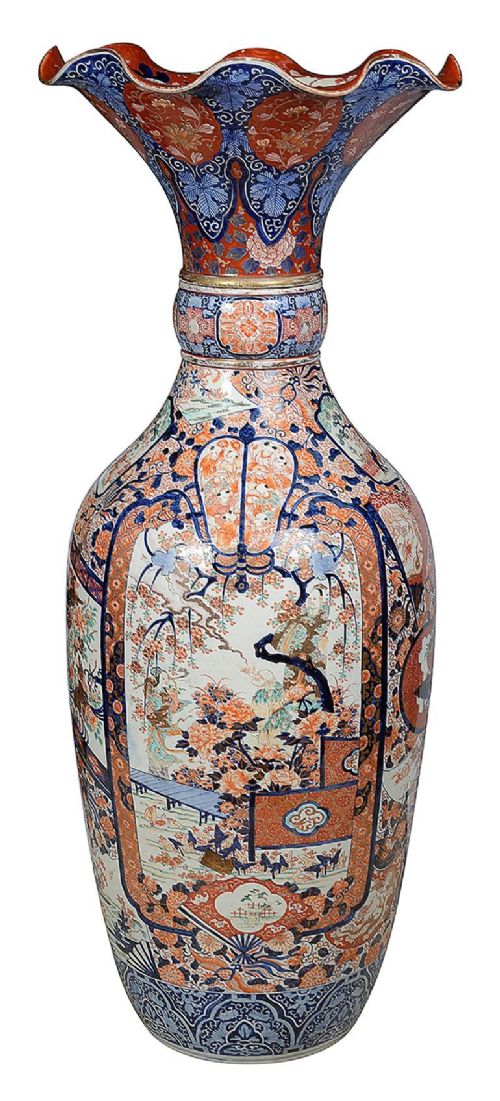
When searching for antique imari urns, buyers encounter a diverse mix of large Japanese floor standing vases, lidded jars, and British porcelain pieces from the Georgian, Victorian, and Edwardian eras. These objects range from massive nineteenth-century Japanese Meiji period floor vases down to miniature Royal Crown Derby porcelain vessels and Masons ironstone pots.
The version most commonly met on this page is the Japanese Imari vase or lidded jar dating from the late nineteenth century, often created in Arita during the Meiji period. Alongside these Japanese exports sit British interpretations and adaptations, including Chamberlain Worcester ice pails and Spode ironstone wares decorated in the characteristic Imari palette.
What varies in quality
Quality in these vessels rests upon the crispness of the porcelain body and the precision of the hand-painted enamel palette. Pieces produced by established factories like Royal Crown Derby or originating from Arita during the Edo and Meiji periods display superior control over the cobalt blue and gilt details.
Scale and ambition also define the upper tier of the range, separating modest miniature bud vases from magnificent floor standing vases and garnitures of three. The density and intricacy of the decorative schemes separate standard production pieces from truly exceptional works.
Antique Imari Urns Retail Price Guide 2026
Typical asking prices for imari urns among the pieces listed under this phrase on Sellingantiques today, from the lower quarter to the upper quarter. They describe what is for sale here now, not the wider market.
Object forms documented here include floor standing vases, ginger jars, lidded urns, ice pails, koros, and table lamps.
Royal Crown Derby·Chamberlain Worcester·Spode·Masons
The Antique Imari Urns Glossary
- Imari
- A style of ceramic decoration originating in Japan, characterised by a palette of underglaze blue, iron red, and gilt. It heavily influenced European porcelain makers during the Georgian and Victorian periods.
- Garniture
- A set of three or more matching vases or urns designed to be displayed together on a mantelpiece or piece of furniture. These matched groupings are particularly sought after by collectors.
- Meiji Period
- The era in Japanese history spanning from 1868 to 1912, known for significant export of high-quality decorative arts including large floor vases and lidded jars.
- Ginger Jar
- A ceramic vessel with a rounded body and a cover, originally used for storing spices but frequently collected purely as a decorative ornament.
- Ironstone
- A type of heavy, durable ceramic developed in Britain during the nineteenth century as a robust alternative to porcelain.
- Koro
- A traditional Japanese incense burner fitted with a cover, often rendered in the Imari palette and mounted with handles.
Antique Imari Urns: Frequently Asked Questions
What periods do these pieces span?
The selection encompasses items originating from the late seventeenth century through the Georgian, Victorian, and Edwardian eras up to the early twentieth century.
Japanese examples often date from the Edo and Meiji periods, while British interpretations reflect nineteenth-century revival styles.
How were these vessels used originally?
Many served as purely decorative floor vases, mantelpiece garnitures, or lidded ginger jars displayed in prominent rooms of grand homes.
Some specialised forms, such as ice pails and koros, had functional roles at the dining table or in domestic rituals.
How do I identify Japanese versus British pieces?
Japanese pieces typically feature traditional Arita porcelain bodies painted in the classic Imari palette during the Meiji period or earlier.
British pieces often utilise ironstone or soft-paste porcelain created by factories like Spode or Royal Crown Derby working in the Imari manner.
Can I use an antique urn as a lamp?
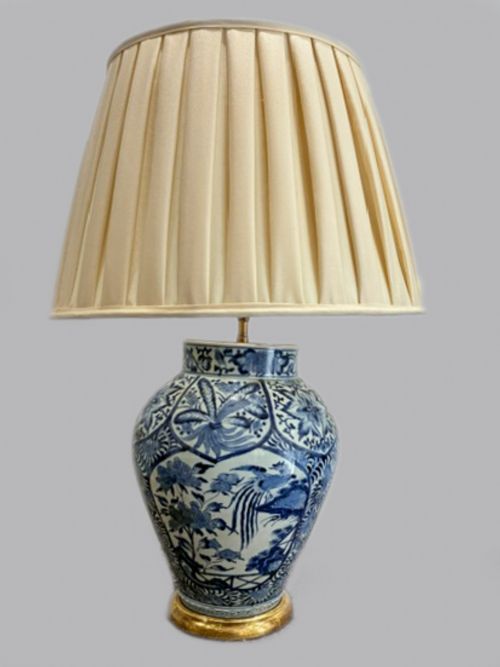
Historical precedent exists for this, as some late seventeenth-century Japanese vases were converted into table lamps in later periods.
Modern conversion is possible, provided the wiring method preserves the integrity of the ceramic body.