


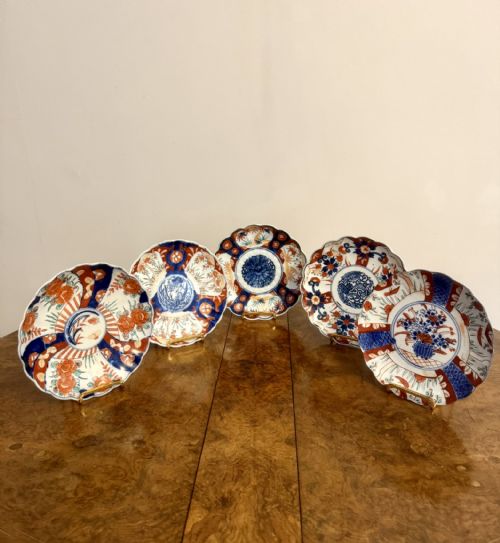


Antique Imari Dish Set
These antique imari dish set pieces bring robust blue and iron-red palettes to your table, offering centuries of decorative tradition.
Antique Imari Dish Set
An antique imari dish set gathers together plates, bowls, and serving pieces defined by their distinct palette and origins. Most examples on this page date from nineteen hundred or the nineteenth century, reflecting robust trade and production periods.
Forms range from small decorative plates and shaped dishes to larger dessert services and wash sets. You will encounter Japanese Imari alongside English interpretations such as Mason's ironstone pieces from the Georgian era.
The assortment includes sets of four, five, six, fourteen, and smaller groupings, often featuring matching bowls or jugs. These sets offer a practical way to acquire coordinated ceramic ware with rich historical context.
How they were made
Potters utilised porcelain and ironstone as the primary bodies for these wares, applying ceramic glaze to seal the surface. Skilled decorators then hand-painted the intricate patterns using enamel colours.
Many pieces incorporate gold leaf, gilt, or gilding to highlight specific details within the design. This combination of underglaze blue and overglaze iron-red with gold created the signature look associated with Imari production.
Antique Imari Dish Set Retail Price Guide 2026
Typical asking prices for imari dish set among the pieces listed under this phrase on Sellingantiques today, from the lower quarter to the upper quarter. They describe what is for sale here now, not the wider market.
Collectors sometimes find mysterious Black Ship designs recording early maritime trade.
What varies in quality
The refinement of the painted details and the precision of the enamel work distinguish finer examples from simpler production. Consistency across a matched collection of plates or dishes also elevates the standing of a set.
The application of gold leaf and the depth of the glaze contribute to the overall visual impact of each piece. Superior execution in the decorative motifs ensures the patterns remain crisp and vibrant.
Mason's Ironstone
The Antique Imari Dish Set Glossary
- Imari
- A style of Japanese porcelain originating from the port of Imari, characterised by a palette of cobalt blue, iron-red, and gold. This style heavily influenced both Eastern and Western ceramic production.
- Ironstone
- A type of heavy earthenware patented in the nineteenth century, known for its durability and resistance to chipping. Mason's ironstone is a prominent example found in English ceramics.
- Gilt
- A thin layer of gold applied to the surface of ceramics to enhance decorative elements. It adds a reflective quality that catches the light.
- Enamel
- Opaque glass used as a coloured decoration over the glazed surface of ceramic pieces. It provides the vibrant reds and other secondary hues in Imari designs.
- Dessert service
- A matching collection of plates and dishes designed specifically for serving the final course of a formal meal. These sets often display unified decorative schemes across all included vessels.
Antique Imari Dish Set: Frequently Asked Questions
What is an imari dish set?
An imari dish set consists of coordinated plates or serving vessels decorated in the distinctive Japanese Imari style or European interpretations.
These sets typically feature a strong palette of blue, red, and gold, used historically for both display and dining.
How were these sets used?
Many of these sets functioned as decorative plates or dessert services for formal dining occasions.
Wash sets and jugs served practical household purposes in bedchambers before modern plumbing became common.
How do I date an imari set?
Dating relies on examining the ceramic body, the style of the decoration, and any maker marks present on the base.
Pieces on this page largely span the nineteenth century up to nineteen hundred, showing shifts between Japanese export wares and English ironstone.
How do I care for antique ceramics?
Wash antique porcelain and ironstone gently by hand using mild soap and warm water, avoiding harsh scrubbers.
Keep pieces away from direct sunlight and extreme temperature changes to protect the glazes and gilding.