




Imari Pattern Display Dishes
These imari pattern display dishes bring together striking iron-red and cobalt blue palettes across centuries of porcelain production.
Imari Pattern Display Dishes
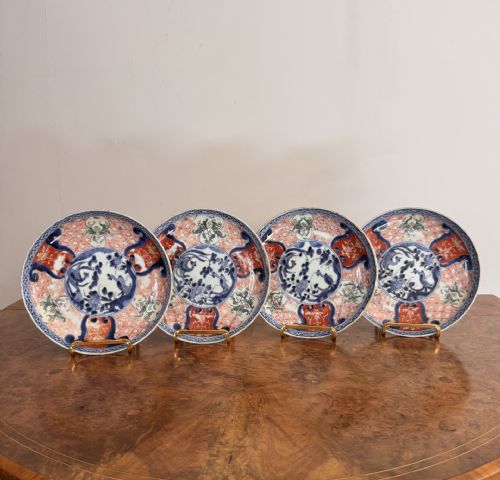
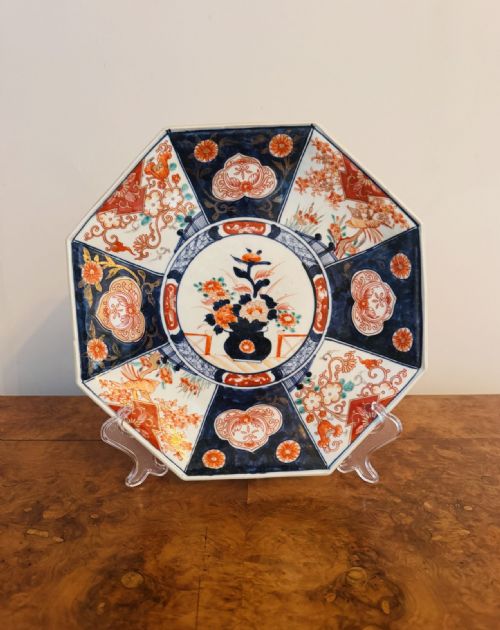
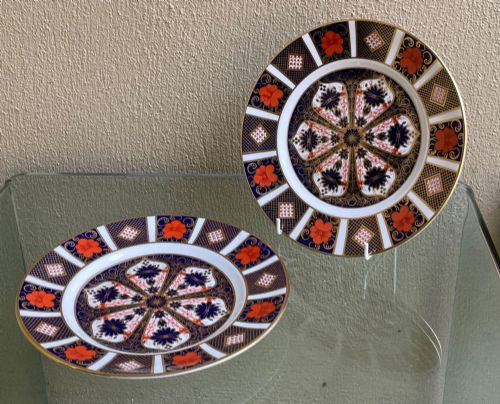
When buyers search for imari pattern display dishes, they look for decorative plates and dishes that show the distinctive aesthetic originating in Japan and subsequently adopted by English potteries. These pieces combine rich underglaze blue with overglaze red enamel and gold leaf accents.
On this page, the most common pieces encountered are Japanese examples from the Meiji period and the year nineteen hundred, typically featuring intricate floral or panelled motifs. English interpretations from the Georgian and Victorian periods also appear, showing how domestic makers adapted the oriental palette for British dining rooms.
The selection spans various forms, including hexagonal plates, scalloped edge dishes, and pairs of decorative plates. These objects were made primarily for display in cabinets or on walls rather than for daily domestic service.
How they were made
The creation of these ceramics relies on high-temperature firing of porcelain or bone china bodies to establish the base structure. Artisans then applied cobalt blue underglaze before the initial glaze firing.
Following the glaze fire, craftsmen added overglaze enamels in iron-red and other colours, often finishing the design with detailed gold leaf highlights. A secondary low-temperature firing fixed these surface pigments and gilt details to the ceramic body.
Imari Pattern Display Dishes Retail Price Guide 2026
Typical asking prices for imari pattern display dishes among the pieces listed under this phrase on Sellingantiques today, from the lower quarter to the upper quarter. They describe what is for sale here now, not the wider market.
Periods represented span the eighteenth century, the Georgian era, and the nineteenth and twentieth centuries.
What varies in quality
The standard of painting forms the primary distinction between ordinary wares and superior examples. Finer pieces demonstrate precise brushwork, well-defined panel details, and rich, consistent cobalt tones without bleeding.
The application of overglaze enamel and gilt embellishments also indicates manufacturing grade. Premium dishes retain crisp gold leaf highlights and vibrant red enamel that sits cleanly upon the glaze surface.
Royal Crown Derby·Flight, Barr and Barr·John Ridgway
The Imari Pattern Display Dishes Glossary
- Imari Style
- A decorative ceramic scheme inspired by Japanese export wares featuring iron-red, cobalt blue, and gold. This palette was widely copied by European factories.
- Meiji Period
- The era in Japanese history spanning from eighteen sixty-eight to nineteen twelve. Pieces from this time often exhibit high technical skill and elaborate painted details.
- Overglaze Enamel
- Coloured glass decoration applied to the surface of a previously fired and glazed ceramic. It requires a further lower temperature kiln firing to fuse.
- Bone China
- A type of soft-paste porcelain incorporating animal bone ash. This composition creates a strong, translucent body used extensively by English potteries.
Imari Pattern Display Dishes: Frequently Asked Questions
How do I identify Japanese imari from English imari?
Japanese examples typically utilise a slightly greyer porcelain body with characteristic spur marks on the base from kiln supports. The iron-red tends to have a dry, matte texture.
English interpretations often employ bone china or refined earthenware with whiter bodies and smoother glaze finishes. Factory marks or pattern numbers frequently appear on the reverse of English pieces.
Were these dishes meant for dining?
Most of these pieces served as decorative plates for display cabinets, sideboards, or wall hanging rather than utilitarian tableware. Their intricate overglaze enamels and gold leaf details made them susceptible to wear from cutlery.
Heavier everyday service wares generally omitted delicate gilt highlights to withstand repeated washing. Display pieces prioritize visual impact over functional durability.
How do I care for antique imari plates?
Gentle dusting with a soft, dry cloth is usually sufficient for routine maintenance. Hand washing in lukewarm water with mild soap is required if cleaning becomes necessary, avoiding soaking.
Dishwashing machines and abrasive scrubbers will damage the delicate overglaze enamels and gold leaf accents. Storing pieces securely in plate racks prevents edge chipping.
What is the significance of the Meiji period?
The Meiji period marks an era of intense artistic output and increased export of Japanese decorative arts to Western markets. Makers during this time refined traditional techniques to satisfy international demand for intricate porcelain.
Dishes from this phase often feature complex geometric borders surrounding central floral or landscape panels. This era represents a peak in the production of high-detail export ceramics.