


Antique Hunting Dog Figure
An antique hunting dog figure brings the energy of the field indoors, captured in bronze, porcelain, and Staffordshire pottery across the Victorian and Art Deco periods.
Antique Hunting Dog Figure
When you search for an antique hunting dog figure, you encounter sculptural works and ceramics that celebrate hounds, setters, greyhounds, and gundogs. These pieces span from Georgian porcelain and Victorian pottery pairs to French animalier bronzes and twentieth-century spelter casts.
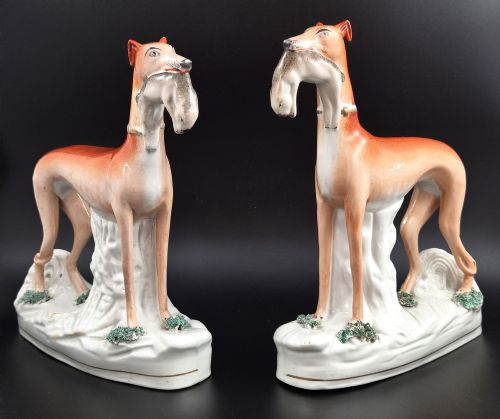
You are most likely to meet Staffordshire pottery figures of greyhounds and setters alongside nineteenth-century bronze sculptures mounted on marble bases. The selection also includes oil paintings and porcelain figures depicting dogs alongside game, handlers, or mythological figures like Diana.
The forms range from domestic mantelpiece figures to life-size garden statuary and cabinet ceramics. Makers and foundries across England, France, and Germany produced these works to capture the distinct posture and alertness of working breeds.
How they were made
Bronzes are cast using the lost-wax technique, often finished with cold painting, patination, or ormolu details, and frequently secured to heavy marble plinths. Animalier sculptors modelled these metals to emphasise musculature and tension in the animal's frame.
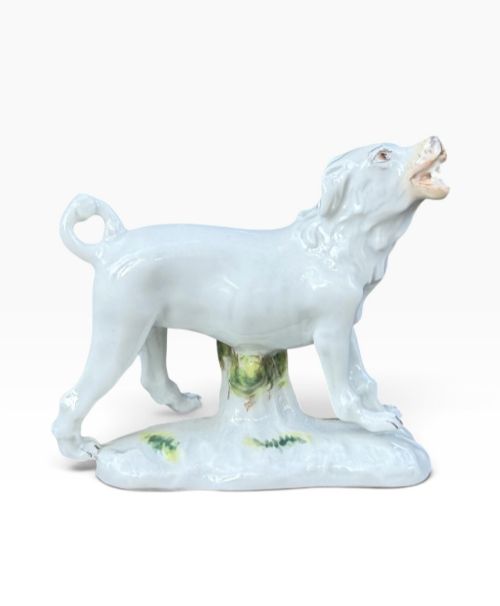
Ceramic pieces utilise earthenware, porcelain, and blanc de chine, shaped in moulds and finished with lead glazes, enamel paint, or fine surface painting. Potteries such as Staffordshire, Meissen, Minton, and Royal Dux employed specialised kiln techniques to fix these coloured glazes.
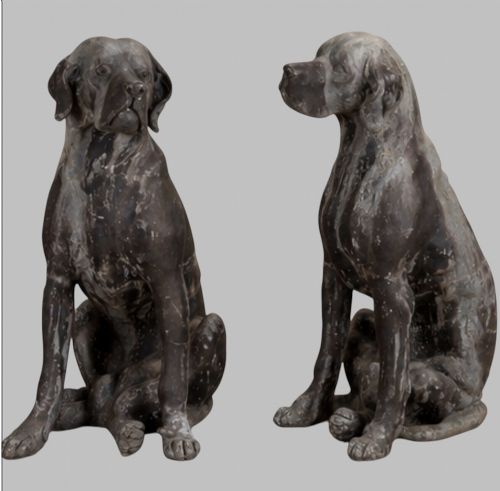
Lead and cast iron were also utilised for heavier figures intended for exterior placement, while spelter served as an accessible alternative to bronze during the Art Deco period.
Several hounds share their sculptural space with startled hares, pheasants, and rabbits.
What varies in quality
The standard of an antique hunting dog figure rests on the fidelity of the animal's anatomy and the crispness of the casting or moulding. Superior bronzes capture minute details in fur and sinew through careful chasing after the cast, whereas lesser examples lose definition.
Thomas Parr·Thomas Hicks·Delabrierre·Minton·C Masson·Jules Moigniez·Enoch Wood factory·Royal Dux·Christophe Fratin·Pierre-Jules Mène·Dubucand·Charles Hunt Jnr
The Antique Hunting Dog Figure Glossary
- Animalier
- A nineteenth-century artistic movement dedicated to the realistic portrayal of animals, particularly predators and working dogs in motion.
- Spelter
- An alloy of zinc and lead used as a cheaper substitute for bronze, frequently painted to imitate metal patination.
- Cold painted
- A method where bronze figures are painted with cold enamel colours rather than fired in a kiln.
- Blanc de chine
- A Chinese porcelain style featuring a smooth white glaze, later emulated by European potteries like Minton.
- Lead glaze
- A glossy ceramic coating containing lead oxide that produces a smooth, reflective surface on earthenware.
Antique Hunting Dog Figure: Frequently Asked Questions
What is an animalier bronze?
An animalier bronze is a nineteenth-century sculpture focused specifically on the lifelike depiction of animals. These works capture dogs and wildlife with anatomical accuracy.
French sculptors popularised this style, mounting the heavy metal casts on marble or slate bases for display.
How do I identify Staffordshire dogs?
Staffordshire pottery figures typically depict seated greyhounds or setters, often modelled in pairs with hares. They feature hand-painted details over an earthenware body with a clear lead glaze.
Many nineteenth-century examples were produced for mantelpiece decoration in pairs facing one another.
What is spelter?
Spelter is a zinc alloy commonly used in the early twentieth century as an affordable alternative to bronze. It was frequently treated with a metallic finish to resemble genuine bronze.
Art Deco figures often utilised spelter mounted on marble plinths.
When were bronze gundog figures made?
Most bronze hunting dog sculptures date from the nineteenth century, driven by the French animalier school. Artists cast dogs retrieving game or pointing in realistic postures.
These pieces often bear the signature of the sculptor on the bronze base.