

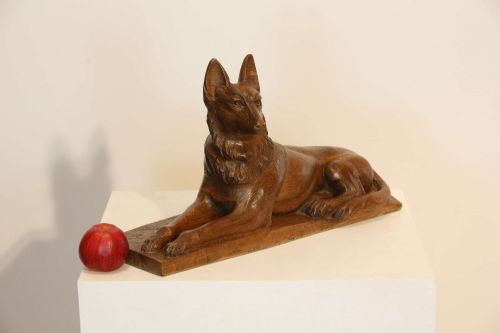
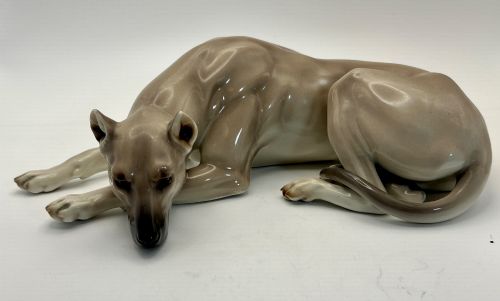
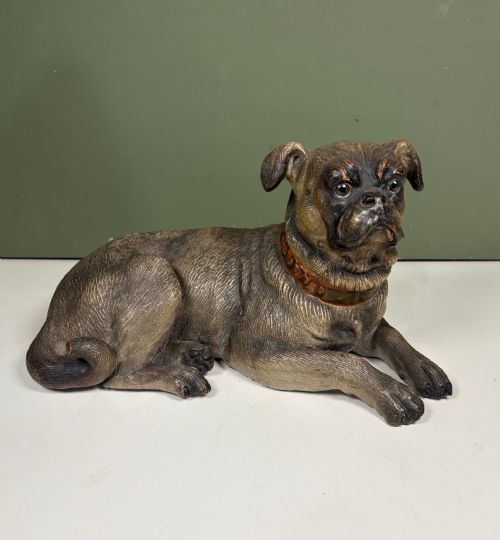


Recumbent Dog Figure
A recumbent dog figure brings a quiet, watchful presence to a desk or mantelpiece, cast in bronze, carved in wood and stone, or modelled in pottery.
Recumbent Dog Figure
A recumbent dog figure captures a canine companion at rest, stretching from the early nineteenth century through to the art deco period. These pieces take the form of functional desk accessories like inkwells and quill holders, alongside standalone sculptures and pottery figures.
The materials span earthenware, hard-paste porcelain, pottery, and stoneware, paired with carved oak, Derbyshire alabaster, and bronze. Originating from British, German, French, and Nymphenburg workshops, the dogs range from spaniels and pugs to greyhounds, setters, and German shepherds.
Victorian Staffordshire pottery and nineteenth-century animalier bronzes dominate the selection, offering both folk charm and academic precision. Whether cast in metal or modelled in clay, each object records a different breed in a relaxed, lying posture.
How they were made
Pottery and porcelain examples rely on slip-casting or hand-modelling in clay, finished with coloured glazes and enamels before firing in a kiln. Staffordshire pieces often feature painted details over a white earthenware body, while factories like Nymphenburg use hard-paste porcelain for finer definition.
Bronze sculptures utilise the lost-wax casting method, capturing musculature and fur texture before applying patination or mounting on marble bases. Carved items involve direct hand-working of materials such as oak and Derbyshire alabaster using chisels and gouges.
Recumbent Dog Figure Retail Price Guide 2026
Typical asking prices for recumbent dog figure among the pieces listed under this phrase on Sellingantiques today, from the lower quarter to the upper quarter. They describe what is for sale here now, not the wider market.
Listings feature items spanning the nineteenth century through to 1930, utilising bronze, earthenware, marble, oak, hard-paste porcelain, and pottery.
What varies in quality
Functionality and material selection also divide standard work from superior examples, particularly in desk accessories where brass lids, glass liners, and carved wooden bases remain intact. The prestige of the maker or foundry, from Enoch Wood to Nymphenburg, elevates the standing of individual pieces.
Bright And Sons·Enoch Wood factory·Christophe Fratin·Nymphenburg Porcelain
The Recumbent Dog Figure Glossary
- Animalier
- A nineteenth-century artistic movement focused on the realistic depiction of animals, particularly in bronze sculpture. Practitioners often captured beasts in dynamic or resting poses with acute anatomical precision.
- Hard-Paste Porcelain
- A ceramic material fired at very high temperatures, composed of kaolin and petuntse. It produces a dense, durable body with a bright white lustre.
- Inkwell
- A small container for holding ink, frequently integrated into desk accessories alongside pen trays or quill holders. These objects often incorporate sculpted animal figures as decorative housings.
- Quill Holder
- A desk accessory designed to keep writing quills close at hand. In nineteenth-century ceramics, these often took the form of recumbent greyhounds or spaniels.
Recumbent Dog Figure: Frequently Asked Questions
What animals appear as recumbent dog figures?
The selection includes pugs, King Charles spaniels, greyhounds, setters, German shepherds, great danes, and bullmastiffs. Each breed reflects the taste of its period, from Victorian spaniels to twentieth-century shepherds.
Potters and sculptors chose breeds that suited specific forms, matching slender greyhounds to quill holders and sturdy mastiffs to inkwells.
How were these figures used originally?
Many served as decorative ornaments on mantelpieces and side tables, bringing domestic warmth into nineteenth-century rooms. Others had a practical purpose as desk accessories.
Pieces with inkwells and quill holders combined utility with sculpture, keeping writing equipment tidy on a library desk.
What materials are most common?
Pottery and earthenware are widely seen, particularly in Victorian Staffordshire figures decorated with coloured glazes. Bronze is equally prominent among animalier sculptures and art deco desk pieces.
Carved materials include oak and Derbyshire alabaster, alongside hard-paste porcelain from European factories.
How do I date a pottery dog figure?
Dating relies on stylistic clues, glaze characteristics, and the manufacturing body, such as nineteenth-century earthenware or Victorian stoneware. Maker marks or factory stamps provide definitive chronological markers.
The modelling style also shifts from the folk simplicity of early Staffordshire to the refined realism of later European porcelain.