

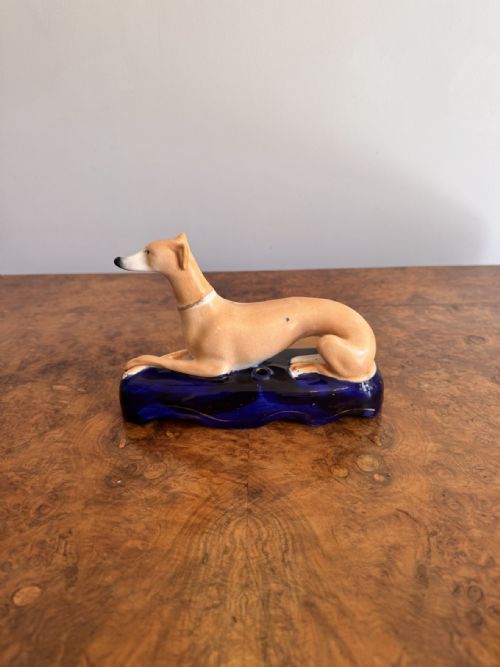


Vintage Dog Porcelain Sculpture
These vintage dog porcelain sculpture examples bring charm and character to a room, capturing faithful hounds and spirited puppies in ceramic form.
Vintage Dog Porcelain Sculpture
A vintage dog porcelain sculpture brings together decorative objects and ornamental figures spanning the nineteenth and twentieth centuries. Buyers searching for a vintage dog porcelain sculpture will encounter works originating from European factories and Asian traditions alike.
The assortment includes individual hounds, sporting dogs with game, and groups featuring boys alongside their pets. Notable examples range from early twentieth century German and Bohemian output to nineteenth century Parian ware and Qing period pieces.
Figurines and statues dominate the selection, offering varied depictions of setters, greyhounds, hunting dogs, and puppies. Each piece reflects the sculptural tastes of its specific period, from Victorian realism to Art Nouveau and Art Deco design.
Materials and methods
These figures utilise ceramic materials such as standard porcelain, biscuit porcelain, and Parian ware to achieve distinct surface textures. Makers employed fine clays and precise moulding techniques to render the musculature, coats, and expressions of each animal.
Surface decoration relies upon applied ceramic glaze and detailed enamel work to add colour and definition. Firing processes fixed these pigments and glazes, creating either a high gloss finish or the matte, marble-like appearance characteristic of unglazed biscuit porcelain and Parian.
Vintage Dog Porcelain Sculpture Retail Price Guide 2026
Typical asking prices for vintage dog porcelain sculpture among the pieces listed under this phrase on Sellingantiques today, from the lower quarter to the upper quarter. They describe what is for sale here now, not the wider market.
Listings feature works from the Edwardian era alongside pieces created during the 1900s, 1910s, and 1920s.
Judging the work
Quality in these sculptures rests upon the fidelity of the modelling and the precision of the anatomical detail. Superior pieces capture the natural posture and alertness of the animal with lifelike accuracy, whereas simpler items rely on generic forms.
The Vintage Dog Porcelain Sculpture Glossary
- Biscuit porcelain
- Unfired or once-fired porcelain left unglazed to produce a matte, tactile surface similar to white marble. This finish highlights fine sculptural detail without the reflective sheen of a standard glaze.
- Parian ware
- A fine-grained bisquit porcelain developed in the nineteenth century to imitate carved marble. It was frequently utilised for classical figures and animal sculptures.
- Glaze
- A glassy coating applied to pottery and fired to seal the porous clay body. This layer provides a smooth, protective finish and can be transparent or opaque.
Vintage Dog Porcelain Sculpture: Frequently Asked Questions
How do I clean my porcelain dog?
Dust the sculpture gently with a soft, dry brush to prevent the accumulation of dirt within crevices and textured areas. Avoid harsh chemical cleaners or abrasive sponges that might damage delicate enamel work or glaze.
For stubborn grime, use a slightly damp cloth with mild soap, then dry the piece thoroughly with a soft towel. Take extra care around unglazed biscuit porcelain or Parian ware, as moisture can sink into the porous surface.
Where were these figures made?
The pieces originate from various international ceramic centres, including renowned European factories in Germany, Bohemia, and Britain. Asian works also appear, representing traditional techniques from periods such as the Qing dynasty and the Japanese Meiji and Edo eras.
Each region brought distinct stylistic preferences and manufacturing traditions to animal sculpture. European pieces often reflect academic realism or twentieth century design movements, while Asian examples follow long-established cultural motifs.
Are these sculptures fragile?
Ceramic and porcelain are inherently rigid and brittle materials that require careful handling during placement and relocation. Thin extremities, such as tails, ears, and modeled game, are particularly susceptible to chipping or snapping under pressure.
Display the figures on stable, level surfaces away from heavy traffic areas or the edges of furniture. Secure shelving prevents accidental knocks that could damage these historic objects.
How can I tell the age of a piece?
Age is typically assessed through stylistic markers, manufacturing techniques, and factory marks stamped or painted on the base. Victorian and Edwardian works often feature naturalistic modelling, while later twentieth century pieces align with Art Deco or modernist aesthetics.
Examining the wear on the base and the consistency of the glaze provides further clues to a piece's vintage. Comparing the object to documented factory productions helps narrow down the period of creation.